Food as Art: Ludobites 6.0

Restaurant: Ludobites 6.0 [1, 2]

Location: 13355 Ventura Blvd Sherman Oaks, CA 91423.

Date: Nov 02, 2010

Cuisine: Eclectic Modern

Rating: Excellent, but a tad intellectual.

_

Chef Ludovic Lefebvre has been doing this series of “mobile” or “popup” restaurants that appear for 1-2 month stretches in the space of another place. He brings very rapid experimentation to the forefront. While not as polished or perfected as a place like Calima, this is a very creative and tasty avant garde establishment. Oh, and did I mention how hard it is to get a table. I and another foodie friend were spamming the reservation site as they became available for 6.0 and we barely snagged our Tuesday 6:30pm table for six. We’re glad we did.

A Ludo signature COQtail, “Yuzu Tequila Martini.”

Tonight’s menu. We had everything!

I brought the wines from my celar as usual. The 2005 Comte Armand Pommard Clos des Epeneaux. Parker gives it 94-96 points and says, “The 2005 Pommard Clos des Epeneaux was still in three lots segregated by age and location of vines when I tasted – each fascinatingly delicious in itself, and the concentration of the old vines portion in itself almost too severe. Fascinating dark berry, carnal and mineral notes mingle in the nose. Low-tone sirloin meatiness, black cherry, cassis, faintly bitter black chocolate, and toasted hickory inform a glycerin-rich, polished, yet firmly structured palate. Notes of licorice, horehound, and mineral salts add complexity to a finish of palate-staining intensity and grip. This superb Pommard should require 5-7 years of cellaring and reward considerably more.”

This Ludobites has a wine list now, small but good. But I prefer my own cellar. Corkage was a reasonable $15.

“Warm Baguette, Baratte smoked butter, Sardine-Laughing Cow Cheese.” The bread was fantastic. The sardine spread reminded me of good whitefish salad.

Sea Urchin Roe, Frozen milk, balsamic, orange broth, black rice.” This had a very novel texture, and tasted like… well Uni (sea urchin).

“Oriental Mussels Veloute, Heirloom Tomato, Small Fries.” The fries were to die for, like fresh potato sticks. The mussel veloute was silky smooth, creamy, and delicious. Somewhere between a french cream soup and a very soft Thai green curry.

“Marinated Mackerel, Leche del tigre, baby leeks, verdolagas leaves.” This was a great dish too. The mackerel had a pleasant fishiness to it, but the prep was a bit like a Nobu miso glaze.

Hamachi, Vietnamese style.” This was my favorite savory dish. The hamachi was nice, but the topping was like some great Vietnamese salad, with spice, interesting texture, and a refreshing citrus note.

“Barely cooked squid noodles, pad Thai, prawn, black radish.” This was weird, but good. Not for the timid eater because of the textures of the raw fish, but I liked it.

“Scallop, Celery Root Remoulade, red port, walnuts, passion fruit.” Tasty. I liked the salid bit (slightly Waldorf slaw-like) best, but I prefer my scallops raw.

“Poached-roasted Foie Gras, Acacia Honey, Autumn fruits, rose flowers.” This was damn yummy. The fruit was one thing, but the pink stuff is some kind of reduced rosewater, and it went great with the Fois, lending it a middle eastern note.

“Salmon ‘a l’huile’ Somen Noodles, carrots, red wine vinaigrette, grilled salmon roe.” This was a really good dish. The salmon was raw sashimi, and the roe like Ikura. The noodles lent it a nice slippery coolness.

John Dory, potato, herbs, brocollini flowers, green jalapenos nage.” There was nothing wrong with this dish. The fish was succulent and perfectly cooked, but it just wasn’t as exciting as some of the others.
The 2001 Beaucastel Chateauneuf du Pape. I’ve long been a fan of this Chateau, even going so far as to visit last year. Then I got to split a free bottle of the 2007 Chateau Beaucastel Chateauneuf du Pape Hommage A Jacques Perrin (100+ pts). But tonight’s wine Parker gives it a mere 95 and says, “Beaucastel has been on a terrific qualitative roll over the last four vintages, and the 2001 Chateauneuf du Pape (which Francois Perrin feels is similar to the 1990, although I don’t see that as of yet) is a 15,000-case blend of 30% Grenache, 30% Mourvedre, 10% Syrah, 10% Counoise, and the balance split among the other permitted varietals of the appellation. This inky/ruby/purple-colored cuvee offers a classic Beaucastel bouquet of new saddle leather, cigar smoke, roasted herbs, black truffles, underbrush, and blackberry as well as cherry fruit. It is a superb, earthy expression of this Mourvedre-dominated cuvee. Full-bodied and powerful, it will undoubtedly close down over the next several years, not to re-emerge for 7-8 years. Anticipated maturity: 2008-2025.”
“Half chicken, poached egg, chanterelles, chorizo.” Tasty and rich, but I was starting to fill up.
“Marinated korean steak, crispy kimchi, bone marrow.” The steak was very rare. Not as good as a great cut at a top Korean BBQ place, but good. The marrow added a nice richness. Starting to get very full.
Onto desert. The “Cold chocolate soup, peanut butter, marshmallow, long pepper chantilly.” This was damn good. The texture and peanut notes of the marshmallow really added.
“Warm carrot cake, coconut, Thai curry, mango sorbet, kaffir lime.” It was weird, but good. The overall flavor profile was like a Thai red curry. The mango sorbet, refreshing as it looked, was actually fairly spicy. The icing stuff tasted like butter icing. Inside the ramekin is Kaffir lime oil. The savory quality of this desert reminded of my first Ludo meal, at Bastide, where I ordered the “Chocolate spaghetti al carbonara,” a desert that actually had pancetta and raw egg cracked over chocolate noodles with a scoop of parmesan ice cream!
ANY CHARACTER HERE
Overall the meal was very very good, although a tad intellectual. A few dishes felt like they were trying too hard without totally paying off. Still, it’s a rare restaurant this creative.

Quick Eats: Panini at Home

Location: The Villa Malka (home), Pacific Palisades, CA.

Date: Nov 02, 2010

My brother came over to whip up a quick batch of brunch panini, one of his specialties. All the actual cooking in this post is courtesy of “guest chef” Mitch Gavin. My related masterpiece are my home made pizzas, I’ll post about them sometime.

First the ingredients. This particular batch was vegetables and cheese. Red onions, farmers market tomatoes and baby bell peppers, fresh basil, two sorts of parmesan, sharp cheddar, and mixed greens.

We often use lavash bread — after all, we live in LA, home to about 1000 great Persian markets. The cheese goes on the bottom, thinly sliced, then some salad.

The salad is dosed with fresh squeezed Meyer Lemon (good on everything) and onion.

The peppers and tomatoes, then some various spices like pepper and oregano. Anything will work.
A little “really good” Olive Oil drizzled on goes a long way. Laudemio makes fantastic single orchard varietals.
You can find these Panini machines at any specialized cooking store these days.
Cook it down until the veggies really collapse, and the cheese goes all over.
Voila!
It’s like grilled cheese and a salad all in one.
And as a bonus you can scrape off the fried cheese (mostly parmasean). Even my two year old liked that.
You can throw just about anything in a panini and it will go great. In this particular one you could add yesterday’s left over steak (sliced), or turkey, or grilled chicken, or prosciutto, whatever.

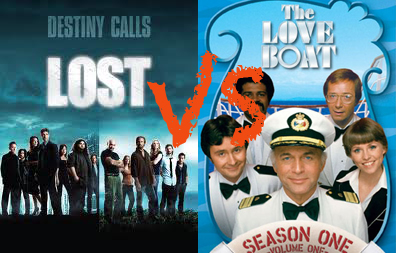
Thoughts on TV: Lost vs The Love Boat

I’ve had a funny relationship with TV as a storytelling medium. During the 80’s and much of the 90’s I used to mock it as generally inferior and for numbskulls. But let it be said that I watch TV for stories. I pretty much detest the medium for information transfer (like news) and I despise reality TV and other non story based programming. The article title makes light of the difference between what I call “episodic” and “continuous” television. The Love Boat is episodic, you could scramble the order of many episodes, and everything resets back to neutral between shows. This is pretty much a constant. You KNOW when watching the show that any changes that occur during the course of the episode will get resolved and unwound by the end. Almost all sitcoms fall into this category. Although in more recent years, even some of these are hybrids, like Friends, where major changes do slowly occur.

Lost is an extreme example of continuous television. The story runs continuously — I hesitate to say linearly — from episode to episode. In the most extreme shows of this sort, like Lost and HBO/Showtime dramas, the episodes and seasons are merely chunks of delivery, much as Dickens novels were originally sold in chapters.

I was never much for episodic TV. During the dark years of the 80’s I watched little TV, and the few programs I did watch were either hybrids or had extreme appeal (like the original Battlestar Galactica which is both). I did find myself attracted to some early ventures into the continuous arena: Hill Street Blues, Saint Elsewhere, Miami Vice (my REVIEW HERE), Wiseguy, etc. One might classify these as adult soaps — and they are — but at least they allowed for character development. That’s the thing about episodic television. There isn’t much development, and very little risk. If you know that everything will get back to where it started by the end of the hour, why worry, why invest?

A number of factors have contributed to the rise of continuous television. These 80’s trendsetters can take some credit, as can the miniseries, but probably it is the rise of cable that was the next big step. On cable, freed of some of the childish conventions of traditional network programming and more importantly of the albatross of mid-show advertising, television has become a medium where it is possible to deliver “books” of 10-17 hours of solid programming. This is radically different than film’s 1.5-4 hours (and 4 is a Gone with the Wind length movie) scope. Sure film often has a bigger budget to work with, but that’s not what really makes a story. Writing fulfills that responsibility. DVD packaged television provided the second huge step, allowing even interrupted network programs to be viewed in a continuous manner.

With this in motion the 90’s saw the rise of more hybrid continuous shows: My So Called Life, Buffy the Vampire Slayer (my DISCUSSION ON BUFFY HERE), the X-Files, to name a few. These straddled the line, retaining a roughly episodic format, but allowing characters, relationships, and big conflicts to arc from episode to episode. In the late 90’s, with the rise of the big HBO dramas this all changed. Some network shows like Buffy that started episodic became largely continuous. In the 2000’s we experienced a golden age of fully continuous television. Network shows are still mixed, with most being largely episodic or hybrid. It’s rare on the networks to have a fully continuous show like Lost, but few are wholly episodic like most 80’s fare. The big cable dramas: The Sopranos, Deadwood, Rome, Carnivale, The Tudors, Six Feet Under, Big Love, Dexter (my REVIEW HERE), Weeds, Boardwalk Empire, The Wire, Trueblood, Entourage, etc. are pretty much all continuous.

This new medium, the continuous or strongly hybrid series, allows for a depth of character development and intrigue not possible in the traditional visual mediums. Although, I guess technically soap operas have done this for decades, but the narrow demographic focus, slow pace, and extended melodrama makes these a unique species of their own. I myself am basically drawn to television on a basis of how continuous it is, and the quality of the writing, not so much the particular genre or subject. Often I sense  the progressive modulation of quality in a show is based on where it falls in the spectrum. For example, Roswell, which began with a hybrid first season that leaned toward continuous was forced into a more episodic form in the second season, much to the detriment of the show’s quality. Likewise, Buffy, my all time favorite show, picks up strength in seasons 2-6 as the show sheds itself of the early episodic quality and becomes a more continuous narrative.

Another interesting phenomenon is that continuous shows are much better when watched in bulk on DVD without the breaks in time or advertising. I’ve discussed this with many friends and all agree that when you start a show like Lost on DVD, bingeing through episodes back to back it has a continuity and emotional intensity that is lost when one is forced to skim through ads and wait a week between episodes — and we won’t even mention the endless inter-season breaks. Catching up to “realtime viewers” can feel like driving into a brick wall. This exists for book series as well. Pounding through a huge series of fantasy novels back to back is much more satisfying than when one catches up with the author and has to wait years.

In any case I’m all for this, as I like longer more substantial storytelling where characters are free to change. Anything else is just repetitive.

Quick Eats: Brunch at Tavern

Restaurant: Tavern [1, 2, 3, 4]

Location: 11648 San Vicente Blvd, Los Angeles, CA 90049. (310) 806-6464

Date: Oct 31, 2010

Cuisine: Market driven Californian

Rating: Nice brunch spot.


Tavern is a welcome and tasty replacement for the Hamburger Hamlet in Brentwood. They have a bakery, and three rooms, including a lovely glass ceiling “patio.” It’s part of Susanne Goin’s restaurant group along with A.O.C. and Lucques.

Tavern eggs benedict. Brioche and Prosciutto. The hollandaise was perfect, with a nice citrus note. This was a very good version of the classic. My only complaint was that the frise stuck in my throat slightly.

These are other peoples, but they looked good.

The sausage I tasted. Delicious, like some kind of lamb/pig hybrid, with fried sage on top.

Tavern also has a yummy looking bakery all decked out in Halloween themed goodies:

I had one each of these macaroons. They were two of the best I’ve ever had, incredibly moist. The pumpkin one tasted like my mom’s fresh pumpkin pie, and the carmel one was soft and sweet with just a little dose of sea salt.

Tavern hold’s its own as a top example of the new new modern California style, similar to other great places like Gjelina and Rustic Canyon. Or more meals at Tavern HEREHERE, or HERE.

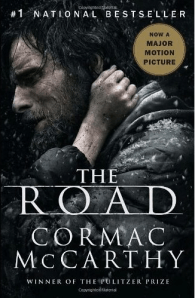
Book and Movie Review: The Road

The RoadTitle: The Road (movie)

Author: Cormac McCarthy

Genre: Literary Sci-Fi Horror

Read: Oct 29-30, 2010

Summary: Evocative.

_

At the suggestion of my friend Peter (in comments on my review of The Passage) I picked up The Road. I’d seen the movie a couple months ago. This novel is a relative oddity, being both literary and Sci-Fi post apocalyptic.

The prose: We have to speak first about the prose. At first, as with other McCarthy books, I found it jaring. He writes long sentences without much punctuation. He uses nouns and adjectives as verbs (like Shakespeare). For example, “The man glassed the horizon” (meaning he looked with binoculars) or “The white fog paled the trees.” These long sentences are interrupted with short burps in counterpoint. The dialog, what littler there is, has no quotations (remember he doesn’t like punctuation), and precious few tags. There’re no chapters, but scene breaks occur with startling rapidity. Many scenes are just description, slashes of images. McCarthy employs vocabulary the likes of “vermiculate,” (covered in worm like lines) or verbs like “hove” (past tense of heave). I found myself needing to use the kindle app’s built in dictionary feature. Still, after 15-20 pages I stopped noticing — well I didn’t stop entirely, but it grew comfortable. This very specific and personal voice is wonderfully evocative. Haunting, and spare, but with elegant and precise use of words and word parings does a good job of sketching the bleak setting. I’m not sure how the casual reader would react, but I certainly appreciate his skill with words. No awkward Stephenie Meyer style constructions here.

The book: Not a whole lot happens in the book. Basically “The man” and “the boy” wander through this post post apocalyptic landscape where nothing but an occasional hostile person moves. The world has burned and been all used up. There is no hope, absolutely none. Not a plant or animal lives. It’s just a matter of delaying the inevitable — perhaps avoiding being eaten by cannibals along the way. This bleakness is well conveyed. Still, I had issues with the overall setup. What the hell would kill EVERYTHING but humans? Every plant, bug, animal, but just leave the people? I don’t know, but we have the same biology as the other animals. I could see everything getting obliterated, or LOTS, but not every single thing but people. That being said, if that did happen, and you waited until really few were left, it might be this bleak. But I’d think that basic items like shoes would be easier to find. With 5 billion less people to wear them, they should be in decent supply. Overall I found it very evocative, and depressing, but there are only two characters, and the dialog felt staccato and stilted. Hard to follow, and not much reason to do so. I’m a plot and character reader first and formost, so I had mixed opinions. I enjoyed reading it, I liked the deft literary sketch work, and the book is the right length (short), but I can’t say that I absolutely loved it.

The movie: I did like the book better than the movie. I’m a Viggo fan (who couldn’t be after Lord of the Rings and Eastern Promises). The boy was very good too (he also stars in Let Me In, and does a great job there too). The film is surprisingly faithful. A few little adjusts, but the only big thing they changed was adding the flashbacks with the man’s wife. There’s one brief one in the book, but it’s more developed in the film. They didn’t need this. The film captures the bleak qualities, but without the energetic prose it’s just grim on grim. I found watching to be almost punishing. The unrelenting hopelessness, the fear of being eaten. It was much scarier than the book, but also harder to stomach. It’s certainly not a fun watch, although very well made.

Food as Art: The Bazaar

Restaurant: The Bazaar

Location: 465 S La Cienega Blvd, Los Angeles, CA 90048. 310.246.5555

Date: Oct 30, 2010

Cuisine: Spanish influenced Molecular Gastronomy

Rating: Awesome, one of LA’s best places.

My first exposure to the genius of José Andrés was at Cafe Atlantico in Washington D.C. On an occasional Sunday I’d go with my parents for their Nuevo Latino Dim Sum, which was a ludicrously large prix fix brunch (30 some courses and several hours). I was thrilled when he opened a restaurant in LA. The spectacular result is The Bazaar in the SLS hotel. I’ve been five or six times and the scene alone is great. They  have a number of different rooms and restaurants  grouped together. There is the bar, with cool snacks and molecular cocktails, the scrumptious pataserie, two rooms of the main restaurant, and the secret prix fix only Saam. This meal  was in the main Bazaar. Everything is tapas style, small dishes (about 4 per person) shared by all.

They have all sorts of interesting cocktails, but the signature one is the nitro caprina. Dry ice is used to freeze the rum and lime concoction down without added ice or water.

The result is above. It tastes like a sherbet, with a highly unusual smooth texture, but it’s intensely potent (in terms of proof). Goes down all too easy.

Then I pulled out the first of my wines. The 2007 Laurel. Yum. As I mentioned in my review of Calima this is a fantastic Spanish wine buy. Parker gives it 94 and says, “The 2007 Laurel, a blend of 65% Garnacha and 35% Cabernet Sauvignon, is deep purple-colored with a bouquet of wet stone, Asian spices, black cherry compote, and incense. Dense and sweet on the palate with tons of spice, it is super-concentrated, rich, and smooth-textured. Give this lengthy effort 2-3 years of additional cellaring and drink it from 2013 to 2027. Laurel is produced from the young vines of Clos Erasmus as well as from the results of a triage in the vineyard and cellar of the flagship wine.”

Ordering here can involve a bit of planning — not to mention paper and pen.

This first dish is “Sweet potato chips, yogurt, tamarind, star anise.” The crisp chips are used to scoop up the fluffy cool yogurt, which has a pleasing fruit tang.

Then we have “Spanish olives, traditional.” Classic olives with pimentos and anchovy.

This is followed by “Spanish olives, modern.” Pureed olive has been “sphereized.” The flavor is basically the same, but these pop in your mouth to deliver a concentrated burst of olive.

“Embutidos platter, chorizo, lomo, salchichos.” A selection of pig, pig, and pig. The chorizo in particular is intense, although not nearly as much as some of the examples I had in Spain where each bite transported you magically to the barnyard sty.

Served with some grilled “tomato bread.”

“Bagel and lox cone,” is deconstructed and re-interpreted. Cream cheese is paired with Ikura (salmon eggs). Tasty.

Bunuelos, codfish fritters, honey aioli,” these are specular (but hot, right out of the fryer). The sauce gives them an almost Chinese flavor. Fried fish always works.

“Baby beets, citrus, pistachio, goat cheese.” A nice variant on what has become an LA classic.

“Sea scallops, romesco sauce.”

“Brussel sprouts, lemon puree, apricots, grapes, lemon air.” This was a big hit, the sprouts aren’t bitter at all, and have a light cabbage-like texture. The lemon air is the best part, adding a nice zing.

“Jicama wrapped guacamole, micro cilantro, corn chips.” This was really good, vaguely like a caterpillar roll.

“Barramundi, black beans, garlic,” was an incredibly tasty fish. The skin was perfectly crisped, the meat moist.

“Not your everyday caprese, cherry tomatoes, liquid mozzarella.” This is a near perfect deconstruction of the caprese. The mozzarella balls explode in your mouth, and pair great with the pesto and the little crunchy crackers.

“Seared artichokes with pastrami Saul, La serena cheese with PX reduction.” This wasn’t my favorite. The artichokes seemed a little dry.

The deconstructed “Philly cheese steak” is one of my favorites. The bread is super crispy with liquid parmigiana. the beef is wagyu.

You can see the cheese oozing out.

The vegetarians got this “Hilly cheese steak” with mushroom instead of beef. Same cheese.

“Braised Waygu beef cheeks, California citrus.” This tastes like the best pastrami you’ve ever had, melts in your mouth.

“Catalan spinach, apple, pine-nuts, raisins.”

“Butifarra senator moynihan, Catalan pork sausage, white beans, mushrooms.” The beans were a little dry, but the sausage rocked. This dish reminded me of the equivalent Tuscan sausage and fava beans. I suspect in both cases it hearkens back to the traditional Roman combination of pork sausage served with lentils (over at new years, the lentils symbolizing coins and the wish for wealth in the new year).

At some point we switched up to the 2008 Flor de Pingus, which is even better than the Laurel, deep inky, but silky smooth. Parker gives it 96 saying, “The 2008 Flor de Pingus had been in bottle for 2 weeks when I tasted it. It offers up an enticing nose of smoke, Asian spices, incense, espresso, black cherry, and blackberry. On the palate it displays outstanding volume, intensity, and balance. Rich, dense, and succulent, it has enough structure to evolve for 4-5 years and will offer prime drinking from 2015 to 2028.”

“Lamb loin, Jacques Maximus pistou, trumpet mushrooms.”

My personal favorite along with the cheese steak, “Cotton candy fois lollypop.” The little cube of fois pairs with the sugar like a Sauternes. Oh so yummy.

If that little bit of fois didn’t stop the heart, take a “Fois gras, quince, toasted brioche.” A perfectly put together burger version of the classic pairing.

On Halloween eve, weird costumes abound.

Savory dishes complete, we transferred over to the patisserie for desert. I ordered a glass of this lovely 1927 Pedro Ximenez sherry. I love PX. This one was like sweet motor oil.

“Nitro coconut, floating island, passion-fruit, banana.” I don’t like bananas (had too many with half a bottle of whiskey in ’91), but the nitro island was delicious. Cold, refreshing coconut.

I’m a huge flan fan and this Spanish classic didn’t disappoint.

“Chocolate cupcake.”

“hot chocolate mouse, three layers.” This was good. You gets to inject it with the little syringe of chocolate and the little balls add great texture.

The passion-fruit “Pate des fruits” packed a wonderful wallop of fruit flavor.

Assorted bonbons.

No other restaurant in LA has the combination of ultra modern chic and whimsical playfulness that The Bazaar does — plus everything tastes great and you get to experience an great melange of flavors in one meal. One of these days I need to try Saam and let the chef throw his best at us. I never plan far enough ahead. One note, I ‘ve done The Bazaar’s “set menu” twice, and ordered myself four times. If you know what you are doing doing it yourself is the better way to go, particularly because they don’t mix up their set menu enough. However, if it’s your first visit, letting them handle serves as a fine introduction.

Book and Movie Review: Twilight

TwilightTitle: Twilight

Author: Stephenie Meyer

Genre: YA Romantic Supernatural

Read: January 2008 and Oct 2010

Summary: Confused.

_

Since I’m such a vampire fan, having seen or read vast untold volumes of the stuff, I thought I should put my formal two-cents in on the strange source material that spawned the Twilight phenomenon.

First the book. I read it before the movie came out. There was a lot of buzz about it already, and I was excited about it. Generally, things that are really popular have a kernel of quality about them, and I love vampires and teen heroines. Buffy the Vampire Slayer is my favorite TV series of all time — I will blog about it one of these days. So I started reading Twilight in the Vegas airport while waiting for a flight. Despite the clunky prose (more on that later) I was actually pretty engaged in a low key way during the first half. Then Edward revealed to Bella that he was a vampire (not that I didn’t know) and the whole thing went to shit. I had to force myself through most of the rest, and the ending left me baffled. “Wait, where’d the fight go?  What about the climax?”

Back to the writing: It’s really clunky. I won’t go into too much detail, this other blogger did. But let me say Meyer is the anti Cormac McCarthy (I’m in the middle of The Road right now). He eschews punctuation, she loves it. Every long improper sentence is peppered with a random assortment of commas and em-dashes. She adores the em-dash, using it in approximately 50% of sentences, and usually not for its proper purpose of offsetting a parenthetical. Maybe she felt she had too many commas (she does), and needed to replace some of them with em-dashes for the hell of it. Oh, and she loves certain words or word combinations, like “cold fingers” and uses them several times a page in places. And she clearly choses random synonyms from the thesaurus without being aware of the connotations of said words. For example: “His expression shifted instantly to chagrin.” Can the word be used that way? I don’t think so. But none of this really matters when reading the book, you adjust and just role with it. I guess if you’re 14 and haven’t read a lot you don’t notice to begin with.

The plot and content: Given what actually happens in the first book, it’s pretty long: 118,000 words. Not much really does happen. We have a LOT of words devoted again and again to how pretty Edward is and how much Bella loves him. This isn’t really SHOWN too much, or justified, but she sure TELLS us about it a lot. But again, the first half was okay. However, once the reveal came in, it gets really silly. Basically they go play this ridiculous baseball game and the Black Eyed Peas (oops, I mean the evil vampires) walk onto the field, sniff Bella, and decide the most important thing in the world is to sink their fangs into her blood. There is no real attempt to sell anything in this plot, to provide any believable reasons, it just happens. You couldn’t possibly have more one dimensional villains — although they do compliment the one dimensional heros nicely. Then my all time biggest gripe, we close in on the unbelievable “final” confrontation of the book and Bella gets knocked unconscious (she is after all the narrator) and we miss the whole thing. It’s told to us by Edward after we know it came out okay so as to minimize tension. I had the feeling that the author didn’t know how to write an action scene, so she just chickened out.

The vampires: Oh my. It’s totally clear (particularly in later books) that Meyer doesn’t do research. This includes even watching a few vampire films or perhaps reading Dracula. Her undead aren’t really vampires, or even undead, except for being immortal and having a taste for blood, and “cold fingers.” They don’t seem dead, or particularly evil. They sparkle in the sun, they apparently have like, oh my God, no real weaknesses. And they’re all really pretty. We hear about that a lot. Let’s not forget their smorgasbord of cool psychic powers like seeing the future, and reading minds. These make hack plot construction really convenient. I actually started my novel a year before even hearing of Twilight, but reading it certainly motivated me to make sure my vampire heavy was a really bad-ass undead in a nasty evil way. He doesn’t sparkle in the sunlight but he will leave your entrails hanging from a tree to make a point — and he certainly wouldn’t ever concern himself to learn current High School vernacular.

Publishing mystery: Twilight had a very aberrant publishing history. As a first time novelist it was picked up by Jodi Reamer of Writers House really quickly. This is a very prestigious agency and that’s very rare. It was then sold quickly to a great publisher for a really huge advance. That Reamer showed interest in it is not what surprises me. There is a mysterious something about the first half of the book — it had potential. But what surprises me is that it was never edited — or if it was I’ve never heard of an editor that lax. The standard length for YA books is more like 50-70k, and there is a LOT of fluff in the book, not to mention the bad grammar and the flaccid ending that would be easy to fix. Having been through rounds and rounds of revision myself, the book was held to none of the standards my editors have exhibited. Of course it turned out to be a great decision for Jodi, but I still don’t understand why it was never edited.

The movie: Catherine Hardwicke directed the first movie. She actually did a really good job with the source material, and I think the movie is actually better than the book. Not exactly great, but better. The casting was excellent, particularly Kristen Stewart who does have a soft charisma, and she’s hot in a non obvious way. If you see her in some of her other films like Adventureland or Speak you realize that she’s actually a very fine young actress in certain roles. Twilight doesn’t provide a lot of room for subtle acting. I myself had casually known Hardwicke from when she did production design for Insomniac’s Disruptor in the mid 90’s (Insomniac was located next to my company Naughty Dog in those days). So I’d noticed when she started directing with Thirteen, which is a depressing but brilliant movie — particularly given what must have been a VERY low budget. Hardwicke brought the same kind of hand-held-documentary style to Twilight, and it worked well to offset the inherent cheese factor of the material. Not totally offset, but the result was somehow watchable. She did a nice job capturing Bella’s POV. This is tricky because in a novel, particularly a first person one like Twilight, so much of the book is dominated by the voice. With a combination of diary style voice over (more-or-less quoted from the book) and a peeping-over-the-shoulder viewpoint (as also used in Thirteen) Hardwicke pulls it off. For some reason, they ditched her with regard to directing the sequels, and the those devolve into further cheesiness. Of course so do the later novels. Can I just say Volturi?

Conclusion: I’m kinda baffled. Twilight isn’t particularly good, or well done, but it does have a certain appeal. However, the overall magnitude of success has left me totally confused. Harry Potter is ludicrously popular, but at its core rest three stunningly good initial books. The first book is really well written, the central premise is very novel and sold with incredible style. Even the ridiculously melodramatic Vampire Dairies is more fun than Twilight. I’m just left scratching my head and hoping the anti-vampire backlash isn’t too bad.

Food as Art: Urwasawa

Restaurant: Urasawa

Location: 218 N Rodeo Dr, Beverly Hills, CA 90210, 310-247-8939

Date: Feb 16, 2010

Cuisine: Japanese

Rating: Mind blowing, but a hefty blow below the money-belt.

I’ve been here four or five times over the years, both in it’s older incarnation as Ginza Sushi-Ko under the supervision of chef Masa Takayama and in recent years when helmed by his disciple Hiroyuki Urasawa. To tell the truth, given my limited sampling, I think the student has surpassed the teacher. This is no strip mall sushi joint, but a deliberate effort to maximize the impact of flavor and presentation to the nth degree. This includes an almost gratuitous use of exotic and luxurious ingredients — not to mention gold foil. There are no menus here, no choices, just an expensive parade of delectables the chef selects. The place is tiny, only about 8 sushi bar seats and two little private rooms (one table each). This time we had a room as there were five of us celebrating a birthday.

It’s been a little while so forgive me if I miss-remember some ingredients.

We start with some Toro (ultra rich tuna belly) wrapping a special kind of tofu, banded by daikon, topped with scallions and the omnipresent gold fold, and dosed with ponzu. Yum. Notice the shabby presentation.

I can’t even remember what this was. But it had gold foil too.

Sashimi. Look at this presentation. Ice has been carved into a form of sculpture. Flowers and little rocks adorn. The fish was melt in your mouth.

Caviar with a few other bits on the spoon. Might have been Uni. Everything was delicious here, although if you’re some kind of land-lubber, stay home, pretty much 95% seafood.

Gold foil again. This dish had that kind of subtle Unami flavor profile that is unique to asian cuisines. I happen to love this kind of salty/savory flavor. I think there was a traditional egg custard underneath.

Tempura, very traditional style with the little mound of Daikon radish one can add. I can’t remember what was fried up, but I’m sure it was something rich like lobster. Or it might even have been Fugu (blow fish).

I bet this spider crab didn’t think its body would end up being the cooking pot for its own meat. But it did, with a little Uni (Sea Urchin) to add some extra zest. Again very subtle flavors, and very juicy crab.

This was sort of the ultimate shabu-shabu. Below is a peice of kobe beef, some Akimo (Monfish liver), some japanese scallop and something else I can’t remember. They are cooked in the heated broth in the upper left (very briefly, by swish swishing them — that is what shabu-shabu means), and then dipped in the tangy ponzu. The resulting broth, rich from the fats of the beef and liver you drink as a soup.

I think this is the above broth after it was served to eat.

Some of the sushi got eaten before I got my camera aimed. The sushi here is incredibly good. Even the ginger is all hand made.

More sushi, classics such as Maguro, Hamachi, and Ika (squid), but spectacularly tasty.

More sushi. I think you can technically keep on getting it as long as you have room (for the same high high price), but one fills quickly.

This is the big slab of Kobe beef that is the source of the bits we were eating.


Toro, Uni, and some kind of clam.

Three different grades of Toro. A rare treat.

I think a mackerel, or maybe more than one type, and some thing else.

I of course, being a dedicated gourmand (i.e. glutton) kept on letting them bring me more and more rounds.

The very best sort of grilled sea eel.

It is traditional to judge a sushi chef by the quality of his Tomago, or sweet omelet. Urwasawa passed muster.

A refreshing course of various plums and pressed fruit things. Much more sour than American taste would normally allow.

Red bean paste — which I’m not normally a fan of, but this one was great. Not pasty, but smooth with a nice crunch from the topping, not only the signature gold foil, but crumbled nuts of some sort, adding a pleasant richness. This was accompanied by very special green tea, frothed to a foamy consistency, but with a nice bitterness.

And then a VERY high end “tea ceremony” brown tea.

The overall meal was exquisite, blending fully food, ambiance and style. I forgot to photo my wine but I brought a number of high end whites including my last bottle of the 1986 Chateau Y, which is the almost dry secret wine of Château d’Yquem.

Book Review: Tropic of Night

Tropic of NightTitle: Tropic of Night

Author: Michael Gruber

Genre: Supernatural Horror Thriller

Read: Spring 2010

Summary: Very good.

I read this book both because it was represented by an agent I was interested in and because it loosely fit the ill-defined cross-genre of my own novel: Supernatural thriller with realistic style and magic. In fact, in this book it’s not even 100% clear that the magic is intended to have actually happened — but I like to think it did. There’s a lot of interesting stuff going on here, particularly to my taste. There are three points of view, and not all are as good. One is the female protagonist, a former anthropologist hiding out in Miami from her murderous African shaman ex-husband. The second is the same character, but told in the format of journals written during her field work in Siberia and Africa. And the third is a Miami Cuban-American police detective investigated a series of horrific murders in Miami (perpetrated by the nasty shaman of course). I loved the detective, his investigations of the ritual crime scenes, and the bit of Cubano Miami flavor . The present action protagonist was okay, and the journals were intermittent. When they got into the magic stuff they were good. What I most loved about this book was the creepy and very realistic feel of the mostly Yoruba based shamanistic magic. Overall I enjoyed reading it, but the book could have benefited from some tightening up. The detective investigating this awful ritual crimes was very good too. If you like murder procedurals, and you like creepy well researched voodoo-esque magic, then give this a read.

Food as Art: Sasabune

Restaurant: Sasabune [1, 2]

Location: 12400 Wilshire Blvd Ste 150 (South Carmelina Avenue) Los Angeles, CA 90025, (310) 820-3596

Date: October 29, 2010

Cuisine: Japanese

Rating: Excellent as always.

Today I went to one of my usual lunch spots, Sasabune. This is one of LA’s many top sushi joints. It’s an culinary descendant of the Nozawa school of “warm rice” sushi making. The best way to enjoy these places is with Omakase. I opted for the “Japanese Omakase” which means more “squirmy creatures,” and hence more fun for me.

The appetizer here is some kind of giant mollusk. It was served with pepper/yuzu relish and 10,000 year old sea salt. The clam has a taste similar to scallop, but with a firmer texture. Although salty (no duh) it’s very nice with the yuzu and salt.

Big-eye tuna (Maguro) and Toro. As is typical at this school of sushi place many of pieces already have sauces, and do not need soy sauce. If you are a sushi neophyte you should know that Toro is the fatty belly of the tuna, which means it tastes better. The Japanese rank Toro into different grades of honorability. This is fairly normal Toro (some get almost white with fat), but it melted in the mouth like butter.

I believe this was Tai (red snapper) and another white fish. The little bits of seasoning are customized to each fish and add a nice zing.

Oyster done two ways: raw with vinegar and spicy radish, the other baked dynamite. The later is richer, but the first has the pleasant briny taste of fine oysters.

Salmon with the traditional sesame and the sheet of seaweed stuff (which I love). A very nice Hamachi (yellowtail), with a little yuzu for kick. Giant clam, and sweet shrimp (raw). This last is sweet and soft and melts in the mouth.

Orange clam and two kinds of mackerel, Spanish and Japanese.

After a brief trip to the fryer, the sweet shrimp head makes a return appearance, tempura style. You eat the whole thing, the heat has denatured the chiton in the shell into a softer more sugary form (chiton is a quad sugar organic construct like cellulose).

Waste not, want not. The shrimp roe returns too, marinated in a nice tart vinegary ponzu.

My brother groaned at this from across the table, but I love both. Very sweet Ikura (salmon eggs), which pop in the mouth to release their sweet/salty flavor, and a very nice sweet Uni (sea urchin) — from the taste I would assume from Santa Barbara.

Ankimo (Monk fish liver) and sea eel. Yum! The liver was in a miso sauce. The eel of course is BBQ, with the sweet sauce.

Probably red snapper again? and maybe another cut of yellowtail.

Japanese sea scallop, with salt and yuzu. This is SO good.

This is actually an eel roll my brother ate. But we each got the blue crab hand roll before it. However, the Sasabune blue crab rolls are SO GOOD that we gobbled it down before I remembered to grab the camera and snap a picture. If I hadn’t been full I would have ordred another.

Don’t miss my detailed post comparing the American and Japanese Omakases. CLICK HERE.