Book Review: Hex Hall

Hex HallTitle: Hex Hall

Author: Rachel Hawkins

Genre: YA fantasy

Read: Oct 23, 2010

Summary: Fun.

Continuing my unrelenting survey of both supernatural and YA books (together and separate). This is a vaguely Harry Potter-ish tale of a fifteen-year-old witch who ends up in magical reform school. It was surprisingly decent. Not great, not super innovative, but the first person voice was very enjoyable. Occasionally I found myself cringing when the events served the plot in ham handed ways. For example, the protagonist and boy she likes are both sentenced to the same detention — just the two of them. And there are vampires, but they are treated too casually like everything else. Still, it was funny and I enjoyed reading it, I didn’t have to force myself through anything. I plan on buying the sequel. This is actually pretty high praise for a reader as jaded as myself.

Book Review: The Ghost Brigades

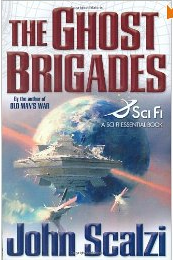
The Ghost BrigadesTitle: The Ghost Brigades

Author: John Scalzi

Genre: Sci-Fi/Space Opera

Read: Oct 27-28 2010

Summary: Great read!

_

Since I enjoyed Old Man’s War so much I jumped right in and pounded this out last night. I might have liked it even better. The characters are a tad less likable than the first book, but there is more plot, and more aliens — remember I like aliens. The book starts off with a great prequel that holds your interest (and I’m not a prequel fan), slaps you with a nicely done twist, and is immediately obvious to the real plot that develops. This involves a Special Forces space marine who is a complete genetic construct. He is born an adult, learning to be a solider and human all at the same time in a frantic computer-in-the-head rush. There is some good Sci-Fi in here, and some really fun aliens, but it doesn’t get in the way of a really fast fun story. I’m very much reminded of a lot of my favorite authors from my High School Sci-Fi reading: Robert Heinlein, David Brin, Larry Niven, etc. but Scalzi‘s books (at least the two I’ve read) don’t feel derivative in any negative way. He maintains a good balance between character, story, action, and Sci-Fi elements without letting any of them overshadow the rest. I’ll read the third book soon.

Book Review: City of War

City of WarTitle: City of War

Author: Neil Russel

Genre: Contemporary Thriller

Read: First week August 2010

Summary: Extremely fun read.

_

I don’t read too many Thrillers without a Horror/Sci-fi/Fantasy/Supernatural element, but I was introduced to the author through a friend of mine and decided to check his book out. I’m glad I did. This is a roller coaster ride I can only describe as Fletch meets James Bond meets The Big Sleep. A billionaire playboy who happens to be ex-special forces happens to rescue a naked (and gorgeous) kidnapping escapee on the freeway, and things snowball into a globe spanning conspiracy of murder, art forgery and more. It’s fast and fun, but what really sells everything is the know-at-all first person voice of the protagonist. The action is often a little over the top, but his snarky attitude makes everything amusing. Perhaps (like Bond and many other action heros) he is a little too good at what he does, too calm under pressure etc. But it doesn’t really matter because he entertains with every paragraph. Great settings and a plot with a few shocking moments and unexpected changes of direction doesn’t hurt either. A director and well cast lead with the talents to capture the voice could turn this into a great action movie.

Book Review: Old Man’s War

Old Man's WarTitle: Old Man’s War

Author: John Scalzi

Genre: Sci-Fi/Space Opera

Read: Oct 26-27 2010

Summary: Top notch fun! If you liked Avatar and want to see how much better a good Sci-Fi novel can be, read this.

_

This novel borrows heavily from classics like Starship Troopers and Forever War, but who cares. It’s great. A flawlessly breathless read from start to finish. Basically it’s about a normal (for the year 2200) 75 year old man who volunteers to leave the sheltered Earth, gets upgraded, and is thrown into the maelstrom of interstellar alien combat. It’s action driven, idea driven, AND character driven. Not that the characters are painted with some kind of world shattering mastery, but they’re good, and likable. The atmosphere and action are all great. I also enjoyed seeing aliens again in my Sci-Fi. By that, I mean weird and tentacled out hostile aliens. I like my aliens alien.

There are also a lot of good newer Sci-Fi ideas packed into the book, plus a healthy dose of classic 60’s-80’s ones that have been nicely updated. I have a few little bones to pick with the author’s vision of the future. Particularly on Earth where things seem to have barely changed. Hell, there are even magazines in a waiting room. We won’t have magazines 20 years from now. In addition, the alien planets seemed to too often have the coincidental breathable atmosphere. This is common across Sci-Fi but always bugs me. The space marines have combat suits, it could just mention the suit dealing with the issue. And several of the aliens liked to eat humans. Now I liked the gruesome touch, but the reality is that alien biology would be way too different. The odds of them having the same amino acids, salts, etc as life on Earth are astronomical. But as I said, I liked Scalzi’s aliens, particularly the weird militant advanced religious nut warrior bugs.

But still, these complaints are just nitpicks. I loved the book. I downloaded the next two sequels already (via Kindle to my iPad). Enough said.

On Writing: Revising, and Waiting

The Darkening DreamOne of the weird and disconcerting things about the revision stage of novel writing is the waiting. For me a revision often goes like this:

1. Receive a bunch of notes about problems or possible improvements for the book.

2. Become briefly depressed (1-2 days) as I ponder how to fix the problems.

2. Cheer up as I create a revision plan with little notes per chapter detailing my grand scheme to fix everything. I try and visualize in my head how the big picture of the story will be affected.

3. Do all the “little changes” that can be done without breaking the book and requiring a full read to fix.

4. Take one by one the bigger changes (including big cuts) and make them, attempting to repair the story as I make the changes, including finding any references in the story that are now inconsistant because of changes. Anytime a scene requires substantial changes I need to make the changes and then do at least one full sweep read of the scene to pickup typos and the like. Within each of these changes it often involves moving around passages and cutting stuff first, then blending in the changes and repairing the loose ends. I think of this as the surgery stage.

5. Sometimes certain “global” changes which involve small changes across a lot of the book are left out of the surgery. An example of this would be adding a pervasive trait or line of thought to a major character. For example in one draft I added a dead little brother into the history of the protagonist and needed various little references here and there.. These are things that can only be easily done in the context of a full read.

6. Start reading at the beginning. As I go through each scene correct any errors, line edit, revise, tighten etc. Insert in any changes that are part of large sequential changes, particularly things that involve complex reveals of information back and forth across the entire novel. If the changes in a particular scene are big, do a sweep read. An interesting note here is that one’s style evolves. Even simple things like how I use line breaks, or most particularly my style of dialog tagging change over time. The full pass is a good place to “modernize” scenes and try and bring them all up to the latest style.

7. After finishing the whole pass do line edit and compression passes on a few scenes that might have felt “fat” but for some reason I didn’t compress during the big sweep.

This whole process is very intense and I tend to do it in a big manic burst of energy. Then I have a new draft. Given that I’ve read the book so many times, I’m usually out of new ideas for improvement at that point. If I had any, I would’ve put them into the draft. I’m unlikely to get any more until someone else jogs my brain via feedback. I’m a maniac workaholic so I’d prefer to work steadily on the book until it’s done. Totally done. But at this point until I get some feedback the only thing I could actually do is read scenes over and over and “tune” the prose. However, If I just completed a big full read this is counter productive. One only gets so many reads of any scene before it becomes very difficult to actually pay attention, so doing too many back to back isn’t a good idea. Plus, what you can’t tell after big changes and cuts is how exactly the overall reveal of information in the book works for a new reader. As the author one intrinsically knows too much about everything. You need a virgin reader for that.

So I have to send the book out for comments and wait. I send it to my professional freelance editors, and I try and solicit as many friends and family readers as is reasonable for the draft with the goal of getting just a hand full of decent commentaries back.

I hate waiting. So I try to keep myself busy with other things. Catching up on my reading. Learning to Blog. Updating my synopses and/or query letter (mind numbing!). Searching the web for possible agents. All this is dull and not nearly as creatively rewarding as working on the book itself. What I really want to do is find out what might be wrong with it and fix it until it’s done.

But it takes at least two, usually more, weeks to get comments back. Arrgh! I’m used to video games where everything is done NOW NOW NOW. Let’s not even talk about the archaic mid-century operating speed of the traditional publishing biz — I’ll save that for another time — the only things slower than that are French silk factories, municipal construction, and the US PTO.

What I really SHOULD do is work on the outline for my next book. I do a bit of this, but it’s hard to jump full tilt into the early stages of another gigantic creative endeavor when what I really want to do is finish the one on my plate. I used to have this exact same feeling after we’d ship the US version of a Crash Bandicoot or Jak & Daxter game. I’d sit around waiting for the external QA department to approve the Gold Master, or the foreign groups to return their last tiny localization changes. Meanwhile, I could neither go on vacation nor devote proper creative energy to the next project.

Maybe it’s just my hyper kinetic “finish it!” type personality, or maybe it’s just part of the process.

Book Review: The Passage

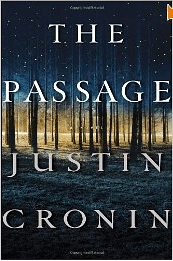
The PassageTitle: The Passage

Author: Justin Cronin

Genre: Sci-Fi/Horror

Read: Late June 2010

Summary: Excellent.

Nne of this year’s top new vampire entries. It’s an odd book, long, and broken into three parts, but good. The first third is set more or less in the present and deals with how a viral epidemic that turns people into nearly indestructible vampire-like creatures gets loose and destroys the world. The writing is good and this section is a bit of an oddity in that the plot itself is minimal, but padded out with almost gratuitous backstory on nearly every character. Bit players that we meet in the gas station for one page get five pages of life story flashback. All these people, lovingly details, die quickly. Oddly, it works and is a compelling read. However, it makes me scratch my head as all the standard writing advice I’ve been given by editors, agents, and the like would’ve been to cut all these backstories. In fact, they certainly would’ve told me that the entire first third of the book is backstory, and the proper place to start was far later. At a certain level they are correct, because there is only one character — and an odd one at that — who crosses from this long prelude into the main two thirds of the novel.

The middle third of the book takes place 100 years later and totally kicks ass. This was some of the best Sci-fi/horror I’ve read in years. It’s post apocalyptic, taking place in this one compound somewhere in the California desert. They are under continual siege by vampires, and their numbers are dwindling. Their entire life and society is organized around survival, but slow attrition of their numbers is the only thing in their future. The Road Warrior meets I-don’t-know-what feel of this section is awesome. Cronin does a fantastic job of world building here, and the specific animalistic vampires (a bit reminiscent of I am Legend) is great. In some way’s it feels more like a Zombie apocalypse because it has that feeling of instant-death-at-any-second.

In part three, these same characters are forced out of their little sanctuary into the big bad world. This part is still good, but does a little shark jumping and borrows very heavily from things like the Stand, etc. I didn’t mind, but the ending felt a little forced and just didn’t quiet sustain the promise of the amazing middle section.

Still, the overall novel was excellent. Flawed, but the middle part was so great, and the first and third sections enjoyable enough, to make it one of the better books I’ve read in a while.

Book Review: Personal Demons

Personal DemonsTitle: Personal Demons

Author: Lisa Desrochers

Genre: YA supernatural romance

Read: Oct 20 2010

Summary: Detested it.

The premise of this book is that a demon and an angel are both vying for the love (and soul) of the same high school girl. This I don’t mind. The execution however…  Let us start with voice and character. The book is told in staccato alternating first person from the girl and the demon’s POVs. The girl is written in currently-in-vogue snarky-boy-crazy voice which is frankly repulsive and (hopefully) not even accurate in all but the most brainless products of mass media consumption. All she can think about is that whichever guy is in front of her looks hot in his jeans. The demon was less annoying but even more ridiculous. He’s supposed to be a 4000 year-old denizen of Hell out to corrupt the souls of the innocent and he comes off like a self involved High Schooler. At no point does he actually BEHAVE in any way particularly evil. He shows no particular long term perspective, but instead just has the hots for the girl. There is no real thought about what it might mean for God and the Devil to actually  meaningfully over someone’s heart, or even what it means to be a good or evil person. The good vs. bad is couched in terms of which boy the girl sleeps with. The high level premise is fine, but the book as written just makes no sense except on the most superficial level, and most importantly the characters are cardboard cutouts serving only the voice and premise — so who cares about them. This makes Twilight seem a work of art, and is exactly the kind of pseudo-religious story that I wrote my novel in counterpoint to.

Book Review: The Adoration of Jenna Fox

The Adoration of Jenna FoxTitle: The Adoration of Jenna Fox

Author: Mary E. Pearson

Genre: YA light sci-fi

Read: Mid Oct 2010

Summary: Liked it a lot.

_

I’ve been disappointed by a lot of the contemporary Young Adult novels I’ve been reading and this was a pleasant surprise. Told in first person present tense this is the story of a girl who awakes from a mysterious accident with almost no memory. She doesn’t know what to make of what her “parents” tell her and the videos and images of a life she doesn’t remember. It’s very light Science Fiction, set in a near future with very little prose-time spent on explanation of tech stuff — which is fine. It’s just very well written and the point of view engaging. The characters feel real, and you invest some emotion in them. At a certain core level this is all it takes. For many young readers the concepts of deconstructed identity might be novel — for me as a sci-fi reader who likes that theme this book wasn’t really about the plot. But there’s nothing wrong with it. It’s just a good book and an easy read. I liked the voice and found it pleasantly free of forced attitude.

Book and Movie Review: Let Me In

Let Me InTitle: Let Me In / Let the Right One In

Author: John Ajvide Lindovist

Genre: Horror

Read: Mid Oct 2010

Summary: Liked it, but had issues with the second half.

_

This is the original novel (translated I believe from Swedish) that forms the basis of the recent movie Let Me In and last years Swedish film Let the Right One In. First I’m going to talk about the book, then I’ll also discuss both movies and a bit about the process of adaption.

The novel has a lot going for it. It’s a relatively new take on vampire feel — and I’ve certainly seen/read an exhaustive amount of vampire films/books. Lindovist loosely sticks to the basic lore tenants (some of which I regard as sacrosanct). No daylight sparkles, feeding on blood, requiring invitation, etc. But his vampire(s) live a more marginal less powerful existence than many. The emotional core of the story is about a human boy who is misunderstood and bullied in school, and how he is therefore ripe for the kind of symbiotic/parasitic relationship that the book’s central vampire needs to survive. This part I like, and the character of the boy is well done, as is the girl vampire and the relationship. For me it kind of depends on the pubescent pre-sexuality of the central couple. But there are some things the book does to work against itself.

It’s too long, and has an extensive subplot involving some neighbors in the apartment complex. I ended up skimming much of this and it hardly mattered. It should have been trimmed to the bone (which the movies did). In the later third the book also goes crazy with this hard to understand devolution of the vampire’s former thrall/Renfield type into some kind of weird brainless half-vampire. This also was cut from the movies for good reason. But most critically, in the later part of the book [ SPOILER ALERT ] the gender of the vampire is thrown into question back making her/him into a castrated boy, and tossing in a horrific undead on undead anal rape scene. I’m all for extreme, but this whole ending left me not only feeling grossed out, but requiring myself to kind of ignore it and try and pretend she was still  a girl to finish the book. I really didn’t see the point and this more than anything mared my overall opinion of the book. I try to like it despite the twist.

So this brings us to the film translations. The process of stripping down a longer work into the compact requirements of a feature film is interesting. You have to find the central story and rip everything else out. This is what the filmmakers did, and in my opinion, almost all for the better. By stripping down the subplots, removing the crazy monster, and most important the gender ambiguity (although there is a hint of it in the Swedish film, but not enough to bother) the story concentrates itself on the central relationship and becomes very effective. Both films are good. The Swedish one is a bit moodier and the vampire is a little more androgynous. In the American adaption, which at times feels like a shot by shot remake, the subplots have been stripped even further and the sexuality notched up just a hair (Chloe is very clearly feminine). The American version also adds a slight tragic-comic quality to the vampire’s old familiar which I liked. Both films are very good, and very similar (besides the language spoken). I really liked this combined take on the story. The only thing I would have borrowed more from the book was a sense of the strange pedophiliac relationship with the old familiar — which although horrible, jives well with the creepy mood of the work.

Food as Art: Calima

Restaurant: Calima

Location: Marbella Spain

Date: June 10, 2010

Cuisine: Molecular Spanish Gastronomy

Rating: Mind blowing.


Okay, I’m a ridiculous foodie. But I believe passionately in food as a Fine Art, which has been practiced by mankind since the dawn of time in parallel to other cultural and artistic traditions. Sometime maybe I’ll blog about Apicus as an example of the high development of ancient culinary traditions. But today is about Calima, a fantastic Molecular Gastro place in Spain that shows off cuisine at its most modern and technical — but also extremely tasty.

Not too shabby a location, right on the south coast of Spain. If it had been a clear evening we could’ve seen Africa straight ahead. Like many high end restaurants Calima only has fixed menus. Here was ours.

Note that all the dishes below are individual portions. Each person received their own. We begin with the series of Amuse-Bouche, small bites to amuse the mouth.

The first one came in this neat little container.

Inside was revealed “Olive oil and Raf tomato nitro popcorn.” More or less pure Spanish olive oil frozen in liquid nitrogen to create this thing that looks like popcorn but tastes like olive oil and tomato. It’s very cold too. This is a neat example of trends in Avant Garde cuisine where things look like something they aren’t and also have unexpected textures and/or temperatures. It was good — but everything here was great so I won’t keep saying it.

This is “Crystallized transparent shrimp fritter ‘Tortillita de Camarones’.” It had a cellophane consistency and reminded me of certain japanese snacks.

Because a truly fine restaurant never half asses anything. The homemade bread options weren’t anything to snicker at.

And there was a second shelf.

This amuse is “‘Mollete de Antequera’ cooked in aluminum foil and stuffed with braised Tuna.” The foil was edible.

This was one of my favorite items. A devine “Nougat of Foie and Yuzu.” I’m pretty sure there was peanut butter in there too, or at least it tasted like it. Both incredibly rich, sweet, and tangy at the same time.

“Cold almond soup from Malaga ‘Ajoblanco’ thickened with red pepper caramelized and lichis” is served inside an egg. Ajoblanco is a very traditional Spanish soup made from garlic and olive oil, and this is a riff on that note.

This is a cold cherry Gazpacho.  The menu says “Manzanilla,” which translates to “Little Apple.”

No fine meal is complete without the wine. We had three. A nice Spanish Cava (Champagne equivalent that I failed to get a picture of) this tasty white and a fine red, below.

The “Laurel” is worth mentioning as it’s the the “second wine” of one of Spain’s greatest wines, the Priorato “Clos Erasmus.” The “first wine” costs upwards of $700 a bottle, but the Laurel, if you could possibly find it, is often $45-50! This for a 95-96 point wine! Priorato is a fantastic Spanish wine region. We consumed the Cava, at least two whites, and three or more reds.

“Cold ‘Puchero’ broth scented with mint; hummus flowers and soft boiled quail egg.” Very Japanese flavor profile to this dish. Light and refreshing.

“False Raf tomato stuffed with ‘pipirrana,’ cold avocado soup with ‘Quisquilla’ shrimp from Motril.” This was spectacular. The tomato, which tasted like one, is in fact some kind of reconstructed creation of the chef’s art. It was filled with a type of tomato mouse.

To illustrate the flexibility of kitchens at this level, the above is the “vegetarian” version of the False Tomato that they whipped up for one of our vegetarian dinner mates (notice no shrimp).

“Caviar ‘Per-se’ from RioFrio; a Calima surprise.” The custard underneath the fine Iranian caviar is vanilla with a bit of oyster juice. The contrast with the salty roe was fantastic.

This wasn’t on the menu, but it came nonetheless. Some kind of mushroom in a custardy broth.

“Citrus Oyster.”

“Sardines in a Moroccan flavored something (the menu cut off the sentence).

‘Olla Gitana’ of green beans, pumpkin and chickpeas, slow-cooked Foie and red curry. This was really good too, with a very fresh vegetable flavor to the “soup.”

“Roasted Sea bass with beans and citrics.”

A rich cut of pork in a fruity sauce that I couldn’t find on the menu, but it came.

An anonymous fish dish that came instead of the pork for a non meat eater at our table.

“Braised Iberian Pork tail dumpling with scarlet shrimp.” This was one of my favorites. The “dumpling” tasted like pork shumai, and the prawn was spectacular. The butter sauce held it all together, because “never too much butter.”

This measly collection of mostly Spanish cheeses confronted us, in both a visual and olfactory wallop.

This was the Spanish greatest hits we ended up with for the table, plus a tray of accompaniments.

“Caramelized Apple Hearts, acid yogurt, honey and eucalyptus thyme ice-cream.” Sort of a fancy take on Apple Pie al-la-mode.

“A piece of Sierra Nevada; pineapple iceberg with passion fruit, fennel and ginger.” This was amazing.

“Chocolate with caramelized pecan nuts, cacao, coffee and 16 year-old Lagavulin whiskey.”

“Nitro ‘Coconut’ with honey rum.” Yum.

The bonbon cart, because four deserts is just getting started.

Each person got one of these.

And one of these, which includes nitro frozen berries and chocolate truffles.

At three in the morning (the meal was 5 and a half hours long) the staff debriefs in the kitchen.

This meal was so good we had to come back two weeks later and try it again (mostly different dishes). While not priced like “In and Out” this gigantic 25 course extravaganza was no more than you’d spend at a pricey LA sushi place (I’m not talking Urasawa either — I’ll have to post one of my meals there too). In Spain wine prices are very reasonable too. This new form of Spanish cuisine is hard to find in the states. In LA we only have Bazaar, which is very good but not nearly as elaborate. I hope you can appreciate the artistry and effort that goes into these dishes and they tasted as good as they looked.

If you are interested in this kind of cuisine, also check out my reviews of La Terraza or The Bazaar.