Why the iPad is a Document game changer

iPadI work with a lot of documents. By this I mean things one reads, usually mostly text and often PDF’s or Word docs. I always did, but especially now that I’ve been writing. I have drafts of my books, drafts of other peoples books, notes on them, peoples screenplays, programming manuals downloaded off the internet, etc. Books and other printed versions of documents have always been the nicest way to read or edit these things as you can sit somewhere comfortable and you can mark on them easily, but books take a long time to print. The two traditional solutions were:

1. Print it out, which takes a while and wastes paper.

2. Sit at your computer, which is uncomfortable.

The iPad changes the game because it makes it  so easy to read these things. There are lots of ways to get your docs on the device, including just emailing a PDF to yourself and clicking “Save to iBooks.” But you can also use Dropbox. This free app allows you to drag files into a tree of folders on your computer and have them immediately accessible on any iPhone, iPad, or computer with a Dropbox client. You can read there or save to a better app.

Goodreader is a decent and cheap PDF/doc reader ($0.99), although for PDFs the free iBooks is great. Goodreader even allows you to do markup on top of the files and email out annotated PDFs. But the interface for this is a little clunky. For serious editing I use iAnnotate which admittedly is “expensive” for an iPad app ($9.99), but has a really slick interface for marking up documents. I’ve sat on my couch and highlighted, crossed out, edited 500 pages that way. If someone emails you a doc you can do it anywhere without even going to your computer, and no destroying a big hunk of tree for the ream of paper and toner needed to print. Not to mention that 500 pages of looseleaf is hardly convenient.

Basically if someone sent me a draft screenplay or something before I’d put off reading it because sitting at the computer was no fun. Now it’s no different than a published book — I read those on the iPad too.

Book Review: Summer Sisters

Summer SistersTitle: Summer Sisters

Author: Judy Blume

Genre: Chick Lit

Read: Oct 21-22 2010

Summary: Loved It, but had issues with the second half.

Continuing on the Judy Blume theme. This is a the first adult novel I’ve read by Blume. It’s longer than her YA fare, but it still shows the same skill at painting fascinating characters. Summer Sisters is the tale of a girl, Vix, who joins her “wild friend,” Caitlen, for a whole summer on Martha’s vineyard (in 1977) and ends up with this surrogate family every year after. It follows them from 12 to about 30. The POV is present tense, but flips around between everyone in the story except for Caitlen (she’d probably be unwritable). About 2/3 the word count is from Vix’s point of view. The first half is frankly awesome. The people are so weird, yet so real. The late 70’s early 80’s Martha’s Vineyard setting is so true to life (been there). The sex is hot, and there’s plenty of it. The pre-sexual experimentation is really well told too. However, in the second half the story picks up the speed at which it moves through time and we blow past the college and post-college years. Caitlen runs off to Europe and essentially disappears from the picture, although not the mind of the protagonist. I’m not sure I loved where it all went and wrapped up. But it doesn’t really matter because the island scenes with the two girls are unforgettable and worth the price of admission. I’m still in envy of Blume’s character and dialog skills.

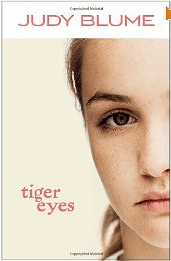
Book Review: Tiger Eyes

Tiger EyesTitle: Tiger Eyes

Author: Judy Blume

Genre: YA Drama

Read: Oct 19 2010

Summary: Loved It.

After reading Forever I went on a bit of a Judy Blume kick, trying to find all the ones I missed that are aimed at teenagers or up (I’m not sure I’m up for an MG novel). I’m determined to figure out how to write normal life scenes this engaging. It almost seems like she could have the characters do anything and make it a fascinating read. They shower, they change their sneakers, trim toenails — all stuff that is generally forbidden in writing guides — and yet it works. Tiger Eyes could have been like an after school special. In fact, it probably was made into one. It’s about a 15 year-old girl whose father is killed in a hold up, and she has to learn how to deal. It’s not preachy. The people are just real, the friendships real, the family dynamics real. The early 80’s Los Alamos setting is even interesting. There’s no sex, no violence (other than the retroactively occurring murder), but there is a lot of excellent dialog.

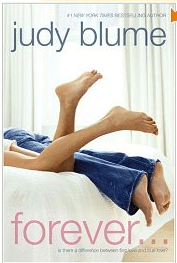
Book Review: Forever

ForeverTitle: Forever

Author: Judy Blume

Genre: YA drama

Read: Mid October 2010

Summary: Loved it.


Everyone should read. Okay. I admit I read a ton of Judy Blume back in Elementary School, but it’s been a long time. I found this because I was trying to find out how edgy YA books really get, particularly with regard to sex. Incredibly, a quick googling seems to indicate that 1975’s Forever is still about as much sex as YA gets. Someone please correct me if I’m wrong (and link me to some books) because I really want to answer the question as to how extreme (when well done) is appropriate for YA books today. In any case, somehow I had missed Forever in the 70’s — probably because I stopped reading Judy Blume at 10 or 11. I shouldn’t have. It’s great, and holds up perfectly well as an adult novel. After reading so many recently published and truly mediocre YA books (I’ll get around to reviewing some of them) this was like a breath of fresh air. First of all, I’m in awe at Blume’s skill at holding your attention with nothing but normal life. Mostly through dialog and a bit of interior monologue she paints incredibly real people effortlessly. I’ve now read a couple other books recently, and all her characters are always distinctive and real. In Forever she writes in a tight first person present. This drops you nicely inside the head of the narrator, but she doesn’t overdo the interior monologue (which I find tedious). There is none of the snarky-boy-crazy quality of so many current voices, just a very real teenager. Also, having grown up in the 70’s, I loved the subtle nostalgic flavor of suburban 70’s life. The book is never preachy, and despite the fact that absolutely nothing out of the ordinary happens, holds your interest through every word. The sex is frank and quite funny, using a clever device to soften it. You’ll know when you meet Ralph. Basically it just sticks your head right into this little slice of life, particular person, time and place, and holds it there for about two hours.

Book Review: Still Missing

Still MissingTitle: Still Missing

Author: Chevy Stevens

Genre: Thriller

Read: Late Sept 2010

Summary: Ambivalent

_

I picked this up because it was edited by the same editor that I use (the amazing Renni Browne), represented by a top WME Agent, and debuted on the NYT best seller list. It’s not normally my cup of tea, even though I am very guilty of reading plenty of chick novels. Essentially, it’s about a woman who’s kidnapped, held for a year, and repeatedly raped, by a creep she can only call “the Freak.” In the present she’s escaped and is attempting to deal with this rather horrific course of events. The flashbacks to her captivity are intense and gripping in the same way that the police reports for serial killer cases are. They certainly feel realistic and whipped by, but they also left me with a kind of “dirty” feeling for enjoying them — not the what was being done mind you, but the reading of it. The present tense “action” however bored the hell out of me, for there was no action, merely interior monologue and brief conversations with her therapist. Obviously getting over such a thing would be HARD, but it doesn’t really make for a fun read, or represent a mental process I really need to work through a fictional telling of. Then in the last third, after the backstory has caught up to the present, the book takes a whacky left turn and the whole thing turns out to be a cockamamy conspiracy and non-coincidence. This, while easy enough to read, just bugged me. The writing was clean and out of the way. You didn’t notice it — which is about right for this sort of thing. So overall a was just left with the sordid tale of her capture, captivity, and escape, which was pretty good, but felt exploitive. The rest I could leave back at the cabin in the woods.

Book Review: Rabbit Run

Rabbit Run

Title: Rabbit Run

Author: John Updike

Genre: Fiction

Read: Mid Sept 2010

Sum: Ambivalent

_

I’ve read a good amount of Updike, but I’d never read this, so I figured I should. At first I liked it a lot, mostly for the prose. The prose is great. The third person present gives it that breezy literary quality — I’m not sure of this, but I have to assume Updike was a fairly early proponent of this tense/pov in fiction. As usual his sketch-like descriptions and wry humor engaged. But, about a third of the way through I found myself bogged down in the slow pace of the plot and the overly moralistic — or perhaps even post-modern amoralistic  — pandering. You can’t really like Rabbit. He’s kind of a shit, and the pastor fellow was really annoying. The book does have some graphic sexual moments, which Updike is always good for, but they aren’t really sexy. I pretty much had to force my way through the second half. Also, the daughter’s fate is also so avoidably unpleasant that it left me feeling unsettled. Maybe in the 50’s this whole “should vs. want” theme seemed more relevant but all it did for me was remind me thematically of Revolutionary Road. Overall (which I also had a similar reaction to). I can’t say I really enjoyed it, but I do have prose envy.

Book Review: A World Undone

A World Undone

Cover via Amazon

Title: A World Undone

Author: G.J. Meyer

Genre: History

Read: August 2010

Summary: Highly Recommended

_

Doing research for the sequel to my novel I started reading a number of histories of World War I. This is simply put: an amazing single volume history of the war, its causes, and course of events (but not the post-treaty fallout). I’ve read hundreds (or more) of history books, and as single volume war histories go — this is excellent. I’d recommend it to anyone who wants to understand the world we live in, because the modern political arena was forged in World War I (far more than WWII). The often autocratic (or at least Imperialist) regiems of Europe were not prepared for what it really meant to bring the full might of post industrial powers into conflict. The last real shakeup of Europe had been a hundred years earlier with the Napoleonic wars, but the 19th century had remade the economies of the world. The clash, cataclysmic in terms of everything, ended the old world order. All of the big old autocratic states collapsed (Prussia, Russia, the Hapsburgs, the Ottomans) and even the winners were left unable to hold onto their empires. Meyer does a great job introducing the players gradually so as to not overburden the story of the war’s origins with background. It reads like a taut horror novel — and that’s pretty much what it is.

Book Review: The Gathering Storm

The Gathering Storm

Cover via Amazon

Title: The Gathering Storm

Author: Robert Jordan and Brandon Sanderson

Genre: High Fantasy

Read: Late Sept 2010

_

Summary: Recommended only to the very determined WOT fan. If you haven’t read any of them, read Eye of the World, since it is very good.

After reading the rather enjoyable The Way of Kings I figured I’d finally return to the latest in the world’s longest running Fantasy series, The Wheel of Time, also known to us long time fans as The Wheel of Tedium. Sure the first five or so volumes were amazing, but now at twelve, plus a prequel, and with each clocking in at around 400,000 words it’s getting a bit… long. First of all, since it had been five years since I read volume eleven (which was decent, and cost me a good chunk of life by motivating me to install World of Warcraft) I had to do a little studying. Even with a partially photographic memory I found that while reading the summaries of books 9-10 online to “bone up” that I couldn’t remember even remember reading 10. Well, maybe a little. Anyway, the cast of characters has grown so vast that no one could be expected to follow it without extensive study if any appreciable time has passed between reading (and eleven was released five years ago). But I began. I forced myself through about 200 pages (no movement in the plot) and found I could only care about the tower thread. This major plot thread, the most important one of this volume, involves Egwene in the White Tower.  I’ve always liked the White Tower, as long as I turn off my sexism detector because the way in which Jordan has always written women — bitchy and he goes to great length to show and tell this point — grows very tedious. For pages 200-500 I read the Egwene chapters (enjoying them immensely, and skimmed most of the other chapters. Eventually, even this became too much and I had to resort to the WOT wiki to read chapter summaries for all the chapters except for Egwene’s and Rand’s, and even Rand’s were pretty painful. To tell the truth, ever since Rand became the Dragon Reborn and big head honcho he hasn’t been that interesting. Being a ridiculously-all-powerful-dude-in-command-of-vast-resources-and-armies leads to scenes that smack of the new Star Wars council or those with Orpheus in the Matrix 2 or 3. If you loved those… read on. Anyway, the Egwene section is a novel in itself, surely over 100,000 words, and is quite good, wrapping up with a big battle at the end. Because I’m a completist, I’ll force myself to skim through volumes thirteen and fourteen to finish the epic, but I doubt I’ll enjoy it. With all my skimming I was able to “read” the whole thing in one day. It was certainly no worse than any of the recent volumes and I was unable to tell where Jordan left off and Sanderson began, it felt authentically Wheel of Tedious.

Book Review: The Way of Kings

Cover of

Cover via Amazon

Title: The Way of Kings

Author: Brandon Sanderson

Genre: High Fantasy

Read: Late Sept 2010

Summary: Recommended for High Fantasy fans

_

After finishing the 6th major draft of my own book I decided to tackle this 400,000 word hunk of “light” reading. Sanderson is the relatively young fantasy author who is finishing the late Robert Jordan‘s Wheel of Time series, and this is the first volume of a new massive epic fantasy of his own. Surprisingly, despite its tome-like weight, it was a fast read. Maybe three days, and gripping enough all the way through. Sure, I would have chopped about 30,000 words worth of interlude chapters involving completely irrelevant characters, and the beginning has the requisite boring high fantasy prelude, but the bulk of the book hauls right along. Probably about 2/3 of it is centered on the life of a slave in a vast military camp. This has a detailed personal feel that is highly engaging. Although there is a reasonably satisfying sub-conclusion, this is clearly a setup for a very long story and highly introductory. There is an interesting magic system and overall world mythos. The magic does borrow really obviously from his own Mistborn series — where I had found it extremely novel — but it’s still good. Overall, the book works, at least for the avid fantasy reader.

About Book Reviews

Lately I’ve been trying to read a ton of novels in order to improve my writing. I’ve always read a lot, but at the moment, I’m targeting one a day. I’m hitting a bewildering assortment of genres and styles, but of course, being a supreme fantasist, mostly those with strong fantastic elements of one sort or another. So to that effect, I’m going to experiment with blogging short reviews of each. I may also review some of my favorites, and I’ll tag those with “classic,” meaning that I read them significantly previous to the post.