Quick Eats: Piccolo

Restaurant: Piccolo [1, 2]

Location: 5 Dudley Ave, Venice, Ca. 310-314-3222

Date: Nov 5, 2010

Cuisine: Northern Italian

Rating: Much above average neighborhood Italian.


The location of this upscale neighborhood Italian has always been weird. You turn on Rose, and find it about 30 feet from the seedy boardwalk on Dudley, conveniently located near the drug dealers and others who hang out on the Venice boardwalk at night. Don’t worry it’s well lit, and they recently installed their own valet.

A couple years ago my wife and I had gone when the place had been under the shepardship of Antonio Mure, a talented local chef whose cuisine instantly said to me: “Verona” (certainly not a bad thing). Most Americans don’t realize how much Italian cuisine varies by region. In those days there were no reservations, only an hour long wait standing with the other yuppies watching the pot clouds drift by. Now you can reserve, even on Open Table. The space seems larger too. Mure moved on to various other restaurants, including the much lamented by me, Il Carpaccio. In any case, they new chef is named Bobo, and he’s also from the Veneto, a good thing, and totally obvious from the cooking.

I apologize for the picture quality as I forgot both my 5D Mark II and my little S90 backup camera and had to resort to the iphone 4, which really has come a long way for a cel phone camera.

You can see by the dishes that he is an innovative cook, and this is neither an old school italian menu, nor even a typical example of modern LA Italian. “Caprese Rivisitata. heirloom tomatoesburrata, revisited microbasil, sicilian olive oil.” Here Burrata (one can never go wrong with Burrata) tops layers of tomatos, some even pureed.

The wine list was pretty reasonable, and had a wealth of northern Italians. I didn’t bring wine as it was just a quick dinner, and so settled on this reasonable 2007 Marcarini Barbaresco. It was only $40 for a half bottle and was very pleasant for such a young wine. If I’m going so young, I often prefer Barbaresco over Barolo as it’s more approachable early on.

The group that spawned Piccolo originally, and at various points included La Botte, Wilsons in culver city, Il Carpaccio, and Ado — I’m not fully educated on how they’re all connected — has always had good bread. Excllent for sopping up those buttery northern Italian sauces.

I ordered this odd pairing slightly skeptically. Warm seared Hamachi over buffalo mozzarella with clover, olive oil, and a kind of basil Pistou. It was good. Very good. Usually fish and cheese pairings don’t work. It was the pesto-like sauce (just off camera, in little blobs) that really drew all the elements of the dish together.

Pumpkin ravioli. This is the Chef‘s interpretation of my wife’s most favorite pasta, a specialty of Mantua (less than an hour from Verona). In the most traditional dish the ravioli are stuffed with a mixture of pumpkin or squash and Amaretto cookies, then lightly covered in butter sage sauce. These had a slightly different shape, and no Amaretto. They were perhaps a tiny bit too al dente, and the sauce coverage not quite a 100%, but still good.

This is a risotto with sausage and a fontina-butter sauce around the edge. I’m very partial to certain kinds of risotto when done right. This one was excellent. In a good risotto, the buttery flavor is so intense that it encourages very small bites. The rice had just the right texture. The sausage was good, but I’ve had slightly better (there is this joint in Philly’s little Italy which has been grinding it’s own since the 19th century — their slogan is something like “nothing but the pig.”)

LA has a lot of very good Italian places, a lot of mediocre ones, and a lot of terrible ones. This one is very much above average and worthy of being in the rotation. It’s different too, being a little more experimental and modern, typical of Italy’s bustling north. Many other places have stronger Sicilian or Tuscan influences. I happen to love Sicilian food too, it’s just different, which is a good thing. It’s nice to have some Veneto in the mix. For some reason, as beautiful as Tuscany is, it’s never been my favorite region on the culinary front, perhaps because of it’s emphasis on heavy meats. Not that it’s bad, food is never bad in Italy, but many of Italy’s other regions are more to my taste food-wise. I still long to find real Sicilian deserts in the states. In Philly or NY you can get a real Cannoli, but I’ve never, ever, found a real Cassata alla Siciliana in the states. Even Celestino Drago who is a world class Sicilian Chef, and a friend of mine, makes a modernized version (which can be seen HERE). It’s good, but I prefer the totally old school one with the Ricotta that separates and goes bad in 8 hours.

A second review of Piccolo can be found HERE.

TV Review: Buffy the Vampire Slayer – part 3

CONTINUED FROM PART 2 ABOVE. And the whole series [12, 3, 4, 5, 6]

WARNING: CONTAINS SPOILERS:


Season 3:

Everyone must have thought: With the little half-length first season, and such a strong second season, that Buffy season 3 was heading toward a huge sophomore slump. But no, this season is even better than the second. Several things contribute to this:

1. The writers learn to deepen the mythology. They bring back old characters in surprising ways. They take gimmicks that made previous episodes great, and reintroduce them with new twists that get even better. Through it the characters and dialog stay strong, the veneer of comedy and fantasy is used to toe into, and then later delve deep into places where TV was usually afraid to venture.

2. The “experimental” or more radically different episode is introduced.  These special episodes shake up the viewers preconceptions about the show. Many of these are written and directed by Whedon himself, and make up some of the best episodes of the series, culminating in Season 6’s “Once more with feeling.” Season 3 comes out of the gate this way with “Anne” (Buffy alone in LA), and continues with “The Zeppo” (told entirely from Xander‘s perspective), and “The Wish” and “Doppelgangland” (where an alternate version of the town and characters are explored). These introduce vampire Willow, who heralds some of the long term changes in store. Willow: “It’s horrible! That’s me as a vampire? I’m so evil and…skanky. And I think I’m kinda gay.”

3. The main series arcs become more integrated with each of the shows. We get the best darkly comic villain of the whole series, the sinister “Mayor.” The arcing becomes so sophisticated that even the most standalone episodes have important changes affecting the relationships of the characters. We meet bad-girl Faith, who provides delicious counterpoint to Buffy’s honor-bound sense of duty — not to mention introducing sexy newcomer Eliza Dushku. Her presence, twisting as it does across the entire season and winding together with the overall villain arc helps stich the entire season together. The result is very few episodes that feel standalone, as even those with a monster of the week are moving forward the relationships between the characters.

4. Sub arcing involving character relationships, notably the love lives of Xander, Willow, Cordelia, Oz etc. proceeds fast and furiously.


Season 4:

This season could have sunk the show, as High School shows often fail after graduation. It’s stil a transitional season,  but it accurately reflects many details of college life (adapted to the Buffyverse). The show’s formula is mildly upset by the change. The relationship of the Scooby Gang (the main gang of friends) and mentor Giles teeters — enough that by season five, college will be downplayed and a new equilibrium established around the magic shoppe as headquarters.

Additionally, the main villain of the season is the weakest of the series, involving a government/army conspiracy and a frankenstein-come-terminator monster. Still, the great writing holds everything together through the change.

Many classic elements of a High Schooler’s transition to college are parodied successfully: college jitters, bad roommates, one night stands, over-drinking, fraternities, four-year lesbians, etc. The show keeps us engaged by continuing the ever evolving relationships. Willow and Oz explode, and she goes gay. Xander finds love with an ex-demon. Buffy has her only healthy relationship of the entire show. Spike, the popular villain from season two makes a return and begins a long an amazing transformation that is pretty much a Whedon halmark, where villains can become heros and heros villains.

The tradition of special episodes also continues with the groundbreaking “Hush,” the extraordinarily creative “Superstar,” and the oddball “Restless.” In “Superstar” for example a relatively minor (at this point) reoccurring character from the past literarily takes over the show. This extends to a meta level, involving the creation of a new custom title sequence just for the episode. There is a radical creativity here, a willingness to experiment and play with even the container and format of TV itself.

CONTINUE WITH PART 4 HERE.

Quick Eats: Andy’s Spanish Eggs

Although I’m a ludicrously obsessive Foodie, I don’t cook that many things. However, those that I do make, I try to do to the Nth degree (anyone who knows me knows this to be true of me in general). One of my breakfast specialities is Spanish Poached Eggs. The original recipe was taught to me personally by Mark Peel of Campanille at a cooking class. I’ve made a few small improvements (adding Burrata and arugala). The result is below:

First, you need to make some homemade Romesco sauce. You can do this a couple days in advance if you like (I do).

Adjust the oven racks to the middle and upper positions, and preheat theoven to 350° F.

Drizzle the tomato halves with a teaspoon of the olive oil and a pinch of salt. Place the tomatoes. cut side down, on a baking sheet, and roast on the upperrack for 45 minutes to an hour, until they are soft and the skin has wrinkled and blackened slightly. Allow to cool, remove, and discard the skin.

In a very small ovenproof skillet, saucepan, or dish, combine approximately 1/4 cup of the olive oil with the garlic cloves, to cover the cloves halfway. Roast in the oven on the middle rack about 20 minutes, until the garlic is soft and malleable. Allow to cool, and squeeze the pulp from the cloves. Reserve the oil and set aside.

Turn the oven down to 325°.

Spread the almonds and hazelnuts on a baking sheet (in separate piles). Toast on the middle rack in the oven for 12 – 15 minutes, until lightly browned. Place the hazelnuts in a kitchen towel, and rub them together to remove the skins.

Meanwhile, on a hot grill or directly on the stovetop over high heat, char the pepper over an open flame, turning frequently until the skin is blackened on all sides and the flesh becomes tender. Place the pepper in a plastic bag or in abowl covered tightly with plastic wrap to steam until cool enough to handle.Using a towel, wipe off the charred skin. Remove and discard the seeds and ribs. Coarsely chop the pepper.

In a small skillet, over medium heat, warm the reserved olive oil from the garlic. When the oil is hot, fry the bread on both sides until lightly browned. Remove the bread to a paper towel to drain.

In a mortar and pestle, or in a food processor fitted with a metal blade, grind the nuts and bread until they form a coarse paste. Add the tomato, roasted pepper. vinegar, garlic pulp, cayenne pepper and salt and pulverize or process until smooth. Slowly pour in the remaining cup of olive oil and stir or process until combined. Season with salt to taste. lt will keep in the refrigerator for up to 5 days.

For the actual dish you will need:

  • Lots of eggs, one per dish
  • A loaf or two of good rustic bread. I use La Brea Bakery rustic italian or similar. Cut into big slices.
  • A huge bottle of extra virgin olive oil
  • Black pepper
  • A bag of arugala
  • A tub of fresh Burrata, no more than two days out of the creamery. In LA you can buy it at Bay Cities Deli. If you live somewhere (most places) where you can’t get this tub of heaven, then you will have to use some good mozzarella.
  • A couple Meyer lemons (regular will suffice if you are feeling lazy)

Next up is the bread. This can be prepared right before, or even a couple hours before eating. Get a real cast iron pan. No mamby pamby modern pans allowed. Fill it halfway up with olive oil and bring to a near boil. Be careful, if you get it too hot the oil will ignite and you will have to stick a lid on it (have one handy for snuffing fires) and wait for it to cool. Hot olive oil spontaneously combusts in the presence of oxygen.

After the oil is hot, quickly fry the bread slices. This makes a mess, but they fry in 5-10 seconds per side.

You end up with this, a plate of fried bread. This is yummy by itself or smeared with the Romesco.

Wash your arugala and put it in a bowl, toss with black pepper and Meyer Lemon juice.

Now that we’ve done the hard stuff. The following you do while your victims (guests) sit around the kitchen. This is sort of frenzied assembly because it needs to be eaten VERY soon after the egg gets poached (in the hot olive oil). So prep your bread.

Take a piece, smear generously with Romesco and add some tossed arugala. Have the Burrata (or Mozzerella) handy nearby.

Then add a nice blob in preparation for the egg. Burrata, when fresh it’s creaminess is visceral.

You can use your same hot olive oil (keep the bottle on hand to refill) to poach the egg. Have a slotted spoon and tongs ready. Crack an egg carefully into the oil. I use a small bowl, into which I crack the egg first, so that I can slip it quickly into the oil without splashing a lot of boiling oil onto my hands (a little is just a small price to pay for this dish).

It poaches (I prefer not to think of it as fried) in about 10 seconds. Spoon some hot oil over the top. You want it crispy and fluffy, but the yolk totally runny. Then get it out of there fast with the slotted spoon, drain, and onto your prepped bread.

Here it is again. Eat instantly. The yolk will run out and soak the crunchy bread. If you’re a more moderate person you could leave out the Burrata, or even not fry the bread, but the full monty is much better.

Book Review: The Last Colony

Title: The Last Colony

Author: John Scalzi

Genre: Sci-Fi/Space Opera

Read: Nov 1-4, 2010

Summary: Fun read, but not as good as the previous two.

_

This is the sequel to Old Man’s War and The Ghost Brigades. I really enjoyed those books and pounded through this one as well. It’s just as easy to read and picks up with the same two main protagonists. John Perry narrates in first person as he did in the first novel.

Unfortunately, it just isn’t as good. Not that it’s bad. It’s a fun read. John and Jane, no longer nano-engineered soliders, get recruited to lead a new colony, and are swept into a high stakes game of Alien politics. It just seems sillier. There’s less specific action, more political explanation. That might be half my problem with this novel. A lot of the big stuff takes place off screen and/or is just summarized in narrative instead of being told in scene. The plot also tries to tackle way too much, leading to loose ends like a newly discovered sentient alien species — introduced, and totally never resolved or explained in any way. The political action happens too fast, and on such a large scale, with fairly crazy solutions. I just didn’t buy it, so I was left feeling a bit empty.

The fourth book in the series is apparently the same story told from the point of view of Zoe, John and Jane’s teenage daughter. I’m not sure I want to read this story again — although I did like Zoe as a character.

Food as Art: Capo

Restaurant: Capo [1, 2, 3]

Location: 1810 Ocean Ave, Santa Monica, Ca. 310-394-5550

Date: April 30, 2010

Cuisine: Italian with Cal influences

Rating: The food here is really very very good.

_

Capo has always given me slightly mixed feelings. Not about the food, that part is great, but they have a bit of an attitude at times, and it’s too expensive. I just don’t expect Italian to be super expensive, which Capo is, unless it’s Northern Italian Haute Cuisine, which we have basically no real examples of in Southern California. And they’ve given me trouble several times about my wine (which I always bring), as they’ve an unusual and restrictive corkage policy that is enforced with great zeal. But the food is fantastic, and one of their pastas is the best ragu I’ve ever had — and I’ve spent a lot of time in Italy.

It’s a lovely restaurant too, with a fun intimate atmosphere, and the very high prices give it a full-on star factor. A couple years ago I sat next to SKG (Spielberg, Katzenberg, and Geffen). Spielberg seems to love high end Italian, because I’ve seen him four or five times at said establishments — not that I blame him.

Entering, they now have a pig leg on the counter. I have to admire that. It’s “Jamon Iberico de Bellota,” which is extremely fine ham from Spain. The downside is $60 for one little plate! One time when someone else was picking up the tab I tried it here — with a side of Burrata. It was good, but no ham — as much as I like it — is worth $60 for a few slices. Particularly after having spent the month of June in Spain where every restaurant has a wall of pig legs and you can get a plate of the stuff for $6-10.

This isn’t from Capo, in fact it’s a store in Madrid known as “Museo del Jamon.” This is a chain, and such displays are commonplace in Spain, a land in which pigs live in mortal terror.

I brought this wine, Parker gives it 94 points, saying, “Luciano Sandrone’s 1998 Barolo Cannubi Boschis is another of the standouts in this tasting. Layers of perfumed dark fruit flow effortlessly from the glass with wonderful depth and purity. The wine offers a long, intensely harmonious personality and a refined, aristocratic finish. The 1998 is an excellent choice for readers who may also be cellaring bottles of the 1996 or the 1999, two wines that offer considerable upside potential. Anticipated maturity: 2009-2019.”

Now this brings me to my little corkage rant. Capo’s corkage policy is that you can bring one and no more than one bottle, and that it must not be on their list. It’s enforced — I’ve been rejected for having a wine on the list twice — so it requires me to download the list before going and research which wine I can bring. They have a huge list. It’s not bad, but it is VERY OVERPRICED. I once went through all 112 pages on paper at home with the Parker website and couldn’t really find any good price/value ratios. I know making a profit at a restaurant isn’t easy, but a have several beefs with this kind of list. I know a lot about wine, and have a very experienced palette. Lists like this are stuffed with wines that are good on some aspect, like winemaker, but fail in another, usually vintage. When there’s a crappy vintage in Bordeaux where do you think all the “cheap” Pauillacs go? Restaurant wine lists, priced as if they were from 1982. But the real problem is that a wine I would pay $150 for — and I buy carefully at auction or from well priced dealers I know well — is $400 or more on these lists. It pains me to pay $150, and there is just no way I’m going to pay $250 dollars extra for the privilege of a waiter mangling my cork with a stupid leverage corkscrew when I have thousands of bottles at home. When I have to order off the list it means I have to drink vastly inferior wine, and still pay $150-200 for it — and my friends are so appalled at the price anyway that I automatically pick up the tab. So until Capo (and the couple others that have even worse policies. Giorgio Baldi you know who you are!) modify their lists to only markup by about $40 I can’t be fully satisfied. Frankly, I would go to both all the time if they had open corkage policies. Enough said.

Capo always puts out this little humus-like spread. I suspect it’s fava beans, and it was mostly eaten by the time I got my camera on it. It’s addictive though. We settle down to examine the MENU, which is big, and always a difficult decision because there is so much great stuff on it. They have an odd menu format, in which each item is identified by only it’s principle ingredient, forcing you to guess or ask how it’s actually prepared. Plus they have “fill in the blanks” on the menu which are filled in by a separate sheet of daily specials. No big deal, but it’s kind of bizare. Doesn’t matter though, as the food is great.

Lest you think I’ve been all negative, let’s get to the real meat of the matter, the only thing that really makes a restaurant — the food. “Maryland crab torta.” This really is Crab Norfolk, and it’s probably the best one I’ve ever had, and I spent summers as a boy in Oxford Maryland, land of the blue crab. This is a big juicy pile of delicious blue crab, drenched in butter, and their special touch is a little Meyer lemon in the mix. Bellissimo!

My wife got to this faster than the camera did. But you can see the egg in this fresh pasta. I LOVE fresh pasta. When I went to Italy first in the 80’s, when Italian in the States pretty much meant lasagne, chicken parm, and red and white table clothes, the pasta was a revelation. It never gets old. Some kind of cheese tortelloni in butter sauce. I snagged one. Yum!

This wasn’t my dish, and I can’t remember what it was, I’m sure it was good.

“White corn ravioli.” You can’t beat fresh pasta in a butter sauce.

This is “buccatini with lamb ragu,” and it’s one of the best pastas I’ve ever had.  I’ve come back like three times for it. I love a good ragu, and the buccatini (spagetti with a tiny hole in the middle) is perfect. The dish is rich and meaty, divine.

We had to switch up to the overpriced wine list because of the above mentioned corkage policy. Another problem with most wine lists is that the wines are too new. Capo does have some older stuff though, and often there are some tolerable deals (relatively speaking). This is an example, a 90 point Barbaresco, and the list had it for $120. Well, I’d generally get a 94-96 point Italian for that price. I try not to buy things under 92. This is a nice wine, and drinkable, but it isn’t a great wine. I can’t afford great wines off the list, and that bums me out. My cellar is full of great wines. Parker says, “1998 Vignaioli Elvio Pertinace Barbaresco Nervo—Dark ruby in color, this superb Barbaresco features an intense nose of spices, menthol and minerals, and flavors of crushed raspberries, plums, and strawberry jam. It is a gorgeous, multi-layered wine, with plenty of structure and length on the palate. The three wines I tasted from the Nervo cru are irresistible, alluring wines with great personality. They are superb values as well. 90 points/drink now-2010.”

This was a chocolat creme brulee, the deserts here are just as good as the food.

And this. This was to die for. “Meyer lemon semifreddo,” with a blueberry or blackberry sauce. Everything about this was spectacular, one of my all time favorite deserts. The cold-soft texture, the bright lemon flavor, and the tart sweetness of the berries. OMFG!

A nice plate of little petit fours, not so usual at American Italians, more french. In Italy sometimes you’ll get treated to little almond cookies and shots of grappa or sambuca.

So to conclude, Capo is hands down delicious. I didn’t show it, but they also have this huge wood grill fireplace and sizzle up killer Tuscan-style porterhouses and other grilled meats. The food is VERY VERY GOOD, and the service is top notch. The intimate little atmosphere is great also. My only beefs are with the high prices, and the annoying corkage policy.

For another review I wrote of Capo, CLICK HERE.

Movie Review: Centurion

Title: Centurion

Director/Stars: Michael Fassbender (Actor), Dominic West (Actor), Neil Marshall (Director)

Genre: Period Action

Read: Nov 3, 2010

Summary: Surprisingly kick-ass.

I’d completely missed this movie in the theaters, but that’s no wonder because it only played on 19 screens across the country. I hadn’t even heard of it, but I noticed a review while browsing my favorite movie reviewer’s site. Reviews were mixed, but it’s set in 117AD, and as a Roman History buff I had no choice but to order.

Wow. It kinda kicked ass.

This isn’t a film for everyone, certainly not for most women. Like the original Predator, it’s a guy’s film. Set in Northern Britain, this is the story of a bunch of Roman soliders on the run from a group of Pictish warriors (old old school Scotts) who want nothing better than to hack off their heads and carry them back to their village. Now, you actually can’t totally blame the picts, they have their reasons. For the most part, this movie is actually fairly authentic. I mean this in a loose sort of way. It’s not based on any real historical events. The action is pretty crazy, but still, compared to some (cough cough, King Arthur), it makes perfect sense.

The movie is basically one long chase scene, and it just works. The landscapes are gorgeous, and the fight scenes have an intensity that’s often missing in today’s over edited films. Things are a bit grisly, but the camera cuts away quickly. You could freeze frame to see some nice brain splatters and battlefield amputations if you were so inclined. There’s a bit of a problem with the fact that many of the actors look very similar in their military uniforms with helmets or short cropped hair — but that’s why the army has uniforms etc. The actors do a good job given the largely physical demands of the roles. The dialog didn’t make me cringe except for a couple lines right in the intro. The whole thing has a nicely stylized feel without being all 300/Spartacus (the second of these, however, is a serious guilty pleasure). It’s much more realistic than either.

So if you like mano-a-mano sword and survival fighting, give it a watch.

If you don’t care about historic nitpicks, you can stop reading, but because I’m a huge Roman buff I’ll mention the anachronisms that bugged me, although none of them really detracted from the film. There are two female Pictish warriors. They kick ass, and I didn’t mind, but I’d wager my life on the fact that 1900 years ago Scottish society — like Roman — was, shall we say, a tad too sexist to allow women to formally fight. I’m all for the recent trend of sexy girl action stars, my own novel has a slightly anachronistic tough female protagonist, but we should realize it just wasn’t the case historically. The Picts also ambush and slaughter  a roman legion using the old “rolling balls of fire” trick, slaughtering all but about 10 men. I’m not sure that balls of fire had been invented, or that they ever were terribly effective in the field. In this period, leadership, numbers, discipline, armament, and positioning usually determined the outcome (almost always in the Roman favor). There are only a few cases of bald-faced defeats of the Imperial army, and none that bad in Britain, but I guess it isn’t that different than their defeat at Teutoberg Forest about a 100 years before the date of this film. Certain bits about the costumes were a little dubious, particularly the boots. What we think of as modern boots really weren’t in service in the Roman army at this period, even in cold areas. The armor looked accurate though, they were lucky because movies always love to use the segmented look of the second Century, even if depicting a Republican army. The Pictish outfits looked a bit medieval to me, rather than Iron Age, and the women had shoes (sorry girls, such luxuries were mostly for soldiers and hunters in that kind of borderline neolithic society). Oh, and a few too many Picts seemed to speak Latin — I have to wonder how common that was. But all and all it felt fairly second century.

Food as Art: Bistro LQ

Restaurant: Bistro LQ [1, 2]

Location: 8009 Beverly Blvd. Los Angeles, CA 90048. (323) 951-1088

Date: October 12, 2010

Cuisine: Modern French

Rating: Food was very good. Service lagged a bit behind.


This restaurant is a year and a half old, and the chef, Laurent Queniox, is French, having worked at Maxim’s in Paris, and then at the Hôtel Négresco in Nice (My wife and I ate there on our Honeymoon, but it was probably long after his time). He bounced around through various LA joints, including his own Bistro K in Pasadena, before opening this one. The food itself is very much like what modern one and two star Michelin places in France are doing, with a 25% dash of California thrown in.

We went with our usual Foodie friends, and hence only considered the 7 course ($70) versus the 10 course ($90) tasting menus. We settled on the 7 course after the waiter told us the 10 course was A LOT of food. They have a 7 course vegetarian menu too which very much excited the vegetarian member of our party.

The first Amuse, “Sea urchin tapioca pudding with yuzo kocho,” tasted like it sounded. The food was exciting out of the gate, but we did have minor service issues. For example, even though we’d gone over the whole “vegetarian” bit at length with the waiter, out came an Sea urchin Amuse for said party. Bus service brought them, and a request for a vegetarian varient took… awhile.

More goodies from my cellar. If you’ve been reading my posts you will notice I don’t screw around in the Burgundy department. Parker gives this Jadot 1997 Grand Cru Chambertin Clos de Beze 94-96 points, saying “harvested at an unheard of (for Burgundy) 14.2 natural potential alcohol. This black/purple-colored benchmark-setter displays saliva-inducing cookie dough and cherry syrup aromas. Immensely ripe and concentrated, yet pure, fresh, and noble, it conquers the taster with unending layers of jammy compote-like fruit flavors. Awesomely dense, deep, fresh, and refined, this stunner has the potential to ultimately merit a score in the high 90s. It seamlessly combines the New World’s over-ripeness and fruit-forward characteristics with Burgundy’s trademark balance, elegance, and structure. The lucky few that will secure a few bottles of this nectar should note that it should be at its peak of maturity between 2003-2015. Bravo!”

But, again the service had some issues. He triggered one of my pet peaves and took awhile to get the bottle opened. I nearly pulled out the Screwpull I keep in my case and took care of it myself (I have no problem beating waiters to the job). He got the bottle open, but I did have to pour for the table the whole night. I don’t really mind, but with food of this calibre a glass should never go empty, it certainly wouldn’t in France.

“Venison Tartar, Green Chartreuse Gelee, Pomme Frite.” The frites were a tiny bit soggy. But the tartar! Yum!

It deserves a closeup. The little quail egg is dumped on top and eaten with the raw venison. Slimy in a good way, rich, and delicious.

“Haddock, from Scotland, marinated in olive oil, Blinis Pancake, Ricotta Lemon Mousse and American Sevruga Caviar.” Nothing wrong with this dish either — although it wasn’t the tartar.

This was a vegetarian vegetable soup. It tasted of fresh veggie, as it should have.

Salted Cod, Lentils, Octopus, Smoked Duck Wing, Morcella, Piquillo Pepper.” This was a very tasty combination of… a lot of flavors. The richness surrounding the cod made one able to half think it was lobster.

“Salmon, Cippolini Onions, Braised Carrots, Smoked Salt, Wild Mushrooms.”

“Red beet, and burrata sorbet.” A slightly criminal use of Burrata (which I buy by the tub from Bay Cities Deli and make into my own treats — I’ll post sometime), but excellent nonetheless.

“Artichokes, Goast Cheese Curd, Confit Tomatoes.”

This was a kind of fried sweetbreads (veal or beef I think) in a corn soup/ polenta like meal. It tasted VERY good. Sweetbreads, however, are one of the few dishes that give me a minor case of the willies, so I had to pretend they were something else. I also kept imagining my rising uric acid levels.

This was a vegetarian something I didn’t try, but it looked good.

Hanger Steak, Served with Glazed Shallots, Sweet Potato Smear.” This didn’t suck either.

The 2008 Flor de Pingus, which I had written about bringing to Bazaar (this actually was first), deep inky, but silky smooth. Parker gives it 96 saying, “The 2008 Flor de Pingus had been in bottle for 2 weeks when I tasted it. It offers up an enticing nose of smoke, Asian spices, incense, espresso, black cherry, and blackberry. On the palate it displays outstanding volume, intensity, and balance. Rich, dense, and succulent, it has enough structure to evolve for 4-5 years and will offer prime drinking from 2015 to 2028.”

The cheese. They had a good cart, including some really nice stinky ones, and Eppoisses.

And the condiments were REALLY good, with a variety of different “sauces” and toppings. Walnut and hazelnut, Roasted Cumin Seeds, Canneberges Chutney with Cloves and Walnuts, Apple Gellee, Huckleberries Gellee, Bell pepper Mustard, Tomatillo and Figues Compote, Pumpkin Ginger Truffle honey, Homemade Green Ketchup.

The honey, cumin, and nuts were on a separate plate.

“Pot De Creme. Espresso and Chocolate, Butterscotch Bread Pudding, Vietnamese Coffee, Hazelnut Ice Cream.” This was REALLY good too.

The Petite Fours were also top notch.

Look at these. The marshmallow had a lovely citrus flavor. There was a nice pate de fruits, macaroons, and even little cupcakes with cream-cheese icing. It was all great.

Food-wise, this was a meal worthy of 2 Michelin stars, I’ve had better or worse at such establishments in France depending on how the wind blows. But Bistro LQ needs to get their service up to snuff with the food if they want to play in those leagues. Although, to tell the truth, it didn’t really bother me. The waiter was very nice, and he left the wine bottle on the table so I could self pour. Certainly there was no attitude, they just didn’t show the flawless professionalism of the kind of staff that this sort of food usually commands. But then again, it doesn’t have the prices either (a Paris 3 star can sometimes be 220 Euros for one dish). All in all, we were very satisfied, and will be back to tackle the 10 course.

TV Review: Buffy the Vampire Slayer – part 2

CONTINUING FROM PART 1 ABOVE. And the whole series [1, 2, 34, 5, 6]

WARNING: CONTAINS SPOILERS.

Buffy


Season 1:

The Buffy pilot is a work of art. In just 74 minutes, it manages to effortlessly introduce a big cast and a complex setup. But it’s the dialog that sells the entire series, and how that manages to consistently characterize a big cast of very funny, yet very real people, caught up in ridiculous situations. There’s a rhythm to it, capturing natural teen dialog, self referentially referred to as “buffy-speak.”

Xander: Well, uh, maybe I’ll see you around… maybe at school… since we… both… go there.
Buffy: Great! It was nice to meet you. [walks away]
or
Willow: Well… when I’m with a boy I like, it’s hard for me to say anything cool, or, or witty. Or at all. I-I can usually make a few vowel sounds, and then I have to go away.
Buffy: It’s not that bad.
Willow: No, i-it is. I think boys are more interested in a girl who can talk.
Buffy: You really haven’t been dating lately.

Whedon even manages to make an info dump funny:

Buffy[to Giles] To make you a vampire they have to suck your blood. And then you have to suck their blood. It’s like a whole big sucking thing. Mostly they’re just gonna kill you. Why am I still talking to you?

The pilot may be brilliant, but some of the other episodes in this mid-season 12 episode run are a little “monster of the week.” The special effects are laughable. But still, the dialog is spot on and the characters are great. Buffy, Willow, Cordelia, and even the evil Darla are all sexy, yet not fully stereotyped. Xander and Giles are just plain funny. Even in this early run, the season has an overall meta-villain, the sinister, yet silly “Master,” a rehash of all Most Ancient Vampires.

The Master: You’re dead.
Buffy: I may be dead, but I’m still pretty. Which is more than I can say for you.
The Master: You were destined to die! It was written!
Buffy: What can I say? I flunked the written.

He’s totally silly, but he’s also kinda scary in his own goofy way. And he is a nasty killer. The connections between the pilot, a few of the intermediate episodes, and the literally killer finale (“Prophecy Girl“) give the show a nice hybrid continuity (see my article on this). Overall it’s the weakest season until Season 7, but it’s still fun, and the show slips in references to material from older episodes in such a consistant manner (much as real High School friends never let you live anything down),  that it’s essential to foundation for the greatness that is to come.


Season 2:

It’s with the second second that Buffy really starts to hit stride. As our season villains we get the awesome Spike & Drusilla, a pair of british vampire lovers who play marvelously against type. On first watch a lot of the episodes in this season don’t seem as integrated into the overall story and mythology as they will from Season 3 on, but the clever writing team retroactively mines them as sources for ongoing material in later seasons, therefore pulling them into the fold. The robot employed in “Ted” will eventually lead to Season 5’s robot girlfriend and hence the Buffybot. “Halloween” sets up Giles’ past as Ripper, and his old nemesis Rayne. The creation of a second slayer upon Buffy’s first season death at the hands of the master is revealed. And that’s just a few.

Across all the episodes the relationships between the characters start to really come into their own. Willow’s lifelong crush on Xander is stymied and she meets Oz and begins to dabble in witchcraft. Xander’s negative chemistry with Cordelia draws them both into something unexpected. Giles’ dark past begins to surface. Fundamentally, the writers aren’t afraid to play with their formulas. Since season one, Buffy’s relationship with the brooding reformed vampire Angel has been growing, and when on her 17th birthday she decides to give her virginity to him: Things don’t go exactly as planned. Writers before and after have used the supernatural as allegory for human problems, but never with such darkly comic panache. The show isn’t afraid to go dark. I mean really dark, and still be funny. Most shows would have just beat around the bush of Buffy’s sexuality, but here, she does it, and gets a metaphoric stake in the heart in return. This pivot drives the second half of the season into really dark territory, and it’s all the stronger for it. Watched back to back on DVD there is a raw emotional intensity to the arc, and it comes from just plain good writing. The characters are funny, yet real, and their genuine changes and growth irresistible.

CONTINUED IN PART 3, CLICK HERE…

Food as Art: Melisse

Restaurant: Melisse [1, 2]

Location: 1104 Wilshire Blvd.Santa Monica, CA 90401. (310) 395-0881

Date: March 3, 2010

Cuisine: California French

Rating: Awesome, but heart stopping.


I’ve been going to Melisse for years but I could never convince a whole table to try the chef’s “Carte Blanche” menu. Even my ever-patient wife wasn’t up to it. So I went last March with two other glutton gourmands (my Foodie Club) and we went to town. We even added in some supplements. This meal was 7-8 months ago so I apologize for lapses in my memory, hopefully made up for by pretty pictures.

The first Amuse was grapes done two ways, on the right covered in goat cheese and a nut, and on the left spherized.

I brought wine from my cellar as usual. A meal of this magnitude called for a Grand Cru burgundy. In this case a 1995 Mazis-Chambertin. I’ve long been a burg-hound, and this didn’t disappoint.

Melisse has excellent bread in the modern French style. I’m particularly partial to the bacon bread. This meal was also used by both my friend Erick and I as beta testing for our DSLR based food photography. After having to stand back from the table and annoy other guests with a big flash I went out that week and bought a 50mm compact macro lens and a macro flash ring. Now I’m golden. Food is a tricky subject because while it doesn’t move, the natural habitat is often dark and it’s a small subject that must often be filmed from very close (normal lenses don’t like to focus under two feet).

I can’t say I remember what this amuse was, but the Japanese pottery is pretty. If I had to guess I’d say herring or mackerel of some sort.

I think this was Fennel Flan, Valencia Orange Gelee, Cashew Froth. This is the kind of dish Melisse excels at. Things involving cream.

I can’t remember this either, but it’s a good bet here that when something looks creamy or buttery, it tastes great.

“Egg Caviar, Lemon Creme Fraiche and American Osetra Caviar.” A Melisse classic. This has a wonderful creamy/eggy ness.

“Trio of Melisse Foie Gras. Dated Confiture, Pineapple Gastrique, Tarragon.” Because one fois isn’t enough.

In no time the three of us had plowed through the Mazis-Chambertin and I had to pull out the 1989 Lynch Bages. This was the first great wine I ever bought when I began serious collecting (and drinking) in ’96. It’s remained a nostalgic favorite of mine ever since. Parker gives it 95 points and says, “The style of the two vintages for Lynch Bages parallels the style of the 1989 and 1990 Pichon-Longueville-Baron. In both cases, the 1990 is the more forward, flattering, and delicious to drink wine, in contrast to the more massive, backward, tannic, and potentially superior 1989. The opaque purple-colored 1989 is less evolved and showy. However, it looks to be a phenomenal example of Lynch Bages, perhaps the finest vintage in the last 30 years. Oozing with extract, this backward, muscular, dense wine possesses great purity, huge body, and a bulldozer-like power that charges across the palate. It is an enormous wine with unbridled quantities of power and richness. The 1989 requires 5-8 years of cellaring; it should last for three decades. These are two superb efforts from Lynch Bages.”

This is the “Truffle Egg.” It wasn’t on the menu, but I’ve wanted to try one for some time. We were going to each order one but the waiter wisely convinced us to share. It’s a crazy poached egg like thing in a truffle butter sauce with a buttery foam on top. Then…

Fresh black truffles are shaved on top.

Voila! It tastes as good as it looks.

This single shrimp and single stalk of asparagus from a specific California farm was quite excellent. The shrimp was almost lobster-like. Buttery sauce of course.

I think this was a mushroom/scallop soup with a Japanese-like flavor pallete.

And this was a monkfish with various vegetables and sauces.

Sonoma duck, config of leg, and breast. Quail egg. This was really tasty, particularly the breast and everything when smeared in the egg yolk.

Beef of some sort, including the marrow.

And the Carte de fromage. My favorite. Melisse has always had one of the best cheese carts in town.

Get a look at that runny Vacheron or Epoisses in the middle (the orange round one).

We ended up with these.

This was basically strawberries and cream. It was amazing. The strawberry is in gelato/sorbet form.

I think this was “Frozen Passion Fruit Souffle. Pistachio, Coconut, Lemongrass Broth.”

Lest we forget the chocolate, we each got like five kinds. The soufflé had it’s own injector. It’s called “Chocolate, Chocolate, Coffee. Chocolate Souffle, Chocolate Peanut Butter Crunch, Coffee and Mascarpone.”

Here in tripple form. Remember this is but the third of several deserts, after the cheese!

Wafer thin mint anyone? These petite-fors were actually a bit lackluster, but who had room anyway. The wild strawberries and creme fraiche were good.

We started at 8pm and left close to 1 am. Look how the dining room appeared during our final courses. This was a very (modern) French meal in a lot of ways, following the classic rule of “never too much butter, never too much cream.” It’s very very good though, if a bit on the rich side.

For another Melisse meal, click here.

Or for other Foodie Club meals, click here.

TV Review: Buffy the Vampire Slayer – part 1

Title: Buffy the Vampire Slayer

Creator: Joss Whedon

Genre: Comedic Teen Contemporary Fantasy

Watched: Winter 2004-05, Summer 2009, Winter 2010-11

Summary: Best TV show of all time.


As a diehard vampire fan I saw the movie version of Buffy when it came out. I hated it so much I used to mock it as my pre Twilight example of lame vampires. I have this requirement that vampires need to be menacing, even if comic (Fright Night) or romantic (Interview with the Vampire). The Buffy movie undead were just flaccid.

When the TV show debuted, I was in the midst of the busiest year of my life, the year of Crash Bandicoot 2, when I was in the office every single day (7 days a week) between New Years and September 8th. Besides, the movie had been dumb. So the show even became a punching bag of mine (although I hadn’t seen it at the time) used to illustrate Hollywood’s creative drought: Hey, they’d made a show based on a terrible movie that hadn’t even made much money.

Oh, how wrong I was.

Finally, in November of 2004, after having “retired” from Naughty Dog, my wife having insisted for years that the show was good, I succumbed and ordered the first season on DVD. Thus began an obsessive binge where I watched all seven seasons, plus five of Angel, back to back over the next three months. Generally I consumed three or more a day, including watching 18 episodes of season 3 in one continuous sitting (home Sunday with a cold). My only breaks were the week back east for Thanksgiving and three weeks we spent in Sicily (yum!). Four and a half years later I re-watched all seven Buffy seasons during the summer of 2009. It was almost as good the second time, and I appreciated it more.

Despite a significant cheese factor, and a first season that suffers from being overly episodic, the show is absolutely brilliant. If you aren’t a fan you probably think, “Buffy has these weird obsessive fans, but that kind of thing isn’t for me.”

It is.

I’ve never met anyone who’s sat down and started watching from the beginning who doesn’t absolutely love the show. But that’s just it, you have to start from the beginning. Fundamentally the show blends fantastic writing, really funny dialog, off-beat but likable characters, zany and intricate mythology, a creativity with the TV medium, and quirky humor with a kind of hidden dark realism found in only the best dramas. By disguising drama with humor and the supernatural the writers are able to get at real human issues without freaking out the network, and because they’ve created characters we care about, it all works.

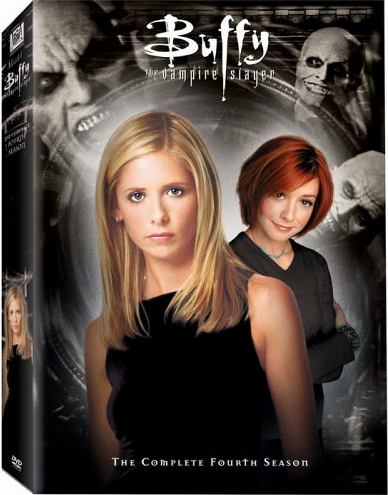
The casting too is inspired. Sarah Michelle Gellar is perfect as Buffy. She may be cute, blonde, and perky, but she isn’t a typical airhead. She combines practical cleverness, toughness, and hidden vulnerability, with a strong sense of duty. Fundamentally the show is about the weight that rests on her narrow shoulders, and what it takes to bear it. The rest of the core team is great too. Alyson Hannigan‘s Willow is every geek’s fantasy, the shy computer nerd who learns to kick ass, Nicholas Brendon‘s Xander provides the token maleness with more humor than testosterone, and Anthony Stewart Head‘s Giles is pitch perfect as the stuffy older advisor with a dark past.

But it’s not just the premise that makes this show rock, but what the writers do with it. I’ll explain when I CONTINUE IN PART 2…

The whole post series [1, 2, 34, 5, 6]