Weekend Draft

I just finished the rough cut of the third major draft of my new novel, Untimed. Just in time too to get out of town.

This weekend will be quiet and post free. I’m off to Vegas with the Foodie Club for some more high end gluttony. Namely Twist by Pierre Gagnaire and  É by José Andrés (my review of the comparable Saam here).  You can expect detailed coverage when I get back.

For more on the revision process, see this recent post.

Or for more posts on writing, click here.

Revision Slog – Novel as Algorithm

As I slog toward the end of my third major draft of my new novel, Untimed, I felt the need for brief procrastination in the form of detailing the process. Most people seem to discount how much grind and sheer time investment is required in writing (and revising) a novel, even a vey steady workaholic like me. Let’s do a little breakdown.

Untimed is actually fairly short, currently at 83,000 words and 38 chapters. This is MUCH shorter than my first book started out. Length is a factor because you have to iterate (i.e. read through the book a LOT of times).

Think of each major draft as a loop (I am a programmer) with various sub loops.

. Generate Idea (for the most part this kind of happens or doesn’t)

. Character Design and High Level Plotting (you could spend who knows how long on this, I don’t find it that useful upfront, most of it just comes to me while doing other things)

. The First Draft:

. Initial drafting: For each chapter (1..38) loop:

. Plot the beats in the chapter. This takes an absolute minimum of 1-3 hours even if you know exactly what’s supposed to be in there. Sometimes it takes several days of banging your head and talking to others.

. Pound out a first draft. I can do 2000-2500 words of new draft in one 8 hour day. I generally make this a chapter. Occasionally I’ll be on a roll and do two.

. Reread it to catch really stupid typos, phrasing, and make sure it makes sense (1 hour)

. Subtotal. For above book that represents 50-60 workdays (NOTE: if you take days off, it’s chronologically much longer). Notes on finishing the first draft, here.

. High level pass:

. It’s impossible when writing a chapter or two a day to see the big picture in the book, so you have to do at least one faster pass through afterward.

. I can do about 10-15,000 words a day like this, which is actually fairly brutal

. Subtotal. About 7 workdays. 1-2 full reads.

. Quick read:

. If you want to judge pacing you have to read it all in a day or two like a normal book, not on the computer

. Subtotal. 1-2 days. 1 full read.

. Draft total. About 60-70 workdays. 4-5 full reads.

. Wait for feedback:

. Since you have to finish something and send it to someone, even a paid editor will take some time to read it and return feedback. This usually takes several weeks. I try and overlap it with the cleanup passes, but it’s tricky.

. Revision Drafts (I’m currently finishing the third major redraft) so I’ve done two of these so far on Untimed:

. Plan, outline, and organize changes.

. Can take from a couple days to a couple weeks. Some thoughts on this with Untimed HERE.

. I can do about 2-3 chapters a full day of revision. So for each block of 2-3 chapters loop:

. Do the actual revision. This can be fairly grueling, involving initial big surgery, a smoothing pass, then a cleanup pass

. Reread it to catch really stupid typos, phrasing, and make sure it makes sense (2 hours)

. Subtotal. Plotting 7 days, revising 15 workdays. Generates 2-3  extra reads per chapter.

. Medium Quick read:

. Checking for consistency

. Subtotal. 3-4 days. 1 full read.

. Total for each revision draft. Approximately 25 workdays. 3-4 full reads. Notes on the second draft HERE.

. Wait for feekback. You have to find out from others, often people who have never read the book before, how a draft comes across. This takes awhile. A reader who gets back to you in a week is amazing. It often takes several and some gentle (or not so gentle) prodding. Or tossing them some money. Sometimes that doesn’t even work. I had one (paid) unemployed beta reader tell me that they couldn’t start it because it interfered with their watching TV! NOTE: Said individual did not get paid.

. Line Editing:

. When the big picture is all settled out one sends it out to an editor for Line Editing. This involves more editor time than author time, but still chunks of the book come back and one must go over the edits and install them.

. My editor will request a “compression” pass before sending it to her. This is an extra pass to try and self edit it first.

. I can do about 8000 words a day like this. Approximately 10 days. 1 read. This is brutal but can be overlapped chronologically with the editor’s line editing. I.e. I can self edit a chunk and then send it out, meanwhile self editing the next chunk while the editor is working on the previous one, then also fit in the next part (processing) of returning chunks in a pipelined fashion.

. I can “process” returned line editing at about 6,000-8,000 words a day. For each chunk loop:

. Read over the track changes version of the line edit in word, approving and rejecting various edits and making cleanups

. Copy over each scene in into the real draft. Cleanup formatting.

. Do a quick read of the chunk or chapters to make sure nothing got screwed up

. Subtotal. Approximately 12 workdays, but spread across more chronological time as the edits can’t churn out this much per day. 2-3 full reads.

. Quick read:

. If you want to judge pacing you have to read it all in a day or two like a normal book, not on the computer

. Subtotal. 1-2 days. 1 full read.

. Total for line editing. approximately 24 days. 4-5 full reads.

As you can see. This adds up to a LOT of days and a lot of passes. Finishing up the third draft here, I’m already on eight months and at least 12 read throughs, and I can look forward to several more of each.

For more posts on writing, click here.

Middle Madness

I think I’m over the hump with the third major draft of my new novel, Untimed (for a quick blurb see here).

Story structure is hard. And while this book is much better structured than early drafts of my previous novel, it had two major problems: the ending and the first part of Act II. Late (very late) in the second draft I cracked the ending. So that just left the middle.

Therefore, I wasn’t surprised when the biggest comment from my awesome freelance editors’ (I use three: Renni Browne, Shannon Roberts, and R.J. Cavender) involved problems in this middle section. It’s not that the scenes wen’t good or exciting, but mostly that I fell prey to a personal need to sneak Napoleon into the story (time travel seems to call out for the most pivotal personality of the modern era) and this resulted in a bad case of “Double Mumbo Jumbo” (or a variant thereof).

So what is the dreaded Double Mumbo Jumbo? Most specifically it’s the phase coined in Blake Snyder‘s Save the Cat book (which I discuss here). DMJ is invoked by throwing two unrelated implausible things into the same story. However, my specific problem is really a cousin, what my editor Renni calls “1+1=1/2”. This is, the idea that doing the same improbable thing twice in the same book isn’t twice as good as doing it once, but actually half as good. Even if the thing is cool. So a kind of DMJ.

And I was doing it in my middle.

Still, this section of my story accomplished a lot of other things too. And I had to figure out how to rework it to keep as much of the good as I could, avoid a DMJ — and not make TOO much work for myself in terms of repercussions later in the book. Thinking about various ways to restructure, particularly given the constraints of my story, my elaborate time travel scheme, and history itself, was quite the brain buster. I thought on it all day for at least a week. So hard one Friday that I literally gave myself a migraine headache! I found myself pondering time travel so aggressively that I became confused as to what year it was — and then my vision began to shimmer (migraine).

I probably outlined 15 different scenarios and talked about countless more. This part of the writing process is very peculiar. I often end up with a half-baked scenario that satisfies some goals, but just doesn’t really work. One quickly reaches a point where no new ideas surface internally and you need to shake it up. I then find it extremely useful to talk with a limited pool of friends who have read the book in it’s latest incarnation. This allows me to efficiently go over the possible elements. Then we talk out the problems. By vetting numerous failed scenarios it’s often possible to collect enough different disconnected ideas that a single coherent new plot can be jig-sawed together. Or at least coherent enough to polish out in the writing.

This last week, I even twice resorted to writing out (as prose) incomplete outlines to see if they worked. The first revealed itself as a miserable failure. The second made it to the finish.

Now it’s off to friends and editors to see how it passes muster.

For more posts on writing, click here.

Introducing the Writing Index

In my continued effort to improve site navigation I’ve introduced a new page to index all my writing posts, sorted by topic. You can also find it in the “Writing” menu at the top of the site or by clicking on the gold “Writing” icon on the righthand sidebar.

As an added bonus, the page includes a blurb of my new novel, Untimed, check it out.

Save the Cat – To Formula or Not To Formula

I’m always reading books on writing and storytelling. In fact, I read three this week. One of them was Save the Cat by the late Blake Snyder. This post isn’t a review per se of that book, but more some mental ramblings on issues it raised.

First an observation about the nature of “advice” books and the possible career of sceenwriter. Mr. Snyder was (he unfortunately died suddenly recently) a noted screenwriter, having sold over a dozen major spec scripts, at least two for over a million dollars each. He worked on roughly 100 screenplays in some capacity. Yet, only two of these have even been made into movies.

Eeek gads! If this is success as a screenwriter it has to be creatively bankrupt. Unlike novels, screenplays aren’t a medium themselves. In fact, I find them boring as shit. They’re just a weird but essential initial sketch of a film. Now don’t think I consider them unimportant. A production can easily ruin a great script, but it’s exceedingly rare to take a bad one and make a good movie out of it. They’re certainly the single most important element of any film. Great screenwriters add immeasurably to a film. Look at the different between Empire Strikes Back and Phantom Menace. Personally I think it was Lawrence Kasdan or some other writer who was NOT George Lucas.

In any case, having almost none of your creative work see the light of day has to be depressing. I’m also guessing that in recent years Mr. Snyder made more money selling his books/lectures/advice ABOUT writing screenplays than in actually writing the things. Hehe.

Cover of

Cover of Wedding Crashers

But that was what I intended to write about. Save the Cat is essentially a book about making your story (screenplay) correspond fairly rigidly to the classic Hollywood three act structure. It even goes so far as to break (every) film into roughly a dozen beats and assign exact page numbers in which they should occur. For example: “theme stated” (page 5) or “catalyst” (page 12). All of this can be found on his website.

Now there is some real merit to this structure and it’s certainly very useful and entertaining to be able to breakdown movies like this. In fact, if you want a giggle go to this page where you will find a breakdown of the guilty-pleasure comedy The Wedding Crashers. It’s highly amusing to see a film this silly (but admittedly funny) stripped down to include a Hegelian thesis/antithesis/synthesis dialectic. And I do admit if you are trying to write and sell high concept comedies in today’s marketing executive driven world, this whole formula has to be the way to go.

But I wonder how useful it is to try and fit EVERY story into this exact mould. You could say actually that Save the Cat represents a thesis: yes all movies should follow this fixed structure. The antithesis of course is that interesting ones, the example he uses is Memento, should not. Now Mr. Snyder’s conclusion is literally “Fuck Momento!” (actual quote from the book). But I think that Christopher Nolan is laughing to the bank — just not on that film! — he had to remake it using dreams inside of memory loss.

I myself am thinking that a synthesis is in order. A new universe blending both perspectives. The classic structure does encapsulate A LOT of solid lessons about audience expectations for story telling. Perhaps one should use it more as a toolbox or set of guidelines.

This is specifically relevant in my new novel, Untimed. It does to a large extent follow the classic structure (although certain not with such rigid page number demarkations). But there are questions. I have two ideas in the book that could be considered thesis and antithesis, but their advocates are far more muddled than formula would require. Do I restructure and state each in a more obvious way? Likewise, as is typical with me, my ending does not neatly wrap up all questions, villians, and the like. There is climax, but it’s messy. I like ambiguity, and I have gone to great length to construct a world order sufficiently complex that not all mystery is to be solved in one book. Doing so leads to the standard Hollywood sequel problem, where the followups are just more of the same but missing the best part: the discovery inherent in beginnings. If you haven’t answered all the questions, there is still more to learn.

But a squeaky voice in the back of my head wonders: do I need a more Hollywood ending?

Food for thought.

For other posts on writing, click here.

Or find out about my novels:

The Darkening Dream and Untimed.

Untimed – Two Novels, Two Drafts!

My second novel, Untimed, is a YA time-travel adventure.

And I just finished the rough version of my second draft. Whew! Happy to be done with that. The book grew to 84,000 words (it’ll probably get trimmed down a bit for draft three). It still needs polish, but the second draft is often the worst, and this one took 5 or so weeks of concentrated work. While I learned from my first novel and put the beginning at the right place, the previous draft still had a number of classic first draft problems.

Namely, character and motivation needed work. Plot can formally be considered the friction between the protagonist’s desire and the obstacles to said desire. The book is/was jam packed with conflict and action, but the desire line was a bit weak. I won’t say it’s perfect now, but it’s a hell of a lot better. As are the characters. For me it’s difficult in the first draft to flesh both of these out because as a pantser I don’t know exactly where I’m going with the story until I get there. Not that I write blind, but I like the story and the characters to take me where they want.

When writing the second draft, you have an end (even if you plan on changing it), so you know all the elements that you intend to put in the book. Therefore it’s easier to go back and foreshadow those and reinforce the important ones. You also know what the character is going to need to feel at different points in the story, so it’s easier to try and set up and reinforce those feelings.

Additionally, as a pantser, I actually get to know my characters in the first draft. The writing of them brings them to life in my head. Then in the second draft, I need to brainstorm extra elements in their past and present that reinforce the traits I know they’re supposed to have, then hint at the them in the book. Again, hard to do the first time around.

Now to see what some reader that aren’t me think — and trial and nail the third draft.

I’d also like to thank my story-consultants Sharon & Bryan for listening to every blow by blow change and my independent editors Renni & Shannon for pointing me in the second draft direction. Here’s to hoping I went far enough :-).

The second draft involved a few weeks of incubation (June), a full read and polish (also June), and then hardcore writing from June 30 until August 2.

And in case you’re wondering what the book is about, I still haven’t written a log line, but its a lean-mean-fast-paced first person present story about a boy whose name no one remembers — not even his mother. And it features Ben Franklin, Napoleon, a male gang leader that wears red high heels, and the Tick-Tocks, creepy clockwork time traveling machines from the future.

For more posts on writing, click here.

Untimed – The Second Cover

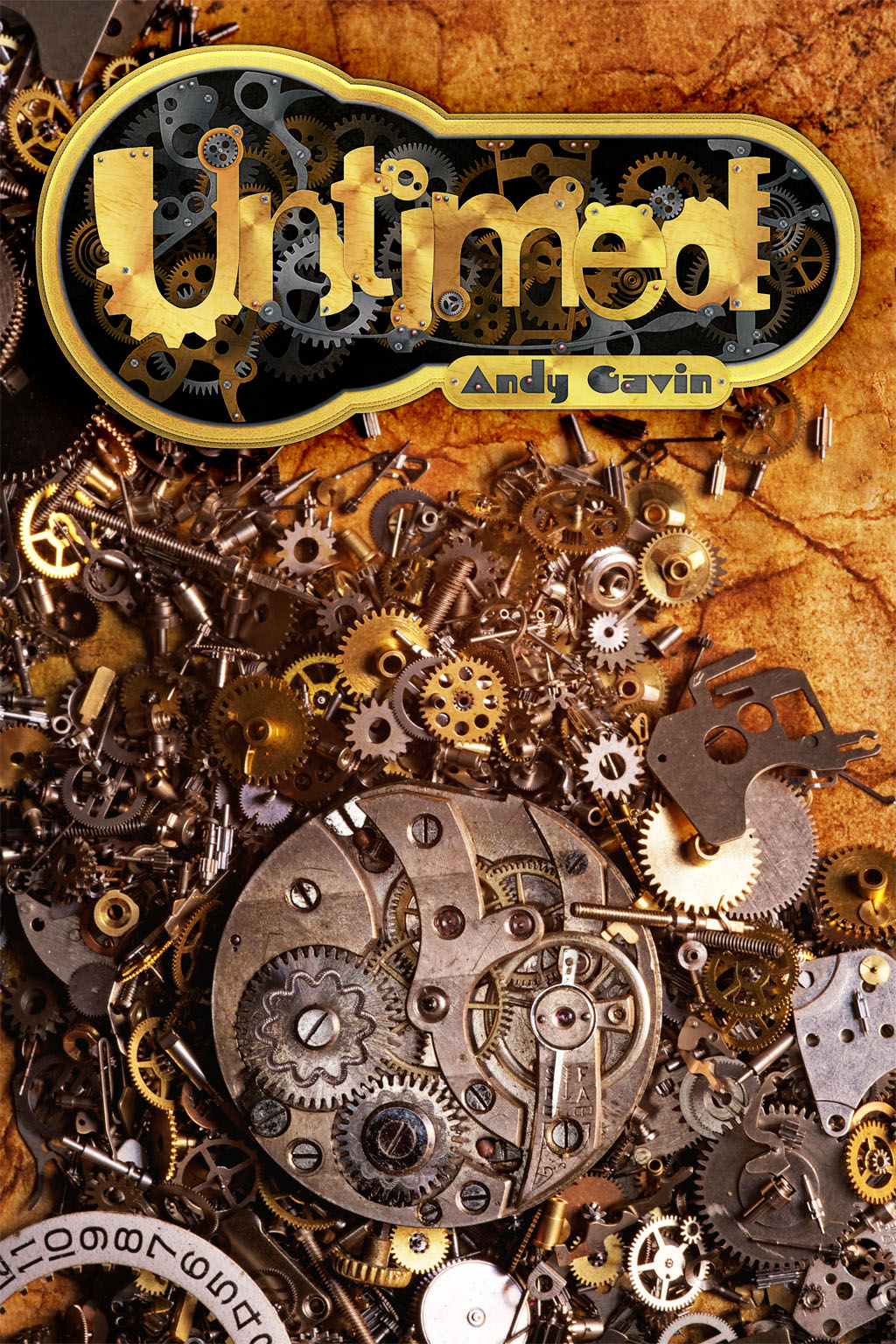
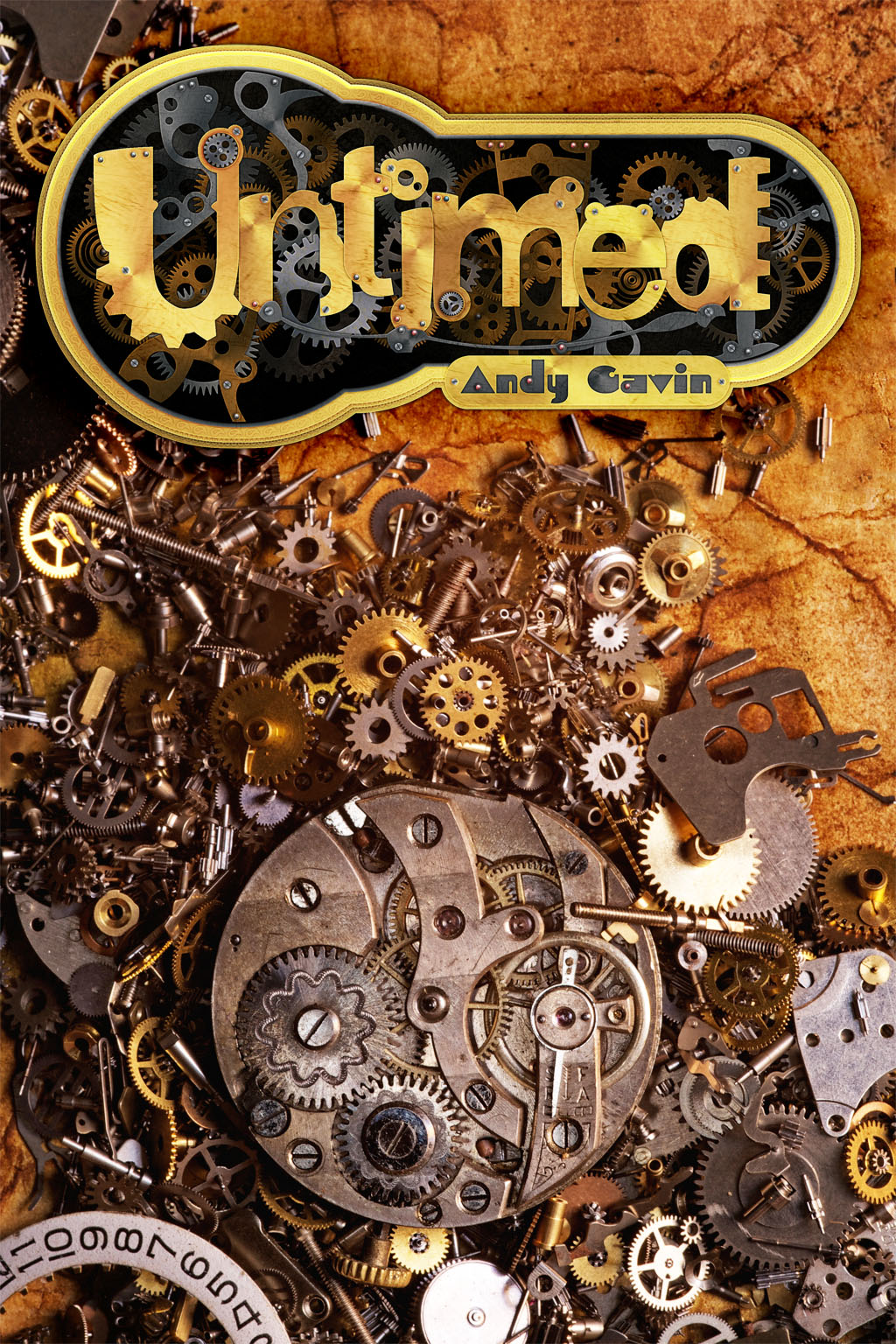
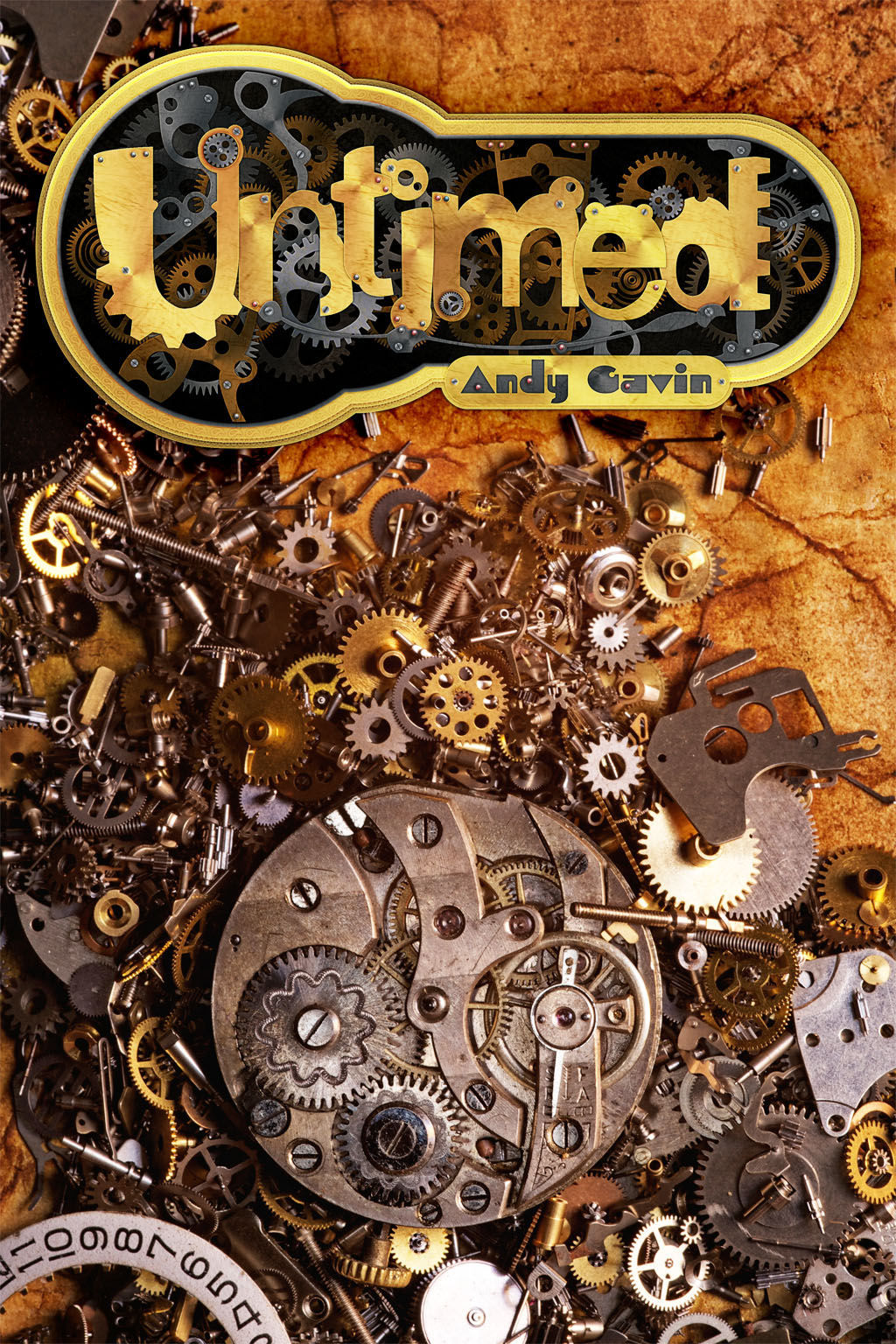
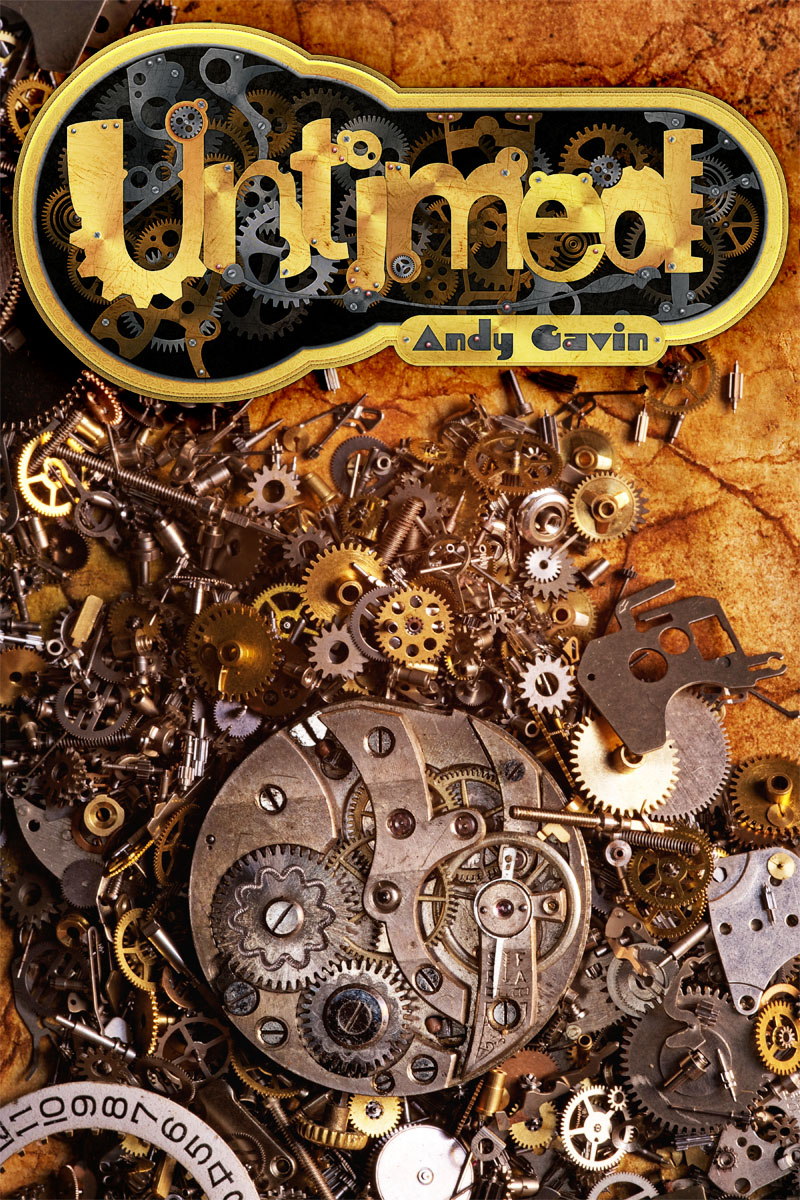
Just finished up a new “working cover” for my second novel, Untimed. Thanks a million to my friend and long time business partner Jason Rubin for concocting the excellent logo. He is a true Photoshop wizard.

If any of you have thoughts on the cover (the book’s a YA time travel adventure), post them in the comments.

Now back to working on the second draft.

I will use powers of superhuman concentration to ignore the fact that I have A Dance with Dragons sitting on my iPad — more or less unstarted.

I will.

Not reading during working hours!

Lessons from a Lifetime of Writing

Title: Lessons from a Lifetime of Writing: A Novelist Looks at His Craft

Author: David Morrell

Genre: Writing Guide

Length: 240 pages

Read: May 21-22, 2011

Summary: Very good.

_

Having just finished the first draft of my second novel I did what I always do after a draft: take a little time to consider my craft (and not look at the book). So I pulled this puppy off my stack of books on writing. I’ve read a lot of such books, and this is one of the better ones in it’s category.

They fall into a number of broad groups: books on specific components like plot or character, books on sentences, books on editing, books on selling your books, books on summarizing your books, windy pontifications on the nature of creativity, and this type, the bit of everything, with a dose of personal experience thrown in. Lessons is a lot like Lawrence Block‘s Telling Lies for Fun & Profit. Both cover a bunch of the big areas quickly like plot and structure, and also include the author’s personal perspective on his career (Morrell’s best known for First Blood, on which the first Rambo was based) and the writing business. It does not focus heavily on sentences or editing.

There were a number of interesting insights. He has a technique for getting past sticky points in your story construction I might try (next time it happens). There were also some interesting technical thoughts on the structure of scenes and chapters. He has a perspective on selecting POV that I hadn’t come across, which was interesting. Although he is slightly dated in his opinion of first person stating that he feels it always needs a reason why the narrator is telling the story. This used to be the case, but in the last few years the rise of first person (particularly in YA) was sort of negated this.

A good chunk of the book is about his career, optioning books to Hollywood etc. This was amusing as well. He started in the early 1970s so he’s a product of that different era in publishing. The book was written in 2002 and while none of the writing advice is dated, the advent of ebooks and changes in the market are shifting the business side. Still, good writing is still good writing, and even writing style itself doesn’t change all that fast. Books I’ve read by authors whose prime was the 1950s still have plenty to offer. Last weekend I read The Postman Always Rings Twice, published in 1934, and that hardly seems dated.

So if you like books on writing and plan to read many, I’d check Lessons out. While that doesn’t sound like spectacular praise, I do like this book. Many writing books I read are total drivel. This one was worth the time, and that says something.

Some of my favorites are:

Untimed – Two Novels, Check!

Today I reached a milestone and finished the first draft of my second novel, tentatively titled Untimed. Now this doesn’t really mean it’s done, revision is usually more work than the first draft. Still, it’s a book. It has a beginning, a middle, and an end.

Untimed is the first book in YA time travel series. I haven’t written a log line yet, but it’s currently 70,000 words, and is a lean-mean-fast-paced first person present story about a boy whose name no one remembers — not even his mother.

Oh, and it features Ben Franklin, Napoleon, a male gang leader that wears red high heels, and the Tick-Tocks, creepy clockwork time traveling machines from the future.

I started it Feb 9, 2011 and finished the first draft May 20, 2011. I took about three weeks “off” to work on revisions of The Darkening Dream. So that’s roughly three months. My output was actually slower (as measured in words) than with TDD, because a don’t overwrite now. If anything Untimed is underwritten and certainly needs a lot of character work in revision, which might make it grow slightly.

I learned a lot of things from problems with TDD (mostly fixed in my many many revisions). I learned to find a place to start your story that really hooks BEFORE starting to write. I learned not to write any scenes that involved merely going from place to place. I learned not to flash back. I learned to stick with the plot, not the sub plots. And a whole lot more.

And I tried to outline the entire story before I wrote it, failed miserably, and concluded that I’m really a pantser (a seat of the pants writer).

For info on my first (and completed) novel, click here.

ps. If you’re one of my many dedicated beta readers, and want to offer early high level feed back, send me a note.

Call For Feedback

As a writer, feedback can be essential to the process. You don’t necessarily want to spend months writing the whole novel draft to find out the voice sucks, or that your plot is boring. I’m a frantic high energy writer (I work 8+ hours a day and usually churn out 2,000 pretty good words), and one of my biggest problems is getting enough feedback fast enough. I want to find out how a chapter works NOW, or hash out what’s going to happen tomorrow. My plots are intricate and I have two people (one I’m married to) who ALWAYS read chapters in a few hours and are willing to spend an hour brutally arguing about how well they work.

Still, it’s not enough. I also use a number of professionals who provide awesome advice, but not only do the cost money, but they’re busy and often take a few weeks to turn stuff around. I’d give a nut for another conspirator who’s great at plot construction. Relatively few people are willing to say, “No, no, this whole branch of the action is boring, the villain and the hero need to be face to face.” Then actually provide suggestions to mull over or shut down. Most amateur critics nitpick on sentences or little inconsistencies. Those are useful, but the big picture criticisms — and more importantly suggestions for fixes — are harder to come by.

I’m looking for something analogous to a TV writers room where people know the story and characters to every last detail and can really yell and hash out ways to interject more power into the story at the plot and character level. This is the hardest part for me to do alone. I can take any basic sequence of events and turn it into a great scene, but building the perfect twisty-turny plot with engaging characters is hard. There’s a reason why you see this most often in great TV shows where they have a room full of brilliant people.

A good argument over the story fuels my creative fire. I suspect if I had more of it I could write even faster.

And I’m willing to pay for said criticism with highly responsive reciprocal reading and response on how your stuff could be better! 🙂

Seriously. I’m extremely fast and sleep very little. There’s no give it to me and have to check back a couple weeks later. I tend to turn stuff around in hours. I’m willing to talk at odd ball times. I can do everything from plot to line editing.

So if you’re another writer, interested, fast, dedicated, good at plots, like the fantastic (my stories always involve some supernatural/speculative element), and willing to dedicate a couple hours a week, shoot me a note and we’ll see if there’s any synergy.

or blog

Also, peek at my novel in progress: The Darkening Dream