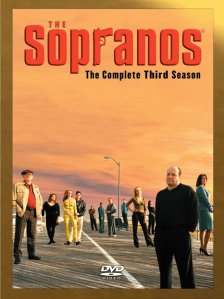
The Sopranos – Season 3

Title: The Sopranos- season 3

Genre: Comedy / Drama

Stars: James Gandolfini (Actor), Lorraine Bracco (Actor), Alan Taylor (Director), Allen Coulter (Director)

Watched: Second season: May 4-May 12, 2011

Status: Six seasons, series finished

Summary: Still flying high

ANY CHARACTER HERE

Season 3 continues to groove on the rhythm established in season 2. There aren’t any big shake ups in the formula, but by concentrating on the mob action and the relationships, it remains outstanding. There is, I think, a slight notch up in the humor. While things maintain a pretty serious level of violence, some of the episodes just seemed a bit funnier in a clever understated way.

The season starts off with the highly amusing and stylized efforts of the FBI to bug the sopranos house — really a clever reintroduction to the characters in disguise. Joe Pantolanio shows up to give us Ralph, the guy who Guido the Killer Pimp grows up to be. He serves to replace Richie as Tony’s designated pain in the ass. He’s funny (and tragic, but not for him), but he isn’t quite as interesting a figure. Mom takes a most appreciated (I found her funny but annoying) permanent vacation. There are arcs with Meadow at college and her boyfriends, with Jackie Jr, with Dr Melfi, with Christopher.

Structurally this arcs are more spread out, crossing most of season, or at least several episodes. This isn’t yet The Wire or Game of Thrones where the episodes are just arbitrary blocks of a much longer story, but it’s getting closer. Still the sense of a bigger arc for the entire season is more muted than in season 2 (where the dual “Big Pussy as informant” and “Richie makes trouble” arcs served to anchor the season).

There are some good shocker moments too like in “Employee of the Month.” I also really enjoyed the gang antics in “Pine Barrens.”

The dominant theme continues to be the co-existence of family and personal life with violence. The balance of this rather realistic portrayal and dark humor is as pretty fucking brilliant. Despite the comedy and violence, the characters feel very very real, and I think that’s the secret of the show’s success.

Also interestingly, each season ends with an Aprille death. Although the last episode is a bit of a letdown.
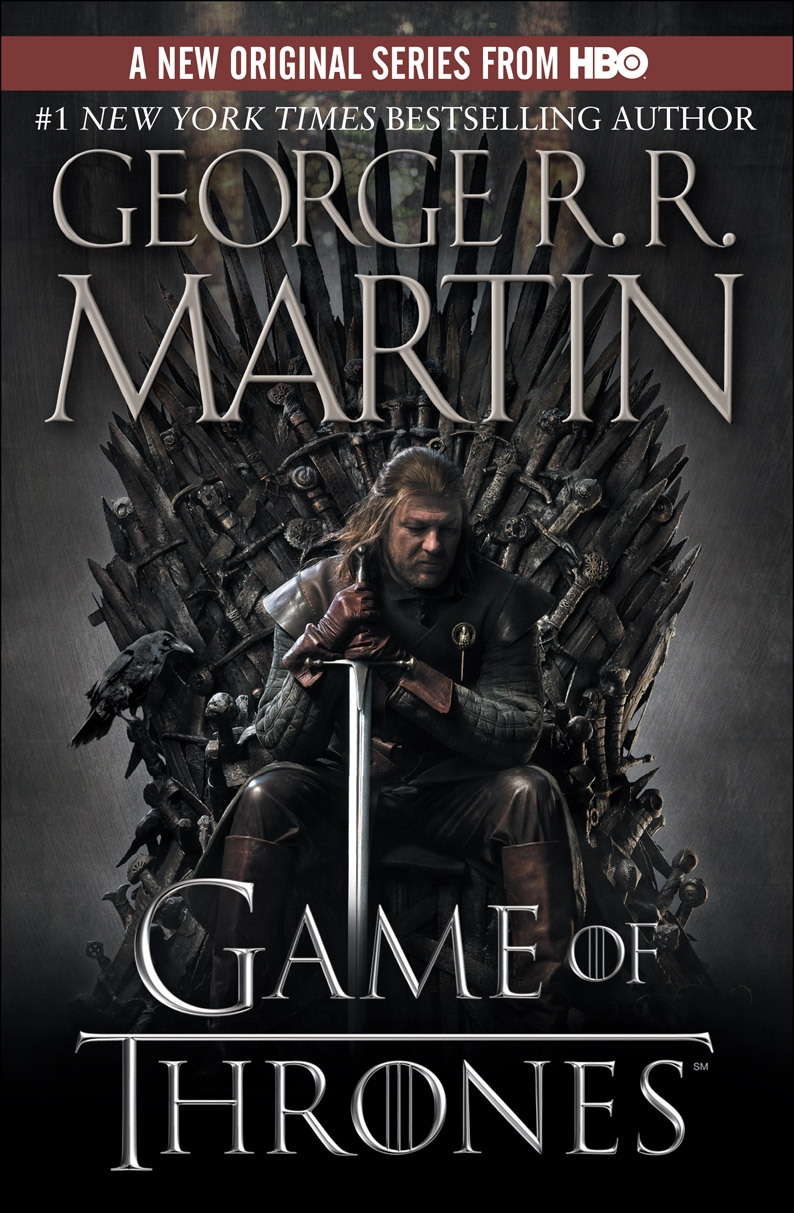
For my review of season 1

or season 2, see here.

Game of Thrones – Episode 4

Title: Game of Thrones

Genre: Historical Fantasy

Watched: Episode 4 – May 8, 2011

Status: First Season now airing on HBO

Summary: Amazing!

ANY CHARACTER HERE

With Episode 4,  “Cripples, Bastards, and Broken Things,” the enormous narrative of Game of Thrones begins to pick up speed. Still, it’s amazing how much time this show needs to spend on characterization, which is a tribute to the enormous depth of such in the source material. Even streamlined, there’s just such a ridiculous number of interesting characters, each with their own pathetic stories.

The episode introduces Sam (fan fave from the books), Gendry, the Mountain that Rides, the annoying Bard, Bronn, Janos Slynt, Hodor, and even briefly shows Ghost (where’s he been hiding?). But it’s also packed with bits enhancing existing characters, big and small. One of my favorites is Littlefinger’s grim tale of the Mountain and the Hound’s “boyish games.” Good stuff, although by moving it the story from the Hound himself to Littlefinger, I wonder if the former’s complex character won’t be diluted — not to mention his peculiar but important relationship with Sansa.

The four main threads of the story continue to advance: Jon at the Wall, Dany with the horselords, Tyrion making his way home, and the central focus of Ned and the girls at King’s Landing. The first and the last are dominant here, getting 80-90% of the time. Perhaps because of it’s more contained scope, Jon’s story is the most complete, setting up camaraderie and threat in the Realms bleakest and most northern castle.

In Ned’s world, the plotting and complexities are starting to heat up even further in, and Arya — as usual — steals her one major scene.

For other fans of N and V (something I this show has plenty of), we have a great scene with sexy slave girl in the bathtub and a bit of jousting lance to the jugular.

And after last weeks less dramatic, but atmospheric ending, Episode 4 is back to a serious pivot. Cat’s little speech in the Inn was something I loved in the books, and it’s well done here too. I can’t wait to see the Eerie, which I suspect will be episode 6.

Reviews of previous episodes: [ Episode 1, Episode 2, Episode 3 ]

or here for Episode 5.

Click here for some trailers for and about the series.

Or find out about my own fantasy novel, The Darkening Dream.

Game of Thrones – Episode 3

Title: Game of Thrones

Genre: Historical Fantasy

Watched: Episode 3 – May 1, 2011

Status: First Season now airing on HBO

Summary: Amazing!

ANY CHARACTER HERE

Episode 3 is titled “Lord Snow,” in reference to Jon Snow‘s nickname at the wall. This episode continues, and I think essentially wraps up, the trio of scene setting episodes. This world is so complex, with so many characters, it needed a three hour pilot. Still, it’s a damn enjoyable setup.

We do find ourselves with a different feel than last week’s “The Kingsroad.” This episode is brighter and faster, better I think, but also lacks any real momentous events or a dramatic conclusion. Episode 2 started off slower, but ended with a bang. Episode 3 just fundamentally introduces the Wall and King’s Landing. But both are fun. Varys and Littlefinger are a delight. There are a lot of very strong scenes in here, mostly in the area of character development and exposition. The scene where Robert, Barristan, and Jaime discuss their first kills is terrific. Others will and have quote it, but I will again. “They don’t tell you that they all shit themselves. They never put that part in the ballads.” Just awesome.

Tyrion and Arya continue to rock, Jon is building momentum. There’s good work with Arya and her sister, even better work with her and her father, and the fan fave delicious introduction of her “dancing instructor,” Syrio. No one who’s read the books doesn’t love Syrio and the waterdance. You can see subtle little nods to the characters, like Arya listing off those she hates, as this will flare into the flame that keeps her warm in the dark cold nights.

There are also curious absences. What happened to Ghost?  (Jon Snow’s albino wolf)  And Commander Mormont’s raven?  And time pressure makes a few of the scenes feel very very fast indeed for those viewers who haven’t read the books (particularly the Dany scenes this time around). If any of readers are in this camp (not having read the books), please comment below and offer your opinions of the show, I’m really curious. I love it, but some of this is propped up by my encyclopedic knowledge of the characters and their relationships.

I do also have to say that I don’t love the weird mixed race look of the Dothraki. The Khal is fine, but I would have just cast the rest as Mongols and made them straight up raw and tough. The blood rider is so young he looks soft, and middle eastern to boot. Who’s with me in thinking that Endo from Lethal Weapon would have made the perfect blood rider? — 25 years ago.

King’s Landing (aka Malta) has a different sunnier feel than I imagined it in the books, but I kinda like it, down to the interesting little detail of the floors always being dirty. And in a number of scenes the CG view out the windows is gorgeous, high up on the towers with the whole city laid out beneath like in Napoli. I also liked Maester Aemon, but he needs those white “blind guy” eyes because that’s how I imagine him.

Exposition or no, I enjoyed every minute of this episode, and we’re poised for some serious stuff in the hours to come ahead. Next week, jousts and dwarves in a pickle.

My reviews of other episodes: [Episode 1, Episode 2, Episode 3, Episode 4].

Click here for some trailers for and about the series.

Or find out about my own fantasy novel, The Darkening Dream.

The Sopranos – Season 1

Title: The Sopranos- season 1

Genre: Comedy / Drama

Stars: James Gandolfini (Actor), Lorraine Bracco (Actor), Alan Taylor (Director), Allen Coulter (Director)

Watched: First season: April 20-28, 2011

Status: Six seasons, series finished

Summary: The HBO missing link

ANY CHARACTER HERE

For whatever reason The Sopranos remained the only real HBO drama that I hadn’t seen. I’ve been a huge  HBO original programming fan as far back as Dream On, but I just never got around to Tony and crew.

Until now.

It’s interesting to see it after the fact, after having watched Rome, Deadwood, Six Feet Under, Carnivale, True Blood, The Wire, Big Love, Game of Thrones, Boardwalk Empire, etc. This is an intermediate stage in the development of today’s long form visual medium. The Sopranos, like all HBO dramas, is very well written. Where it shines is in character building. Not development per se, but in the creation of unique and interesting personalities. The casting is spot on and nearly every member shines as distinctive and amusing individuals. But inherently, this is a recipe HBO has really mastered, blending casting, writing, and acting to make seamless characters.

It isn’t (in this first season) as well plotted as some of its sucessor shows. Less happens, and the events are a bit less dramatic. This isn’t to say that nothing’s going on, but we don’t have the momentous and shocking events every fifteen minutes that are the hallmark of the mid 2000s shows. I suspect later seasons may grow into this. The net net of this was that I wasn’t quite as riveted by the events, and certain subplots dragged, but the characters certainly kept me watching.

There is something to note here, which is the odd dichotomy of the like-ability of most of the cast and their “trade” as cold and murderous mobsters. The show strikes a slightly comic and not entirely realistic tone with regard to this, making it easier to disregard the violence and keep on liking them. And like them I certainly did, particularly Tony. James Gandolfini shines in this role, nailing his particular brand of goomba charisma. His mother is perfect too (although fun to hate) as the manipulative bitch that she is.

I was also a bit ambivalent about the central premise of the mafia boss in psychotherapy. Although I did like the shrink, and I liked the amusing way in which Tony would sometimes describe a happening in mild mannered terms while the visuals showed it “the way it really was.” I often enjoy this this sort of humor. At times the overall conceit felt a little forced, but it basically works.

So I’ll start in on season 2, particularly as I’ve heard the series only gets better.

For my review of season 2, see here.

Check out my review of Game of Thrones.

Game of Thrones – Episode 2

Title: Game of Thrones

Genre: Historical Fantasy

Watched: Episode 2 – April 24, 2011

Status: First Season now airing on HBO

Summary: Amazing!

ANY CHARACTER HERE

After watching Episode 1 three and a quarter times, I was eagerly awaiting the continuation. This week’s installment, entitled “The Kingsroad” didn’t disappoint, although this is an extremely transitional episode.

In “Winter is Coming” (Ep 1) we were introduced to the major players in what amounts to two major settings and story lines, one at Winterfell with the Starks, King, and Lannisters, and the other across the sea with Daenerys. About midway in this second episode the main Westeros storyline splinters into three: Ned and the girls, Jon & Tyrion heading to the wall, and Cat, Robb, and Bran back at Winterfell. This fragmentation will continue a bit in further episodes, but for now everyone is moving into place. I suspect in the long run this will be one of the “duller” episodes of the series. But all is relative, and it still contains a number of very powerful scenes.

Peter Dinklage as Tyrion continues to delight with his ironic tongue and sharp delivery. The queen shows both her calculating side, and her cruelty. Joff is appropriately loathsome and Arya every bit as spunky as she should be. While new viewers might not be totally aware of it. This episode really starts to drive home the consistant notion in the books that all choices and actions have consequences, and that those are never what they might seem.

Jon chooses the wall, but even from the start, it isn’t the romantic knighthood he hopes. Tyrion chooses to side, even if by default, with his own, and that will play out with fiery results. Sansa choses to stay out of the fray, Arya to enter one, with drastic consequences. Dany chooses to try and make the best of her miserable situation. I do wonder a little how new viewers (those who have not read the books) will take all this, as even in this long (10 hour format) the incredible richness of the characters, their interactions, choices, and consequences.

For example, despite spending an entire hour on this transitional moment the writers still have to rush Dany’s realization that she can take control of her situation. Married off by her abusive (and more than slightly creepy) brother to a mongol-type warlord who takes her every night “Dothraki-style” (like a Stallion and a mare) she isn’t in the best place. Some reviewers have issue with this, but personally, as this has been the plight of millions (or billions) of women throughout time, nobel and pauper alike, I think it belongs here. Some wonder, why does she stay? Well, what is she supposed to do, married to a warlord, virtually alone in a camp he controls with 40,000 of his people in the middle of nowhere? She does the only strong thing possible, she starts to seize on some measure of control in her relationship. One must not interject the modern conception of mariage is mutable into it. For much of history a sort of grim fatalism pervaded most people’s being.

The final bit of the episode too, with the crucial play out of various childish personalities having dire consequences in both the youthful and adult worlds is very well handled. Joff’s cruelty and impotence, Arya’s headstrong nature, and Sansa’s passivity clash. Who suffers? A cute doggy and the peasant boy. But this will have long standing consequences for everyone involved, including the adults. We can see it in the seething looks exchanged between Ned Stark and the queen. The very end rises to a nice emotional tieback. Still, I would have enhanced the mystical a bit here (almost totally downplayed by the producers). Perhaps showing all five of the other wolves howling and/or linking with one of Bran’s dreams as in the books. I suspect that because of a fear of being labeled too fantasy the producers will continue to soften the fantastic elements, subtle as they are even in the original books.

Still. I can’t wait for Episode 3, which with the arrival at both Castle Black and King’s Landing should make for some good stuff. Littlefinger!

For my reviews of other episodes by number: [1, 2, 3, 4]

Click here for some trailers for and about the series.

Or find out about my own fantasy novel, The Darkening Dream.

Making Game of Thrones

HBO has posted a new 25 minute Making of Game of Thrones video which is really good.

CLICK here for my review of Episode 1 of the upcoming series,

or HERE for more videos about the series.

Game of Thrones – Episode 1

Title: Game of Thrones

Genre: Historical Fantasy

Watched: Episode 1 – March 31, 2011

Status: First Season coming to HBO April 17

Summary: Amazing!

ANY CHARACTER HERE

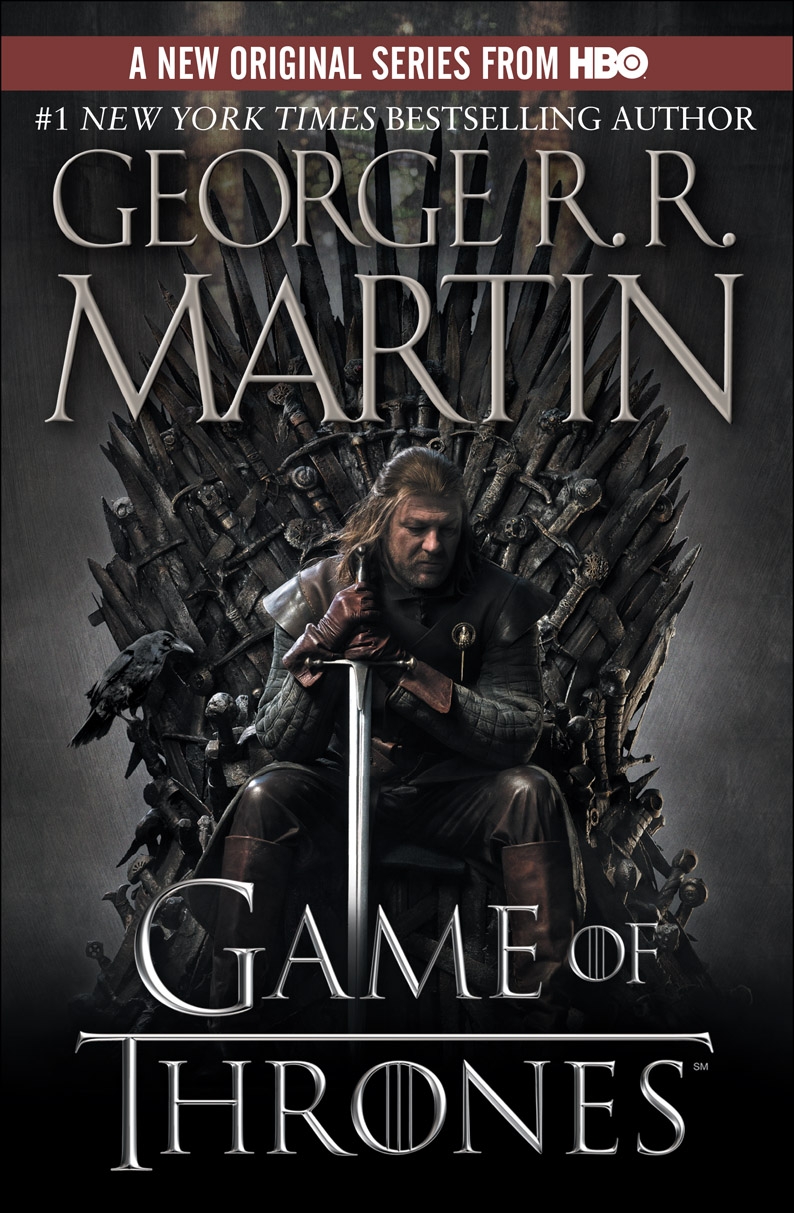
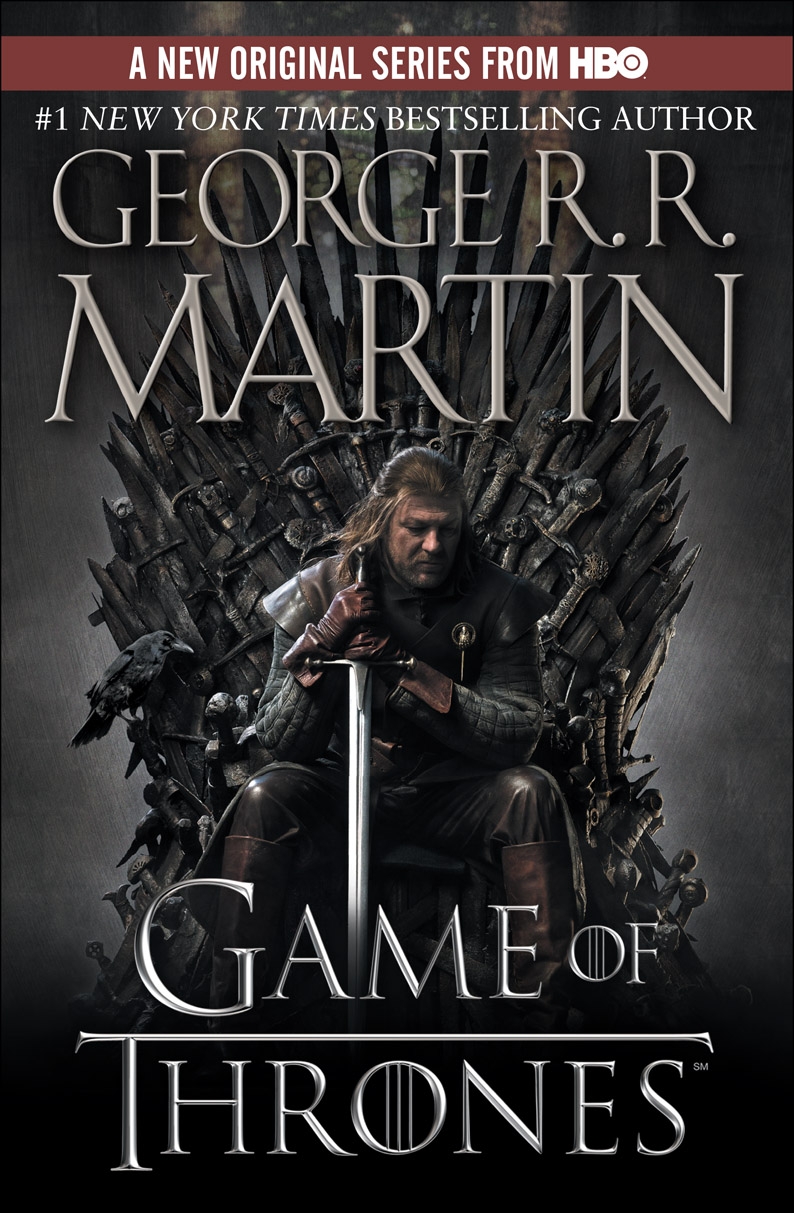
I had the privilege to get an advance screening three weeks before the premier of the first episode of the new HBO miniseries Game of Thrones. For those of you living in a hole, it’s based on the stunning (and huge) series of novels by George R. R. Martin called the Song of Ice and Fire. The TV series is named after the first volume, Game of Thrones, and the first season covers the first novel. Currently there are four books to the series, with a fifth due this July.

These are arguably my favorite fantasy books (read them all twice) and fantasy is my favorite genre. I’m not reviewing the books specifically here, but it is worth noting that they are stupendously good. Political, dark, complex, and full of very human characters. While this is fantasy, set in a sort of medieval-England-like kingdom, the fantasy is light. There are no armies of trolls and orcs. Just good old fashioned human sex and violence and a touch of the magical.

Which makes it perfect for HBO, and if the first episode is any indication they have done a stupendous job of adaption. I was blown away. I wanted to like it. I love HBO dramas so I hoped I would. But I’m critical by nature, so I was thrilled to find it exceed my expectations on all accounts.

This is a very faithful adaption of fantastic source material, but the series also plays to television’s strengths. The production is lavish, landscapes, sets, costumes, food, everything looked tremendous. And sounded tremendous. I saw a 35 mm print on the big screen with a serious sound system. After the titles alone (gorgeous) and the pitch perfect music I had goosebumps.

The casting/acting is also fantastic, and combined with the great writing is going to make this ambitious show work. These books have a lot of characters, and very well written ones. There is no big Sauron-type villan, there are only conflicted people. The Lannister brothers are awesome. My favorite character is Tyrion, the  Imp, brilliant, sharp-tongued youngest son of the land’s richest (and meanest) Lord. This is a tough role, and made even more difficult by the inherently limited roster of actors short enough to play it. Peter Dinklage is off to a tremendous start, stealing every scene he’s in. Awesome, and cudos Peter! Nikolaj Coster-Waldau is also superb as his taller and prettier older brother Jaime. Both are complex characters, and it’s good to see them nailed out of the gate. The Stark daughters and Jon Snow were also great, plus Sean Bean dominates with all the powerful gravitas that Ned Stark deserves. Emilia Clarke is gorgeous and appropriately vulnerable as Daenerys Stormborn — I’ll be interested to see if she can handle the character changes in store for her. Some seriously good casting across the board.

The writing is also great. This episode pounds through a LOT of material. A lot of introductions, and a good amount of setup and action, and it does it without feeling rushed. I’ll be curious to see how viewers who have not read the books cope with the staggering array of characters. It seemed to me that D.B. Weiss and David Benioff (they had the writing credits) did an incredible job unfolding the parallel threads of the book’s many viewpoints into one seamless narrative. They’ve linearized the story a bit, which actually makes it clearer. I hope that newbies give these characters a chance to unfold because as startling and brilliant as the first novel/season is, it’s really with books two and three that things really get crazy.

The atmosphere was perfect too. Detailed and moody. Filmed mostly in Ireland and Malta (across the narrow sea) it feels authentically “celtic.” And there is the now HBO standard hefty dose of nudity. We’ll also see what the producers make of some of the books’ more sordid moments — which are one of the things that make them such a dark pleasure to read. Now the only problem is that I have to wait a couple weeks for the second episode!

Congrats HBO and George R. on such an awesome job. Now just make sure to green-light the next 6 or so seasons!

For my reviews of other episodes by number: [1, 2, 3, 4, 5, 6, 7, 8, 9, 10]

Click here for some trailers for and about the series.

Or my review of A Dance With Dragons.

Or find out about my own fantasy novel, The Darkening Dream.

TV Review: Downton Abbey

Title: Downton Abbey

Genre: Historical (England 1912-1914)

Watched: March 14-19, 2011

Status: First Season (second coming fall 2011)

Summary: Great Television!


My parents, as lifelong anglophiles and Masterpiece Theatre viewers, recommended this British TV series set in 1912-1914. It wasn’t a hard sell once I read the blurb, and I’m so glad we watched it. This is really fine television.

Downton Abbey is a fictional great English country estate, owned by the middle aged Earl of Grantham. He has a loving wife and three daughters, not to mention about 30 assorted housekeepers, maids, footmen, and the like. What he doesn’t have is an heir, as his cousin, the closest male relative went down with the Titanic. The major family drama here is the conflict between the complex English system of inheritance (and this earl’s specific case) and the circumstances. The playground is an anything but simple household that contains no less than 20 major cast members.

No show or movie I’ve ever seen before so intimately details complex organization of great estate like this. I’m always fascinated by the evolution of everyday living (for rich and poor alike) and anyone who thinks the rich keep on getting richer ought to see this. And then remember that a 100 years earlier a house like this would have had five times the servants. Also dominant are the politics and different roles of the various staff and family members. 1914 is the end of an era, as the double whammy of World War I/II will shatter the aging remains of Europe’s cast system like a crystal vase dropped off the Empire State Building (HERE for some of my thoughts on that). In any case, this series is to a large extent about this particular moment, so indicative of the long history of social change. We have employee rights, women’s franchise, choice in marriage and family, even the availability of healthcare and the installation of the telephone.

But that’s not what makes it good, merely interesting. What makes it good is the phenomenal writing and acting. Maggie Smith (younger viewers will know her better as Professor Minerva McGonagall) is a standout as the reigning Earl’s crotchety old mother, but the entire cast is great. For this many characters, they are each highly distinct and multidimensional. Some you love, some you love to hate, but they all make it entertaining. Downton Abbey is not a series about sudden murders or gratuitous brothel scenes like the great HBO dramas (and I love those too!), but instead a series of intertwined character studies that reveal their era as well as timeless facets of human nature.

So unless you thought Transformers 2 was high entertainment, go watch!

Game of Thrones – The Houses

With the premier of Game of Thrones, the HBO series based on what is perhaps my all time favorite Fantasy series, fast approaching, the network has been releasing all sorts of goodies. Now I’ve posted about this before, but these books, and it looks like the show, are so darkly delicious that I fell I must share.

Power (above) is new trailer.

Fear and Blood (above) is another new trailer for the show in general.

Then we have a whole series of videos on some of the most important Great Houses. Like Dune before it, Game of Thrones is a story about the interplay of politics and loyalty among a number of great factions. This was frequently true during the late middle ages, and to some extent the series is based a bit on the War of the Roses.

The Starks (above) are the moral center of the story.

House Baratheon holds the throne… for now.

The Lannister’s you love to hate — except for Tyrion who rules.

House Targaryen knows all about dragons.

Above is a more detailed video on Jaime Lannister.

and above Robb Stark.

Above is Littlefinger.

and above about the world in general.

For a review of episode 1, click here.

Book Review: The Windup Girl

Title: The Windup Girl

Author: Paolo Baciqalupi

Genre: Sci-Fi

Read: Jan 5-9, 2011

Summary: Interesting Science, mediocre Fiction.


This novel won the 2009 Nebula and tied for the 2010 Hugo. It’s set in an approximately 100-200 years-from-now dystopian future Bangkok ravaged by gene engineered diseases. Fossil fuels are nearly exhausted and society eeks by on “megadont” (gene hacked elephant) and human power.

At first I found this intensely gripping, as the depiction of the future world is crystal bright and highly novel. The prose is fantastic, bordering on slightly literary. The problem is that the story has a lot of characters, five or six main points of view, and I found it very hard to care about most of them. I only really liked Emiko, the gene hacked whore/slave looking for a better life. The American gene thief was okay too. The rest of them I could hardly focus on enough to follow their rambling monologues. Once the relative novelty of the world ground down a bit, I just couldn’t keep myself interested in what was happening. There’s plenty of plot, but it’s moderately byzantine, and I just didn’t care.

Because books are all about the characters. Contrast The Windup Girl with something like Song of Ice and Fire (which I need to write up, but is being adapted into an HBO series). The plot and world in that book are intense, but Martin makes you care for all (well most) of the characters. The Windup Girl has a lot of repetitive rantings. The elderly Chinese guy for example goes on for about two pages in his second chapter about his distrust of banks. Sure this was supposed to instill the sense that he no longer trusts any institution (for good reason), but it just felt self indulgent. The seedy scenes with the titular character in sort of future Patpong where cool though, albiet disturbing.

Let me get back to the world, as this is the biggest strength of this book. The author clearly spent some serious time in Bangkok, and the  foreign, yet vaguely possible future was pretty damn good. I don’t really buy the relying on springs for power, and there’s very little impact here of either nanotech or computers, both of which I think will dominate the 21st century. Still, it was pretty cool. There’s a serious element of “environmental preachy” between the lines, which I suspect is a factor in it’s award winning status. Award gives love a leftist cause. Not that I’m not pro-environment, I’m just not a “causist.” The book reminded me of Neuromancer and Diamond Age in that they described really cool and consistant worlds, but had inadequate character development. Diamond Age in particular is pretty darn boring once you get over the world (which is great). Two many characters, no reason to care about them, opaque and weird motives.

Personally, I think authors should focus tighter on character in these “new world” type books. For example, Consider Phlebas worked for me. People bag on it’s story, but at least it focuses fairly well on a particular guy’s adventure, and the world is amazing. There’s only so much you can do in one book, and a totally new world is a lot. Occasionally someone managed both, like one of my all time favorite novels, Hyperion, but brilliant as that is, even it still suffers from switching the POV so often. But boy does he work some serious pathos into a number of them.