Save the Cat – To Formula or Not To Formula

I’m always reading books on writing and storytelling. In fact, I read three this week. One of them was Save the Cat by the late Blake Snyder. This post isn’t a review per se of that book, but more some mental ramblings on issues it raised.

First an observation about the nature of “advice” books and the possible career of sceenwriter. Mr. Snyder was (he unfortunately died suddenly recently) a noted screenwriter, having sold over a dozen major spec scripts, at least two for over a million dollars each. He worked on roughly 100 screenplays in some capacity. Yet, only two of these have even been made into movies.

Eeek gads! If this is success as a screenwriter it has to be creatively bankrupt. Unlike novels, screenplays aren’t a medium themselves. In fact, I find them boring as shit. They’re just a weird but essential initial sketch of a film. Now don’t think I consider them unimportant. A production can easily ruin a great script, but it’s exceedingly rare to take a bad one and make a good movie out of it. They’re certainly the single most important element of any film. Great screenwriters add immeasurably to a film. Look at the different between Empire Strikes Back and Phantom Menace. Personally I think it was Lawrence Kasdan or some other writer who was NOT George Lucas.

In any case, having almost none of your creative work see the light of day has to be depressing. I’m also guessing that in recent years Mr. Snyder made more money selling his books/lectures/advice ABOUT writing screenplays than in actually writing the things. Hehe.

Cover of

Cover of Wedding Crashers

But that was what I intended to write about. Save the Cat is essentially a book about making your story (screenplay) correspond fairly rigidly to the classic Hollywood three act structure. It even goes so far as to break (every) film into roughly a dozen beats and assign exact page numbers in which they should occur. For example: “theme stated” (page 5) or “catalyst” (page 12). All of this can be found on his website.

Now there is some real merit to this structure and it’s certainly very useful and entertaining to be able to breakdown movies like this. In fact, if you want a giggle go to this page where you will find a breakdown of the guilty-pleasure comedy The Wedding Crashers. It’s highly amusing to see a film this silly (but admittedly funny) stripped down to include a Hegelian thesis/antithesis/synthesis dialectic. And I do admit if you are trying to write and sell high concept comedies in today’s marketing executive driven world, this whole formula has to be the way to go.

But I wonder how useful it is to try and fit EVERY story into this exact mould. You could say actually that Save the Cat represents a thesis: yes all movies should follow this fixed structure. The antithesis of course is that interesting ones, the example he uses is Memento, should not. Now Mr. Snyder’s conclusion is literally “Fuck Momento!” (actual quote from the book). But I think that Christopher Nolan is laughing to the bank — just not on that film! — he had to remake it using dreams inside of memory loss.

I myself am thinking that a synthesis is in order. A new universe blending both perspectives. The classic structure does encapsulate A LOT of solid lessons about audience expectations for story telling. Perhaps one should use it more as a toolbox or set of guidelines.

This is specifically relevant in my new novel, Untimed. It does to a large extent follow the classic structure (although certain not with such rigid page number demarkations). But there are questions. I have two ideas in the book that could be considered thesis and antithesis, but their advocates are far more muddled than formula would require. Do I restructure and state each in a more obvious way? Likewise, as is typical with me, my ending does not neatly wrap up all questions, villians, and the like. There is climax, but it’s messy. I like ambiguity, and I have gone to great length to construct a world order sufficiently complex that not all mystery is to be solved in one book. Doing so leads to the standard Hollywood sequel problem, where the followups are just more of the same but missing the best part: the discovery inherent in beginnings. If you haven’t answered all the questions, there is still more to learn.

But a squeaky voice in the back of my head wonders: do I need a more Hollywood ending?

Food for thought.

For other posts on writing, click here.

Or find out about my novels:

The Darkening Dream and Untimed.

Conan the Barbarian – Lamentation of their women

Title: Conan the Barbarian

Director/Stars: Arnold Schwarzenegger (Actor), James Earl Jones (Actor)

Genre: Drama

Watched: August 3, 2011 (and before)

Summary: Still one of the great fantasy films

_

In honor of the upcoming remake of this classic, the  release of the blu-ray, and the political demise of its star, I decided to rewatch this for like the 10th time — I think the last time was in 1997.

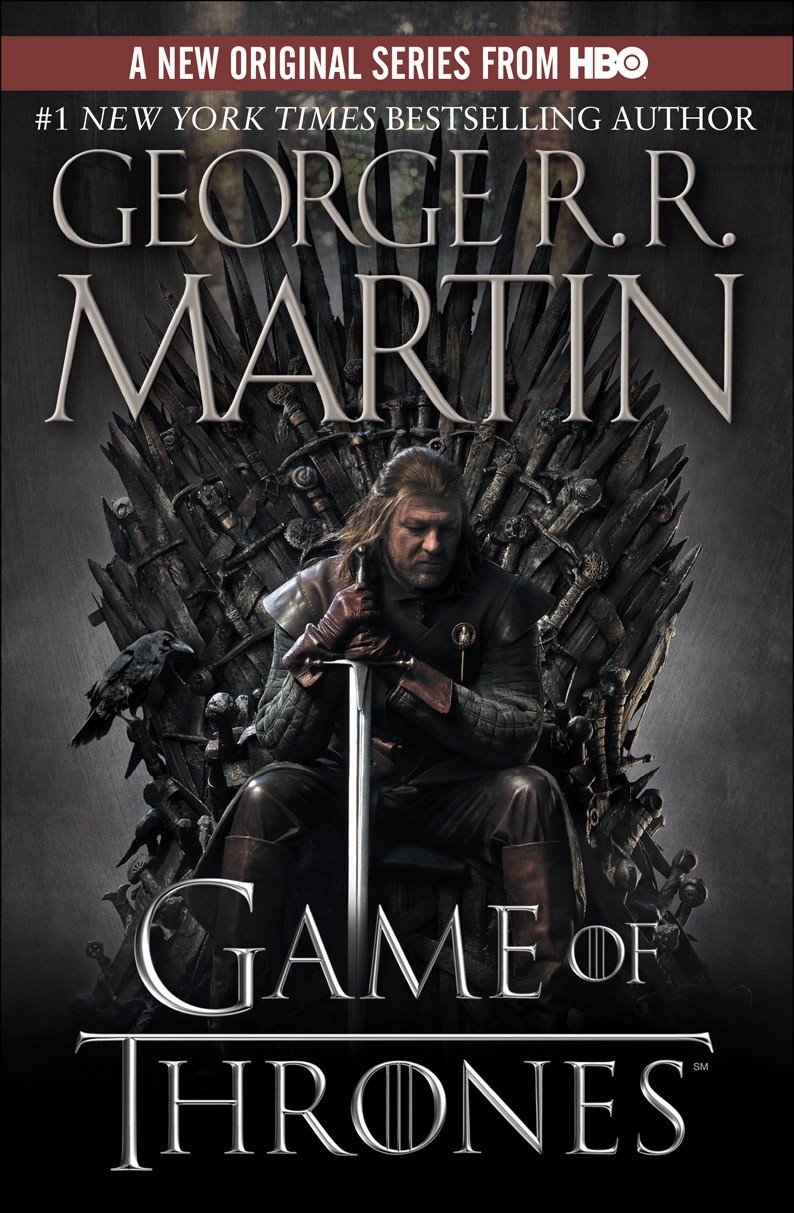
During the long long dark ages of fantasy filmmaking, before the wonder that is Peter Jackson’s Lord of the Rings, or the epic new HBO Game of Thrones, we fantasy fans had to be content with a sorry set of films indeed. Above the pathetic likes of Willow and Krull, the 1982 Dino De Laurentiis epic starring the pre-Terminator Mr. Universe was high art indeed. In fact, it’s pretty much hands down the best High Fantasy film prior to LOTR.

It’s fascinating to see how it’s aged. Pretty well.

Technically, the blu-ray isn’t radically better than the DVD in the picture quality department, although it looks good. There is some film grain from the era, and the movie has a lot of contrast which strains my plasma (I need to get an LCD or good new projector). The sound needed a major new restoration it didn’t get, it was pretty terrible. Which is a shame given the spectacular score. Nevertheless, none of this takes much away from the film.

This movie has blood, guts, and tits, snakes, swords, cannibals, wizards and all that long before HBO. Gotta love it. The period head-banger stylings of everyone, particularly the bad guys are great fun.

I love this trio of baddies. Check out heavy metal guitarist Nigel Tufnel on the right. Love him. And James Earl Jones is fantastic as cruel neo-hippy-killer Thulsa Doom. “Steel is week, flesh is strong!”

This movie feels big. It uses wide open location shots in Andalusia Spain to good effect, big sets, and crazy costumes. It’s just plain unabashed. Sure the dialog is laughably cheesy and the script ham-handed. Transitions are abrupt and there is little to no character development. But there are great lines like “time enough for the earth in the grave” and Atilla the Hun’s stolen quote, “To crush your enemies, see them driven before you, and to hear the lamentation of their women.” All good stuff.

What’s also very interesting is the forgotten style of epic storytelling, which has more in common with Lawrence of Arabia than it does with modern action crap like Transformers. This film has long Easy Rider style travel scenes with just the thunderous score and more interestingly, several almost ballet like giant action numbers with an operatic orchestral quality. These scenes, notably the raid on the Conan’s village, the assault on Set’s tower (awesome!), and the war-painted invasion of the cannibal Mountain of Power (more awesome!), have virtually no dialog. They have muted sound effects, but predominantly the mood is set with the booming orchestra and the intricately choreographed action, swaying as it does to the hypnotic score.

Really good stuff.

Peter Jackson knows his fantasy films, because he borrowed heavily from this in his own epic. Think the Black Riders at the Bree ferry, or the long descent to the bridge of Khazad-dûm. All favorite scenes of mine.

Michael Bey, eat your heart out!

Click for a review of the new 2011 Conan.

Or for more Film reviews, click here.

Storm Front

Title: Storm Front

Author: Jim Butcher

Genre: Paranormal Noir

Length: 384 pages, 87,100 words

Read: July 5-7, 2011

Summary: Fun read, decent noir redux.

ANY CHARACTER HERE

This novel has the amusing premise of taking the straight up traditional noir detective novel, like The Maltese Falcon or The Big Sleep, and giving it a modern paranormal spin. Now it isn’t the first book to do this, Laurell K. Hamilton‘s Anita Blake series is more or less on this model, but Butcher clearly read his source material.

It begins with the detective (ahem… wizard) in his office, and the case initiated by the lip chewing lady. Lets first address the success of this book as a piece of entertainment, then we’ll get into it’s loyalty to it’s sources. The book works. It’s a very fun read, catches you early on with the voice, and moves along at a good clip. I’d have sworn it was 250 pages and not 384. It has it’s flaws, but it’s fundamentally a good piece of entertainment. Compare to the somewhat similar Dead Witch Walking which I started recently but stopped halfway.

The voice is fun. Hardboiled, but not nearly as much as Dashiell Hammett‘s masterpiece upon which it seems loosely modeled. Harry Dresden (the wizard/detective protagonist) is observant and engaging, but he lets you know through interior monologue what he thinks about the situation. True hard boiled only implies or tells just a little. They remain much more oblique in terms of the character’s inner life, despite being first person. Now given that there’s a lot of magic and supernature creatures in Storm Front, being upfront probably helped the clarity. Even if it did occasionally leave me with a tiny feeling of too much TELL. The prose is pretty witty too — again not Hammett witty — but good, and very clear.

The characters varied from excellent (Harry, Bob, the mob boss) to just fine. The villain was kind of weak. Actually more than kind of weak. Fairly cardboard. Morgan (the memory of the White Wizard’s council who watches our hero) was a paper thin twerp too. The plot had plenty of good elements, and moved like lightning, although at times it felt contrived to keep Harry in maximum jeopardy. There seemed no reason he shouldn’t have trusted his police partner a bit more, as the only thing doing so would have cost him is a lot of worry and a whole lot of bruises.

The magic system and supernatural creatures were good too. Handled with a deft brevity as this book has plenty of creatures: vampires, fairies, wizards, etc. but they didn’t bother me — and I’m picky here. Although only the amusing little fairy stood out. A lot (like the vampire) were used jump because. The feel of many elements, like the potions and the fairies, was a bit tongue and cheek, but fit.

True to it’s noir roots, the book is pretty dark, with grisly murders and (off screen) sex. But by being supernatural, and more importantly campy, it looses that black edged moral ambiguity that the best classic noir had, making it just a fun read, free of any real comment on the human condition.

For more book reviews, click here.

More Game of Thrones CGI

My post showing Game of Throne’s transparent CGI was wildly successful (over 25,000 views on my site alone). Apparently its been popular across the web at large because the SFX company released another video of even more.

Particularly interesting is how many of the weapon strike shots (getting stabbed, speared, shot etc) are all added in with CGI. Traditionally this was just done with quick cuts, trick weapons, and fake blood. Now, evidently, it’s cheaper (and better looking) to just have the actors pantomime the response and fill in the weapon and gore. All those latex horror effects guys must be out of jobs!

This is a very effective means of conveying what they’ve done, and also shows you how weird the rough cut of the show must look without the visual effects. And, also tells you why they need six months after wrapping filming to get the show out!

You can check out the first video here, or

my reviews of each episode of Season 1 of Game of Thrones (the HBO series):

[12345678,910]

Or my review of A Dance With Dragons.

Untimed – Two Novels, Two Drafts!

My second novel, Untimed, is a YA time-travel adventure.

And I just finished the rough version of my second draft. Whew! Happy to be done with that. The book grew to 84,000 words (it’ll probably get trimmed down a bit for draft three). It still needs polish, but the second draft is often the worst, and this one took 5 or so weeks of concentrated work. While I learned from my first novel and put the beginning at the right place, the previous draft still had a number of classic first draft problems.

Namely, character and motivation needed work. Plot can formally be considered the friction between the protagonist’s desire and the obstacles to said desire. The book is/was jam packed with conflict and action, but the desire line was a bit weak. I won’t say it’s perfect now, but it’s a hell of a lot better. As are the characters. For me it’s difficult in the first draft to flesh both of these out because as a pantser I don’t know exactly where I’m going with the story until I get there. Not that I write blind, but I like the story and the characters to take me where they want.

When writing the second draft, you have an end (even if you plan on changing it), so you know all the elements that you intend to put in the book. Therefore it’s easier to go back and foreshadow those and reinforce the important ones. You also know what the character is going to need to feel at different points in the story, so it’s easier to try and set up and reinforce those feelings.

Additionally, as a pantser, I actually get to know my characters in the first draft. The writing of them brings them to life in my head. Then in the second draft, I need to brainstorm extra elements in their past and present that reinforce the traits I know they’re supposed to have, then hint at the them in the book. Again, hard to do the first time around.

Now to see what some reader that aren’t me think — and trial and nail the third draft.

I’d also like to thank my story-consultants Sharon & Bryan for listening to every blow by blow change and my independent editors Renni & Shannon for pointing me in the second draft direction. Here’s to hoping I went far enough :-).

The second draft involved a few weeks of incubation (June), a full read and polish (also June), and then hardcore writing from June 30 until August 2.

And in case you’re wondering what the book is about, I still haven’t written a log line, but its a lean-mean-fast-paced first person present story about a boy whose name no one remembers — not even his mother. And it features Ben Franklin, Napoleon, a male gang leader that wears red high heels, and the Tick-Tocks, creepy clockwork time traveling machines from the future.

For more posts on writing, click here.

Game of Thrones – CGI

This is a very interesting little video showing off how the Game of Thrones locations are built up using Computer Graphics, substituting effectively for matte painting in traditional film.

In my extensive reviews of the show one thing I’ve noted is that the “foreground” CGI elements are a little thin. There aren’t much in the way of magical swirls, lightning bolts (LOL) etc. The backgrounds however are incredibly lush — and subtly so, bringing to life the rich and detailed world. This video shows the intricate relationship between the art of the location scout, the set dressers, overall planners, and the CGI team. Pretty impressive!

Also don’t miss this second video with more effects, this includes a lot of action shots (getting stabbed, etc).

Also check out my reviews of each episode of Season 1 of Game of Thrones (the HBO series):

[12345678,910]

Or my review of A Dance With Dragons.

A Dance With Dragons

Title: A Dance With Dragons

Author: George R. R. Martin

Genre: Epic Fantasy

Length: 959 pages, circa 400,000 words

Read: July 12-23, 2011

Summary: Awesome, but not without issues.

ANY CHARACTER HERE

My charge through book 5 of Martin’s epic fantasy series was a bit drawn out by my need to concentrate on the second draft of my new novel Untimed, but I finally finished. Before I launch in, it should be noted that this review is full of spoilers.

Dance is huge, weighing in at nearly 1,000 pages. This itself is actually a welcome and comforting fact because these books are something to savor. Overall, I would rate this volume as better than A Feast of Crows and slightly worse than the first three. Still, it’s a fantastic book. Prose-wise, Martin is still a master at both people, places, plotting and reversals. It’s just that this book suffers from a few pacing and structural issues.

Most of these stem from his controversial decision to pull out half the characters from the bloated manuscript of Feast and push them into Dance by themselves. So the first two thirds of the new book is everyone who didn’t get a turn in Feast. Now, for the most part, this saved the best for last. Dany, Jon, and Tyrion make up the bulk of the book, particularly this first two thirds, and they are some of my favorite characters. But overall this leaves both Feast and Dance feeling a little more threadbare than the first three books. Personally I think he would have been much better off winding out the story chronologically, trimming out some useless threads (Aeron Damphair, Victarion, and probably the Dornes), and rearranging the plot so as to have some kind of sub-climax at the end of each book.

As it is, Dance reads excellently for the first 2/3, feeling fairly focused on its three mains. But it’s weird to rewind in time and revisit certain happenings from Feast from the other side (for example Sam leaving the Wall). When we get to the cut off point, however, some of the characters from Feast start to weave back in. This mostly has the effect of slowing the narrative and making it more diffuse. At least until the set of cliffhangers and deaths that come in the final chapters.

I also think that Martin is letting his pacing slip a bit. It’s not that each chapter isn’t entertaining and well written — they are — but many threads there have multiple chapters where the happenings could’ve been collapsed without loss. If we hadn’t known a few of those details were there, we would never have missed them. Worse than the pacing issues, however, is a weirdly increasing fondness for skipping some of the big moments. Now Martin has always done that (the Red Wedding, the “death” of Bran & Rickon, etc) but it’s worse than ever. He has a real tendency to build slowly toward a big event, then skip the event itself, showing what happened to the characters obliquely through other eyes at a much later point.

I’m going to go through some of my opinions and analysis thread by thread.

Prologue

I don’t really understand why fantasy authors are obsessed with these. It was kind of interesting, but didn’t advance anything.

Jon

His thread is fine (until the end), but it does feel a bit static. While he’s certainly grown into command, he mostly sits back at the wall and fields interference between factions (Stannis, his queen, the Red Priestess, the Wildlings) etc. Then at the end, he mysteriously decides to rush off to Winterfell. This is a move that makes no sense as he has refused to enter into family entanglements about six times before, and while he is goaded, there is really less at stake for him. Then out of nowhere comes a reaction to this decision that leaves us in a bad cliffhanger. Boo.

Tyrion

The Imp is funny as always and now I can hear Peter Dinklage cracking each and every droll line. Still his thread is also a little dragged out, although it does involve some great sightseeing and is certainly entertaining all along. In the first part of the book it feels like he (and everyone else) is heading toward Dany, but then he gets within inches and turns back. Using him to introduce us to Griff and “Young Griff” is however an excellent device and works much better than an extra POV would have. It is mostly through Tyrion and Dany that we get a sense of the complex and old slave societies of the mainland. Unlike Westeros which feels like late Medieval England, these realms feel more like the ancient east (perhaps an updated Babylon vibe).

Dany

Her chapters are mostly political. She does feel a bit passive. I don’t really understand why she doesn’t try to get a handle on her dragons earlier, this is obviously a key move which could trump all of her political problems. Instead she dicks around (literally and figuratively) with various factions. This is all fairly entertaining, but feels like treading water. Then “a big event occurs” (at least this one is on screen) and she rides off on Drogon. That’s all great, but her narrative disappears until the last chapter. When it returns nothing is resolved at all, but a new out of the blue cliffhanger is introduced. I do really like the world of Meereen and the slave cities, although it feels like we are lingering here a bit long.

Barristan

The hero serves to replace Dany as the POV in Meereen. He’s actually a great POV character with all his lingering thoughts about events during and before Robert’s Rebellion. I really enjoyed his chapters. But they didn’t come to any resolution.

Theon

The hier to the seastone chair returns to us, a few bits worse for the wear. I hated Theon in books 2 & 3, but I enjoyed his chapters immensely here. His transformation into Reek and back again is very deftly handled, with a very proper (and sordid) period quality. It isn’t for no reason that Tarantino used the phrase “medieval on his ass” and that is exactly what the Bastard of Bolton has done to Theon. His pseudo redemption is good. Still, we have classic Martin avoidance of the action with the actual escape from Winterfell. In the cut between Theon jumping from the wall into the snows and his delivery to his sister is a big blank. Not that we needed the travel, but whatever battle happened at Winterfell needed some detailing.

Asha

I could have lived without her POV. It mostly serves to fill in some parts of Stannis’s story when he leaves the wall. The technique is sketchy and I ended up having no idea what really happened during his brutal snowy march and the seige of Winterfell. This I thought was the weakest part of the book structurally, as I’m basically confused.

Quentin and the Dornes

Cut! Dull for the most part, except for some info about the cultures they traveled through. I couldn’t have cared less for these characters. The attempt to steal a dragon was interesting, but was also vaguely described. I’m thinking that Martin, for all his brilliance as a character and world builder, isn’t actually the best at action scenes.

The Dorne chapter back in Dorne: It was okay, but we didn’t really need it.

Jaime

This sucked. I like Jaime’s POVs, but this single chapter had a bunch of crap, followed by one of those annoying Martin reveals that just serve to highlight the gap in information. Brienne returns and they ride off. You don’t find out how she escaped her predicament, what she knows, anything. It just kinda sucked. The effect of her cliffhanger was entirely spoiled.

Cersei

These were pretty good, and I enjoyed seeing her get hers. Martin certainly knows how to throw in the creepy little details so your mind fills in the rest.

Victarion

Cut! I could have lived without these, and they basically just told you he was heading off to Dany with a horn and a Red Priest. Although he’s better than his brother — I’d take any chapter over Aeron Damphair.

Arya

These were great. I have no idea where they’re going, but that’s fine. Arya has always been one of my favorites. Give us more. To be honest it felt like these were the chapters that should have gone in Feast and this the conclusion that book should have had for Arya’s thread. Probably that was Martin’s original plan.

Bran

His chapters were good, but so little, and it all felt dropped as his last chapter is about midway in the book.

Davos

I’ve never been a fan. I think we could have just had these told by raven.

Epilogue

This was actually very good, really being a Kevan in King’s Landing chapter in disguise. I loved the return of Varys at the end — particularly his dialog.

Some observations: There is more magic of sorts in this volume. Martin has a real thing for nubile slave girls — but then again, what self respecting fantasist doesn’t? The scope of this book, with it’s gigantic foreign cities reminiscent of the ancient world is going to make for some hard adapting should the TV series get this far. As I noted in my series reviews the show already has problems with handling large scale people scenes. These slave cities and the like will make that even harder. Likewise with the slave sex and slave violence. I’m all over it (in fiction) but some of it will undoubtedly have to be cut/changed. Sigh. I like that Martin at least highlights some of the sad reality of actually being a nubile slave girl.

Overall, Martin’s books are among my all-time favorite novels. I enjoyed the book immensely, and eagerly await the the next volume (and I’m sure I’ll be waiting for a long time), but I can’t help but think it could have been SO much better if Martin had taken all the material in both Feast and Dragons and reedited them together into two chronological and slightly leaned down volumes.

Also check out my reviews of each episode of Season 1 of Game of Thrones (the HBO series):

[12345678,910]

The Eagle

Title: The Eagle

Director/Stars: Channing Tatum (Actor), Jamie Bell (Actor)

Genre: Period Adventure

Year: 2011

Watched: July 7, 2011

Summary: Decent.

ANY CHARACTER HERE

It’s interesting that in the last year or so there have been two movies about the Roman legion “lost” in North Britain during the Hadrianic period. The other is Centurion which I review here. It just goes to prove that Hollywood loves to copy. Two volcano movies? Two Wyatt Earp films? Two Lambada films?

And, to boot, it’s unlikely the legion was actually “lost” (as in militarily). More likely it was just disbanded and the sketchy historical record makes it seem to have disappeared.

In any case, The Eagle is less stylized, and perhaps less anachronistic in terms of it’s action and look than Centurion. However, it doesn’t work as well. Centurion is a very fine chase movie, with almost no character development. The Eagle tries for the latter, with mixed success. The first half works best. Our hero, Centurion Marcus, is posted (on request) to a fort in Britain, proves himself and is injured, then gets shipped out to his uncle’s villa to recover. I liked this opening section, and the film is very well researched from a visual standpoint. The scenery and costumes are great. They didn’t, however, get as much right involving the way in which the Roman army is organized. They insisted on using modern terms like “duty roster” and “honorable discharge.” Roman soliders (of this period) weren’t enlisted out of civilian life. They were either senatorial/imperial appointees (mostly officers) or serving a fixed (20+ year) service.

But I did like this early section. The battle sequences were well done. I liked the crazy druid and his chariot (still in use then by tribal groups in Britain). I liked the legionaries fighting in formation (mostly).

But after recovering, Marcus makes the ridiculous decision to go north of Hadrian’s wall (into enemy Scotland) by himself, accompanied only by a celtic slave who owes him his life. His mission, taken upon himself, is to recover the Eagle (battle standard) lost by his father a decade or so before. He has no idea where it is. Scotland is a big place, full of celts and picts. They don’t like Romans.

But he blunders right into it after riding across some gorgeous wet looking scenery. Again, landscape and costumes look amazing. The movie also doesn’t have a lot of CG, which is good. The natives feel very… well native. I was reminded visually of The New World — a movie of stunning visual lushness about the Jamestown colony. After all that we have an encounter with this seal tribe, a fictionalized Northern British coastal tribe. Their look and ceremonies are wonderfully depicted. Marcus has a bit of slave/master reversal with his friend, but eventually the two grab the eagle and make a run for it, followed by a showdown.

The finale devolved into a kind of anachronistic “all cultures are equal” kind of thinking that just did not exist in the second century. Not only didn’t it exist then, it didn’t even exist during World War I, or any time in between. This modern, intensely modern, way of thinking was formulated during the 20th century. Sure a few people may have thought this way — slightly this way — in the 18th and 19th centuries. But precious few.

Romans. No.

The Roman’s were actually very accommodating and tolerant of foreign cultures and races, radically so compared to medieval Europe, incorporating them in great numbers into their polity. But this stemmed not from any sense of cultural relativism, but from an intense pragmatism, and a world-crushing confidence in the ability of Roman society to absorb and transform.

But back to the film. Overall, I enjoyed it, but mostly from a visual and historical standpoint. The costumes, locations, and sets really are fantastic. It has a pretty ancient feel — ignoring some of the dialog. It’s not nearly as satisfying an adventure movie as Centurion. But it tried to be more. I also appreciate the extremely well done more traditional style of filmmaking. This is no 300, full of garish comic book stylization and whacky CG.

For more film reviews, click here.

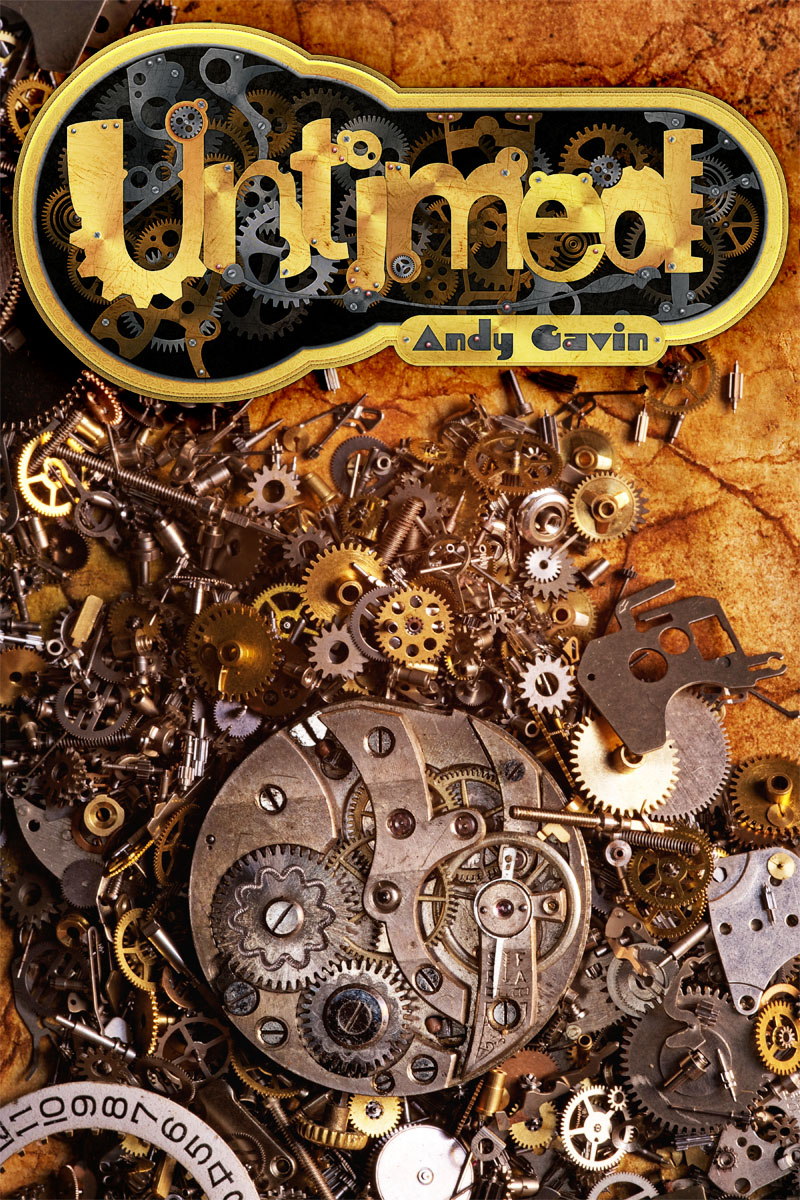
Untimed – The Second Cover

Just finished up a new “working cover” for my second novel, Untimed. Thanks a million to my friend and long time business partner Jason Rubin for concocting the excellent logo. He is a true Photoshop wizard.

If any of you have thoughts on the cover (the book’s a YA time travel adventure), post them in the comments.

Now back to working on the second draft.

I will use powers of superhuman concentration to ignore the fact that I have A Dance with Dragons sitting on my iPad — more or less unstarted.

I will.

Not reading during working hours!

Kushiel’s Dart

Title: Kushiel’s Dart

Author: Jacqueline Carey

Genre: Epic Historical Fantasy

Length: 912 pages, 315,000 words!

Read: June, 2011

Summary: Long, overdone, but intriguing

ANY CHARACTER HERE

This book itself as Fantasy, but it’s certainly not your typical one. Really it’s a sort of reinterpreted epic (and I mean long) historical romance — without much of the modern sense of romance (almost none). But it does have plenty of the traditional, more atmospheric form.

This is a flowery first person narrative about a slave girl brought up as a sort of high end courtesan who gets involved — very involved — in politics. I’m going to try and break down and discuss various elements of the work.

It’s worth noting the tremendous length. The book is 900+ pages and feels it. I enjoyed it, but it’s like four novels glued together. This lends it a decidedly Gone with the Wind effect. Just when you think it should be over (except for the fact that you have 650 pages to go!) everything switches up and it moves on to a new stage. This happens several times.

First the setting. With the exception of a bit of prophecy and one large scale pseudo divinity (the Master of Straights) at about the 85% mark this novel really has no magic. And in fact, is actually a sort of disguised work of Historical Fiction. The Fantasy is more the invented nature of the tale than any actual magic. As best as I can tell the whole thing is more or less set in a reinvented thirteenth or fourteenth century France. It felt late medeval or early Renaissance. At times I wondered if it even had overtones of Carolingian (ninth century France). The names of the places and faiths are all changed, but in a recognizable way for those of us who know our European history. Rome is “Tiberium,” Spain “Aragonia,” the Germanic tribes the “Skaldi.” Carey does a good job of this, and her grasp for the flavor and cultures of Europe between the fall of Rome and the modern era extremely solid. The central nation of the novel feels both troubadour French and even a little Late Venetian Republic at times. There are plenty of deviations from real history. First an foremost the loosey goosey religious situation (as opposed to the dogmatic Catholic church). The religions have been reinterpreted and the nation founded by what appears to be an interesting mating of Jesus and Dionysus. An intriguing (and Romantic) mythical entity who was also followed around by a bunch of demi-god disciples who seeded various schools or bloodlines. Overall, the setting was probably my favorite part of the novel.

The voice. At first I loved the voice. Yeah it’s flowery. Girly. Really girly. And full of words that the Kindle dictionary informed me were “archaic” or just chosen for plain weighty flavor. Words like “limned” or “ague.” The sentences have an unusual and formal structure. There is a LOT of reppetition. This began to wear on me. Carey reminds you like 50 times who everyone and everything is, which considering the vast cast of characters and the incredibly complex political situation might be necessary for those that don’t have a semi-photographic memory or an obsessive knowledge of European history. The narrative is first person, and told from some unspecified far future point in Phedre’s (the protagonist) life. It’s the antithesis in many ways of my own voice, as it’s really really really heavy on the TELL and fairly light on the SHOW. Carey loves to insinuate before the action (when it occasionally occurs, separated by many many pages, but often enough given the titanic length of the book) that things won’t turn out as planned, or that something bad is about to happen. Lots and lots of stuff is done with narrative summary. I myself try to set everything in scene and tell it as it happens in a more hard boiled style, more like the Maltese Falcon or the Big Sleep, even if the subject matter is very different. Carey chooses a more sentimental approach. But at the same time I found the voice very distancing. A lot of this is the feeling that it is written looking back on events, which removes a lot of the tension inherent in the action. The rest is probably the TELL factor.

I liked the whole sex-slave-girl-bondage-courtesan angle. But Phedre is a little too good at just about everything other than pure agressive bravery, and she has her constant companion the warrior-monk for that. While bad things do happen to her, she pretty much flawlessly reads every situation and is titanically lucky / unnaturally talented. I still kinda liked her. And the fact that she has a lot of edgy sex is good. The book alternates between graphic and evasive in this realm, which ends up being more teasing than satisfying. Still, I guess normal people might find it dark.

Now the overall affect of this novel is pretty good. It starts off great. But it sometimes bogs under volumes of political talk I found excessive — and I read multivolume political histories for pleasure! Some of the sub-adventures (like Phedre’s time as a Skaldi slave) are really good and there are lots of varied settings, cultures, and characters. I also really enjoyed the depth of world building and the alternate but very “realistic” religious mythos. But…

There is absolutely no psychological realism to any of the characters, our protagonist included. The central condition of Phedre’s nature is supposed to be that she finds pain and suffering intrinsically hot. Even this isn’t really handled totally consistently. The rest of the people — while interesting and possessed of different traits — merely serve the story or the need to roster out a bunch of interesting types. The don’t feel exactly cardboardy, as they are detailed, but unlike the completely brilliant Game of Thrones, there is no fundamental relationship between the different nature of different personalities, their situations, and the decisions they make and the consequences those decisions bring.

In the end, I found the way in which things just sort of grandly worked out for Phedre tedious. The big war at the end is complex, but summarized, and the wrap up phase of the story nearly 100 pages. Carey also just loves to throw in grand and sumptuousness just for it’s own sake, which at the beginning felt lush, but by the time Phedre has dressed in 62 elegant gowns a bit much.

Still, I kind of liked the book, if only for its world and its very creative reinterpretation of medeval/renaissance fantasy. At times it reminded me of Guy Gavriel Kay, but his works felt somehow a bit more connected to place and certainly more emotional.

For more book reviews, click here.