Book Review: Switched

Title: Switched

Author: Amanda Hocking

Genre: Paranormal Romance

Read: Jan 2, 2010

Summary: Easy read, but needs editing badly.


I’ve been doing research on publishing for the last year. I’ll have to write a separate post about the changing nature of the biz, it’s relationship to other publishing businesses (like video games), and the rise of the self published ebook author. But in any case, I stumbled upon this independent and self published author who is selling very well (mostly on Amazon) with no prior print history. I figured I’d check one out. Switched appears to be her best seller and she says on her blog that it’s her favorite.

This is a funny little paranormal romance about a girl whose mother hates her and thinks she’s a changeling — but she is. In fact she’s a troll. She’s then dragged off to her real mother. The first 25% is slightly “high school novel,” and the later 75% “fish out of water.”

Overall, I’m not sure what to make of the book. The first person voice was strangely engaging and I pounded through it easy in an afternoon. Still, it felt like a first (or maybe second draft), and it’s full of flaws.

According to her website the author has roughly ten novels, mostly written in 2010 and she pounds out the first drafts 2-4 weeks! I consider myself fast at 2,500-4,000 words a day of first draft, but I have to admire that kind of lightning pace. The book was short. Maybe 50-60k words and it could perhaps be classified as “engaging” but could’ve been “really fun read” with some real editing.

There is a crazy amount of “tell,” in this book. A lot of it buried in the overzealous volume of interior monologue. Characters are constantly attributed characteristics directly, without them being shown. Often, these characteristics are never shown. The protagonist gives the straight dope on things as she sees it, but this often feels more like how the author wants the reader to see it than how it really is. In fact, there isn’t a whole lot of “show” in the book at all.

The author is a solid writer. The sentences themselves are well formed, but a lot of them needed to come out, or be trimmed down. Conversations are redundant. Dialog points are redundant. The author loves the words creepy and foxy. Really loves creepy. The important scenes feel drained of emotion as the excessive interior monologue and somewhat forced dialog rob the moments of any real drama. The more casual conversations feel better than the important ones. When there’s action it’s awkwardly blocked, so that you have to go back and reread lines sometimes to figure out what happened physically. The overall plot is pretty straightforward. The end was abrupt and unsatisfying too.

But still. I can’t say it didn’t have a certain charm. I enjoyed reading it, more than many published POCs (like for instance Personal Demons). The fantasy concept is decent and didn’t bug me.

Of course the novel only cost 99 cents! The writing is probably on par with Twilight (see my review HERE). Not that that’s high praise. It just needs a lot of revision. Some plot changes to increase drama, character tune-ups, and most of all line editing (see my detailed post on that HERE).

This is an Indy book. It’s professional, but it’s also the novel equivalent of a B movie. Written quickly, revised quickly, and sold cheaply. The author has enough talent to shoot higher.

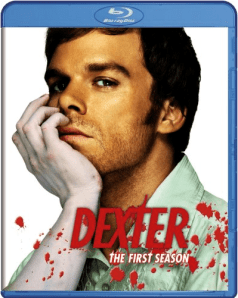
Book and TV Review: Dexter


Title: Dexter Series and Darkly Dreaming Dexter

Author: Jeff Lindsay

Genre: Dark Comedic Horror Police Procedural

Read: Dec 25-31, 2010

Show: Summer 2010

Summary: Immediately watch the show unless you are a squeamish person or otherwise sensitive to gruesome fun.

_

I’m going to try and stick to reviewing tothe first novel (Darkly Dreaming Dexter) and to the first season of the Showtime TV Show. I have, however, seen the whole series.

First, the show. This is one of the best shows on Television, and lots of people know it. It’s incredibly well written and engaging, without resorting to quite the level of crazy plotting that HBO usually goes for. Still, there is plenty of shock, and lots of blood. Not much sex — maybe they thought it would be WAY too creepy to mix in — but lots of blood and death. The idea of a sort of vigilante serial killer protagonist is pretty brilliant, and I’m amazed they pulled it off so well. I mean, taken in any context Dexter himself is really one sick fuck. But you do like him. And the supporting cast is great too. All of them really.

My only problem with the first season is that the Ice Truck Killer is a little too psychic about what is going to happen and what will push Dexter’s buttons. Now granted, there’s a reason for this, but I didn’t totally buy this level of prediction. Still, I had a blast, watching the whole thing in like 2-3 nights.

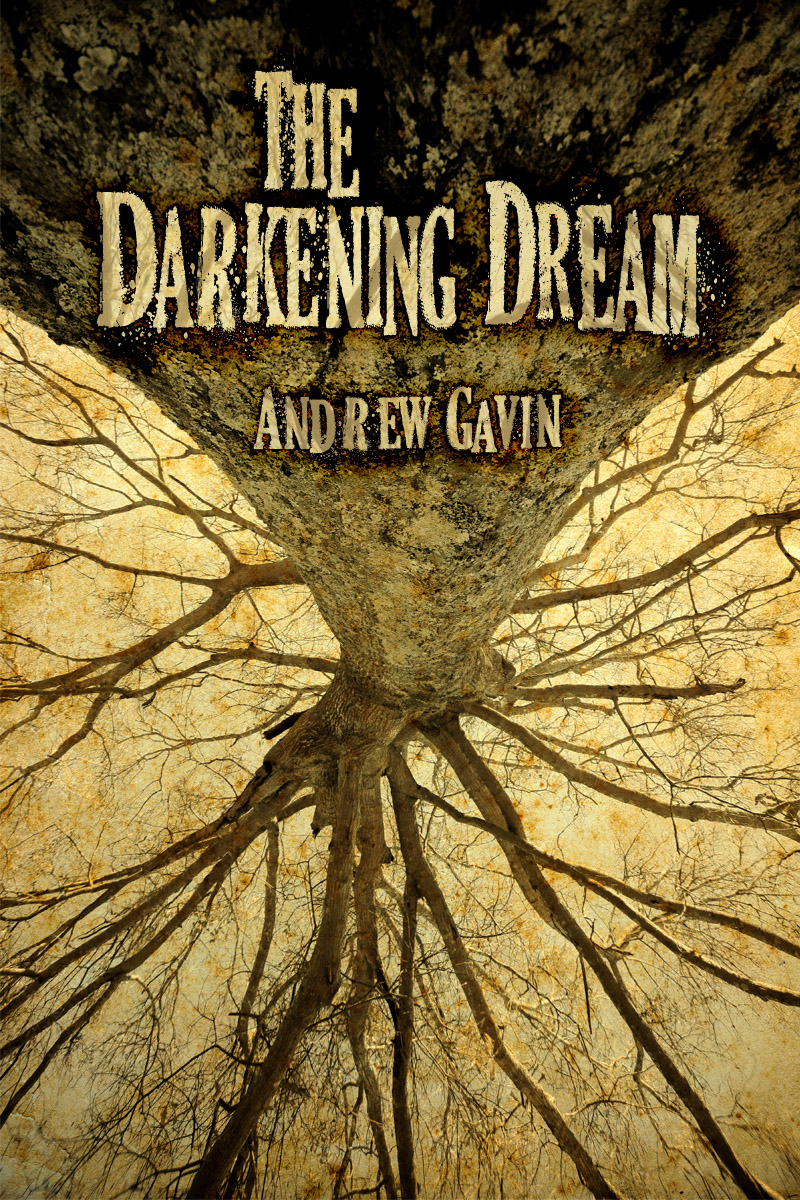
The show is dark, and pretty grisly. Did I mention dark? I love it. It’s also very very funny, in a perfect way which doesn’t give up on any of the realism. This is great. The writers do this with Dexter’s inner monologue, and the way in which his observations are often so in opposition to the situation. But the really telling thing about the show, and what makes it really great fiction, is that sometimes (terrifyingly often actually) we agree with him. Everyone has a bit of the serial killer inside them. Don’t get me wrong. I escort spiders outside to avoid killing them, but a dark thought or two has been known to cross my mind — or issue out of my keyboard — as my own book is pretty dark. Not to mention that my title (The Darkening Dream) is oddly similar to Darkly Dreaming Dexter. But I want to put it on record that I’d never even heard of the novel when I came up with the title. I guess Jeff Lindsay and I both adore alliteration.

Now the book.

It’s hard for me to judge it objectively because I saw the show first. The voice is really great, and the opening killer — literally. The show stays pretty tight to the novel for a while, and a lot of interior monologue and signature elements are in both. When Dexter is being naughty, particularly at the beginning, it’s totally gripping. The novel isn’t very long, 300 pages, 72,800 words. I liked the book.

But I loved the show. It’s just better. There’s more to it (and I’m just talking the first season). The plot is pretty similar, but the characters have much much more depth in the show. In the novel only Dexter, LeGuerta, and Deb (to a lesser extent) are real characters. The others from the show are mostly there, but mostly just scaffolds. In the show they really pop. Angel, Doakes, Vince, Rita etc. They have more dimensionality.

The plot too is much better developed in the show. The back story with Harry is beefed up. There are more twists and turns, and rightfully, the Ice Truck Killer is brought into the story in an active (on screen fashion) much earlier. Dexter’s kills and habits are better defined and more ritualistic, and there is a strong element of the “Cop Show.” Novel Dexter is less likable than show Dexter. Even the voice of the novel — it’s strongest element — is actually better in the show. Michael C. Hall‘s performance is awesome, and he really sharpens the edge on it.

And all the plot changes are big improvements. I had my one little plot beef with the first season, but the novel has several gaping holes. Not that it isn’t still a fun book. But the end for example. Why doesn’t Deb have him locked up? He really didn’t act in a terribly human manner. Also the element of coincidence and near mind reading on the killer’s part is way more pronounced in the book. This always bugs me. Also, Lindsay didn’t do a great job pre-selling Dexter’s origin. He just pops it out of the woodwork at the end (having seen the show I knew it was coming). The show sets it up really nicely.

He did however do a brilliant job with the little bit about “Mommy hiding the rest of her body in the little hole.” Oh so dark and nasty!

Book Review: The Spirit Thief

Title: The Spirit Thief

Author: Rachel Aaron

Genre: Light Fantasy

Read: Dec 7-16, 2010

Summary: Ethereal fun.


Between a trip back east, mega editing on my own book, and another parental visit last week I only had time to read five or so novels in December, about a quarter of my usual rate.

Don’t confuse this fun little book with The Lightning Thief, which I also just read and reviewed. The SPIRIT Thief straddles a fairly unique line between totally straight up 80s fantasy and comedic fantasy the likes of River of Dancing Gods or Myth Conceptions. It’s not however as totally comic as those, and somehow seems a bit smaller and lighter (if that’s possible).

The voice is very good, and the opening scene brilliant. There’s a nice new magic system here, where every living thing has a spirit inside that wizards can bargin with, enslave, or what not. Like comedy fantasy Shinto. It’s not entirely evenly developed, but the book is at its best during the magic fights. Although they do have a certainly sketchy quality too them, where the action doesn’t feel entirely blocked out, but I still liked quite a bit of this. The master swordsmen are really nicely done, combining the intrinsic magic of the book with a slightly Robert Jordan-esque blade-master feel. There were moments that almost felt super cool.

The prose can be very wry, in a good way. Funny, without laugh out loud. A lot of this involves attributing emotion to inanimate objects, which given the magical system is perfectly in line. When it’s on, this is certainly very fun to read. But at the same time this levity makes it hard to take the characters too seriously, and certainly not their perils. So it works for and against. I found oddly marooned in a peculiar — albiet unique — tone.

For some reason it also reminded me a bit of Shattered World, one of my high school favorites. Probably because the protagonists is a thief. I maybe wanted it to feel more like that, but it doesn’t feel as big. Everything takes place in a fairly short time and place, and the stakes seem a little local. The light tone also works against the emotional intensity of the characters, and I for the most part feel that they existed to either service the plot, or like the author was more sure of their personality than the character. The villain in particular is of the “i’m very bad, and very mad, and bad at being mad” sort.

So overall I would call the book a snack. But a tasty one.

On Writing: Line Editing

Line editing and polish is an interesting part of the process of professional writing. It bears a lot of similarities to optimizing code as a programmer, but more fun. One of the weird things is that no mater how many times one has read a chunk of prose, there’s always room for improvement. In code optimization, one is usually trying to make the code either smaller, or use less memory, and there’s a clear logarithmic curve, where for ever increasing energy one can achieve ever shrinking gains. Plus, in order to make it faster or smaller one often has to make the code messier or more complicated. Caching is a frequent speed optimization and this always leads to extra complexity and bugs.

Not so with prose. Optimizing prose should always make it better.

With prose, shorter is usually better — not always, but usually. You want your story to move. Scenes serve a number of purposes. They must entertain, and be cool. They must characterize, and essentially, they must move the plot forward. Each scene therefore has a set of things it accomplishes, changes in the state of the characters, their knowledge, their situation. I have scenes that have dropped from 2600 to 1100 words and yet still accomplish all the same plot and character transformations. Oftentimes even more has been thrown in during the process. If every line, ever word matters, then the scene races along.

At first my editing was a mater of reading the prose over and tweaking the sentences using my inner ear. I have a pretty decent one due to lifelong obsessive reading (5000+ books at least — 150 novels this year alone). If you want to write, you must read. There’s no other way. You have to fill your head with sentences so that when you see an awkward one, it rings wrong. Plus, reading is also the key to vocabulary. Still, you can manually build vocabulary, but it’s tough to build inner ear quickly. My early editing passes were like what I’m going to do with this blog post. I wrote it, then I read through and neatened up the bad sentences — very casual.

But there’s a much deeper level of craft possible.

Here is a paragraph from my novel’s first draft:

The newly exposed body was that of a young boy, perhaps fourteen years of age.  He lay naked on his bake in the dirt, covered now only by a few random sticks and leaves.  He had light mouse brown hair, and his pale eyes were wide open leaving him frozen with a startled expression.  His skin was very pale all over, and one arm was bent savagely behind his back, the shoulder bulging in an odd way as if it had been ripped halfway out of its socket.   This was on the opposite side of the mangled leg, lending him a kind of grim diagonal symmetry.  He had gashes on the wrists, ankles, and a deep gouge on the side of his torso.   There was surprisingly little blood.  Numerous flies however had discovered what little there was, they buzzed happily about the wounds, and crawled in and out of his nostrils and mouth.

Then again as it was a couple weeks ago, after probably 15 or so light self-editing sweeps:

Revealed was the body of a boy, naked in the dirt, belly up, covered only by stray sticks and leaves. His eyes stared at the sky, a startled expression frozen on his face. His skin was bluish white. One arm was twisted behind his back, the shoulder bulging halfway out of its socket in response. On the opposite side, his knee was mangled, lending him a ghastly diagonal symmetry. Cruel gashes scarred his wrists and ankles, and a deep gouge split the side of his torso. There was surprisingly little blood, though innumerable flies buzzed about the wounds, crawling in and out of his nostrils and mouth.

Then two weeks ago, I did a serious self edit pass. The heavy use of passive voice makes me cringe now, even though I had a deliberate intent in using it (to have the effect of someone looking, and then surprised to see this shocking sight). After that my editor got to it, then I cleaned that up yet another time. Notice how the final result is 40% shorter than the original, but isn’t really missing anything. There was too much prose the first time. There’s still a lot, as this is a purposeful attempt to kick the sentences into slow gear for horrific effect.

The body of a boy lay naked in the dirt, belly up, covered only by a few remaining sticks and leaves. His eyes stared at the sky, his face frozen in bewilderment. His skin was bluish-white. One arm was twisted behind his back, the shoulder bulging unnaturally. On the opposite side his mangled knee was twisted, lending him a ghastly diagonal symmetry. Gashes scarred his wrists and ankles, and a deep gouge split the side of his torso. There was surprisingly little blood, though flies buzzed about the wounds, crawled in and out of his nostrils and mouth.

Or take this example of some dialog from my first draft. The first speaker is the sister of the second (Sam).

“Hi Sarah,” she began, but quickly turned to her brother, “Sam get that pack on the horses and lets get going.  Nothing fun is going to happen here right in front of Sarah’s house.”
Sam snapped to mocking attention at his sister’s order, “yes ma’am!”  However, he quickly packed Sarah’s stuff into the saddle bags and then put his hands together allowing Sarah to step up and swing onto the small horse.

Then the current edited version.

“Sam, get that pack on the horses. Nothing fun’s going to happen here on the street five minutes from our house.”
Sam snapped to attention, “Yes, ma’am!”

The sentiment is the same, but it’s a third the words, and vastly snappier. A frequent culprit is first pass dialog. In the first line, the same thing is said twice, both indicate the desire to hurry (which is the only real point). Cut one, or merge. The beat about turning isn’t important. The “snapped to mocking attention” is a TELL. We can tell from the action and his dialog that he’s mocking her (it might not be obvious from the isolated lines, but it is knowing they are siblings of the same age). The final bit about mounting the horse isn’t really needed. In the next scene they’re ON the horses, so we don’t have to show them mounting, it’s assumed in the dead zone of the scene break.

In essence, even after one has worked out much of the plot and character quirks, each scene, each paragraph, each sentence can be polished. Lately for example I’ve been trying to make description more lively. A chunk from my first draft:

The Palaogos house was a large home that had been built approximately fifty years earlier, in the residential adaption of the gothic revival style.  It was all wood, and had a haphazard and eclectic appearance not unlike a giant gingerbread cake.  Frilly little wood details abounded, and it was even replete with a turret like tower.  Inside the atmosphere was generally dark (Palaogos men were not often bothered to draw curtains or open windows), and had lots of odd shaped rooms decorated with a very peculiar mix of period furniture.  The floors were draped in heavy carpets, mostly Turkish, covered with dizzying non-figural designs.  The furniture itself was all very large and heavy, a mixture of things like medieval trunks and benches, juxtaposed with Viennese, Bohemian, and Venetian baroque cabinets and consoles (the later adding a touch of gilt to offset the dark woods of the former).

The description is just description. There are a few amusing comments mixed in, but awkwardly with the parenthetical forms. Below is my current version.

He wound through the maze of staircases and twisty corridors that honeycombed his new house. Built by some baker-turned-architect maddened by the American Civil War, its gothic revival style lent it a haphazard appearance not unlike a giant gingerbread cake. Frilly wooden details included a turret-like tower and odd-shaped rooms carpeted with dizzying non-figural patterns. To this Grandfather had added his own taste for the baroque, all grand and substantial, a hodgepodge of medieval trunks and benches, juxtaposed with Viennese and Venetian cabinets. Dark portraits of dour old men and dying saints scowled down from gold-framed canvas perches.

I’ve converted it from passive to active. He actually travels through the space. Attributing the construction to the “baker-turned-architect” livens things up, and instead of just saying there is baroque furniture, it’s attributed to Grandfather such that we get just a smidgen of characterization.


As you can see this is a highly iterative process. If you are curious to learn more — and there is like 10,000 times more to learn — my freelance editor has a great book on the subject (click the picture to the right).

FOR MY PREVIOUS POST ON WRITING, CLICK HERE

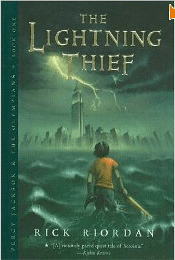
Book Review: The Lightning Thief

Title: The Lightning Thief

Author: Rick Riordan

Genre: MG Fantasy

Read: Dec 1-6, 2010

Summary: Okay read, but really cheesy.

_

In my ongoing research of novels: both bestselling and good, I figured I should give this one a try. Sure it’s for a young audience, but I’m also a big Greek history buff.

Hmmm. The voice is engaging, and it’s certainly easy to read. The idea is great. The characters fine, not good but fine. The writing is stiff, and the plotting… oh the plotting is pretty awful. I really don’t understand why it sold so well. Perhaps it’s a vaguely educational angle?

Percy himself is likable, although he is unrealistically brave in this just-go-for-it-because-I-know-as-protagonist-I’ll-win way. The rest of the characters are pretty one dimensional, although they do fulfill the requisite positions.

The flip style is good, but not exactly ground breaking, and the sentences are clunky.

I’m a stickler for accuracy with regard to mythology. But mostly, that part isn’t too bad. Sure he completely goofed Satyrs, as they are hybridized horse people, not related to goats (although they are partial to the beasts). You can see my detailed post on Satyrs. And on a related note, Dionysus was lamely portrayed, missing out on any of the interesting nuances and dichotomies of the god. That’s the name of the game for this book — shy on nuance. Sure he throws in all sorts of figures from Greek myth, but very little of their subtle and interesting character is retained. But the modernized updates are sometimes fun. Even so, this wasn’t my big problem with the book.

The plot. The premise of modern day child of the gods is great. The overall arc of the plot is fine, that a war of the gods is brewing. It’s just they way the main quest is actually architected. The middle 50% of the book consists of a series of encounters with monsters literally concatenated with nary a thought as to connection or relevance to the overall story. In fact, you could delete quite a few of them and never notice. This is always bad writing. If a scene can be deleted without incident, well then, it probably should’ve been. The overall taste we’re left with is one of ludicrous coincidence, where everything just happens to the hero.

Then we get to the end. Can we say cheesy melodrama. There’s no real menace, or challenge. Things just kind of happen. Mostly the hero solves them by whipping out his sword disguised as a pen. It all works out. It didn’t have to be this way. Harry Potter is much better plotted.

Now I have to see the movie and compare. This may be a chore. I wonder if the series gets better, but I don’t have the interest to find out.

Book Review: Uglies

Title: Uglies

Author: Scott Westerfeld

Genre: YA Science Fiction

Read: Nov 19-21, 2010

Summary: Great Read.

_

The Science Fiction in this book is a little hokey, but it’s still a extremely compelling read. There is a bit of a silly high concept in this dystopian future, where at 16 teenagers get an operation that promotes them from “uglies” (normal people) to super improved “pretties.” I didn’t really buy the idea of this particular and odd society, but I just suspended my disbelief and enjoyed the ride.

The voice is solid and captivating. It’s a good story, and the world has a really nice feel. The characters are pretty well painted too. I pounded though the book and ordered the sequel. I have some little beefs with the logic of the plot, and a bigger one with a motivation of the protagonist, and the ending. However, when I enjoy a story and care about the characters, a little ignoring is worth it.

There are also some cool gadgets. The tech feels a little uneven — I usually find that the case, where the level of technology changes aren’t consistant across the board. But a good read is a good read.

Inside Game of Thrones

HBO has been working on a new hour drama based on my favorite fantasy series, Song of Ice and Fire, which they’re calling by the title of the first book, Game of Thrones. Last night they ran a 15 minute teaser which can be seen here.

I need to do a full review of the series, which you should all immediately read if you haven’t, but it totally rules, and the HBO show looks fantastic too. The books are long, but incredibly fast paced. Set in a sort of fantastic reinterpretation of late medieval England, the magic is very lightly handled. In fact, the story concentrates on extremely vivid and ambiguous characters caught in a vicious political struggle. It’s very dark and real — giving new meaning to the Tarantino phrase, “I’ma get medieval on your ass.” However, nothing’s gratuitous, just well done.

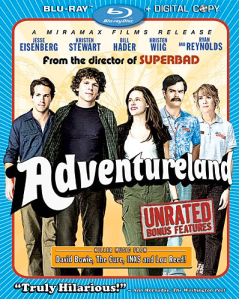
Movie Review: Adventureland

Title: Adventureland

Director/Stars: Jesse Eisenberg (Actor), Kristen Stewart (Actor), Greg Mottola (Director)

Genre: Period (80s) Comedy Romance

Watched: Sept, 2010

Summary: Touching, funny. Great film.


I didn’t really have a lot of expectations going into this film. I knew it was by the same director as Superbad (great film) and starred Eisenberg and Stewart, and that’s about it. It’s a great film. The kind they rarely make anymore where it’s essentially a character movie woven around a romance. The script is great, the acting’s great, and the direction is great. It’s a funny movie, but not in the laugh a minute kind of way, but in a wry more or less real way.

Comedy varies across the spectrum of dark to realistic to slapstick to abstract. This is realistic. The humor is partially in the fact that these situations are real situations that we did or could have found ourselves in — and hence, it’s a kind of bittersweet humor. The tone is not so different than the excellent Freaks and Geeks TV show, and in fact there’s at least one actor in common (the excellent Martin Starr). They don’t make a lot of comedy romances like this anymore, the kind where there’s no gimmick, just real people, and hence real romance.

The plot is fairly incidental. We have the likable Eisenberg (playing on type, but great as a Geek who isn’t really shy) who has money troubles and needs to take a lousy summer job at a crappy Pittsburg theme park. Having grown up in the 80s this is exactly my generation (I’m perhaps 4 years younger than the characters) and the music and outfits are nostalgic and amusing. None of the people he meets are exactly stereotypes, and they have a delicate underwritten quality. The core that holds the film together is Eisenberg and Stewart (who proves she can do better with a script that isn’t terrible… I mean Twilight — CLICK FOR MY REVIEW). Not just the acting but the writing. He’s the kind of guy I could imagine being friends with, and she’s the kind of girl I could imagine having fallen for in college. There relationship feels real. This makes it sexy even though there isn’t much sex. And isn’t that one of the main things that fiction is about? Depicting real people. It seems all too often forgotten.

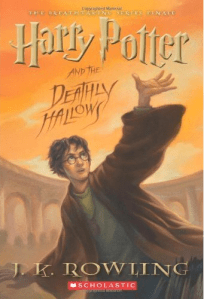
Book and Movie Review: Harry Potter and the Deathly Hallows

Title: Harry Potter and the Deathly Hallows

Author: J.K. Rowling

Genre: YA Fantasy

Read: 21 July 2007, Watched (part 1): 20 Nov, 2010

Summary: Satisfying but obligatory conclusion to the epic series.


Retarded title aside, this is a pretty good film. Caveats, however, abound. If you haven’t seen all the previous installments, or at least the last several — forget it. The film just roles right into the action, with nary an attempt to explain past events, or even to introduce the rather vast array of characters, some of whom die after only a few moments of screen time. This reliance on the previous chunks of the story I find perfectly reasonable, to do anything else would be difficult and boring.

What is odd, however, is that I’m not sure this film series would make a whole lot of sense to the fifty people on earth who haven’t read the books. In fact, I’m pretty sure it wouldn’t. I know a few of those people, and they seem to be universally baffled by the films, and don’t particularly enjoy them. Now I enjoyed my 2.8 hours, but I’ve read all the books, and seen each film at least once (as they came out in almost all cases). The books and films enjoy an peculiar symbiotic relationship. The films rely on the books completely for the sense of the rhythm of Hogwarts (not present in DH part 1 anyway), true understanding of the complexity of the plot, anything beyond names and faces for the secondary characters, etc. They just don’t have time to include it. The movies, on the other hand, prop up the visual world of the series. Now I first read the first four books BEFORE any of the films came out, but when I went back to reread book one this year (it’s still great) I realized how little description is actually in the novel, and how I now visualized exactly the lush and detailed visual world of the films. Most of the viewers in the theatre weren’t even old enough for it to have been possible for them to have read before being exposed to the film imagery. It also seems a bit odd that the films aren’t really made to stand on their own. To the non reader they offer up characters that they never explain. I guess the gravitational pull of the source material is too strong.

Back to DH part 1. Like the book it has an entirely different feel than the rest of the series. Particularly, given how the writers have split it. There’s no Hogwarts at all. No teachers (except a brief glimpse of Snape). Almost none of the other students (Draco and Luna only). It’s a movie about Harry, Ron, and Hermione. That isn’t bad, but it’s different. It’s also a film about Voldemort, because we see a lot more of him — or at least of the CG that completely hides Fiennes. The decision to split the film — beside making the studios et all an extra billion dollars — has given them five hours to work with instead of three. This means that this film is the most faithful to the book since number 3 (my favorite). It feels less rushed, darker and more deliberate. But even having read and seen everything, I had the feeling several times that I just had to take the logical leaps for granted. There still isn’t enough time to really explain the byzantine backstory.

Ron continues to be the weakest of the three core actors, with Harry being fine, and Emma Watson shining as Hermione. I want to see what she can do in a totally different role. Helena Bonham Carter is too over the top. The opening scene with the council of baddies was kinda cheesy, and the death of Dobby felt forced and lacked proper emotional weight. Draco just stands around and looks like he doesn’t know his lines. Hardly anyone else matters. As I said, it’s basically the gang of three in the tent vs the world.

But hell, on top it felt pretty satisfying, and now we have to wait for the last one.

On Writing: Yet Another Draft

The good news is that the comments from my Nov 13  draft came back Tuesday and they were very positive, and a lot less extensive than the previous three batches. So hot off an intense 8 day mega redraft, followed by one day of toddler party, followed by a full read in one day, followed by a half day of fixing the things I found in my own read… I did another 2 day mini full draft. v4.60.

I think it’s finally getting pretty close to just needing line editing (polish and smaller scale fixes). One thing about the process, however, is that a bit like a video game before you’ve had the testers pound on it, one is not entirely sure what one has. Sure, I know the book so well I can name every one of my 300 scenes in consecutive order, quote passages, or tell you to the day and version how a scene has evolved. Still, it’s hard to judge the work as a whole without a full read — and I just did one on Monday (plus two full drafting passes since then).

This is why one needs a ready supply of beta readers. Too bad it’s illegal to lock friends in a room with the book and tell them no food until they slide notes back out under the door.

FOR MY PREVIOUS POST ON WRITING, CLICK HERE