The Darkening Dream

Since I’m always cryptically referring to my novel in progress, I figured I’d post a few words about it.

The Darkening Dream is a historial dark fantasy. It’s currently 95,000 words and I’ve just finishing up the line editing and polish. [ Updated 3/16/11 ] I’m looking for a literary agent to help me start slogging through the process of publishing.

ANY CHARACTER HERE

As to the thing that matters — the story [ Updated 3/25/11 ]:

An ominous vision and the discovery of a gruesome corpse lead Sarah and her friends into a terrifying encounter with a fledgling vampire. Eager to prove themselves, the young heroes set out to track the evil to its source, never guessing that they will take on a conspiracy involving not only a 900-year vampire, but also a demon-loving Puritan warlock, disgruntled Egyptian gods, and an immortal sorcerer, all on a quest to recover the holy trumpet of the Archangel Gabriel. Relying on the wisdom of a Greek vampire hunter, Sarah’s rabbi father, and her own disturbing visions, Sarah must fight a millennia-old battle between unspeakable forces, where the ultimate prize might be Sarah herself.

To read about my second novel (in progress), click here.

Or here for the index of all my Creative Writing posts.

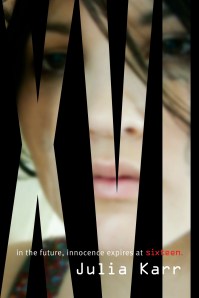
Book Review: XVI (read sexteen)

Title: XVI

Author: Julia Karr

Genre: YA Dystopian Fiction

Read: Jan 16-19, 2011

Summary: Good premise, tried hard, fell flat.

_

I really wanted to like this book more than I did. The premise is fine, set in a dystopian 2150 where teens are branded at 16 as”legal for sex.” Nina is almost 16, and is dealing with not only the stress of this oncoming rite of passage, but boys, the death of her mother, and a bigger conspiracy.

But where to begin with the problems. The protagonist is okay, and there isn’t anything wrong with the prose, but fundamentally this book stands out as an example of premise over plot. Plot, we are told is how the characters in a story deal with or overcome the premise. A good one sells the premise in an engrossing and personal manner. The plot just felt weak, and the characters reactions to it rushed and forced. People keep popping up out of nowhere. Dramatic events — like the narrator’s mom dying — blink by. They live in Chicago, yet everyone seems to know everyone. The villain tattles his villainy while playing hide and seek with the heroine — so very Scooby Doo.

And the Science Fiction is pretty darn mediocre. This is 150 years from now and music and films are stored on “chips!” There won’t even be physical media in 15-20 years. There is no mention of a net or internet — nary a computer. They still have magazines! Video playing machines that play films on chips (like a DVD player). People have phone numbers (also on the way out already). There are no substantial tech improvements. Some “transports” that maybe fly. Mention of moon and mars settlement, but no matching tech on earth. No new biotech, no new computer tech.

150 years ago is 1860 and the civil war!

I didn’t hate the book, in fact wanted to like it, but it just fell flat.

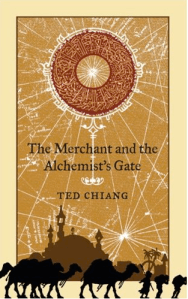
Short Story: The Merchant and the Alchemist’s Gate

Title: The Merchant and the Alchemist’s Gate

Author: Ted Chiang

Genre: Historical Time Travel

Read: Jan 10, 2011

Summary: Awesome and lyrical.


This 60 page short story is so up my alley. A story of time travel, set in medieval Baghdad, what could be better? If it were written in a lyrical style reminiscent of the Arabian nights! This is a gold and gem encrusted little dagger of a story. Mimicking prose style AND story telling conventions of its chosen era. It manages to demonstrate its time travel device and constraints in a manner so clear even an Abbasid merchant could understand.

It won both the Hugo and Nebula Novellette awards. Good show. Read it. Ali ibn Hammud al-Nasir (the villan from my own novel) commands that you do so. And he’s been known to make tea from the ground bones of those who refuse him.

It’s for sale standalone (very expensive), and in this anthology (cheap).

Book Review: Girl Walking Backwards

Title: Girl Walking Backwards

Author: Bett Williams

Genre: Lesbian cuming of age YA

Read: Jan 10-15, 2011

Summary: Less than Zero meets Rubyfruit Jungle.

_

This book is rather brilliant, but isn’t for everybody. In my review of Lost It (CLICK HERE), I had inquired if anyone knew any YA that was racy, and this was recommended. It’s written in a breezy first-person past with a kind of stream-of-consciousness lightweight quality that made me have to look to make sure it wasn’t persent tense. The prose is very very good — fitting the material perfectly.

Skye is a fifteen-year-old growing up in Santa Barbara, and she’s basically raising herself. Her mother is a self-help seminar junkie and all-around new age psychotic, her dad (divorced) lives in LA where he directs films and has sex with pretty production assistants. Neither seem to think about her at all. She has a boy friend, sort of, but wants a girlfriend. She drinks and does drugs, but she isn’t a bad girl.

Somehow this character rang very true for me, and the voice is intensely personal and likable. Even the hare-brained situations seem very real, and like Less than Zero the substance abuse and self destructive behavior believable. The voice effortlessly shifts with the state of mind — often altered — and does a first class job conveying that. For some, this might be a hard book to read, particularly if one were right-wing, but I thoroughly enjoyed it. Bret Easton Ellis‘s above mentioned masterpiece feels like watching a train wreck. While Girl Walking Backwards doesn’t have the terrifying “all rashed and looks dry and I can see that it’s been shaved” moment, and is ultimately transcendant.

Finally, his is a book that is very candid about sexuality.

Not only do we have various incidents of masturbation, near sex, and actual sex, but they aren’t even the focus. This isn’t gratuitous, it’s just frank. This isn’t about a girl becoming a lesbian, or coming out. It’s about a girl trying to find her footing in a world without foundations.

Introducing the Fiction Index

In my pursuit to optimize the blog I’ve created yet more pages:

Food Index
Fiction Index
On Writing
Complete Archives

Blog navigation is funny because the default themes make it difficult to to lure people into old posts. Given that my posts are often “references” (reviews of restaurants, books, films etc.) it’s useful to see a list of them by topic.

All ofthese indicies, including the existing Food Index can be found in the righthand sidebar under “MORE POSTS ON.” Just click the ghetto programmer art buttons.

As a note. WordPress.com sure could use some code to help making these better/easier. If one uses WordPress.org (have to host it yourself) there are a bunch of plugins and you can use php to automate the process. WordPress.com only has a simple code snippet thing for the archives, but it doesn’t allow any filtering by category or tag, sorting other than by date. In other words it’s lame. This is a totally obvious candidate for automation.

Book Review: Across the Universe


Title: Across the Universe

Author: Beth Revis

Genre: YA Science Fiction

Read: Jan 10, 2011

Summary: Great read. Reminds me of books I read 30 years ago.

_

A couple months ago one of the book/writing blogs I read featured an article about first chapters that included one from this book. It was unpublished at the time, but I liked the first chapter enough to pre-order the book on Amazon. Liked it enough to actually read it yesterday when it came in the mail (one day before it was supposed to and the Kindle version wasn’t out yet — so for the first time in a little while I read on paper).

I knew I’d liked the first chapter for a reason. Besides the fact that it (the first chapter) featured a naked seventeen year-old girl, this was a fun book. And no there isn’t much sex in here — at least not for the characters that matter.

And the reason this is a good book… drumroll please… the characters. Particularly Amy, the female lead.

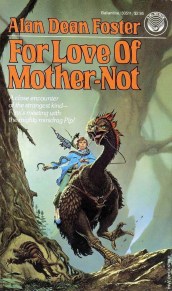
Superficially this is fairly old-school Science Fiction, slanted a bit younger than adult, almost like Citizen of the Galaxy, Home from the Shore, or For Love of Mother-Not (boy is cover design today 1000x uglier than it was in 1980!). Worth a 2 minute diversion:

Left the old one, the right is new. Which would you pick? Personally, I hate photography on fiction covers. I like COVER ART. Call me old-school. Anyway.

Across the Universe (not to be confused with the movie of the same title), is about a girl who joins a generation ship as cryogenically frozen cargo (the ship will take 300 years to go to it’s colonial destination) with her parents, but is accidentally woken early (alone) to find herself amongst a very strange society. The crew has been left to run the ship for centuries, and well nothing stays the same, certainly not human society over the course of generations.

The science here isn’t the most innovative, but it is consistant and easy to grasp. I didn’t totally buy the society and all it’s premises. But it didn’t really matter. The book is told in double first person view point, from Amy’s POV and that of the young future captain of the ship (simplified explanation for review purposes). The POV’s are very good, and stick tightly to single interwound storyline. The classic device of having a newcomer (Amy) works well to make the experience more visceral and personal, and this ties us as a reader into the story. It’s also worth contrasting this with a more “mature” Science Fiction novel I read the day before, The Windup Girl (review HERE), which although Hugo and Nebula winning, and possessed of a MUCH more elaborate and interesting SciFi world, just isn’t that fun to read. As the two main characters are literally the only people on the ship their age, they are fairly obviously in it together. I like the “forced” relationship device.

Again, because the character narrative is too fragmented. I like character. I like narrative. Don’t get me wrong, I LOVE Science Fiction, I’ve read thousands of them. I like elaborate worlds. But they’re nothing without the glue to hold you there.

Now my small beefs. The book was too teasy on the sex. There was sex flying all around, we should’ve had some with the protagonists! I’m old school that way too. 60s, 70s, and 80s SciFi had lots of sex.

And the last 20% of the book started to get that we-have-reached-the-big-reveal-and-now-it’s-all-going-to-feel-a-little-forced stage that many “big reveal” books have. I had this same beef recently with the otherwise perfect Dead Beautiful (review HERE). Still, I read Across the Universe in one sitting, literally, and I enjoyed it the whole way through. I love when this happens — fairly rare as it is for a reader as jaded as I am — it reminds me that there’s still good writers out there.

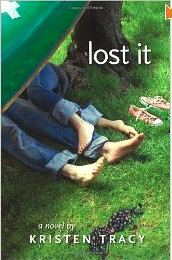
Book Review: Lost It

Title: Lost It

Author: Kristen Tracy

Genre: YA Romance

Read: Jan 3, 2011

Summary: Forever 2007.

_

This is a very likable teen romance about an Idaho girl’s first real relationship and of course… how she lost her virginity. I read this in my continued meandering quest to find out just how edgy and racy YA can actually be. I hope someone points me to another answer, but I’m thinking… not very. If you know anything really edgy, please put it in a comment. Lost It is pretty reminiscent of Judy Blume‘s Forever (my review HERE), and it’s gone backwards in the sexual explicitness department big time. Really there’s barely any.

Don’t get me wrong. This is a good book, and it stands on its own. It’s just not racy. But I really did like the voice. Using the standard first person past you are immediately and tightly drawn into protagonist Tess’s head. She’s pretty funny too, and not your totally typical teen girl. There is a lot of interior monologue, but it doesn’t suffer from the “too much tell” problems that this often entails. Like, for example, the Indy book Switched (my review HERE) I read the previous day. With Lost It, I actually laughed a number of times aloud — or at least chuckled. Like all these books, the narrator is what drives the whole thing, and the book delivers 100% in that regard.

Many of the other characters are good. The best friend, the boyfriend, and the grandmother all felt unique and real. The parents less so. Tracy doesn’t have the effortless ability to make every character totally and completely believable like Judy Blume, but who does? Nevertheless, she gives it the good old college try and the results are very good.

But the tameness bothered me. In our era of hyper shock factor, it would be nice if an honest book like this was a bit more honest and open about its central topic. Sex. Forever certainly has the edge there, and it’s more than 35 years old. It’s also worth noting that the two books have almost the same cover. I guess publisher marketing departments all think alike. Observe to the right!

I don’t know what it is, but at the same time the internet has opened the door to vastly more sexual material than my 70s or 80s brain could have ever conceived, popular media has less and less. But more violence. Somehow this seems pretty twisted — at least the more violence less love thing.

Anyway, Lost It, is a good book. Refreshing actually because I didn’t have to force myself to finish it. It’s all character driven, and when well done that’s a very good thing.

Book Review: Switched

Title: Switched

Author: Amanda Hocking

Genre: Paranormal Romance

Read: Jan 2, 2010

Summary: Easy read, but needs editing badly.


I’ve been doing research on publishing for the last year. I’ll have to write a separate post about the changing nature of the biz, it’s relationship to other publishing businesses (like video games), and the rise of the self published ebook author. But in any case, I stumbled upon this independent and self published author who is selling very well (mostly on Amazon) with no prior print history. I figured I’d check one out. Switched appears to be her best seller and she says on her blog that it’s her favorite.

This is a funny little paranormal romance about a girl whose mother hates her and thinks she’s a changeling — but she is. In fact she’s a troll. She’s then dragged off to her real mother. The first 25% is slightly “high school novel,” and the later 75% “fish out of water.”

Overall, I’m not sure what to make of the book. The first person voice was strangely engaging and I pounded through it easy in an afternoon. Still, it felt like a first (or maybe second draft), and it’s full of flaws.

According to her website the author has roughly ten novels, mostly written in 2010 and she pounds out the first drafts 2-4 weeks! I consider myself fast at 2,500-4,000 words a day of first draft, but I have to admire that kind of lightning pace. The book was short. Maybe 50-60k words and it could perhaps be classified as “engaging” but could’ve been “really fun read” with some real editing.

There is a crazy amount of “tell,” in this book. A lot of it buried in the overzealous volume of interior monologue. Characters are constantly attributed characteristics directly, without them being shown. Often, these characteristics are never shown. The protagonist gives the straight dope on things as she sees it, but this often feels more like how the author wants the reader to see it than how it really is. In fact, there isn’t a whole lot of “show” in the book at all.

The author is a solid writer. The sentences themselves are well formed, but a lot of them needed to come out, or be trimmed down. Conversations are redundant. Dialog points are redundant. The author loves the words creepy and foxy. Really loves creepy. The important scenes feel drained of emotion as the excessive interior monologue and somewhat forced dialog rob the moments of any real drama. The more casual conversations feel better than the important ones. When there’s action it’s awkwardly blocked, so that you have to go back and reread lines sometimes to figure out what happened physically. The overall plot is pretty straightforward. The end was abrupt and unsatisfying too.

But still. I can’t say it didn’t have a certain charm. I enjoyed reading it, more than many published POCs (like for instance Personal Demons). The fantasy concept is decent and didn’t bug me.

Of course the novel only cost 99 cents! The writing is probably on par with Twilight (see my review HERE). Not that that’s high praise. It just needs a lot of revision. Some plot changes to increase drama, character tune-ups, and most of all line editing (see my detailed post on that HERE).

This is an Indy book. It’s professional, but it’s also the novel equivalent of a B movie. Written quickly, revised quickly, and sold cheaply. The author has enough talent to shoot higher.

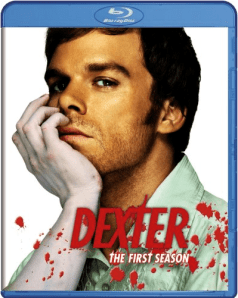
Book and TV Review: Dexter


Title: Dexter Series and Darkly Dreaming Dexter

Author: Jeff Lindsay

Genre: Dark Comedic Horror Police Procedural

Read: Dec 25-31, 2010

Show: Summer 2010

Summary: Immediately watch the show unless you are a squeamish person or otherwise sensitive to gruesome fun.

_

I’m going to try and stick to reviewing tothe first novel (Darkly Dreaming Dexter) and to the first season of the Showtime TV Show. I have, however, seen the whole series.

First, the show. This is one of the best shows on Television, and lots of people know it. It’s incredibly well written and engaging, without resorting to quite the level of crazy plotting that HBO usually goes for. Still, there is plenty of shock, and lots of blood. Not much sex — maybe they thought it would be WAY too creepy to mix in — but lots of blood and death. The idea of a sort of vigilante serial killer protagonist is pretty brilliant, and I’m amazed they pulled it off so well. I mean, taken in any context Dexter himself is really one sick fuck. But you do like him. And the supporting cast is great too. All of them really.

My only problem with the first season is that the Ice Truck Killer is a little too psychic about what is going to happen and what will push Dexter’s buttons. Now granted, there’s a reason for this, but I didn’t totally buy this level of prediction. Still, I had a blast, watching the whole thing in like 2-3 nights.

The show is dark, and pretty grisly. Did I mention dark? I love it. It’s also very very funny, in a perfect way which doesn’t give up on any of the realism. This is great. The writers do this with Dexter’s inner monologue, and the way in which his observations are often so in opposition to the situation. But the really telling thing about the show, and what makes it really great fiction, is that sometimes (terrifyingly often actually) we agree with him. Everyone has a bit of the serial killer inside them. Don’t get me wrong. I escort spiders outside to avoid killing them, but a dark thought or two has been known to cross my mind — or issue out of my keyboard — as my own book is pretty dark. Not to mention that my title (The Darkening Dream) is oddly similar to Darkly Dreaming Dexter. But I want to put it on record that I’d never even heard of the novel when I came up with the title. I guess Jeff Lindsay and I both adore alliteration.

Now the book.

It’s hard for me to judge it objectively because I saw the show first. The voice is really great, and the opening killer — literally. The show stays pretty tight to the novel for a while, and a lot of interior monologue and signature elements are in both. When Dexter is being naughty, particularly at the beginning, it’s totally gripping. The novel isn’t very long, 300 pages, 72,800 words. I liked the book.

But I loved the show. It’s just better. There’s more to it (and I’m just talking the first season). The plot is pretty similar, but the characters have much much more depth in the show. In the novel only Dexter, LeGuerta, and Deb (to a lesser extent) are real characters. The others from the show are mostly there, but mostly just scaffolds. In the show they really pop. Angel, Doakes, Vince, Rita etc. They have more dimensionality.

The plot too is much better developed in the show. The back story with Harry is beefed up. There are more twists and turns, and rightfully, the Ice Truck Killer is brought into the story in an active (on screen fashion) much earlier. Dexter’s kills and habits are better defined and more ritualistic, and there is a strong element of the “Cop Show.” Novel Dexter is less likable than show Dexter. Even the voice of the novel — it’s strongest element — is actually better in the show. Michael C. Hall‘s performance is awesome, and he really sharpens the edge on it.

And all the plot changes are big improvements. I had my one little plot beef with the first season, but the novel has several gaping holes. Not that it isn’t still a fun book. But the end for example. Why doesn’t Deb have him locked up? He really didn’t act in a terribly human manner. Also the element of coincidence and near mind reading on the killer’s part is way more pronounced in the book. This always bugs me. Also, Lindsay didn’t do a great job pre-selling Dexter’s origin. He just pops it out of the woodwork at the end (having seen the show I knew it was coming). The show sets it up really nicely.

He did however do a brilliant job with the little bit about “Mommy hiding the rest of her body in the little hole.” Oh so dark and nasty!

Book Review: The Spirit Thief

Title: The Spirit Thief

Author: Rachel Aaron

Genre: Light Fantasy

Read: Dec 7-16, 2010

Summary: Ethereal fun.


Between a trip back east, mega editing on my own book, and another parental visit last week I only had time to read five or so novels in December, about a quarter of my usual rate.

Don’t confuse this fun little book with The Lightning Thief, which I also just read and reviewed. The SPIRIT Thief straddles a fairly unique line between totally straight up 80s fantasy and comedic fantasy the likes of River of Dancing Gods or Myth Conceptions. It’s not however as totally comic as those, and somehow seems a bit smaller and lighter (if that’s possible).

The voice is very good, and the opening scene brilliant. There’s a nice new magic system here, where every living thing has a spirit inside that wizards can bargin with, enslave, or what not. Like comedy fantasy Shinto. It’s not entirely evenly developed, but the book is at its best during the magic fights. Although they do have a certainly sketchy quality too them, where the action doesn’t feel entirely blocked out, but I still liked quite a bit of this. The master swordsmen are really nicely done, combining the intrinsic magic of the book with a slightly Robert Jordan-esque blade-master feel. There were moments that almost felt super cool.

The prose can be very wry, in a good way. Funny, without laugh out loud. A lot of this involves attributing emotion to inanimate objects, which given the magical system is perfectly in line. When it’s on, this is certainly very fun to read. But at the same time this levity makes it hard to take the characters too seriously, and certainly not their perils. So it works for and against. I found oddly marooned in a peculiar — albiet unique — tone.

For some reason it also reminded me a bit of Shattered World, one of my high school favorites. Probably because the protagonists is a thief. I maybe wanted it to feel more like that, but it doesn’t feel as big. Everything takes place in a fairly short time and place, and the stakes seem a little local. The light tone also works against the emotional intensity of the characters, and I for the most part feel that they existed to either service the plot, or like the author was more sure of their personality than the character. The villain in particular is of the “i’m very bad, and very mad, and bad at being mad” sort.

So overall I would call the book a snack. But a tasty one.