Go Sushi Goes To Lunch

Restaurant: Go’s Mart [1, 2]

Location: 22330 Sherman Way, Canoga Park, CA 91303  818.704.1459

Date: October 11, 2011

Cuisine: Japanese Sushi

Rating: Possibly LA’s best sushi!

_

This is my second visit to the unassuming Canoga Park sushi temple that is Go’s Mart. You can check out the Foodie Club mega tasting meal I had previously. This time I just dropped by for lunch and had a more “modest” little lunch omakase.


The plate of ginger and wasabi gets the saliva flowing.


Marinated toro collar. In some ways like a really nice marinated tuna fish.


Homemade Ikura (salmon roe). As good as that gets.


Go has the interesting format of serving fish in related flights. This is a foursome of whitefish. All are prepared with variations of wasabi, rock salt, truffle oil, and kelp. Some also have shiso and or yuzu pepper. All four are fairly similar with a nice light bright flavor.


Kue I think, which is a kind of grouper.


John Dory.


Red snapper.


Kelp bass.


Sweet shrimp roe marinated in a mirin (rice wine) based sauce.


It looked pretty cool even after I got most of them out.


A flight of shellfish. Dusted with hibiscus salt.


Japanese snow crab with gold.


Some very fine Alaskan king crab.


Japanese scallop. Yum.


And sweet shrimp (body) with caviar.


The heads came back to us fried. Which are also great.


We ate everything but the eyeballs and beaks.


A flight of tunas.


Blue fin tuna with garlic chip.


Albacore tuna with garlic.


Chu-toro (medium tuna belly) with radish and caviar.


O-toro (extra fatty toro), seared, with gold and a slightly sweet sauce.


A tro of squirmies.


Live octopus, cooked. It was alive a few minutes before we ate it. This was good, but I probably prefer it less cooked.


Fresh abalone. As good as the chewy creature gets.


Baby squid, with a bit of squid guts. Very soft for squid.


Both kinds of eel, sea and freshwater.


The sea eel, with kelp.


And the river eel.


Two kinds of halibut. Both with hibiscus salt, micro greens, and yuzu pepper.


Kelp halibut.


Halibut fluke.


A blue crab handroll with a bit of truffle oil.


Go finishes up with a bit of fruit drizzled in sweetened condensed milk. Very nice finisher. There are rasberries, figs, melon, golden-berries, mulberries and blueberries.

Go-san continues to impress with some really scrumptious sushi. He has his own take on the art and not only is the fish impeccable but the flavor combos very refined and interesting. Given the ultra high end nature of the food (and standard sushi pricing), it isn’t even that badly priced either. Much more reasonable than Mori Sushi for example. Go to it!

For more LA Sushi, click here.

Vocal Whiplash

I started a new read through and edit on my first novel, The Darkening Dream yesterday. I’m waiting for feedback on my newer book and wanted to cleanup the first one so I’ll have it ready to be proofread for possible self-publishing. This is the first time I’ve looked at it in eight months (I’ve been working on Untimed) and the difference in voice is flogging my brain.

It’s weird and not a little disturbing to read your “older” work. I started TDD in January 2008, writing the first draft of what’s now the opening twenty percent (before heavy alterations). I stopped (because of work and the birth of my son) and picked up in fall of 2009. Although I’ve done about a zillion (more like ten) drafts, traces of this oldest style remain in these early sections. And boy has my literary voice changed since then. Most dramatically, I no longer detail out as much of the action and setting. Nowadays, I concentrate on sketching and implying important points, choosing my scenes less to block through the whole action than to paint in important moments. These old sections have been heavily trimmed down, edited and reworked, but they are still organized in a stodgier more sequential fashion.

And the beginning of my story is tricky, introducing a period world with a large cast of period characters. I’ve several times restructured the start of TDD, including one late attempt this year to write a number of alternate starts. But I have never found a way to replace the measured build up I currently have with a more hook driven start like Untimed has. It’s easier to start that way. Oh well, live and learn.

The biggest shocker, however, is how difficult it is getting used to past tense again. TDD is written in the normal third person past limited, where different chapters focus on different characters. There is no omniscient narrator but the implied narrator shifts from chapter to chapter. Untimed is first person present. Single narrator obviously. I’ve really grown to love the immediate quality of the present tense. One also gets to ditch most the “hads” used to indicate the past perfect. In past tense, you might say, “He went to the store,” or to indicate prior time “Earlier, he had gone to the store.” In present you’d likewise use “He goes to the store” and “He went to the store.” The normal past tense takes over for the past perfect, and it’s a much cleaner tense.

The first mini-scene of TDD is as follows:

As services drew to an end, Sarah peered around the curtain separating the men from the women. Mama shot her a look, but she had to be sure she could reach the door without Papa seeing her. After what he’d done, she couldn’t face him right now. There he was, head bobbing in the sea of skullcaps and beards. She’d be long gone before he extracted himself.

“Mama,” she whispered, “can you handle supper if I go to Anne’s?” Probably last night’s dinner debacle had been Mama’s idea, but they’d never seen eye to eye on the subject. Papa, on the other hand, was supposed to be on her side.

Mama’s shoulders stiffened, but she nodded.

The end of the afternoon service signaled Sarah’s chance. She squeezed her mother’s hand, gathered her heavy skirts, and fled.

As an experiment, I rewrote this in present tense, a fairly straightforward change:

As services draw to an end, Sarah peers around the curtain separating the men from the women. Mama shoots her a look, but she has to be sure she can reach the door without Papa seeing her. After what he did, she can’t face him right now. There he is, head bobbing in the sea of skullcaps and beards. She’ll be long gone before he extracts himself.

“Mama,” she whispers, “can you handle supper if I go to Anne’s?” Probably last night’s dinner debacle was Mama’s idea, but they never saw eye to eye on the subject. Papa, on the other hand, is supposed to be on her side.

Mama’s shoulders stiffen, but she nods.

The end of the afternoon service signals Sarah’s chance. She squeezes her mother’s hand, gathers her heavy skirts, and flees.

Which do you guys like? I suspect that past tense is more appropriate to this story, being conventional and also given the setting in 1913. But I’ve grown so fond of the present tense that I can’t judge anymore.

For more posts on writing, click here.

Breakfast = Carbs + Salt

The best part about the 26 hour fast of Yom Kippur is breaking it!

Best to start with some wine on a really empty stomach.

Parker 91. “Bottled the week before I visited, his 2005 Morey-St.-Denis en la Rue de Vergy displays aromas of fresh, ripe plum, black cherry, bitter herbs and toasted nuts. Ripe plum and black cherry along with deep rich meatiness mingle in the mouth with notes of mineral salt and iodine and sweet nut oil nuances. Creamy in texture and boasting remarkably fine tannins for a village wine and no hint of its 50% new wood, this finishes with a flattering persistence of crisp, subtly-bitter fresh fruit skin and fascinating mineral suggestions. It should drink fabulously over at least a 5-7 year period.”


Traditional, of course, is deli (i.e. bagels and lox etc.). We get ours from Brent’s Deli, which is my favorite for dairy and fish.


The bagels.


Rye bread of course.


A variety of cream cheeses, old school, new whipped, veggie, and my personal favorite, honey almond (I like the whole sweet and salty thing).


The all important “monster cheese” (what my three year-old calls it).


Various bagel toppings: lettuce, tomato, onion, cucumber.


Brent’s lox is so thick 18 of us toasted 3-4 pounds of it.


Chopped marinated herring. An acquired taste, but I spent too much time in the mid east not to.


Tuna salad (this is homemade by my sister-in-law Wendy).


My personal favorite, whitefish salad. Oh so good.


Salted cod, another classic.


Brent’s slightly sweet cucumber salad (like that) and cole slaw.


And old school pickles.


And fruit.

Plus a bit of homemade chinese chicken-less salad.


Parker 90. “The 2009 Rosso di Montalcino is totally beautiful and elegant in its expressive bouquet, silky fruit and understated, harmonious personality. This is a wonderful, impeccable Rosso from Le Potazzine. Anticipated maturity: 2011-2017.”


And my plate of gluttony. Four bagel halves. I even had another afterward.


The dessert spread is even more deadly.


Parker 99! “A monumental effort, the 2001 Rieussec boasts a light to medium gold color in addition to a fabulous perfume of honeysuckle, smoky oak, caramelized tropical fruits, creme brulee, and Grand Marnier. The wine is massive and full-bodied yet neither over the top nor heavy because of good acidity. With intense botrytis as well as a 70-75-second finish, this amazing Sauternes will be its apogee between 2010-2035.”

It was that good too!


Most of the desserts come from Viktor Benes, an old school Czech bakery with really good Eastern European baked goods. This is a chocolate fudge cake. My in-laws are chocoholics.


Apple pie. Halfway between American style and strudel.


Same with the cherry.


And an assortment of decadent baked goodies. Cookies, macaroons, apple fritters, rugelach, almond strudel-like things etc.

Afterward I stumbled upstairs in a pleasant salt and carb coma. I still felt bloated the next morning too.

Foodie Photography 101

As is fairly obvious from my umpteen food reviews, I take a lot of pictures of food. For such a static target, for a number of reasons, the plate isn’t so easy to photograph. Mostly this comes down to light and distance. Restaurants are often dark and food is fairly small and right in front of you. This distance factor throws it into the realm of macro photography (subjects at very near distances).

I use three different cameras. I’ll go over them all here, in ascending order of size, weight, and quality. As a general rule of thumb the bigger and more expensive a camera is, the better the pictures. It’s also worth noting that all food photos below were processed in Adobe Lightroom and are not “as shot”. I’ll discuss this at the bottom of the post.

The cellphone camera is ubiquitous these days, but for me only an option of last resort.


This sushi pic is about as decent as a good (iphone 4) camera will take, and even with post-processing, that isn’t very good.


And in a dark restaurant, you’re stuck with these hideous flash shots. The flash on these tiny camera has a range of about a foot and an ugly falloff. If you have to use the cellphone, try and hold it very steady, and home it’s lunch time and the window is behind you (keep the light behind the lens).


Next up, and pretty acceptable, is a snapshot camera that is good at macro photography. I use a Canon S90. This is older and has been replaced by the S95 and S100. Any of the three are good, the newer ones are better. They are among the only small cameras to shoot in RAW mode and to focus well at short distances. The S90 is small enough to pocket and I use it for casual meals.


A typical flash shot from the S90. It’s not bad. The camera has a small aperture and hence a very large depth of field which makes for easy focusing (but a flat look). It’s very useful to zoom the camera in and pull physically back so the flash doesn’t get too close to the food and easily blow out the image (overexpose).


My third camera is my “real” camera, the amazing Canon EOS 5D Mark II. But any Canon or Nikon DLSR should do fairly well. While the DSLR is much larger and heavier, it takes a MUCH better picture. Not only is the resolution higher but it handles low light far better. Still, shooting food with a SLR isn’t easy.


This is a typical bad result. A normal lens can’t focus on something less than two feet away and so you have to step way back. Without a flash (and a normal flash doesn’t work well on food) you can easily end up with a soft image like above.


The solution to this distance problem is a macro lens. I usually use the Canon EF 50mm f/2.5 Compact Macro. This is a very sharp prime lens (on a full frame camera 50mm is good for food, it might be even better on the more common crop sensor cameras, but you might have to pull back a bit). This lens is even cheap for a macro at $284, as many of Canon’s macro lens are two or four times that. It’s only problem is the non-USM focusing that’s slow as a dog. Food, fortunately doesn’t move.


But in a very dark restaurant (and despite the appearance of this color and exposure corrected photo, Pizzeria Mozza is very dark) one ends up at f2.5 and a high ISO. Combine that with the very short distance to the plate and you get an incredibly small depth of field. Hence, crust in focus, pizza blurry.


This and the light problem are nicely solved by the bulky Canon MR-14EX Macro Ring. Ideally, you’d want a light box (a big soft glowing box) but this is not practical in restaurants :-), but the white LED light from the flash ring is less directed than a regular flash (which will also do in a pinch).


It makes for a honking big rig, but with the macro lens and the TTL flash exposure adjustment it takes great close up pictures in a pitch black room (the flash can be used as a focus light too).


Hence this lovely photo, with just enough depth of field to give the dish some character and depth. Still, you have to watch the distance and f-stop, even with the flash, but you don’t have to pump the ISO up as high as without it.

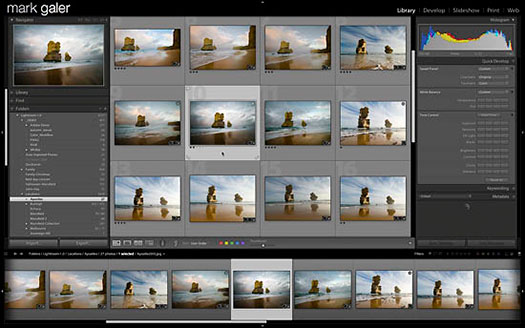
Which finally brings me to Lightroom. Significant discussion of post processing is outside the scope of this post. Photoshop and many other products can allow you to clean up your images, but none do it as easily and quickly as Lightroom. Going through a 60 photo meal can be tedious, but with Lightroom you can do a decent job in five minutes, then quickly batch upload via a vast array of plugins.


To give you an idea how important this is. Check out this image right out of the camera, taken using the 5D and the macro lens, but no flash.


With light three clicks I fix the white balance, the exposure, and correct for lens aberrations. I see so many food bloggers uploading dim orange photos. There’s just no need.

Hopefully this quick little tutorial helps you get the most out of your food photos. Even if you don’t have a big fancy camera, the trick of pulling back and zooming in with a snapshot flash helps both exposure and dealing with the “too close to focus” problem.

Find all of my food reviews here.

Saam – José Andrés Squared

Restaurant: Saam [1, 2]

Location: 465 S La Cienega Blvd, Los Angeles, CA 90048. 310.246.5555

Date: October 1, 2011

Cuisine: Spanish influenced Molecular Gastronomy

Rating: Awesome, even better than The Bazaar.

_

I’m a bit of a Jose Andres groupie as not only have I been many times to the The Bazaar (REVIEW HERE), but also to brunch at Trés, and just last week to é by José Andrés and Jaleo in Vegas.

For those who don’t know, José Andrés is perhaps America’s leading practitioner of  my favorite culinary style: Spanish Molecular Gastronomy. This school of cooking, a radical interpretation of the preparation of food, was begun at El Bulli outside of Barcellona. Andrés cooked and studied there with master chef Ferran Adrià. I first encountered Andrés’s cooking in Washington DC at Cafe Atlantico, and it’s own restaurant within a restaurant, Minibar.

I’ve eaten molecular a number of times in Spain, for example at Calima and La Terraza. The Bazaar and Saam brought molecular style to LA.

Saam is the “secret” prix fixe only room within the Bazaar, open Thurs-Sat.


This is the normal menu for the night. If you let them know they do however adapt very adeptly to dietary restrictions.


Tonight begins with a “Kaviar Kir Royale” which is a deconstructed cocktail consisting of cava.


And miniature “kaviar” (spheres of kir).


You can see them more clearly here, looking every bit like fish eggs. Basically it’s mostly cava, but at your whim you can bit into the little balls of flavor for bits of kir flavor blast.


Then “Lotus Root Chips” with anise powder, making them taste like licorice Pringles.


Then “Tuna Handroll 2009” which are crispy cones stuffed with very fresh tuna, a bit of wasabi, and a caviar ring in the middle. Nice mix of textures and flavors.


It came time to decide on the beverages. Above is the pairing menu ($100 a person). We didn’t opt for this but I’m sure it’s good. Being as we are talking beverages I’ll mention briefly the water trap. We were five people, and this is a long meal. We ordered bottled water. As usual with nice restaurants they just served it. And served it. Fine, but it added up to $180 of water! This was the only thing on the bill that offended me — but it was mighty offensive. $30-40 would have been sufficient tariff, but $36 a person for water?


We did order cocktails individually, which were both yummy and reasonable enough for such things. “Passion Fruit Up! Orange rum, passion fruit and ginger-laurel syrup, topped with passion fruit foam.” Yum!


“Oyster and Jamon.” A little spoonful of oyster with some ham powder and a crispy crouton. It tasted exactly like it sounds. Like intense oyster and a good dollop of HAM!


“Black Olives Ferran Adria.” Instructions on how to make these can be found here. The pureed juice of the olives is coated in a thin gel. They are colored black with squid ink. There is one green olive that is vegetarian. In general, the olives bursts easily in the mouth, exploding intense oliveness.


A signature “Nitro Caprina” which is the classic brazilian drink, frozen with liquid nitrogen. It tastes like a sherbet, with a highly unusual smooth texture, but it’s intensely potent (in terms of proof). Goes down all too easy.


“Jicama wrapped Guacamole.” Micro cilantro, corn chips. The vegetarian substitution for the ham.


Watermelon and tomato with a bit of a kick (some chili or another).


A traditional mojito. Even way back in the Cafe Atlantico days Andrés always served a great mojito.


“Jose’s Combination.” Jamón Ibérico de Bellota with a blob of real caviar. This ham is regarded as the best in Spain, and among the best in the world. They are fed on acorns. Salt on salt here. A very savory combination.


Deconstructed “patatas bravas.” In spain this is a common dish basically being roasted chopped potatoes with a cayenne mayo. This preserves the flavor, but changes up the texture into a little fried cigar. The inside was fluffy and soft. Quite tasty.


“Ottoman Carrot fritter.” Apricots, pistachio sauce. Vegetarian substitute for the chicken below. A deep fried ball of flavor, with a very exotic taste.


“Buffalo Wing.” Looks like fried chicken (and it is), but Wow. Boneless, with a dab of spicy sauce and a blue cheese aioli. An explosion of flavor.


“Not Your Everyday Caprese.” The mozzarella has been through the same sphere process as the olives above, then we have a peeled cherry tomato, tomato seeds, a bit of basil, sea salt, little crackers, and a very fine house made pesto genovese (with extra virgin olive oil). I’m not even a raw tomato fan and this is delectable. The pesto cheese combo really makes it. This pesto is as good as mine (recipe here).


I’m a big fan of priorat and so we chose this wine off the list. Besides the great food and crazy water prices Saam has an annoying high corkage ($50 and one bottle more or less!).


“White truffle risotto.” Instead of the normal Italian risotto rice it used a premium Spanish one, calasparra bomba, and extra virgin olive oil instead of butter. Very tasty.


A fantastic special risotto also using bomba rice, with a chunk of fresh santa barbara uni, some black garlic paste, and a bit of bbq eel. It was tremendously good.


“Crispy Nigiri.” A bit of red snapper on a blob of crispy Spanish rice.


“Chipirones en su Tinta.” More or less a classic Spanish dish, octopus in it’s own ink. Plus some squid ink chips. Very soft and tender meat, complemented by the sweetness of the ink.


A non-shellfish variant containing a bit of bbq fish.


“Banh Mi.” A brioche bun with wagyu beef, tofu, cilantro, pickles, pickled carrots, and a kind of mayo. Tasty tasty sandwich. A mix of soft and crunchy too, but the pickles give it a very distinct tang.


“Banh Mi, vegetarian.”


“Carrot gnocchi.” The broth had a vaguely thai curry flavor. The gnocchi are actually cylinders of sphereized carrots, so they burst in the mouth.


“Brussel sprouts, lemon puree, apricots, grapes, lemon air.” This was a big hit, the sprouts aren’t bitter at all, and have a light cabbage-like texture. The lemon air is the best part, adding a nice zing.


“Mirugai.” A bit of geoduck giant clam, radish, and a watercress puree. This wasn’t my favorite dish, being a bit “clammy.”


“Kurobuta Pork Belly.” Massively flavorful bacon chunk, with a spanish cheese infused turnip mouse and little carrots. Yum yum, heart stop heart stop.


Replacing the pork for the vegetarian was a pomegranate cous cous.


With a poured in broth.


“Philly Cheese Steak.” Air bread, cheddar, Wagyu beef. This is on the Bazaar menu, but it’s so damn good. The crispy bread is filled with liquid cheddar goodness.


“Hilly Cheese Steak.” Air bread, cheddar, mushrooms. The vegetarian version of above. Monkey man will get you!


For the dessert courses we ordered some classes of this fine cream sherry.


A very nice sherry, not quite as thick and syrupy as the PX by the same maker (which I love), but still very fine.


“Japanese Baby Peaches.” Burrata, hazelnuts, arugula.Really interesting. The peaches were so tart off the trees that they were soaked in simple syrup. Paired with the blobs of burrata (a favorite of mine), the nuts, and arugala it was pretty divine.


“Dragon’s breath popcorn.” The pre dessert. A gimmick, but neat.

Carmel corn “boiled” in liquid nitrogen.


Breath on a spoon.

It tastes like… carmel corn, but you can exhale it through your nose for a dragon-like effect.


Smaug, eat your scaly heart out.


They call this “saam buca.” It was apple balls with a nice soft creamy custard — good stuff.


“Chocolate rock.” A nitro frozen chocolate foam/mousse with some citrus foam. This was very reminiscent of the chocolate/cream pairings at  é by José Andrés and Jaleo.


Chamomile tea.


The usual Bazaar “sexy little sweets,” a number of flavored chocolates (flat and in domes) and very good pate de fruits. One of the great things about the brunch at Trés is that they have an all you can eat tower of containing all of these!


A little chocolate hazelnut cube and the menu as a “parting gift.”

Overall, Saam is a tremendous meal, even if not every dish is successful (geoduck!). Since I was at cousin restaurant é by José Andrés a week before I can do a head to head comparison. Saam was slightly disadvantaged by the fact that perhaps 40-50% of the dishes hadn’t changed from my previous visit (making them less novel). I’d say that the food at é is perhaps 5% better, really quite close. The format in Vegas is, however, more fun and intimate. Getting to witness the plating and creation of each and every dish is really interesting.

And the $180 for water was really offensive. I really should have taken the manager to task on it. The stuff costs less than a dollar a bottle in bulk. Pure profit center. Otherwise the meal is fairly reasonable given the extremely high level of production. And it is very very good.

For a previous Saam meal, click here.

For a meal and The Bazaar proper, click here.

Plotter vs. Pantser

The Plotter

This is one of those eternal writer questions, getting into the heart of the creative process. For those of you who don’t know, a “plotter” is someone who plots out (outlines) their entire story before writing it and a “pantser” is at the opposite extreme, starting with an idea or a character and just going for it, like a daydream. Of course, everything between exists as well, it’s an analog space. And for what it’s worth, writers, including myself, love to talk about this.

Given that I’m more hard core, workaholic, and over-organized than nearly everyone I know (and having gone to MIT that includes a lot of anal folks) I would have assumed I was a plotter.

But when I got into it a couple years ago by starting to write The Darkening Dream, I found I totally prefer to just go with it. I do need to plot a chapter or two ahead as I can’t write the scenes until I see in my head what’s going to happen, but after I finished revising my first novel (and there was a lot of revision) I decided to try to plot the whole second. This resulted in about two months of fairly unproductive head banging. Then, with only a lame first act plotted, I started writing and it veered onto a different course anyway. The characters and the situation seem to dictate what happens. Often you can’t tell in plotting which secondary characters will be the coolest, etc.

The Pantser

But certainly the pantser approach requires plenty of revision. I always have to go back and examine the motivations of the characters after the first draft and map  more of the formal dramatic arc onto the story in the second and third drafts. Pantsing also leads to Second Act Problems (what doesn’t?). I think that’s just the way it goes. It would be very difficult in the first draft to do the kind of “setup and payoff” that good stories have. A great example of this is the film Back to the Future which undoubtedly had umpteen drafts and where every little reference at the start of the film is a setup that tests and then pays off for one of the characters. Case in point where George McFly gives in to Biff about the car. Then back in 1955 he does it as young George, but by the end of the film, with Marty‘s help he has the backbone to be in charge in the revised 1985. This is formulaic but satisfying and artfully crafted in a way that takes multiple passes. Still, I think you can start any which way that works for you. Sometimes getting the draft finished is the most important thing. Then you can step back and look at what needs changing.

Personally I find the two different modes: plotting vs. just writing, to use different sides of the brain, and therefore useful to stagger. I can only handle a few days of plotting before I need the release of getting it out there. There really isn’t any rush in writing as good as just pounding out a great scene that’s already gelled in your head, and it’s even better when the scene and characters take on a life of their own and bring something novel to the process. Looking back on it, I realize that as a computer programmer I took this same exact alternating approach (between designing the algorithm and just coding) and that the rush and rhythm were nearly identical.

For more posts on writing, click here.

Ultimate Pizza – The Comeback

After long hiatus, Ultimate Pizza is back (click the think for posts on the components). We’ve brewed up a new batch of dough, and called up some friends and family.

For those of you who don’t know, Ultimate Pizza is our super homemade pizza where we make everything from scratch. In the past I’ve written separate articles detailing elements such as the Dough, Sauce, Pesto, and Toppings.


Every dough batch is different. For more on making it, see here. After three days cold fermenting in the fridge this batch had a weird spiderwebby quality and was very sticky. But that wasn’t anything a little dusting of flour didn’t solve. And baked, it tasted great as always.


This 1997 Barolo served as a good opener, warming up the palette.


The first pizza on the block. Starts with basic totally fresh raw tomato sauce made with Santa Monica Farmer’s Market Marzano tomatoes and mozzarella.


Then some parmesan, basil.


Mushrooms.


Figs, marcona almonds.


And after baking. They aren’t always pretty, but they are good!


I “found” this 1966 Chateau Lafite-Rothchild in my cellar and figured it wasn’t getting any better.

Parker says: “Except for the 1966 and 1870 vintages of Lafite-Rothschild, these wines were poured on virgin territory on my palate. Isn’t it ironic that the most disappointing wine (forgetting the spoiled 1875 Lafite-Rothschild, which had frightful levels of volatile acidity) was the youngest wine, the 1966 Lafite. With a light to medium ruby/garnet color, this wine exhibited a classy, weedy, herbal, Cabernet-dominated nose, soft, washed-out flavors, and little body and length. It is also beginning to dry out. I suppose if one were to taste a 30-year old Cabernet from Monterey County, California, it might reveal similar characteristics. The 1966 Lafite-Rothschild has consistently been a major disappointment from what is an irregular, but very good vintage.”

But we had good luck with this bottle, and it was actually rather wonderful.


The next pizza. Fairly similar, but no sauce.


Finished with balsamic glaze.


Then a cheesier mushroom one.


Finished.

Then my special salmon pizza, which I do just with olive oil and rosemary (picked from the garden).


Then add a mixture of creme fraiche (detail on that here), dill, and chives, plus capers and onions.


And lox. Yum!


The 2004 il Cocco riserva. Only one barrel made!


Another fairly normal pizza, with figs and mushrooms.


My “famous” tikka masala pizza. Masala sauce instead of tomato. Corn, cilantro, goat cheese, mozzarella balls, morel mushrooms, almonds, scallions.


Cooked. This is an amazing (and strong flavored) pizza.


Mirella (one of our frequent pizza chefs) likes to make unique pizzas. This “Lebanese Pizza” began with her homemade muhammara sauce, which is a Lebanese sauce made from peppers, walnuts, olive oil and various other things. She baked it fairly simple.


Then added amazing fresh burrata on top and fresh mint. This was also fantastic.


Another tomato sauce based pizza, with parmesan, figs, goat cheese (a slightly aged chevre from an artisan California dairy), marcona almonds, scallions.


Baked.

And as the last pizza of the evening, my Formaggio Maximus. Olive oil, a little pesto. Fresh chanterelle and lobster mushrooms. Corn, figs, almonds, a little basil, and nearly every type of cheese I have: parmesan, mozzarella, pecorino, goat, and gorgonzola dulce.


Baked.

Then key to the FM is a big blog of burrata and an olive oil and balsamic drizzle.


Dessert time. A giant raspberry macaroon.


And a sinful red velvet, chocolate, and cream-cheese icing cake. Oh the suffering. The worst thing about this cake is that half was left over and I personally ate all of it over the next four days.


The next day for lunch we whipped up a few more pizzas. Here another variant of my tikka masala pizza.


On the stone.


And finished. I do so love this pizza.


Then a green pesto and salad pizza. The greens are arugala tossed with black pepper and fresh meyer lemon juice.


Baked.


Two buns in the oven.


An even greener pizza.


Which we left in about 1 minute too long.


And my special “tuna salad” pizza. Tomato sauce, fresh chunk Italian tuna, parmesan, pecorino, capers, red onions, and arugala salad.


Baked.

That sure was a good amount of pizza!

For more Ultimate Pizza posts, click here.

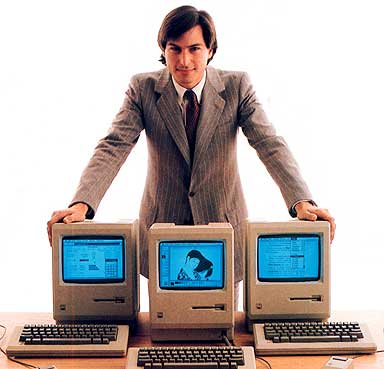
Steve Jobs is Dead :-(

The creator of so many of our toys and tools has passed away. He may have been controversial, kooky, and perhaps a pain to work for, but he was undeniably brilliant and touched all our lives.

Probably his fundamental product genius was the ability to always look at what the product could do better for the user, regardless of how previous products did it, internal momentum, or how difficult it might be to achieve.

My Apple based “origin story” as a programmer and computer guy is here.

More newsy info here.

No one wants to die. Even people who want to go to heaven don’t want to die to get there. And yet death is the destination we all share. No one has ever escaped it. And that is as it should be, because Death is very likely the single best invention of Life. It is Life’s change agent. It clears out the old to make way for the new. Right now the new is you, but someday not too long from now, you will gradually become the old and be cleared away. Sorry to be so dramatic, but it is quite true.

Your time is limited, so don’t waste it living someone else’s life. Don’t be trapped by dogma — which is living with the results of other people’s thinking. Don’t let the noise of others’ opinions drown out your own inner voice. And most important, have the courage to follow your heart and intuition. They somehow already know what you truly want to become. Everything else is secondary.

Steve Jobs, Stanford commencement speech, June 2005

/sigh

All Things Change

So I’m about halfway through my last polish pass on my third major draft of Untimed. [Update 7:44pm, finished the polish] This is one of the umpteen revision passes. Only another day or two to go before I send it off again and get down to waiting for feedback (hands down my least favorite part of writing).

The book totally kicks ass BTW — biased opinion but true.

Anyway, this has me planning to spend my “downtime” (waiting) doing some really serious research on self-publishing my first novel, The Darkening Dream, and seeing if I can get it out there before the holiday season.

I’ve been following self-publishing blogs like A Newbie’s Guide to Publishing and Dean Wesley Smith for around a year. These guys — rhetoric aside — have made sense for some time but the arguments for traditional publishing grow lamer and lamer. Check out something like this, which lays it out there — albeit with a lot of flavor. Publishing is in the throws of the cataclysmic “doing digital” change that has or is shaking up all the media businesses. For example, in music the conversion from media (vinyl, cassette, CD) to MP3 during which the labels/studios stuck their head in the sand and found themselves nearly destroyed.

The fact is, the change is coming no matter what any big old-school companies want or try to do. Readers are well on their way to embracing ebooks, the rise of the tablet (aka iPad), and dropping smartphone and reader prices (order your Kindle Fire here! 250,000 preorders in 5 days!), has etched the writing on the wall (in blood). In a few short years print will make up 20 or less percent of the market. Paper books (and I say this as someone who has a two story library with over 15,000 of them!) aren’t going to vanish instantly, but they won’t be majorly relevant for novel sales.

So this basically guarantees completely and without any doubt that print revenues will crater, leaving publishers unable to support their big overheads. Borders (and nearly every independent) going bankrupt will just hasten this. Barnes and Noble is next. They tried with the Nook, but Amazon is going to crush them (again, Kindle fire, not to mention $79 regular Kindle). And publishers, being large old-school companies that employ LOTS of people under the old model are showing lots of signs of panic, but pretty much not a glimmer of adapting to the changing business.

But they won’t have one soon. Because without control of the gates to bookstores, they don’t control anything.

Right now they still make the better product. But as an author they:

1. tie up rights

2. take way too much money (15% vs 70% doing it yourself)

3. take way too long (15 months instead of like 1-2 to market!)

4. charge too much for ebooks

5. don’t actually do any marketing

6. often have really stupid ideas about “marketability” (like “sex doesn’t sell” or “vampires are over” *)

Eventually new meaner leaner packaging companies will make the murky ground of processing books a bit easier, but in the meantime. Time to get researching.

If anyone knows a kick ass indie book marketer, I’m looking to hire one (that’s the only part I can’t really do myself).

For more posts on writing, click here.

* From above: The Vampire Dairies and True Blood both prove both statements simultaneously asinine. And while TDD does have a vampire, he does not ever sparkle in daylight (900 years and he hasn’t seen a glimpse of it) and he is not in the least sexy. He is, howeverfrightfully smart, cautious, and happy to decorate your house with the entrails of your closest family members.

New Year’s Feast

Since 2005 we’ve been hosting the family feast for Rosh Hashanah. And what is a traditional holiday dinner without an excuse to do some cooking.


Rosh Hashanah occurs in September or October and so it’s traditional to include fall produce, particularly fruits which symbolize the hoped for sweetness of the new year. To this effect we made a huge run on the Santa Monica Farmer’s Market and picked up nearly all of the fruits and vegetables for the meal, including this apples.


When you have to slice two dozen of them, the slicer helps. These are served with honey (also from the market).


A traditional first course is the chicken McNugget of the fish world, Gefilte Fish. We made ours from scratch using this recipe.


As we have a beet dish, we used the beet greens as garnish.


You can see some of the appetizer plates prepped and ready to go.


And the fish plated with the greens and horseradish sauce (using Atomic Horseradish naturally).


Second course was a dish we’ve been working on this fall. Jose AndresGazpacho (recipe here). This is the garnish of homemade croutons and various vegetables from the farmer’s market.


And with the soup added, dressed with a bit of olive oil and toasted pinenuts. You can see the chef’s own version at my recent é outing.


Then the main course is served buffet style. Here is the finished spread.


It includes farmer’s market mixed potatoes in olive oil, salt, and garlic.


Roasted.


And in their final form.


This beet salad (recipe here). We adapted it for buffet style serving (chopped everything finer).


Here with dressing.


My brother’s homemade couscous with various farmer’s market vegetables, mint, etc.


Brisket is one of the traditional meats for the dinner. This is one of two giant slabs of beef we cook up.


We used this recipe (more or less). Which involves slow cooking (for a long time) with carrots and various fruits.


And here is the finished and dressed version. At some point in the middle the brisket is pulled out, sliced, and put back into the stew.


A more conventional “autumn salad.”


The bottom of “Wendy’s Kugel.”


And extracted. I’m not generally a big kugel fan, but this one tastes like a cinnamon, so I’m very partial to it.


And my gluttonous plate.


Then the dessert spread.


My mom generally makes a fruit crumble out of whatever is in season. This year we picked up at the farmer’s market these lovely nectarines.


And added some fresh blackberries.


Here dabbed in flour to prevent them getting too damp.


The crumble itself is a mixture of crisco, nuts, flour, cinnamon, and sugar.


You just sprinkle it on top of the fruit.


And bake.

We also made a traditional seven layer cake. You bake seven very thin cakes.


Make butter-creme icing.


And then layer them up one by one.


And add some finishing touches!

There were snacks and a lot of wine too, but I’m too full to get into it.