Tithe – A Modern Faerie Tale

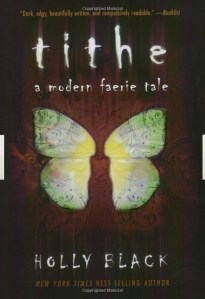
Title: Tithe – A Modern Faerie Tale

Author: Holly Black

Genre: Paranormal YA

Length: 66,000 words, 310 pages

Read: March 13, 2011

Summary: Well written and evocative.


This is the second Holly Black book I’ve read. I enjoyed White Cat (REVIEW HERE) a lot and so I went back to read her debut novel. And liked it even more.

The similarities are striking. Both are short YA books, with nice prose and likable main characters thrown into ‘weird’ paranormal situations. Both have the action so condensed as to occasionally be confusing. Both wrap themselves up in the last quarter in a way that compromises the believability of the secondary characters. Both have unhappy but not completely tragic endings. While White Cat’s premise is perhaps a tad more original, I found Tithe‘s creepy fairy flavor more to my taste. Not that I didn’t like the first, but I really liked certain things about the second.

Tithe is written in third person past, with the protagonist Kaye dominating the POV. Mysteriously, approximately 5-10% is from the point of view of her friend Corny, and about 2% from the romantic interest. These outside POVs felt wrong, and at least in the Kindle version, no scene or chapter breaks announced the transitions. Every time one happened I was confused for a paragraph or two and knocked out of the story. Still, said story was more than good enough to overcome this minor technical glitch.

Kaye is an unhappy 16 year-old with a loser mom. When they move back to New Jersey she is rapidly involved with the Fey, discovers she’s a green skinned pixie, and gets drawn into a conflict between the Seelie and Unseelie (rival fairy) courts. It’s a fun read, and the prose is fast and evocative of the fey mood. Ms Black seemed to have done at least some research and the feel is quite good. The loose descriptive style sketches some rather fantastic creatures and scenarios, and that works. There is some darkness (which I like), and wham bam death of secondary characters without the proper emotional digestion. There is sexuality, but no sex (boo hiss!).

But I really like the way she handled the fairies. There isn’t a lot of description, but what there was left me filling in my own detailed, sordid, and mysterious collage of imagery.

I was loving the first two third of the book, and then it pivoted a bit and lost me a little. Don’t get me wrong, I still liked it, but the last third felt sketchier. The author had a bunch of double takes and betrayals on her outline, and it felt to me that it didn’t really matter if the secondary characters got to be true to themselves — they just followed the script. The protagonists best friend dies in like two seconds, and there is barely any reaction. Everyone also seemed to roll way too easily with the rather gigantic punches (as in Fairies are real). And to be darn good at picking up new powers in no time at all. This is a typical issue, and very hard to address perfectly, but it always bugs me when magic seems too easy. White Cat had the same final act issues.

It’s still a fun book — way above average — with nice prose and breakneck pace. But the potential for great gave way to merely very good.

Book Review: White Cat

Title: White Cat

Author: Holly Black

Genre: Paranormal YA

Length: 76,000 words, 310 pages

Read: March 12, 2011

Summary: Well written, fun, but a little contrived.


This is yet another foray into the world of paranormal YA (I am, after all, doing research for my own writing). Holly Black is a but best selling YA and MG author. This book, unusually, has a male protagonist, and he’s part of a family of “curse workers,” although he himself doesn’t do any magic. He lives in an alternative reality where a small minority of people are able to “lay on hands” in a bad way and curse people. They are known to society, it’s even illegal, and formed into criminal gangs in the 1930s just like the Mafia.

The premise is decent, although I’m not a fan versions of our reality with outed paranormal groups. I didn’t really buy the changes at a social level. The whole existance of this kind of power in volume would throw everything off, and here the only real social change is that everyone wears gloves (because it’s through bare skin that the magic works). We are reminded often of the glove factor.

The writing is very solid and straightforward, in first person present. So straightforward it took me awhile to even notice the tense. Or maybe writing it myself is acclimating me to it. The protagonist is likable and felt fairly real, although maybe not all of his decisions did. And I didn’t really feel the proper weight of his emotions. Big things happen, but without big feelings. By page three or thereabouts we discover he murdered his girlfriend. We’re supposed to still like him. And we do, but mostly because it’s totally obvious that he didn’t REALLY murder her, he only thinks he did. Oh and we quickly hear about the one flavor of curse worker that’s REALLY rare. And guess who’s from a magical family and doesn’t have any power…

But I enjoyed the book — quite a bit — I read it in half a day after all. Another book I attempted to read that same morning was so execrable that I only made it to fifty pages, so this was a vast improvement.

A couple other beefs. At times the writing was so lean that I felt like I missed something in the action and had to page back to find it — but it wasn’t even there. Now, it was then obvious moving forward what had happened, it just seemed that the attempt at leanness and/or agressive editing had taken the edge off the clarity. Then as we moved into the second half we hit the “after the big reveal” syndrome which many books with reveals often suffer from. I’ve mentioned this before (like HERE or HERE), but basically this is where after the big shocker no one really seems to act with appropriate emotional gravitas. I’m used to it, and it’s a tough problem to solve, so I moved on to the ending.

Which was the weakest part. Everything juggled into place such that the people were served the plot rather than their character. The plot wasn’t bad, it’s just that I didn’t really see some of the characters acting like they did.

Overall, the story was fast and fun. As I said Ms Black is a skilled writer, and the prose zipped along, with nice quick descriptions, and she isn’t afraid to be a bit dark or sexy (considering it’s YA). The gratuitous twist on the last two pages bugged me, but I ordered the sequel (which the Twitter/FB buzz says is very good) and another of the author’s books.

How different these neat little package YA books are from a meaty tome like The Wise Man’s Fear (which I finished the same day). There are subplots in that book about the size of this entire story.

For a review of Holly Black’s first novel, Tithe: A Modern Faerie Tale, click here.

Game of Thrones – The Houses

With the premier of Game of Thrones, the HBO series based on what is perhaps my all time favorite Fantasy series, fast approaching, the network has been releasing all sorts of goodies. Now I’ve posted about this before, but these books, and it looks like the show, are so darkly delicious that I fell I must share.

Power (above) is new trailer.

Fear and Blood (above) is another new trailer for the show in general.

Then we have a whole series of videos on some of the most important Great Houses. Like Dune before it, Game of Thrones is a story about the interplay of politics and loyalty among a number of great factions. This was frequently true during the late middle ages, and to some extent the series is based a bit on the War of the Roses.

The Starks (above) are the moral center of the story.

House Baratheon holds the throne… for now.

The Lannister’s you love to hate — except for Tyrion who rules.

House Targaryen knows all about dragons.

Above is a more detailed video on Jaime Lannister.

and above Robb Stark.

Above is Littlefinger.

and above about the world in general.

For a review of episode 1, click here.

The Wise Man’s Fear

Title: The Wise Man’s Fear

Author: Patrick Rothfuss

Genre: High Fantasy

Length: 380,000 words, 1000 pages

Read: March 4-12, 2011

Summary: A worthy sequel.

_

The Wise Man’s Fear is one of 2011’s two most anticipated Fantasy novels, the other being George R. Martin‘s A Dance with Dragons (due in July). WMF, however, can be all yours right now. It’s the sequel to The Name of the Wind (which I REVIEW HERE). This is High Fantasy of a rather less epic sort. Not that it’s any less fun to read, even weighing in as it does at 1008 hardcover pages. Although, who thinks about pages these days, as I read the Kindle version on my iPad (wouldn’t want to mess up that nice hardcover first edition I had signed by Mr. Rothfuss last week!).

Despite the length, it’s well worth it. This book is seamless with the first in the series, despite the four years gap between their publication. I read The Name of the Wind a second time last week, and WMF picks up and continues with exactly the same style and pace. There is still the box story in the present, but this accounts for no more than 5% of the pages. The action mostly takes place in the past with our hero, Kvothe, continuing on for a bit at University and then venturing out into the wider world. While we sense that some bigger events are in the works, this is still a very personal tale. And it defies all normal story telling expectations in that it just meanders along. My editor’s eye says that whole chunks and side plots could be snipped out without effecting anything. And to a certain extent this is true. But would the novel be better for it? Perhaps it could have lost 50-100 pages in line editing, but I’m not sure I’d take out any of the incidents. As the novel itself says, it’s not the winning of the game, but the playing of it that matters.

That is very much what The Wise Man’s Fear is about. It’s a story about stories. It’s rich and lyrical, a luxurious tapestry of world and story, without the distraction of the intricate mechanism of plot. The little glimpses into different sub-cultures show a deft eye for details and invention. This feels like a real place, not so much explained, but revealed through the narrator’s eyes.

As Rothfuss said in an interview, Kvothe is  older now, and he gets himself into more trouble. There’s more sex and violence this time out, although the main romance is still endlessly unrequited 🙂 Kvothe it seems, is a hero of many talents, and that includes those in the bedroom. Rothfuss doesn’t focus on these details gratuitously, it’s not a book filled with battle (or bedroom scenes).

I’m curious to see how Rothfuss wraps this up in the third book (and I suspect the trilogy might expand). Things still feel early. We find out barely anything new about the main villains. In fact they don’t even show in this volume. Just like the first book the end is completely limp and anti-climatic. Kvothe just wraps his story up for the day and we wait (hopefully for slightly less than four years).

But I’ll be waiting. Probably for so long that I’ll have to read book one and two again. I won’t mind.

Book and Movie Review: The English Patient

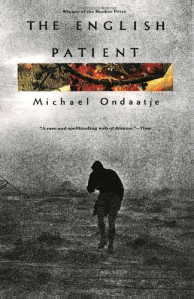
The English PatientTitle: The English Patient

Author: Michael Ondaatje

Genre: Literary Historical Drama

Length: 82,000 words, 300 pages, 162 min

Read: Spring, 2010

Summary: Lyrical.

_

I had seen the film when it came out (and several times after) and it’s long been one of my absolute favorites. So to that effect the novel has been sitting on my shelf for over ten years waiting to be read and this spring I finally got around to it. In some ways I’m glad I waited because I wouldn’t have appreciated the prose as much years ago. The voice, told in lightweight third person present, and lacking nearly all mechanical constructs (like dialog quoting or tagging, preamble explanations of scene transitions, etc.) has a breezy lyrical quality to it. It can only be described as delectable. There is a feel of watching a beautiful but flickery film, a series of stuccato images flash through your head as you read it. It’s worth quoting to illustrate:

“She stands up in the garden where she has been working and looks into the distance. She has sensed a shift in the weather. There is another gust of wind, a buckle of noise in the air, and the tall cypresses sway. She turns and moves uphill towards the house, climbing over a low wall, feeling the first drops of rain on her bare arms. She crosses the loggia and quickly enters the house.”

The plot — such as it is — involves a war battered Canadian nurse lingering in Italy at the close of WWII. She has isolated herself in a half destroyed villa and cares for a mysterious burn patient who is dying and too fragile to move. The book focuses on the nurse as its protagonist, concentrating on her relationship with an Indian (via the British army) bomb disposal tech and her efforts to come to terms with the war and loss. The patient slowly unravels his own tale to her. It is his story, set mostly in Egypt before and during the start of the war, which is the primary focus of the movie. In the book it serves more to offset and focus the nurse’s point of view.

I am blown away by the effort of translating this book for the screen. Frankly, although I loved the novel, I like the film better — this is rare. Anthony Minghella managed the near impossible, translating this gorgeous prose into an equally lyrical visual style. It’s less stuccato, more “lush and languid.” Film is a more linear medium, and Minghella focuses the story to create grander more visual arcs. To do this, he expanded the patient’s epic story of love and loss in pre-war Egypt. I’m a sucker for Egypt, the exotic, the British Empire in decay, and worlds that no longer exist. This story feels bigger than the nurse’s, being as it is more tied in with history and international events. But in both you have a powerful sense of people fighting for their passions, both interpersonal and intellectual, despite the baggage of past choices and the buffeting blows delivered by the unstoppable forces of history.

Both variants of this story are inherently complex, ambiguous, and emotional works. Look for no answers here, just gorgeously rendered questions.

Done Again, Hopefully

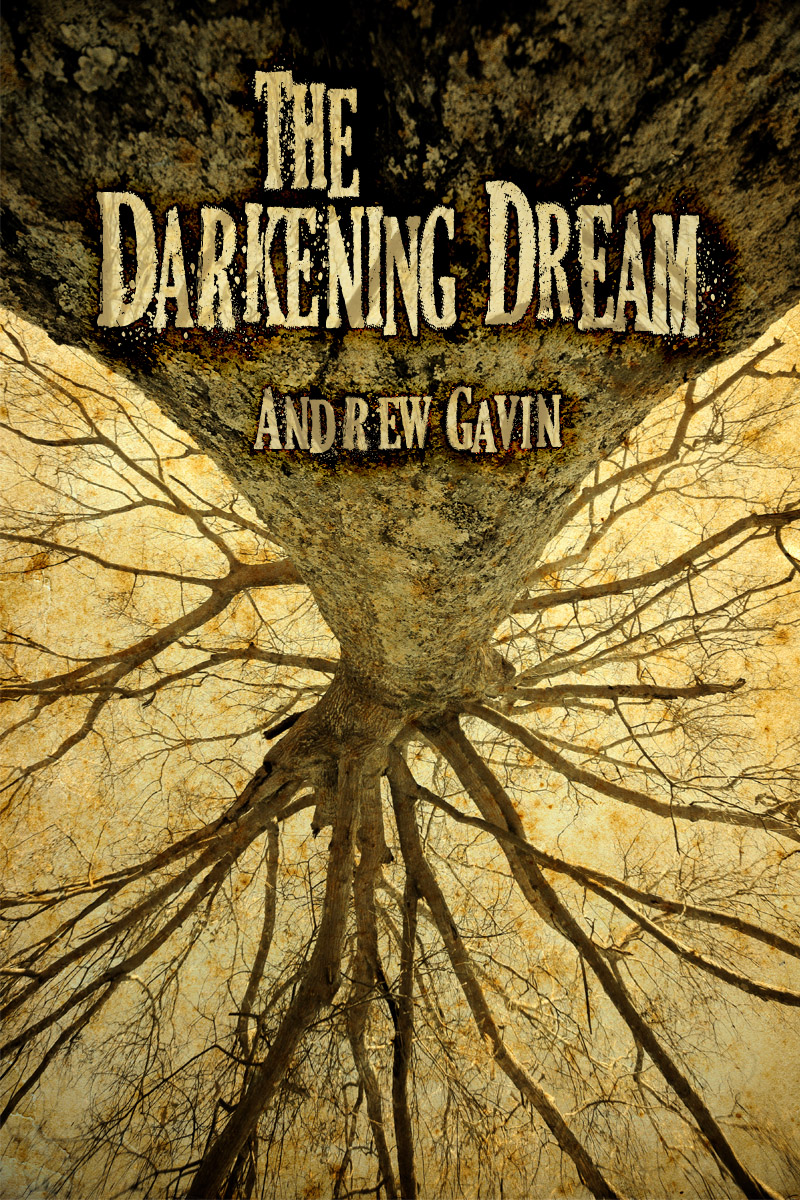
My freelance editor, the awesome Renni Browne, has officially declared my novel, The Darkening Dream, done, and ready for agents!

Now bear in mind that “done” is a highly subjective term, and that as soon as anyone gives me an idea worth doing, I’ll probably do it, and that agents and editors are bound to ask for changes. Which as long as I think the ideas make the book better, is a good thing.

The new version is 5.00i, but this is my ninth full major draft. Woah.

I remember reading Sol Stein‘s awesome book on writing, where he mentioned that The Magician took 10-11 drafts (I was then on my second) and thinking: that’s crazy! I guess not. Totally coincidentally, Renni also edited that novel, published in 1971!

So it’s been a busy week, working only on The Darkening Dream (I’ll get back to my new novel shortly). In the last 10 days:

1. We finishing our big line edit

2. I rewrote the ending again.

3. I read the entire book and made minor mods.

4. Renni and Shannon (her additionally awesome co-editor/assistant) reread the beginning and the ending and did another quick line edit.

5. I went over that.

6. I got back a critique on the beginning of the book, and made some changes based on that.

7. This inspired me to write two entirely different beginnings.

8. We eventually decided the original was better, although I moved a few nice tidbits from the new stuff over.

9. I reread the whole first half of the book, and the ending again, and made some more improvements.

10. On Sunday I rested.

So now I return to the agent game (referrals very welcome), and to the agonizing internal debate about the relative merits of self publishing in the modern (and very rapidly changing) market. And back to the first draft of my new novel (about 25% done).

If any of you beta readers want a copy of the new improved 95,000 word The Darkening Dream, drop me a note.

The Name of the Wind

Title: The Name of the Wind

Author: Patrick Rothfuss

Genre: High Fantasy

Length: 255,000 words, 720 pages

Read: May 2008 & Feb 28-Mar 2, 2011

Summary: Best new fantasy of recent years.

_

In 2008, I read this 722 page novel in Xian China during a single sleepless night, and I reread it just now for the second time in preparation for the sequel (released this week): The Wise Man’s Fear. NOTW is a beautiful book. Of all the Fantasy I’ve read in the last 15 or so years, this is perhaps second best after The Song of Ice and Fire. But that’s not to say that they have much in common, other than both being good Fantasy. George R. Martin‘s books are full of characters, POVs, violence, politics, and a darkly realistic sensibility. NOTW is much more focused and relies on more traditional Fantasy tropes. How focused can a 700 page novel be? Not very, but it is good, and it concentrates on a small number of characters and a single (albiet meandering) storyline.

Kvothe is the protagonist. He’s a young man of many many talents, of no means whatsoever, who winds his way from the actor’s troupe to the mean streets to the magical University and to (implied) great and terrible things.

If I have any beef with the book, it’s that the meta premise of the tired hero telling his story is too drawn out. This volume opens in the “present day,” where very little happens except to set us up for the life story of the hero, which is brilliant. Much like Lord of the Rings or Hyperion, the reader must slog for a bit to get to the gold. In this case about 50 pages in. But the slogging isn’t exactly painful because Rothfuss’s prose is lyrical and masterful. Seriously, it’s a wonder given the tangents, bloated conversations (the dialog is great but not efficient), and the like that this book is so easy to read — but it is. Damn easy, even the second time.

The world and the hero juggle uniqueness and heavy — but delicious — borrowing from classic Fantasy of the best sort. I sniffed out a bit of Ursula K. Le Guin (think Wizard of Earthsea), Raymond Feist, Robert Jordan (Wheel of Time), and who knows how many others. The world is extremely well developed, and feels big, but it doesn’t doesn’t have the camp and cheese of Wheel of Time (although it does pay homage). I love origin stories and I very much enjoyed Kvothe’s journey. He’s a great character: humble, proud, skilled, lucky, unlucky all at once, but in a fairly believable way. Perhaps the most important relationship in the book (and there are actually relatively few) is the romance, and it has a tragic quality that feels very refreshing, and slightly reminiscent of the best of Orson Scott Card (think his old stuff like Song Master) or Dan Simmons.

The magic is very unique and interesting, and we focus on it quite a bit, as this is a story that spends a lot of time in the Arcane Academy. This ain’t no Hogwarts either, it feels altogether more mysterious and dangerous. There are several different magic systems interwoven in what is a world overall fairly light on magic. But this is also a world that feels a bit more technological than most Fantasy, with larger cities, a little more like antiquity than the Middle Ages. The “magical bad guys” have a nice character and bit of mystery to them. I don’t like all my mystery explained. There is a lot of music and theatre in here too, and that just helps heighten the lyricism.

But what exactly makes this book so good?

Proving my geek-cred, swapping some Crash Bandicoots for signatures with Patrick Rothfuss

Fundamentally I think Rothfus is just a great writer, and a very good world builder. I don’t think he’s a great plotter. The story drifts along, relies a bit on coincidence and circumstance, and the end fizzles then pops back out of the interior story and waits for the sequel. But that doesn’t really matter, because the prose, world, and characters keep you enjoying every page.

CLICK HERE for my review of the sequel, The Wise Man’s Fear.

Beginnings and Endings

The first thing I did after getting my line editing back over the weekend was work on the ending of my novel. Beginnings and endings are so important, and as is probably typical, I’ve changed them a lot.

The ending is important because it’s what has to wrap everything up, and what leaves the aftertaste in the mouth of the reader. But it isn’t going to do you any good unless they get there.

Which brings us to the beginning. So important in so many ways. First of all, agents and editors glance at the beginning,and if it isn’t awesome, they’ll just put it down right there. Second, so do many readers. They browse the first couple pages in the bookstore (or on Amazon), or even if they buy it, if it doesn’t grab them right away they might just move onto to another book. I know I do.

During revision, The Darkening Dream has already had three different beginnings. But I’ve never been totally satisfied with them. I took a new high level crack at rearranging the flow of my story’s first crucial day, and ended up whipping out two new takes on the first ~7,000 words. That puts three beginnings on the table if you include the current draft. Each have their plus and minuses.

Do I start with the violent supernatural event that kicks everything off?  Do I start with character development on the protagonist? How do I introduce my large cast of characters?

Now that I have a couple takes I’m trying to decide which one to pursue. IF YOU’RE ONE OF MY BETA READERS, HAVE READ THE BOOK ALREADY, and are interested and throwing your opinion into the ring, drop me a note and I’ll send you some options 🙂

The good news about my new novel, is that before I even started writing I found a totally awesome place to start the story. I LOVE the start of that book, and so does everyone I’ve showed it to so far. Lessons learned.

Machete – The best B-movie ever?

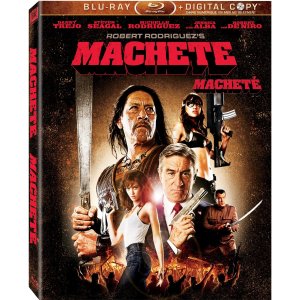
Title: Machete

Director/Stars: Danny Trejo (Actor), Robert DeNiro, Jessica Alba, etc.  Robert Rodriguez (Director)

Genre: Exploitationist Action

Watched: February 27, 2011

Summary: Pure action and camp fun.


Derived from a fake preview in Rodriguez and Tarantino’s Grindhouse double feature, this film is just rollicking camp fun. The premise: that ex-federale Danny Trejo (the ugliest guy to grace the silver screen since The Elephant Man) is lured into a crazy scheme by various right wing racist nut-jobs and has to kick (and get some) ass in various escapes, revenge, etc.

One of the best things is the roster of amusing casting. These aren’t just cameos either: Robert DeNiro, Jessica Alba, Michelle Rodriguez, Steven Seagal, Jeff Fahey, Cheech Marin, Don Johnson, Linsay Lohan and more.

The plot, as such, is thin, and gratuitously cheesy. The characters however, live large, and the action is fun and inventive and sometimes delightfully nasty.

Before the opening credits, Trejo manages to use his trademark weapon to amputate at least a dozen limbs, leading him to rescue a stark naked girl whose cel phone and weapons are stored where the sun don’t shine. Before this scene ends a fat-ass Steven Seagal uses a katana to behead Trejos wife (standard revenge setup). This pretty much sets the tone for the entire film. My favorite gross-out bit is a bad guy whose intestines (still connected) are used by Machete as a rope to swing out the window and onto the floor below.

Nothing about the movie is realistic. The villains are deliciously over the top, and their crazy scheme to raise drug prices by building an electrified fence between Mexico and Texas purely amusing. People get shot in the head and live. Everything resolves in one of those typical Rodriguez giant shootouts.

What makes the film so fun — besides the crazy action — is the unadulterated camp factor of each of the characters. From Cheech’s merlot-drinking shotgun wielding priest to Robert DeNiro’s evil racist state senator (there are a few of those in real life too!).

Rodriguez just should have gone as over the top with his nudity as with his violence. Too much cutting for a work this gratuitous!

The edits are all in!

The last batch of line edits for my novel The Darkening Dream are in from my awesome freelance editors. Now I just have to spend the next day or two groveling over them, tweaking, and then…

Read the entire thing again!

For like the 50th time!