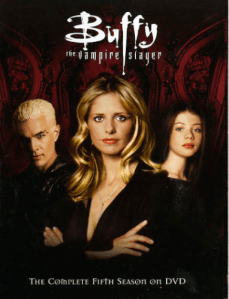
TV Review: Buffy the Vampire Slayer – part 6

CONTINUED FROM PART 5 ABOVE.

The rest of the series can be found here: [12,34, 5, 6]

WARNING: CONTAINS SPOILERS:


Season 7:

So at long last we meander to the final, and worst, season. Not that it’s awful, but it does suffer from a number of serious problems.

1. The big bad is diffuse. This season, in an effort to be even more apocalyptic, they decided on an incorporal season villain called “the first evil.” A vaguely couched badness that takes the form of dead people, often Buffy herself (she did, after all, die twice). Frankly, the first is kinda lame, and not very funny. It certainly doesn’t measure up to Glory or the Mayor (although it occasionally looks like the Mayor). It’s “first” appearance (haha) where it slowly winds back through all the villains in reverse order is however kinda cool.

2. The slayerettes – About 40% into the season Buffy is inundated by a collection of 17 year-old idiots known collectively as the slayerettes. They totally suck, are just anoying, gum up the relationships we really care about, and often get themselves killed (good riddance). Only Kennedy has any redeeming qualities — mostly in the form of implied girl-on-girl action with Willow.

3. Andrew – For some reason, this lamest and most annoying of the “Trio” is held captive in Buffy’s house, where he can serve to annoy us, the viewers. He does have his occasional moments and lines, like “Episode one boring?” But mostly he grates on the nerves of the cast and viewer alike. Oh Andrew, why at least couldn’t you have died in “Chosen?”

4. Mysterious documentary-style shooting – Certain episodes have a more documentary style that is not evidenced anywhere else in the series. Notably “Storyteller” (deliberate there for sure) and bits in “Touched” and “End of Days.” It felt amateurish and out of place.

5. No good creative episodes – Nothing like “The Body” or “Once More with Feeling.” Nothing. They may have tried with “Storyteller,” but it was lame lame lame.

At least the writers knew it would be the last season, and so in a neat and orderly manner arced the story toward a decent conclusion. And the first half of the season starts pretty decently. The new character, Principal Wood is good. “Help” is a great episode and the Anya episode, “Selfless” has some totally priceless 1,000 year flash back scenes between Anya and Olaf the troll — totally priceless, and made all the better for being in some Germanic/Scandinavian tongue and subtitled. “Conversations with Dead People” and “Sleeper” aren’t bad either.

Ug. Then enter the slayerettes. The only compensating bit being the sub-boss bad guy, the “ubervamp” who is pretty cool and kicks some ass, including Buffy’s.

The second half of the season is uneven, including my least favorite episode in a long time “Storyteller,” but the pretty good “Lies My Parents Told Me.” The new sub-boss Caleb is decent too. Then we have “Empty Places.”

I don’t know what they were thinking, but it’s obvious the writers decided they had to separate Buffy from her friends for dramatic effect, and so they stage a show down in which they all turn against her. In no other episode of the entire series is there a moment where so many characters just act completely out of character. I can buy a few of them turning on her like this, but the writers failed completely to give each and every one of them a valid personal reason visa-via their relationship with Buffy to do so. I could barely watch it.

The return of Faith however is good, and the last three episodes are pretty strong, particularly the series finale “Chosen.” Despite the lame cameo from Angel, it does all end up in a pretty good place, and reasonably satisfying — a difficult thing to do after such a long and emotional series. Overall, it’s certainly a must watch, but just not on par with the magnificent pair of seasons that preceded it.

As with the previous two times I’m depressed that it’s over. This time I’m going to make a serious effort at Jos Whedon’s season 8 in comic book form.

The Darkening Dream

Since I’m always cryptically referring to my novel in progress, I figured I’d post a few words about it.

The Darkening Dream is a historial dark fantasy. It’s currently 95,000 words and I’ve just finishing up the line editing and polish. [ Updated 3/16/11 ] I’m looking for a literary agent to help me start slogging through the process of publishing.

ANY CHARACTER HERE

As to the thing that matters — the story [ Updated 3/25/11 ]:

An ominous vision and the discovery of a gruesome corpse lead Sarah and her friends into a terrifying encounter with a fledgling vampire. Eager to prove themselves, the young heroes set out to track the evil to its source, never guessing that they will take on a conspiracy involving not only a 900-year vampire, but also a demon-loving Puritan warlock, disgruntled Egyptian gods, and an immortal sorcerer, all on a quest to recover the holy trumpet of the Archangel Gabriel. Relying on the wisdom of a Greek vampire hunter, Sarah’s rabbi father, and her own disturbing visions, Sarah must fight a millennia-old battle between unspeakable forces, where the ultimate prize might be Sarah herself.

To read about my second novel (in progress), click here.

Or here for the index of all my Creative Writing posts.

TV Review: Buffy the Vampire Slayer – part 5

CONTINUED FROM PART 4 ABOVE. And the whole series [1, 2, 3, 4, 5, 6]

WARNING: CONTAINS SPOILERS:


Season 6:

The transition from season 5 into season 6 is the best of the entire series. After the season 5 finale, with its tear jerking “The Gift,” we slam right in with the two hour “Bargaining,” and it’s more or less continuation “After Life.” I’ve never managed to not watch all three of these together because until the end of the third hour things are so unsettled you just have to keep going.

Season 6 is dark, and in my opinion the seven seasons would be ranked 5,6,3,4,2,1,7. With all but 7 being fantastic, and five and six very close. Six is a bit darker, but I’ll give the edge to five just because I like Glory so much and the whole villain bit is more cohesive. But both five and six have almost no “one off” episodes, even those that technically have a monster of the week like “After Life,” or “Hell’s Bells,” are fundamentally crucial to the larger plot. And episode seven of season six is “Once More, With Feeling,” arguably, along with season 5’s “The Body,” the best episode of the entire series.

“Once More, With Feeling” is just mind bogglingly brilliant. Not only is it a musical, sung entirely by the cast and written and scored by Joss Whedon, but it’s a darn good musical. If you are new to Buffy, don’t watch this episode and expect to be wowed — I mean if you like musicals you might like it — but you have to see it in context of the series to really appreciate it. I’ve watched it no less than eight times, and I’ve been spell bound ever time. Plus I hate musicals. First there is the sheer audacity of it: to just up and write a musical episode, complete with MGM musical style titles in the middle of a long running dramatic series. I even own the soundtrack. But then, much more importantly, is how this episode is actually the most central to the season, the one in which everything comes to a head. It has the most plot, the most climax, of any Buffy episode. Nearly every character is pivoting here — and the music makes it happen. Sheer unadulterated genius.

After “Once More, With Feeling,” things grow really dark. This season our nominal villains are the Trio, three geeks who have ganged up to be super villains. They’re pretty funny, although not nearly as menacing as the mayor or Glory. They do have some tremendous lines like “episode one bad?” But really, their villainy is trumped by none other than the best friend. In the middle of this season Buffy herself struggles with Nihilism, and a career in fast food. But Willow… Her magic addiction threatens to destroy her relationship, her life, and ultimately the world. Lots of other stuff is self destructing here. Giles leaves, Dawn suffers teen angst, Anya and Xander implode, and Buffy turns to down and dirty sex to validate her dark self. This is good stuff, almost too dark.

Nearing the end we have the very emotional “Seeing Red,” and then the high speed tripple whammy of Willow’s vengeful meltdown. The end is good too, just not as deeply felt as “The Gift.”

If only season 7 could have stayed this good.

CONTINUED HERE IN PART 6.

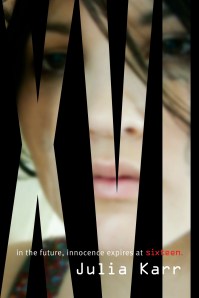
Book Review: XVI (read sexteen)

Title: XVI

Author: Julia Karr

Genre: YA Dystopian Fiction

Read: Jan 16-19, 2011

Summary: Good premise, tried hard, fell flat.

_

I really wanted to like this book more than I did. The premise is fine, set in a dystopian 2150 where teens are branded at 16 as”legal for sex.” Nina is almost 16, and is dealing with not only the stress of this oncoming rite of passage, but boys, the death of her mother, and a bigger conspiracy.

But where to begin with the problems. The protagonist is okay, and there isn’t anything wrong with the prose, but fundamentally this book stands out as an example of premise over plot. Plot, we are told is how the characters in a story deal with or overcome the premise. A good one sells the premise in an engrossing and personal manner. The plot just felt weak, and the characters reactions to it rushed and forced. People keep popping up out of nowhere. Dramatic events — like the narrator’s mom dying — blink by. They live in Chicago, yet everyone seems to know everyone. The villain tattles his villainy while playing hide and seek with the heroine — so very Scooby Doo.

And the Science Fiction is pretty darn mediocre. This is 150 years from now and music and films are stored on “chips!” There won’t even be physical media in 15-20 years. There is no mention of a net or internet — nary a computer. They still have magazines! Video playing machines that play films on chips (like a DVD player). People have phone numbers (also on the way out already). There are no substantial tech improvements. Some “transports” that maybe fly. Mention of moon and mars settlement, but no matching tech on earth. No new biotech, no new computer tech.

150 years ago is 1860 and the civil war!

I didn’t hate the book, in fact wanted to like it, but it just fell flat.

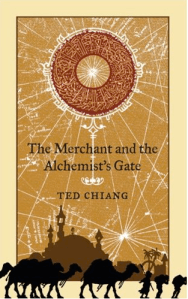
Short Story: The Merchant and the Alchemist’s Gate

Title: The Merchant and the Alchemist’s Gate

Author: Ted Chiang

Genre: Historical Time Travel

Read: Jan 10, 2011

Summary: Awesome and lyrical.


This 60 page short story is so up my alley. A story of time travel, set in medieval Baghdad, what could be better? If it were written in a lyrical style reminiscent of the Arabian nights! This is a gold and gem encrusted little dagger of a story. Mimicking prose style AND story telling conventions of its chosen era. It manages to demonstrate its time travel device and constraints in a manner so clear even an Abbasid merchant could understand.

It won both the Hugo and Nebula Novellette awards. Good show. Read it. Ali ibn Hammud al-Nasir (the villan from my own novel) commands that you do so. And he’s been known to make tea from the ground bones of those who refuse him.

It’s for sale standalone (very expensive), and in this anthology (cheap).

Book Review: Girl Walking Backwards

Title: Girl Walking Backwards

Author: Bett Williams

Genre: Lesbian cuming of age YA

Read: Jan 10-15, 2011

Summary: Less than Zero meets Rubyfruit Jungle.

_

This book is rather brilliant, but isn’t for everybody. In my review of Lost It (CLICK HERE), I had inquired if anyone knew any YA that was racy, and this was recommended. It’s written in a breezy first-person past with a kind of stream-of-consciousness lightweight quality that made me have to look to make sure it wasn’t persent tense. The prose is very very good — fitting the material perfectly.

Skye is a fifteen-year-old growing up in Santa Barbara, and she’s basically raising herself. Her mother is a self-help seminar junkie and all-around new age psychotic, her dad (divorced) lives in LA where he directs films and has sex with pretty production assistants. Neither seem to think about her at all. She has a boy friend, sort of, but wants a girlfriend. She drinks and does drugs, but she isn’t a bad girl.

Somehow this character rang very true for me, and the voice is intensely personal and likable. Even the hare-brained situations seem very real, and like Less than Zero the substance abuse and self destructive behavior believable. The voice effortlessly shifts with the state of mind — often altered — and does a first class job conveying that. For some, this might be a hard book to read, particularly if one were right-wing, but I thoroughly enjoyed it. Bret Easton Ellis‘s above mentioned masterpiece feels like watching a train wreck. While Girl Walking Backwards doesn’t have the terrifying “all rashed and looks dry and I can see that it’s been shaved” moment, and is ultimately transcendant.

Finally, his is a book that is very candid about sexuality.

Not only do we have various incidents of masturbation, near sex, and actual sex, but they aren’t even the focus. This isn’t gratuitous, it’s just frank. This isn’t about a girl becoming a lesbian, or coming out. It’s about a girl trying to find her footing in a world without foundations.

TV Review: Buffy the Vampire Slayer – part 4

CONTINUED FROM PART 3 ABOVE. And the whole series [12, 3, 4, 5, 6]

WARNING: CONTAINS SPOILERS:


Season 5:

Season 5 and 6 pretty much tie for the best of the seven! Pretty incredible how this show just keeps on getting better and better until the final season. With this season everything slips into a serious groove, but what’s really surprising is the depth of emotion pulled out of the viewers. Nearly gone are the episodic “one off” episodes (discussed in my Lost vs The Love Boat post), instead the story just rolls from one episode to the next with only a few exceptions.

The first episode (“Buffy vs. Dracula“)  is light, but it ends with a shocker, one that is reinforced in episode 2 (“Real Me“). Suddenly, and without explanation only-child Buffy has a little sister named Dawn. What casually might seem like a gimmick to spread the show demographic younger in fact becomes completely central to the season’s plot and deepens the character interactions immensely, particularly for Buffy. The season’s “big bad,” Glory — my second favorite after the Mayor — is a Hell God in need of a magical key to break open the barriers between dimensions. Some crazy monks rebuild the entire reality of the world to hide the key as Buffy’s sister, having altered all reality and history such that she existed all along. Pure genius.

What this really does is turn Buffy’s nice little dyad with her mother into a full-fledged family, upping the personal stakes immensely. And it isn’t all supernatural. Joyce (Buffy’s mom) develops a brain tumor in a long and very emotional arc that ties in brilliantly with the family aspect and with Dawn’s growing understanding of her esoteric nature. This comes to a series of shattering culminations in “Blood Ties” and “The Body.” This last episode is probably the best of the entire series, or at least tied with “Once More with Feeling,” and is a stunning piece of television. Written and Directed by Joss (as most of the great episodes are), it is a tour de force of film making. Free of music, almost free of the supernatural, but jammed packed with horror, reality, and emotion, this is a seriously tear inducing hour. And it includes network television’s first on-screen lesbian kiss!

Wisely after the disruptions in some of the formulas from the first three seasons that college (season 4) brought on, season 5 brings the gang into a stable new orbit. Giles has purchased the Magic Shoppe and this replaces the library as the central hub. Xander and Giles are back in full orbit, and Anya, Tara, and Dawn integrated into the team. But it’s Spike, and his new every episode role and gradual character transformation that really livens things up. In an amusing, poignant, and brilliant turn he falls for Buffy (hopelessly — at least for now) and she literally ends up making him a better man. But this doesn’t stop him from still being sordid, hilariously. “Fool for Love” in particular is a brilliant episode in which Buffy forces spike to recount the story of his creation (by Drusilla) and his killing of two other slayers. Plus the Buffybot is pure genius, and real Buffy’s turn playing the bot to get the truth from Spike truly touching.

There are some serious themes of loss and alienation going on here, growing and growing as we head toward the dark territory that is season 6 — Love it! The weight of the world, the family crises, and the burden of protecting Dawn, take their toll on Buffy. This comes to the world shattering conclusion in the finale, Joss’s brilliant “The Gift,” which even on the third viewing had me crying. Seriously, this show is that good!

As the poignant music surges, and Buffy runs from Dawn to dawn across the platform — Death is your gift!

Introducing the Fiction Index

In my pursuit to optimize the blog I’ve created yet more pages:

Food Index
Fiction Index
On Writing
Complete Archives

Blog navigation is funny because the default themes make it difficult to to lure people into old posts. Given that my posts are often “references” (reviews of restaurants, books, films etc.) it’s useful to see a list of them by topic.

All ofthese indicies, including the existing Food Index can be found in the righthand sidebar under “MORE POSTS ON.” Just click the ghetto programmer art buttons.

As a note. WordPress.com sure could use some code to help making these better/easier. If one uses WordPress.org (have to host it yourself) there are a bunch of plugins and you can use php to automate the process. WordPress.com only has a simple code snippet thing for the archives, but it doesn’t allow any filtering by category or tag, sorting other than by date. In other words it’s lame. This is a totally obvious candidate for automation.

Book Review: Across the Universe


Title: Across the Universe

Author: Beth Revis

Genre: YA Science Fiction

Read: Jan 10, 2011

Summary: Great read. Reminds me of books I read 30 years ago.

_

A couple months ago one of the book/writing blogs I read featured an article about first chapters that included one from this book. It was unpublished at the time, but I liked the first chapter enough to pre-order the book on Amazon. Liked it enough to actually read it yesterday when it came in the mail (one day before it was supposed to and the Kindle version wasn’t out yet — so for the first time in a little while I read on paper).

I knew I’d liked the first chapter for a reason. Besides the fact that it (the first chapter) featured a naked seventeen year-old girl, this was a fun book. And no there isn’t much sex in here — at least not for the characters that matter.

And the reason this is a good book… drumroll please… the characters. Particularly Amy, the female lead.

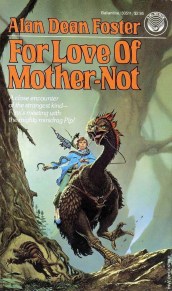
Superficially this is fairly old-school Science Fiction, slanted a bit younger than adult, almost like Citizen of the Galaxy, Home from the Shore, or For Love of Mother-Not (boy is cover design today 1000x uglier than it was in 1980!). Worth a 2 minute diversion:

Left the old one, the right is new. Which would you pick? Personally, I hate photography on fiction covers. I like COVER ART. Call me old-school. Anyway.

Across the Universe (not to be confused with the movie of the same title), is about a girl who joins a generation ship as cryogenically frozen cargo (the ship will take 300 years to go to it’s colonial destination) with her parents, but is accidentally woken early (alone) to find herself amongst a very strange society. The crew has been left to run the ship for centuries, and well nothing stays the same, certainly not human society over the course of generations.

The science here isn’t the most innovative, but it is consistant and easy to grasp. I didn’t totally buy the society and all it’s premises. But it didn’t really matter. The book is told in double first person view point, from Amy’s POV and that of the young future captain of the ship (simplified explanation for review purposes). The POV’s are very good, and stick tightly to single interwound storyline. The classic device of having a newcomer (Amy) works well to make the experience more visceral and personal, and this ties us as a reader into the story. It’s also worth contrasting this with a more “mature” Science Fiction novel I read the day before, The Windup Girl (review HERE), which although Hugo and Nebula winning, and possessed of a MUCH more elaborate and interesting SciFi world, just isn’t that fun to read. As the two main characters are literally the only people on the ship their age, they are fairly obviously in it together. I like the “forced” relationship device.

Again, because the character narrative is too fragmented. I like character. I like narrative. Don’t get me wrong, I LOVE Science Fiction, I’ve read thousands of them. I like elaborate worlds. But they’re nothing without the glue to hold you there.

Now my small beefs. The book was too teasy on the sex. There was sex flying all around, we should’ve had some with the protagonists! I’m old school that way too. 60s, 70s, and 80s SciFi had lots of sex.

And the last 20% of the book started to get that we-have-reached-the-big-reveal-and-now-it’s-all-going-to-feel-a-little-forced stage that many “big reveal” books have. I had this same beef recently with the otherwise perfect Dead Beautiful (review HERE). Still, I read Across the Universe in one sitting, literally, and I enjoyed it the whole way through. I love when this happens — fairly rare as it is for a reader as jaded as I am — it reminds me that there’s still good writers out there.

Book Review: Lost It

Title: Lost It

Author: Kristen Tracy

Genre: YA Romance

Read: Jan 3, 2011

Summary: Forever 2007.

_

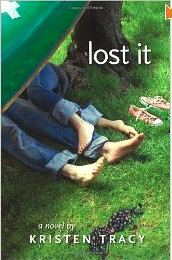
This is a very likable teen romance about an Idaho girl’s first real relationship and of course… how she lost her virginity. I read this in my continued meandering quest to find out just how edgy and racy YA can actually be. I hope someone points me to another answer, but I’m thinking… not very. If you know anything really edgy, please put it in a comment. Lost It is pretty reminiscent of Judy Blume‘s Forever (my review HERE), and it’s gone backwards in the sexual explicitness department big time. Really there’s barely any.

Don’t get me wrong. This is a good book, and it stands on its own. It’s just not racy. But I really did like the voice. Using the standard first person past you are immediately and tightly drawn into protagonist Tess’s head. She’s pretty funny too, and not your totally typical teen girl. There is a lot of interior monologue, but it doesn’t suffer from the “too much tell” problems that this often entails. Like, for example, the Indy book Switched (my review HERE) I read the previous day. With Lost It, I actually laughed a number of times aloud — or at least chuckled. Like all these books, the narrator is what drives the whole thing, and the book delivers 100% in that regard.

Many of the other characters are good. The best friend, the boyfriend, and the grandmother all felt unique and real. The parents less so. Tracy doesn’t have the effortless ability to make every character totally and completely believable like Judy Blume, but who does? Nevertheless, she gives it the good old college try and the results are very good.

But the tameness bothered me. In our era of hyper shock factor, it would be nice if an honest book like this was a bit more honest and open about its central topic. Sex. Forever certainly has the edge there, and it’s more than 35 years old. It’s also worth noting that the two books have almost the same cover. I guess publisher marketing departments all think alike. Observe to the right!

I don’t know what it is, but at the same time the internet has opened the door to vastly more sexual material than my 70s or 80s brain could have ever conceived, popular media has less and less. But more violence. Somehow this seems pretty twisted — at least the more violence less love thing.

Anyway, Lost It, is a good book. Refreshing actually because I didn’t have to force myself to finish it. It’s all character driven, and when well done that’s a very good thing.