Done Again, Hopefully

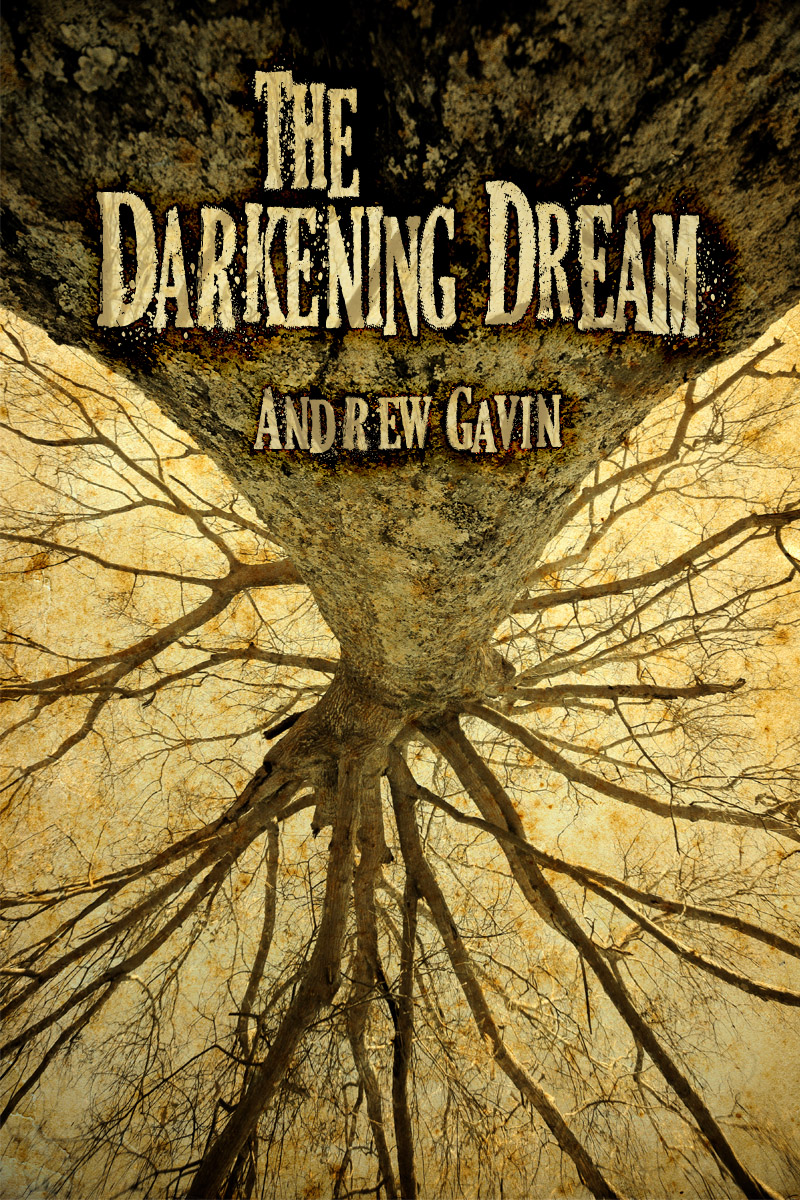
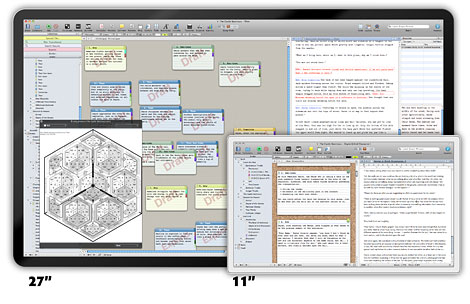
My freelance editor, the awesome Renni Browne, has officially declared my novel, The Darkening Dream, done, and ready for agents!

Now bear in mind that “done” is a highly subjective term, and that as soon as anyone gives me an idea worth doing, I’ll probably do it, and that agents and editors are bound to ask for changes. Which as long as I think the ideas make the book better, is a good thing.

The new version is 5.00i, but this is my ninth full major draft. Woah.

I remember reading Sol Stein‘s awesome book on writing, where he mentioned that The Magician took 10-11 drafts (I was then on my second) and thinking: that’s crazy! I guess not. Totally coincidentally, Renni also edited that novel, published in 1971!

So it’s been a busy week, working only on The Darkening Dream (I’ll get back to my new novel shortly). In the last 10 days:

1. We finishing our big line edit

2. I rewrote the ending again.

3. I read the entire book and made minor mods.

4. Renni and Shannon (her additionally awesome co-editor/assistant) reread the beginning and the ending and did another quick line edit.

5. I went over that.

6. I got back a critique on the beginning of the book, and made some changes based on that.

7. This inspired me to write two entirely different beginnings.

8. We eventually decided the original was better, although I moved a few nice tidbits from the new stuff over.

9. I reread the whole first half of the book, and the ending again, and made some more improvements.

10. On Sunday I rested.

So now I return to the agent game (referrals very welcome), and to the agonizing internal debate about the relative merits of self publishing in the modern (and very rapidly changing) market. And back to the first draft of my new novel (about 25% done).

If any of you beta readers want a copy of the new improved 95,000 word The Darkening Dream, drop me a note.

The Name of the Wind

Title: The Name of the Wind

Author: Patrick Rothfuss

Genre: High Fantasy

Length: 255,000 words, 720 pages

Read: May 2008 & Feb 28-Mar 2, 2011

Summary: Best new fantasy of recent years.

_

In 2008, I read this 722 page novel in Xian China during a single sleepless night, and I reread it just now for the second time in preparation for the sequel (released this week): The Wise Man’s Fear. NOTW is a beautiful book. Of all the Fantasy I’ve read in the last 15 or so years, this is perhaps second best after The Song of Ice and Fire. But that’s not to say that they have much in common, other than both being good Fantasy. George R. Martin‘s books are full of characters, POVs, violence, politics, and a darkly realistic sensibility. NOTW is much more focused and relies on more traditional Fantasy tropes. How focused can a 700 page novel be? Not very, but it is good, and it concentrates on a small number of characters and a single (albiet meandering) storyline.

Kvothe is the protagonist. He’s a young man of many many talents, of no means whatsoever, who winds his way from the actor’s troupe to the mean streets to the magical University and to (implied) great and terrible things.

If I have any beef with the book, it’s that the meta premise of the tired hero telling his story is too drawn out. This volume opens in the “present day,” where very little happens except to set us up for the life story of the hero, which is brilliant. Much like Lord of the Rings or Hyperion, the reader must slog for a bit to get to the gold. In this case about 50 pages in. But the slogging isn’t exactly painful because Rothfuss’s prose is lyrical and masterful. Seriously, it’s a wonder given the tangents, bloated conversations (the dialog is great but not efficient), and the like that this book is so easy to read — but it is. Damn easy, even the second time.

The world and the hero juggle uniqueness and heavy — but delicious — borrowing from classic Fantasy of the best sort. I sniffed out a bit of Ursula K. Le Guin (think Wizard of Earthsea), Raymond Feist, Robert Jordan (Wheel of Time), and who knows how many others. The world is extremely well developed, and feels big, but it doesn’t doesn’t have the camp and cheese of Wheel of Time (although it does pay homage). I love origin stories and I very much enjoyed Kvothe’s journey. He’s a great character: humble, proud, skilled, lucky, unlucky all at once, but in a fairly believable way. Perhaps the most important relationship in the book (and there are actually relatively few) is the romance, and it has a tragic quality that feels very refreshing, and slightly reminiscent of the best of Orson Scott Card (think his old stuff like Song Master) or Dan Simmons.

The magic is very unique and interesting, and we focus on it quite a bit, as this is a story that spends a lot of time in the Arcane Academy. This ain’t no Hogwarts either, it feels altogether more mysterious and dangerous. There are several different magic systems interwoven in what is a world overall fairly light on magic. But this is also a world that feels a bit more technological than most Fantasy, with larger cities, a little more like antiquity than the Middle Ages. The “magical bad guys” have a nice character and bit of mystery to them. I don’t like all my mystery explained. There is a lot of music and theatre in here too, and that just helps heighten the lyricism.

But what exactly makes this book so good?

Proving my geek-cred, swapping some Crash Bandicoots for signatures with Patrick Rothfuss

Fundamentally I think Rothfus is just a great writer, and a very good world builder. I don’t think he’s a great plotter. The story drifts along, relies a bit on coincidence and circumstance, and the end fizzles then pops back out of the interior story and waits for the sequel. But that doesn’t really matter, because the prose, world, and characters keep you enjoying every page.

CLICK HERE for my review of the sequel, The Wise Man’s Fear.

Beginnings and Endings

The first thing I did after getting my line editing back over the weekend was work on the ending of my novel. Beginnings and endings are so important, and as is probably typical, I’ve changed them a lot.

The ending is important because it’s what has to wrap everything up, and what leaves the aftertaste in the mouth of the reader. But it isn’t going to do you any good unless they get there.

Which brings us to the beginning. So important in so many ways. First of all, agents and editors glance at the beginning,and if it isn’t awesome, they’ll just put it down right there. Second, so do many readers. They browse the first couple pages in the bookstore (or on Amazon), or even if they buy it, if it doesn’t grab them right away they might just move onto to another book. I know I do.

During revision, The Darkening Dream has already had three different beginnings. But I’ve never been totally satisfied with them. I took a new high level crack at rearranging the flow of my story’s first crucial day, and ended up whipping out two new takes on the first ~7,000 words. That puts three beginnings on the table if you include the current draft. Each have their plus and minuses.

Do I start with the violent supernatural event that kicks everything off?  Do I start with character development on the protagonist? How do I introduce my large cast of characters?

Now that I have a couple takes I’m trying to decide which one to pursue. IF YOU’RE ONE OF MY BETA READERS, HAVE READ THE BOOK ALREADY, and are interested and throwing your opinion into the ring, drop me a note and I’ll send you some options 🙂

The good news about my new novel, is that before I even started writing I found a totally awesome place to start the story. I LOVE the start of that book, and so does everyone I’ve showed it to so far. Lessons learned.

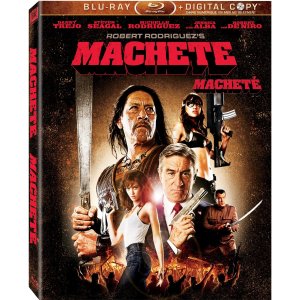
Machete – The best B-movie ever?

Title: Machete

Director/Stars: Danny Trejo (Actor), Robert DeNiro, Jessica Alba, etc.  Robert Rodriguez (Director)

Genre: Exploitationist Action

Watched: February 27, 2011

Summary: Pure action and camp fun.


Derived from a fake preview in Rodriguez and Tarantino’s Grindhouse double feature, this film is just rollicking camp fun. The premise: that ex-federale Danny Trejo (the ugliest guy to grace the silver screen since The Elephant Man) is lured into a crazy scheme by various right wing racist nut-jobs and has to kick (and get some) ass in various escapes, revenge, etc.

One of the best things is the roster of amusing casting. These aren’t just cameos either: Robert DeNiro, Jessica Alba, Michelle Rodriguez, Steven Seagal, Jeff Fahey, Cheech Marin, Don Johnson, Linsay Lohan and more.

The plot, as such, is thin, and gratuitously cheesy. The characters however, live large, and the action is fun and inventive and sometimes delightfully nasty.

Before the opening credits, Trejo manages to use his trademark weapon to amputate at least a dozen limbs, leading him to rescue a stark naked girl whose cel phone and weapons are stored where the sun don’t shine. Before this scene ends a fat-ass Steven Seagal uses a katana to behead Trejos wife (standard revenge setup). This pretty much sets the tone for the entire film. My favorite gross-out bit is a bad guy whose intestines (still connected) are used by Machete as a rope to swing out the window and onto the floor below.

Nothing about the movie is realistic. The villains are deliciously over the top, and their crazy scheme to raise drug prices by building an electrified fence between Mexico and Texas purely amusing. People get shot in the head and live. Everything resolves in one of those typical Rodriguez giant shootouts.

What makes the film so fun — besides the crazy action — is the unadulterated camp factor of each of the characters. From Cheech’s merlot-drinking shotgun wielding priest to Robert DeNiro’s evil racist state senator (there are a few of those in real life too!).

Rodriguez just should have gone as over the top with his nudity as with his violence. Too much cutting for a work this gratuitous!

Book Review: The Road to Tyburn

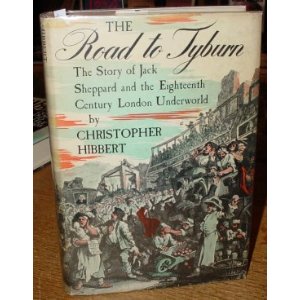
Title: The Road to Tyburn

Author: Christopher Hibbert

Genre: Biography / History

Read: Feb 18, 2011

Summary: Really fun glimpse into a sordid little world.

_

In the last 2-3 weeks I’ve read at least 8-10 books on 18th century London, many on the criminal element of said city. Lest one think I’ve got an unnatural fascination with antique crime this is research for my new novel (more on that here). This book, however, was a standout, and despite being long out of print is well worth mentioning.

It’s short (160 pages), and very lively, reading as fast as a novel. It does a very good job characterizing the bizarre underworld of 1720s London, pretty much that which is depicted in the engravings of William Hogarth. London of this time was a city unique on earth, transitioning out of the 17th century’s religious zealousy and into the head long rush toward industrialization. It was a place of great freedom, great crime, great industry, and an infrastructure and society nearly overwhelmed by change. Pretty damn fun, and why I chose it for my novel.

Jack Sheppard — not to be confused with the protagonist of Lost — is a colorful character I hadn’t previously encountered. More or less just a charismatic young house burglar, he entered the public eye in a huge way — foreshadowing today’s media fascination with crime and criminals — by being a prison breaker of staggering talent. Nothing could keep the guy down, tied, barred, locked, or whatever. He broke out of the notorious Newgate prison no less than three times! (and several others as well).

As a working class, non-violent, handsome, achem… thief, seemingly able to escape punishment at will, he captured the hearts and minds of his fellow Londoners. For me, one of the book’s great moments is the description of his insanely daring and audacious fourth escape, known even then as the “Great Escape.” The guy used only a single bent and rusty nail to extract himself from a huge pile of irons, fetters, and chains, broke open a masonry chimney, climbed up, picked and opened five heavily fortified prison doors, leapt across rooftops, and descended great distances on a rope made of bedding. If anyone ever earned an escape, it was this guy!

Too bad they hung him when they caught him the last time. But he seemed to enjoy the attention and show.

The book does a great job telling Jack’s life story intermixed with really vivid and quick background sketches. The story of the the infamous Jonathan Wild, self proclaimed “Thief-taker General of Great Britain and Ireland” is also an eye-opener as to the origins and history of organized crime. As the book states, no other criminal mastermind in 300 years has ever had London crime (a pretty notorious city) so well organized!

The edits are all in!

The last batch of line edits for my novel The Darkening Dream are in from my awesome freelance editors. Now I just have to spend the next day or two groveling over them, tweaking, and then…

Read the entire thing again!

For like the 50th time!

Truly Deeply Sick and Twisted

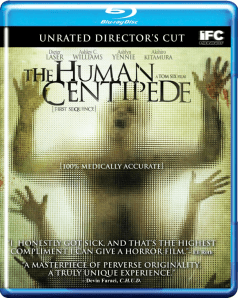
Title: Human Centipede

Director/Stars: Ashley C. Williams (Actor), Dieter Laser (Actor), Tom Six (Director)

Genre: Gross-out Horror

Watched: February 17, 2011

Summary: Repulsive premise coupled with startlingly matter-of-fact delivery.


Just so you don’t think I always review good films, here comes a doozy. My brother knows the guy who stars as the head of the titular Human Centipede in this film, and he brought it to my attention (although he hadn’t seen the film). We looked it up and the premise was so horrifically nasty, so out-and-out repulsive and dark, that I couldn’t help but watch the film.

Now, in the interest of protecting my dear and tender readers, I’m not going to actually tell you the premise. If you are so inclined, you may watch the trailer and decide for yourself. Be warned. Let’s just say it’s terrifying, gross, and of totally dubious possibility.

But having conceived this idea, the writer/director pursues it with gusto. This is actually not a badly made film, considering it’s genre and budget. But there is no attempt to craft a clever plot or characters. It charges headlong into the ramifications of the disturbing by use of straightforward Horror tropes and coincidence, and replies on sheer dread to deliver. The villain, a twisted German surgeon which a penchant for illegal and immoral procedures, is played to hammy perfection by Dieter Laser. His emotionless delivery as to the nature of his plan is as disturbing as it’s intended to be.

For all the film’s unabashed directness. It actually isn’t that graphic, although the ramifications of the premise are rather nasty. I’m also not sure I’ve seen another movie with so much moaning/pathetic-whimpering in it, I felt compelled to keep turning down the volume. And for all it’s true horror, the deadpan delivery lends it to the almost darkly comic. NOTE: On that note, Robert Ebert (my favorite film reviewer) has an an absolutely hilarious review of it here (WARNING, he reveals the premise). There are also some odd choices, like the fact that in the second half their is almost no English dialog as the Doctor often speaks in German, the “head” babbles in subtitled Japanese, and the two female leads can only moan.

And it isn’t the best paced film (particularly the first half), so was an excellent candidate for the Playstation 3‘s most appreciated 1.5x speed viewing feature. This not only speeds up the film smoothly, but does a pretty good job of time based correction on the audio so it doesn’t sound too funny. Many slightly dull films are eminently watchable in this format. For example, silent films from the early 20th century, with their 1-2 minute title cards. It rendered the Human Centipede in an even hour which was just about perfect.

In any case, if you are a fan of Horror, or the truly deeply sick and twisted, crawl on board.

Juggling Brains

As the process of the revising my — hopefully — almost finished novel, The Darkening Dream, draws out the amount of work I have to personally do on it declines toward the limit of… well very little. More and more I’m just waiting on something to come back from someone else. When it does, I have a little flurry of activity and then it’s back to waiting. This is par for the course in the glacially paced publishing business, and I haven’t even seriously gotten into the game of waiting on agents and editors yet, which makes glacial look fast. Hell, publishers routinely (read almost always) sit on books for 12-18 months between signing and release. Of course, this is mostly because that’s how it was done prior to the computer and internet age, and must change very soon or they will find themselves in Chapter 11. One only has to look at something like this to realize that.

But in any case, the authorial solution to this process is to write another book in the meantime.

I’d had a really fantastic idea a couple months ago, as usual a hybrid between some new ideas and one of the forty-two thousand stories that have been bouncing around in my head for years. Often a great book comes out of the evil-mutant-mating of two or more half-formed book ideas. In this case the oldest of these is a time travel concept I conceived in the fall of 1994. Anyway, I’ve been doing some outlining work on it since the new year and finally began writing. Three chapters (5700 words) popped out in no time, as I’m very good at the process of converting a scene idea (as long as I know in my head roughly what’s supposed to happen) into the actual prose. I’d half-forgotten how fun first-drafting is. More fun for sure than line editing, and WAY more fun than outlining, and WAY WAY more fun than writing queries or synopses.

The tricky part when flipping back and forth between books is not getting the voice all confused. The Darkening Dream is in third-person past, and has six distinct character voices, while the new one is first-person present with very clipped immediate sentences. Good synaptic exercise for sure.

Book Review: The First American

Title: The First American: The Life and Times of Benjamin Franklin

Author: H. W. Brands

Genre: Biography

Read: Jan 25-Feb 10, 2011

Summary: Big solid Bio of a VERY interesting man

_

While I’m waiting for the last bits of line editing on my almost-finished novel, The Darkening Dream, I’ve been researching and outlining the  next. Given that it’s me, the new novel features both the historical and the fantastic. As to the historical: enter Ben Franklin. Who was one cool dude.

There’s a reason why he’s on the hundred dollar bill.

Now to reviewing this biography (I’ll call it TFA). It’s very well written, and easy enough to read. It’s also LONG (800 dense pages). Now, Ben lived 84 years, from 1706 to 1790, and he was perhaps the best known and most highly diversified American of his era. So there’s a lot to cover. As a printer/writer Ben left us a lot of his thoughts, and the book does a tremendous job capturing these, with long tracks of his writing embedded in the text. Lest you think this might be dry, he’s a surprisingly witty and modern voice. Eerily so. The book could have used a little bit of trimming here and there — but no more than 5-10%. It marches along steadily from Ben’s parents to his death and legacy, covering everything in between. This is not a history of the Revolutionary War, but covers more Ben’s role than the conflict itself. Good thing since that would’ve doubled the size. TFA does a good job characterizing the era, and particularly the politics of both Pennsylvania and London, and to a lesser extent Paris. It does a great job characterizing Ben.

Overall, I would give the book a 8/10 on the biography scale. That’s independent of it being Ben, but just in managing the job of conveying an important life in a different era. It’s not quite as good as Caesar: Life of a Colossus, Alexander of Macedon, or the Rise/Reign of Napoleon Bonaparte, but it’s pretty close.

But it’s worth talking about Ben. He was a pretty amazing guy, as influential in his own wry was as those three aforementioned titans. And he didn’t kill thousands or conquer nations doing it. Ben was a man of rare genius. Observant as to causes and effects, be it weather, electricity, ocean currents, politics, or business. And he’s depicted here with all his very human faults. But fundamentally he was a spirit of curiosity, optimism, energy, and general good intentions. He wasn’t the best husband or general, but he sures seems to have been one hell of a human being.