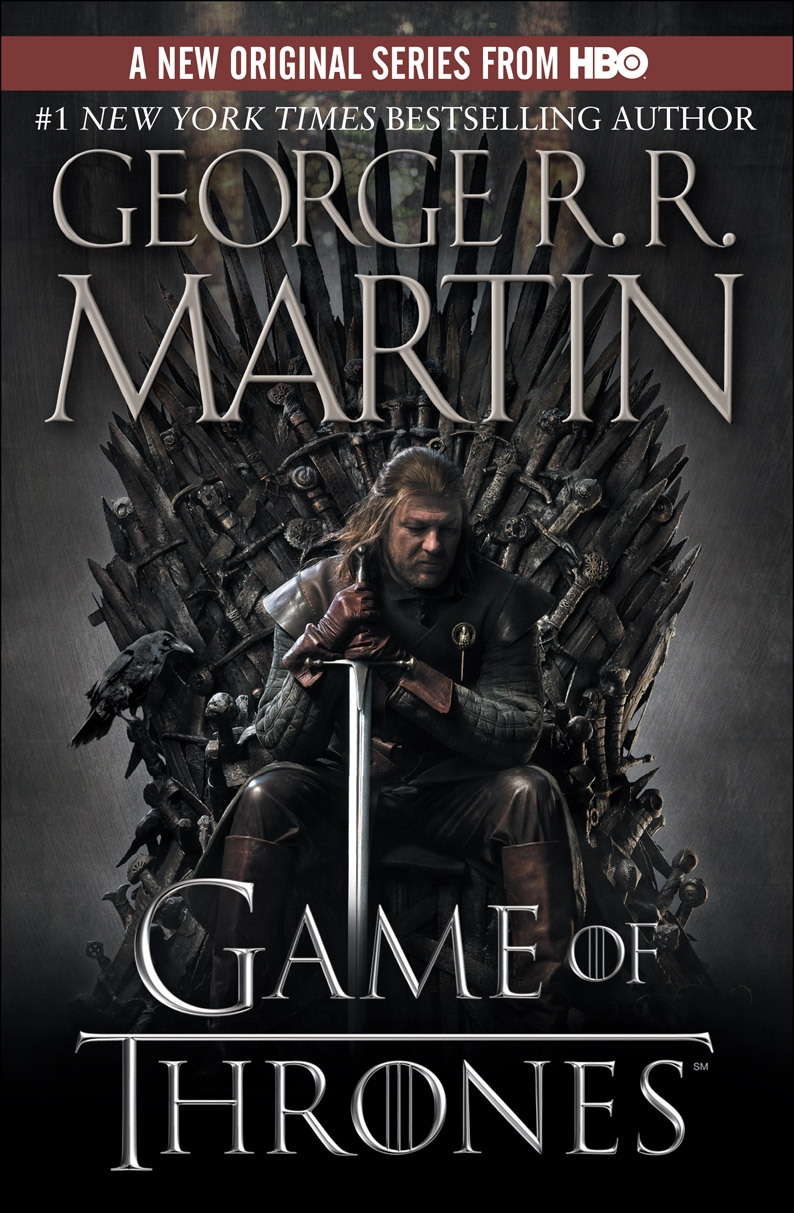
Game of Thrones – Episode 10

Title: Game of Thrones

Genre: Historical Fantasy

Watched: Episode 10 – July 1, 2011

Status: First Season now airing on HBO

Summary: Wrap up with a twist

ANY CHARACTER HERE

Episode 10,  “Fire and Blood” serves primarily as a transitional episode, moving the characters from our headless climax into position for season two. Still, it’s a great episode, doing a good job of managing our many story threads without seeming too rushed.

Arya is pulled out of her fathers execution and set on the way north with Yoren with a bunch of scumbags, Gendry, and some annoying boys. We could have gotten a better look at the men in the cage, but I guess we have episode 1 of season 2 for that.

In Winterfell, Bran has a good scene with Osha and Rickon in which the prophetic (or at least psychic) power of his dreams is hinted at nicely. We actually see Shaggydog too. I’m continuing to come around to Osha, but not sure about Rickon — not that he matters too much.

In King’s Landing we get two scenes showing the odious Joffrey at work. He’s amusing as always, but when he drags Sansa out to the battlements to see her father’s head we do get to see something impressive. Despite her being an annoying snit during most of the season, we can really feel for her predicament here, and the little seed of Stark strength that the situation is nurturing. A moment with the Hound hopefully foreshadows their peculiar relationship too.

Robb makes the transition from warleader to King, and they’ve done a pretty nice job with this. The moment of his proclamation was always one of my favorites, echoing the traditional elevation of sovereigns by the troops (Imperator Imperator!). It feels a tiny bit small, but good nonetheless. They should have picked him up on their shoulders or shields!

Catelyn has one final conversation with captive Jaime, which is as much to establish where we are leaving him at season’s end as anything. Still, this is a very nice scene, and Coster-Walkda continues to nail the character. His continued arrogance is pretty delectable, particularly “I’d hoped the fall might kill him” and the pause when she asks him WHY he pushed Bran out the window.

I suspect the Cersei sleeping with Lancel scene back in King’s Landing will come off as odd to new viewers (although it does satisfy the show’s never ending appetite for boy butt). But Tywin’s handing off of the job of Hand of the King to Tyrion is very well done. In the show it comes off more generous than in the book, less barbed. Sure it’s a reaction to Jaime’s capture, but it makes us think the bad man might actually care — just a little. Then we get just a touch more Shae.

At the wall, Jon is finally determined to run away and help his brother, but his new (black) brothers race after him and bind him metaphorically with a reiteration of their oath. This is surprisingly effective. Partly because of the strength of Sam’s performance, and partly because the oath itself almost brought a tear to my eye. He is then later pleasantly surprised when Morment knows, isn’t too pissed, and he learns they are about to march off north of the wall. And so we have him maneuvered into place with the northern offensive set to launch.

Then before we get to the real wrap up, we have a have a bizarre little bit with Maester Pycelle and Ros, the busiest whore in Westeros. In this we see the relativity of viewpoint as well as more of naked Ros. But what is most disturbing, and most amusing, is the moment at the end when a transparent top (only) wearing Pycelle does a little post sex octogenarian jig.

Now as to Dany, her final pivot of the season, and the culmination of her transformation from meek princess into Mother of Dragons. This is the seminal moment of the first season, the return of magic in Westeros. She smothers the lifeless Drogo, builds his funeral pyre, then loads the annoying Mirri Maz Duur on to burn (good riddance). Finally, walking in herself. But “no true dragon can be hurt by fire.” The acting was uniformly good — except for Duur — through both this scene and her morning awakening with the dragons, but I thought the pyre scene itself needed some more magical effect punch just like the tent scene did last episode. It seems weird and anti-climatic that Jorah and crew don’t notice anything weird and magical at the time, but come check the ashes out in the morning, only to find the hot, dirty, naked, bedraggoned Dany alive and well. This final scene, was however, very effective, despite the gratuitous use of a green dragon as a fig leaf! We just needed some more magic, and the time gap between the two actions possibly reduced. The dragons themselves looked good, although perhaps the camerawork could have been a little more dramatic.

Still it was a great end, and I weep with regard to waiting ten months for more.

As to my concluding thoughts on this very strong television adaption of a great book: Bang up job. I have only three real complaints — fairly mild considering — and all involve punching things up a little bit.  1) The score didn’t feel scored enough. A slightly more dramatic musical underscoring of events would have helped with the scale. 2) The supernatural needed better treatment. Not cheesy, but Lord of the Rings serves as an excellent model. 3) The large scale action and people scenes needed a bigger feeling of scope and more cinematic dynamism. The wide locations shots were great, but they needed this equivalent for crowds, and perhaps some more hectic and creative cutting  (in occasional scenes) to imply larger action.

But they got so many things right. The writing, casting, and acting first and foremost. 90% of the roles were cast and performed to relative TV perfection. And given the time constraints of 10 episodes, they more or less wrote the heck out of it.

Bravo!

Reviews of previous episodes: [ Episode 1Episode 2Episode 3Episode 4Episode 5, Episode 6, Episode 7, Episode 8, Episode 9 ] or a cool video about the CGI.

Or my review of A Dance With Dragons.

Or find out about my own fantasy novel, The Darkening Dream.

Game of Thrones – Episode 9

Title: Game of Thrones

Genre: Historical Fantasy

Watched: Episode 9 – June 30, 2011

Status: First Season now airing on HBO

Summary: Best episode in the series!

ANY CHARACTER HERE

Episode 9, “Baelor.”This is the episode where it all comes together, pretty much summed up by the text I got on first airing from a friend I convinced to watch (he hadn’t read the books — but is now): “OMG!  They killed Ned Stark!”

Not only does it take a lot of guts to up and kill your most central character near the end of the first book of an epic series, but George R. R. Martin really grinds the emotions in by making the reasons it happens so damned personal and believable.

This is the episode where the frothing cauldron of the last two boils on over. For everyone. This emotional tone renders it less sensitive than the previous episode to the diminutive effects of TV. We open with Varys visiting Ned again in the dungeon, and this narrative is used to spell out Ned’s last choice: die honorably, or confess and hope for exile and to save his daughters.

Then we have Robb faced with the choice of making a disreputable deal with an even more disreputable lord in order to gain military advantage in his war. He knows he’s got no choice but to win, and so he’s forced to go all in. Frey is just as amusing as in the books, and while he doesn’t have quite so many children as I imagined, the scene is well done. Particularly amusing is when Catelyn tells Robb he has to marry a Frey daughter and he asks, “how did they look?” and she replies “one of them was well…”

At the wall, Jon ponders not only his father’s imprisonment but the fact that his brother is going to war. Mormont tries to bind him further to the brotherhood by giving him his family sword. This is nicely done and there is some tie-back to Jorah. I particularly like the “he dishonored himself, but he had the decency to leave the family sword behind” bit. In another scene he gets a lecture from Maester Aemon about the hard choices between duty and family. Jon finds out exactly who the Maester was and we have another great scene from the books nailed with top performances.

Tyrion learns that he and his violent new tribesmen friends will get the most dangerous position in the upcoming battle. He stomps back to his tent to find Bronn has brought him a whore named Shae. She’s not how I imagined her in the books (they made her foreign), but I like the way Sibel Kekili plays her. I noticed her last year in the heavy German film Head On, and she’s a gifted actress. Although, we do have to wonder where Bronn dug up such a smart and sexy whore on short notice! Later in the show when the three play medeval “truth or dare” is a really good scene. Shae is cocky and sexy, and Tyrion’s rendition of his boyhood innocence and treatment at the hands of his father is perfect.

However I had mixed feelings about the battle — or lack there of. Tyrion is great and there are some funny lines like Bronn’s advice to “stay low.” But, instead of actually managing to fight — albiet badly — he’s just knocked out. The visual effect of him being dragged along is kind of cool, and I know they were trying to save time and money. But… they could have given us a three minute little window on the fight. I can’t help but feel this is more “TV shrinking effect,” the show’s biggest problem (really it’s only significant problem at all). I can’t help but feel the producers could do something creative and get a little more scope of action without too much more money.

And the same goes for the (non) battle of the whispering wood, where we just see Robb race back to his mother and deposite a captive Jaime at her feet. Come on. It was a night battle, they could have shown some horses and soldiers clashing in front of Riverrun and Jaime’s last stand. The books actually also suffer from certain large scale action being off screen (which I always felt was odd), but I’d hoped the show would rectify rather than amplify this. It would be easy enough.

Now as chaotic as the action is in Westeros, Dany’s journey is just as important. Her world is crashing around her. Drogo’s little chest wound from the last episode is now infected and he’s dying. For some slightly mysterious reason she has trusted the witch lady she saved (Mirri Maz Duur) to treat it, and now is willing to do whatever it takes to save his life, even if that means black magic. I love this part of the story, and I think Emilia Clarke handles it extremely well, but I do have a couple problems. The Mirri Maz Duur actress feels a little silly to me, not too bad, but she doesn’t have enough gravitas. And more importantly, the handling of the magic is underplayed. I liked the weird wailing sounds coming from the tent, but they decided to forgo any kind of special effects for the ceremony. I think this is deliberate rather than purely budgetary (although that is surely a factor). They have consistently played down the supernatural. But they needed it here. They didn’t have to go all the way to swirling wisps of light (ala early 80s Conan), but I think they should have done some kind of creepy animated shadow-play. As it is, the whole dark ritual is left mostly up to the imagination, and it may be hard for the new viewer to know what is supposed to be happening. It almost felt psychological. But the horse death was pretty decent.

And the final scene isn’t half assed at all, which is typical with the show, managing big pivotal (big in the sense of important, not scope) scenes nicely. Arya living in the streets is great, and then her viewing of Ned’s tragic “confession.” Joffrey continues in deliciously despicable style and orders the execution anyway. The handling of this for all involved is well done. Arya perching by that statue. The hysterical Sansa. Even Cersei livid. I would have just liked a little nod to the fact that they use Ned’s own sword: Ice. Come on, everyone loves a sword with a name. Jon said it when he gave Arya Needle, “all the best swords have names.”

Still, by the standards of TV, this is a near perfect episode. The human drama is handled flawlessly, they just need to add a little more cinematic feel to the action and magic.

Reviews of previous episodes: [ Episode 1Episode 2Episode 3Episode 4Episode 5, Episode 6, Episode 7, Episode 8 ]

Or the next, Episode 10.

Or find out about my own fantasy novel, The Darkening Dream.
Game of Thrones – Episode 8

Title: Game of Thrones

Genre: Historical Fantasy

Watched: Episode 8 – June 30, 2011

Status: First Season now airing on HBO

Summary: Oh boy, it’s coming

ANY CHARACTER HERE

I had to delay watching the last three episodes of the show for a month while suffering on vacation in Italy (travel log here). Even after being up for 36 hours I binged through two of the three after unpacking.

Episode 8,  “The Pointy End.” The last third of the season, or even last half, is all about grinding out the consequences of positions and choices made in the first half. Many of these lead to additional hasty decisions that will also have repercussions. Also it is worth noting that this episode is actually penned by George R. R. Martin himself, which is fitting because it’s one where the character arcs are really pivoting.

One of the great things about Martin’s novels are how believable these difficult choices are for the characters. They don’t see the future, aren’t even always aware of all that the reader is, and even more importantly, are filtered through their own biases and priorities.

We open with the play out of the season’s most central pivot, that Ned’s attempt to show the queen and her children mercy leads to disastrous results for his family and for the realm as a whole. His entire household in King’s Landing is slaughtered, and Sansa is captured. But Arya, training with her “Dancing Master” Syrio is not so undefended. Syiro is a favorite character and he is played delightfully by Miltos Yerolemou in the show. I do think that — like many scenes in this episode — that the production felt a little TV. Syiro holds off about five Lanister guards with a wood training sword, which is bad ass, but the choreography could have used just a little more punch. There just wasn’t enough zing to his movements. Still he kicks butt and his final line, “And what do we say to the god of death?” -> “Not today” is awesome. Similarly Arya’s all important stabbing of the stable boy felt a little flabby. Or maybe it was just by mood (very tired).

Ned is briefly visited by Varys in the dungeon, and I do love this portrayal of the spider. Instead of the interior monologue of the novel their conversation is used to expose the central crux of his moral journey: The fact that his mercy (toward Cersei) lead to his downfall, and that he must now chose between family and principles — and they aren’t good choices either way. We also have some wonderful background on Varys.

The news of events in the capital is spreading, linking the separate story-lines together. Jon is forced to cope with his own choices and loyalties between family and duty. We even see a bit of ghost! And then he gets to fight the white walker. This was pretty cool, but again, as I felt with a lot of this episode (but not about Episode 9) lacked a tiny bit of gravitas (not to mention Morment’s raven — boo!). But it’s still important as it really starts to establish his role with the Black Brothers.

In Winterfell Robb must deal with the imprisonment of his father, being forced to become the man he knows he should be. This is well handled, and there is a pretty good sense of him coming into his own. Theon is well set up. In the books he is extremely minor in book 1, but clearly the producers have chosen him as a character to emphasize in seasons 2 and 3. We have a bit of Bran in this part of the arc too. Somehow in the second two thirds of the show Bran feels much more absent than he does in the novels (as there he has all the POV for Winterfell). This brings him back a little, but I would have liked more emphasis on the wolves and the dreams. I’m coming around to Osha a bit though — even if she has crazy hair.

Tyrion and Bronn make their way out of the Vale. Their dialog is first rate as always, and they have their encounter with the mountain men. This too felt a little TV as they just couldn’t show enough men. You see about fifteen, but it really wanted at least 150, a real camp, and more of a sense of ferociousness.

Across the sea Dany is coming down off the high of being promised the world by Drogo to see a bit of the reality of what it really means to be a war leader. The Dothraki are slaughtering the “lamb people” and she tries to put a stop to the rape of some local women. This is a decision that for her will bring momentous change, continuing the theme illustrating the dangers of mercy. We also meet the witch, who looks like some Italian mother from Brooklyn. Like the other big scenes, and many of the Dothraki scenes in the whole show, this little battle felt crimped by the TV budget. Just not large enough or dynamic enough. Drogo’s fight however, defending his manhood and her honor, is pretty awesome. Jason Momoa has some real charisma, and I’m looking forward to the new Conan. He pulls off the very personal manly man-ness (guy-liner and all) to good effect.

The episode concludes softly with the dismissal of Ser Barristan, which is very well handled. You get a real feel for Cersei and this unctuous Joff overextending themselves. Barristan is wonderful too, along with Jaime the only developed member of the Kingsguard.

The plotting  and characters of this story are just so good. Everyone is in motion, in conflict all the time, but not just the kind of meaningless Transformers 2 style conflict, but real honest to goodness stuff that tests their fundamental values.

Reviews of previous episodes: [ Episode 1Episode 2Episode 3Episode 4Episode 5, Episode 6, Episode 7 ]

Or the next Episode 9.

Or find out about my own fantasy novel, The Darkening Dream.
The Big Sleep

Title: The Big Sleep

Author: Raymond Chandler

Genre: Crime Noir

Length: 234 pages

Read: May 27-31, 2011

Summary: Slick and stylish.

ANY CHARACTER HERE

Continuing my between the wars “hard-boiled” novel kick, I followed up on The Postman Always Rings Twice and The Maltese Falcon with The Big Sleep.

The novel is very much influenced by Dashiell Hammett‘s classic. It shares the atmospheric quality, complex plot, moral ambiguity, and dark wit.  Stylistically The Big Sleep has slightly more straightforward and less quirky prose. It’s a little more wry, a little less over the top than the earlier novel. Both have extremely compelling voices and stark style. The lean irony of the narrator in the The Maltese Falcon gives way to the dark cynicism of Sleep‘s Marlowe and his first person voice. “If you can weigh one hundred and ninety pounds and look like a fairy, I was doing my best,” is a typical zinger. The dialog is fantastic, although not as oblique and contrary as in Falcon. It’s a little more natural.

Marlowe is more likable and less belligerent than Sam Spade, although they’re both minted from the same cool-cucumber tough guy template. The plot is involved, and to tell the truth even having seen the movie twice, I had no idea until the end what Marlowe was digging at with his investigation of Vivian’s missing husband. Occasionally some bits of action took me for a loop too, requiring that I reread them to find out exactly what happened. But these are minor complaints. The book really is great. Marlowe’s compelling voice pulling you through at breakneck pace. But at the backbone for me was the sinister portrait of pre-war L.A. While visually tame by today’s jaded standards, this is a dark book, with realistic characters. The movie is forced by 40s standards to gloss or smooth over many of these darker elements, but the novel exposes them for what they are.

I do have to say that these hard boiled detectives are awfully confident in their ability to read dangerous situations!

For more book reviews, click here.

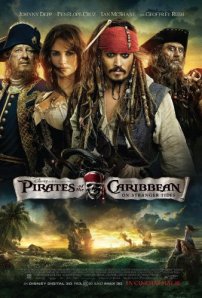
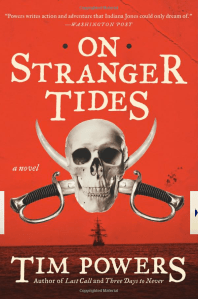
On Stranger Tides

Title: Pirates of the Caribbean IV: On Stranger Tides

Director/Stars: Johnny Depp (Actor), Ian McShane (Actor), Rob Marshall (Director)

Genre: Pirate Fantasy

Read: May 28, 2011

Summary: Better than 2 or 3.

ANY CHARACTER HERE

This post isn’t so much a review of the 4th Pirates installment, but an little digression on its amusing relationship to one of my favorite books. Still, I’ll mention a few things about the film:

On Stranger Tides is a major improvement over Pirates 2 and 3 (blech). It feels more like a prequel to the first film (although technically it’s a straight sequel). Gone are Orlando and Knightly, and the plot focuses mostly on Jack Sparrow and some of the other baddies like Barbarossa and the new Blackbeard (played by the always likable Ian McShane). The plot is a bit of a retrenchment, involving a hectic quest for the Fountain of Youth. It’s more contained, more classically swashbuckled, with a welcome elimination of giant krakens, the afterlife, pirate councils, and ludicrous giant whirlpool ship battles. As such, if you can ignore the gapping plot holes and the merely token setup, it’s much more satisfying and fun to watch. It rates fairly close to the original, which is actually a pretty damn good movie — albiet a guilty pleasure for sure. The CGI is also much reduced. Not that it isn’t in nearly every frame, but it’s more contained and less bombastic. Structurally the elimination of the Orlando/Knightly thing also simplifies the whole character focus.

Now, on to the reason I’m writing this post. When I first saw the preview a year or so ago I was struct by the subtitle (On Stranger Tides) and the fact that the plot involved Blackbeard and the Fountain of Youth. I was instantly reminded of one of my three favorite Tim Powers novels, On Stranger Tides, about the same. Now This is a 1987 novel, and I read it in the 90s. But Powers is one of my favorite authors, and probably one of the biggest influences on my own writing (at least my first novel, The Darkening Dream). He blends history, the occult, and fantasy in an artful and seamless way. Anyone who hasn’t read him must immediately buy and read The Anubis Gates, one of my all time favorite novels. The original novel (On Stranger Tides) is a creepy and heavily researched story about Blackbeard’s maniacal search for immortality. It’s pretty brilliant and quintessential Powers. Much darker and scarier than this film.

Pirates IV is well… a Pirates of the Caribbean movie that involves Blackbeard and the Fountain of Youth. That’s about as far as it goes. Unless I missed something, the only other elements borrowed from the novel are a vague mention of zombies and the fact that when we meet Blackbeard his beard has smoldering flames hidden inside. This is a well documented feature of the man, as he claimed to be a priest of the voodoo god Baron Samedi whose magical totem is smoldering flame. This famous engraving shows the details. In any case the book is really cool and much more interesting than the film.

What’s interesting here is that Disney put “suggested by the novel On Stranger Tides by Tim Powers” in the credits and felt it needed to option the novel just to include the two basic elements of Blackbeard and the Fountain. Nothing else.

Hollywood.

Although I’m glad that Mr. Powers got at least some kind of payday as a result — he deserves it.

The Maltese Falcon

Title: The Maltese Falcon

Author: Dashiell Hammett

Genre: Detective Noir

Length: 217 pages

Read: May 25-26, 2011

Summary: Pure awesomeness.

ANY CHARACTER HERE

There are so many reasons why this is the archetypal detective novel. It’s pure pleasure from start to finish.

Let’s start with the writing. The prose is lean, but it has a way of sparing with the reader, a delightful economy and turn of phrase. Things are handled in a straightforward sequential manner. Simultaneously spartan and luxurious. There’s actually a surprising amount of description. Nearly every character is detailed on first meet, often with a good full two paragraphs. But they’re worth it (more on that later). Spade‘s actions are spelled out in exquisite and exhaustive detail — there must be at least fifty cigarettes rolled and smoked in this tiny book and countless details of dressing, moving from place to place, etc. Somehow these don’t drag, not at all. Action too, is quick, but handled in a kind of cold clear detail. What there isn’t, is one whit of interior monologue. The closest we get is the occasional, “Sam’s expression contained a hint of smugness” or “her hands twisted in her lap.” And more than anything, the prose is fun to read.

Plotting. The story is byzantine, and involves no one knowing exactly what’s going on, but Sam being a damn good judge of what’s likely to happen. There’s perhaps a bit too much action happening off screen, and a little too many coincidences or startling reverses. And for a book with so many shootings and double crosses, it’s mostly filled with dialogue scenes. But that isn’t a problem because…

The dialogue rules! Oblique, snappy, it crackles back and forth like a gunfight. The rules for writing quality dialogue could have been modled on this novel alone. Characters interrupt, they’re impatient, they lie (and lie again), they argue, they betray. They do a lot of talking. I enjoyed every minute of it.

Characters. Hammett really shines here. The villains are a bit over the top, but I adored them. The sinister (and limp wristed — oh so pre-politically-correct) Cairo, the fatman, the kid. The author uses a combination of amusing descriptive characterization (Gutman’s bulbs of fat — “He waved his palm like a fat pink starfish!” — or Cairo’s effete details — “when slapped he screamed like a woman”) and highly distinctive dialogue. Gutman’s is a real riot. Overblown, threatening and complementary at the same time. Sam himself is an interesting figure. Tough, incredibly competent, but also prideful, belligerent, and self interested.

Atmosphere. This is nailed, nailed cold and hard like a corpse left out in January. It oozes late 20s San Francisco. The dangerous dames, the cartoony gangsters, the police always one step behind. The tension in the way that the backstabbing moxie Brigid uses her feminine wiles eerily foreshadows basic instinct and countless followups.

The book’s been a classic for 80 years, and with good reason.

For more book reviews, click here.

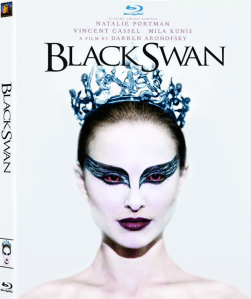
Black Swan

Title: Black Swan

Director/Stars: Natalie Portman (Actor), Mila Kunis (Actor), Darren Aronofsky (Director)

Genre: Drama

Read: May 18, 2011

Summary: Psycho Thriller, Qu’est-ce que c’est

ANY CHARACTER HERE

Reviews for two Natalie Portman movies in a row! She was wasted in the previous Thor, but shows off some serious chops here. This is clearly in a different league altogether.

Directory Darren Aronofsky fuses stylistic traits from his ultra surreal films (Pi, Requiem for a Dream, The Fountain) with the more documentary style The Wrestler into this psychological thriller. While oblique in terms of what’s actually happening, it’s positively crystal clear in comparison to that earlier tro. Also, dark as it is, it’s by no means as unrelentingly depressing as Requiem. Can we say “ass to ass” anyone?

First the components. The music’s awesome. I love Swan Lake as a composition. The acting is even better. Natalie, Mila, Vincent Cassel, and Barbara Hershey all stand out. The film is deliberately underwritten, standing on the strength of its style, acting, and direction. For whatever reason, Darren Aronofsky loves walking shots where the camera is anchored low behind the shoulders of the protagonist, or right in front of their chest. Both The Wrestler and Requiem are filled with these. Black Swan has even more. Rest assured, it’s a stylish looking film.

Now as to the overall effect. I enjoyed it, but this certainly isn’t a fast film. It’s more pretty, with a kind of savage quality, much like the ballet itself. Thematically, I take the entire fantastic/horror element to be purely the reflection of ballerina Nina’s internal state of mind. Even her entire feud with Mila’s Lily is in her own head. There is perhaps a more literal fantastic interpretation, but I feel the case for the psychological is much stronger. This is the opposite of say, Pan’s Labyrinth where while again both psychological and mythological interpretations are possible, I prefer the fantastic.

In any case, it’s a unique film. Not at all the typical Hollywood fare — but then nothing Aronofsky has done is.

Sophomore Slump – Delirium

Title: Delirium

Author: Lauren Oliver

Genre: Dystopian YA

Length: 114,500 words, 441 pages

Read: May 17-21, 2011

Summary: Big disappointment.

ANY CHARACTER HERE

Earlier in the week I read Lauren Oliver’s debut novel Before I Fall and loved it. So I eagerly downloaded her second book, Delirium, on my Kindle/iPad and set to reading. Ick.

She’s a very good writer, and the prose style is nearly identical, being first person present from the POV of a 17 year-old girl. For all it’s flaws (I’ll get to those), the voice is still very good, and makes for compelling reading at first. Oliver’s still great at inner monologue.

But everything else falls pretty flat.

Let’s begin with the premise. First of all, it feels like someone told Oliver that “dystopian is hot” and she jumped on the bandwagon. As far as I can tell, she shows no knack for it whatsoever. And worse, she pushes in this direction at the expense of her considerable talents elsewhere. This version of America exists an ill-defined period in the future, probably around 2050-2075. The central premise of the society is that LOVE has been diagnosed as a disease and the source of all societal ills. But fear not, a cure exists, some kind of magic brain surgery that gets rid of most feeling and desire. Everyone gets this at 18, because conveniently, that’s the age “the cure” works at.

Now besides this ludicrous premise, which involves a drastic about face of human tenants consistant since the dawn of time, we have to accept that in 50 years almost no technology has changed. Sure there are a few nasty totalitarian rules and such, but they still use cell phones, they still text. The book has absolutely NO description of anything different other than attitudes. Hell, there was probably more innovation between 1300 and 1350 than shown here! I just completely didn’t buy the world. Not one bit. There’s no way we could get from here to there. And it’s been done to death before. Better. Delirium is like a lame The White Mountains crossed with Uglies. Both books are far better (particularly the first). The whole thing felt entirely forced, like it was all derived from the high concept premise without any other consideration.

In Before I Fall, Oliver showed herself adept at painting peer groups. This is hard stuff, and fascinating when done well. But we don’t have it here. We have a protagonist, who isn’t bad, albiet a little generic, but then we don’t have too much else. Next up we have the romantic interest and best friend — both okay also. But that’s it. The other characters are like cardboard cutouts. I find this hard to jive with her first book where even the minor characters are deftly drawn.

Also in her first book was an intricate and cleverly woven progression of plot and character, while not perfect, it formed a lovely little puzzle unfolding across the length of the novel. And most importantly, giving a sense of emotional depth.

So what happened? I’m forced to conclude that either: 1) she spent much much longer writing her first book and really polished the hell out of it (nothing wrong with that) or 2) that she should have stayed more firmly rooted in the familiar early 21st century as the complexities of world building (even this minimally) sucked her focus.

Or both.

Still, I do have to give her credit for prose skills. They pulled me enthusiastically through the first third, then groaning and moaning through the rest. If it hadn’t been for this I would have chucked it in the middle and you wouldn’t have seen the review (I rarely review the many books I give up on — doesn’t seem fair).

I’m sad. It could have been so much better. I have nothing against dystopian — I am after all a hard core sci-fi reader — I’d have read nearly anything she gave me and enjoyed it if she just provided some reason to care.

For a review of Before I Fall, click here.

Lessons from a Lifetime of Writing

Title: Lessons from a Lifetime of Writing: A Novelist Looks at His Craft

Author: David Morrell

Genre: Writing Guide

Length: 240 pages

Read: May 21-22, 2011

Summary: Very good.

_

Having just finished the first draft of my second novel I did what I always do after a draft: take a little time to consider my craft (and not look at the book). So I pulled this puppy off my stack of books on writing. I’ve read a lot of such books, and this is one of the better ones in it’s category.

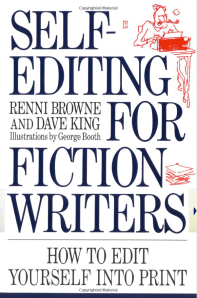
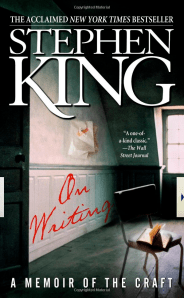
They fall into a number of broad groups: books on specific components like plot or character, books on sentences, books on editing, books on selling your books, books on summarizing your books, windy pontifications on the nature of creativity, and this type, the bit of everything, with a dose of personal experience thrown in. Lessons is a lot like Lawrence Block‘s Telling Lies for Fun & Profit. Both cover a bunch of the big areas quickly like plot and structure, and also include the author’s personal perspective on his career (Morrell’s best known for First Blood, on which the first Rambo was based) and the writing business. It does not focus heavily on sentences or editing.

There were a number of interesting insights. He has a technique for getting past sticky points in your story construction I might try (next time it happens). There were also some interesting technical thoughts on the structure of scenes and chapters. He has a perspective on selecting POV that I hadn’t come across, which was interesting. Although he is slightly dated in his opinion of first person stating that he feels it always needs a reason why the narrator is telling the story. This used to be the case, but in the last few years the rise of first person (particularly in YA) was sort of negated this.

A good chunk of the book is about his career, optioning books to Hollywood etc. This was amusing as well. He started in the early 1970s so he’s a product of that different era in publishing. The book was written in 2002 and while none of the writing advice is dated, the advent of ebooks and changes in the market are shifting the business side. Still, good writing is still good writing, and even writing style itself doesn’t change all that fast. Books I’ve read by authors whose prime was the 1950s still have plenty to offer. Last weekend I read The Postman Always Rings Twice, published in 1934, and that hardly seems dated.

So if you like books on writing and plan to read many, I’d check Lessons out. While that doesn’t sound like spectacular praise, I do like this book. Many writing books I read are total drivel. This one was worth the time, and that says something.

Some of my favorites are:

Game of Thrones – Episode 7

Title: Game of Thrones

Genre: Historical Fantasy

Watched: Episode 7 – May 22, 2011

Status: First Season now airing on HBO

Summary: The pivot of action and consequence

ANY CHARACTER HERE

Episode 7,  “You Win or You Die.” In a lot of ways, this episode is the biggest pivot of events in the maelstrom of plot shifts. While Game of Thrones took it’s time setting up the characters in the first four episodes, 5-7 are a whirlwind of motion. Consequences are the theme.

Because this episode is only on hbogo (for a week) and their are less summaries on the web, I’ll cover the scenes in more detail than usual. So spoiler alert (for this episode).

We open with Jamie and his father Tywin in a military camp, Lord Lannister. The excellent casting continues. They have a lengthy discussion while Lord T butchers a stag. This show uses the repeated device of putting explanatory dialogue on top of certain background but intense actions, like sex in a brothel, or Renly’s shaving. Here the butcher’s work is displayed in considerable detail, adding a nasty factor to the whole scene. We also observe just a bit of what Jaime has to deal with in his home life, and why doing the right thing hardly comes naturally to a Lannister. Oh, and the irony of Lord Tywin skinning a stag… sigil of house Baratheon, is not lost.

Next, one of the most important scenes in the book (and the series). Ned confronts Cersei in the garden, letting her know that he knows about the illegitimacy of her children. He gives her a chance to flee. Of course, he underestimates her, one should never corner a lion. All along, Ned’s honor, his need to do the RIGHT thing by a strict definition of the rules, rather than a flexible political definition, proves to be his achilles heel. This act of honorable mercy, in tipping his hand, more than anything else sets the entire war (which Robert predicted was coming) in motion.

Then we cut to Littlefinger in his whorehouse, training a newly arrived Ros and some other vixen. This earns the episode its nudity in spades. It’s also the same basic mechanic as used with the stag. Still this dialogue, where he slightly unnaturally confesses some of his youthful lessons in life to the whores, reveals a bit more of his complex character. This scene is new to the show, as the information contained here is revealed in Cat’s memory in the book.

We have more Theon exposition back at Winterfell as he attempts to tease Osha and is instead mocked. They are going to very considerable lengths to detail Theon’s background in this season, whereas in the books he barely has a role until Book 2. Osha seems too pretty to me, not hard enough looking.

Then we have Sam and Jon on the wall, where they see an riderless horse returning. They go down to find it’s uncle Benjen’s. Uh oh.

Back to King’s Landing where Renly rushes in to tell Ned that Robert’s been hurt hunting. We then see the injured king and Joff (hiss), and Ned and crew enter. The king shows off his nasty wound, and drives everyone but Ned out. He then writes a letter up making Ned Lord Protector and Reagent, and regrets his decision to have Dany killed (another decision that will have consequences!). When Ned steps out, Lord Varys (his performance is delicious) throws the blame Lancel’s way. Barristen the Bold is here too, and his character has been built up decently — although he’s the only member of the Kingsguard that is, other than Jaime.

Then across the sea, Dany and Drogo are chatting in Dothraki. Boy has their relationship changed. She’s playful and comfortable with him. But he does indicate that he thinks thrones are for sissies. And this from a man wearing way too much eye liner?!? Then Dany goes shopping at the crazy pseudo-middle-eastern bazaar. Some talk with Jormont, and he goes off to pickup his spy message from Varys’ agent — proving what we already knew, that he’s a double agent. Dany meets up with a wine seller from Westeros, and he offers to give her a special gift. But Jormont really is a double agent because he’s suspicious, and saves Dany from being poisoned. This scene has a slightly cheesy feel, as this is a whacky way to assassinate someone, as it depended on the coincidence of Dany stopping by for a drink.

Back to castle Black, where Jon and crew get a speech from the Lord Commander — again, where’s his bird? I loved the bird, and it wouldn’t have added any screen time to keep him. Save with the wolves. This bugs me considerably as in the books each of the boys at least has a completely integral relationship with their wolf, and the beasts are barely shown. In any case, Jon get appointed a steward rather than a ranger. He’s pissed. But Sam sees it for what it is, as he is to assist the Lord Commander directly. Sam is very well cast, and he’s likable, funny, and believably lousy as a solider.

Then back to King’s Landing where Renly is the first to attempt to convince Ned that practicality is more important than honor. If Joff is out of the succession, then that makes Stannis, the older brother of Renly and Robert, but not shown, the king. No one likes him. He has, as Loras said in Episode 5, “the personality of a lobster.” But Ned and his honor are on a unstoppable train. Renly presents detour #1, favor him as king.

But Ned sends a message to Stannis. Then enter Littlefinger to present door #2, make peace with the Lannisters and rule the kingdom as Joff’s Reagent — and Littlefinger’s assistance. Really, this is a pretty attractive looking door, and Littlefinger sells it so well. But alas.

Jon and Sam swear before the old gods. But first we see Ghost for about two seconds, and he’s cute, but where’s he been? The tree itself, with its bleeding eyed face is cool. The words of the oath suitable bleak. Loved it. The man hugs at the end were a bit cheesy though.

Dany and Jormont talk about the failed assassin’s unpleasant fate and Drogo enters.  He is another consequence, as Drogo swears before his gods and the stars to cross the narrow sea and give his bride her father’s throne back. Nicely done, and the Dothraki oath swearing was awesome. Lesson: if you attempt to kill your rival queen, don’t fail.

Then Ned is told of Robert’s death, and he plans with Littlefinger to get the guards anyway so that when he confronts the queen, he has some muscle. They then proceed into the throne room for a nice confrontation, which plays out very nicely. More consequences come back to haunt everyone as the straightforward and honorable Ned is out maneuvered again — caught in the snare of his own honor. Leaving us on a pretty serious cliffhanger. Joff is such a twat, I can’t wait for his wedding.

Absent this week: Tyrion, Cat, Bran, Arya, Sansa. The Lord Commander’s bird and all the direwolves except for two seconds of Ghost.

Overall the episode is great, packed with action and consequences again. We again have four out of the five threads (and really mostly the three: Dany, King’s Landing, and Jon). The note taking distracted me a little, I need to sit down and watch it again without all that.

Reviews of previous episodes: [ Episode 1Episode 2Episode 3Episode 4Episode 5, Episode 6 ]

and of Episode 8, 9 or 10.

Or my review of A Dance With Dragons.

Or find out about my own fantasy novel, The Darkening Dream.