All Things Change

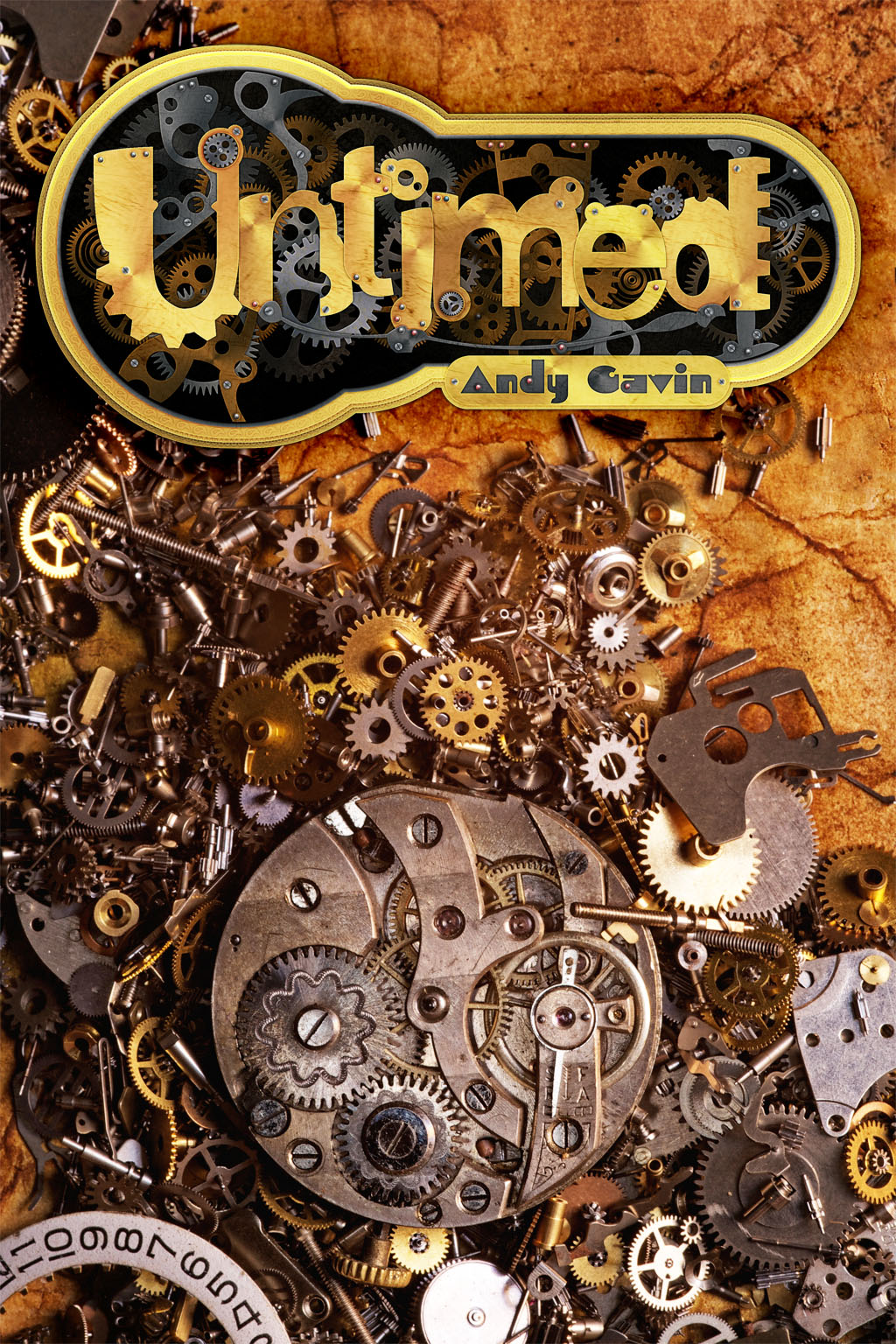
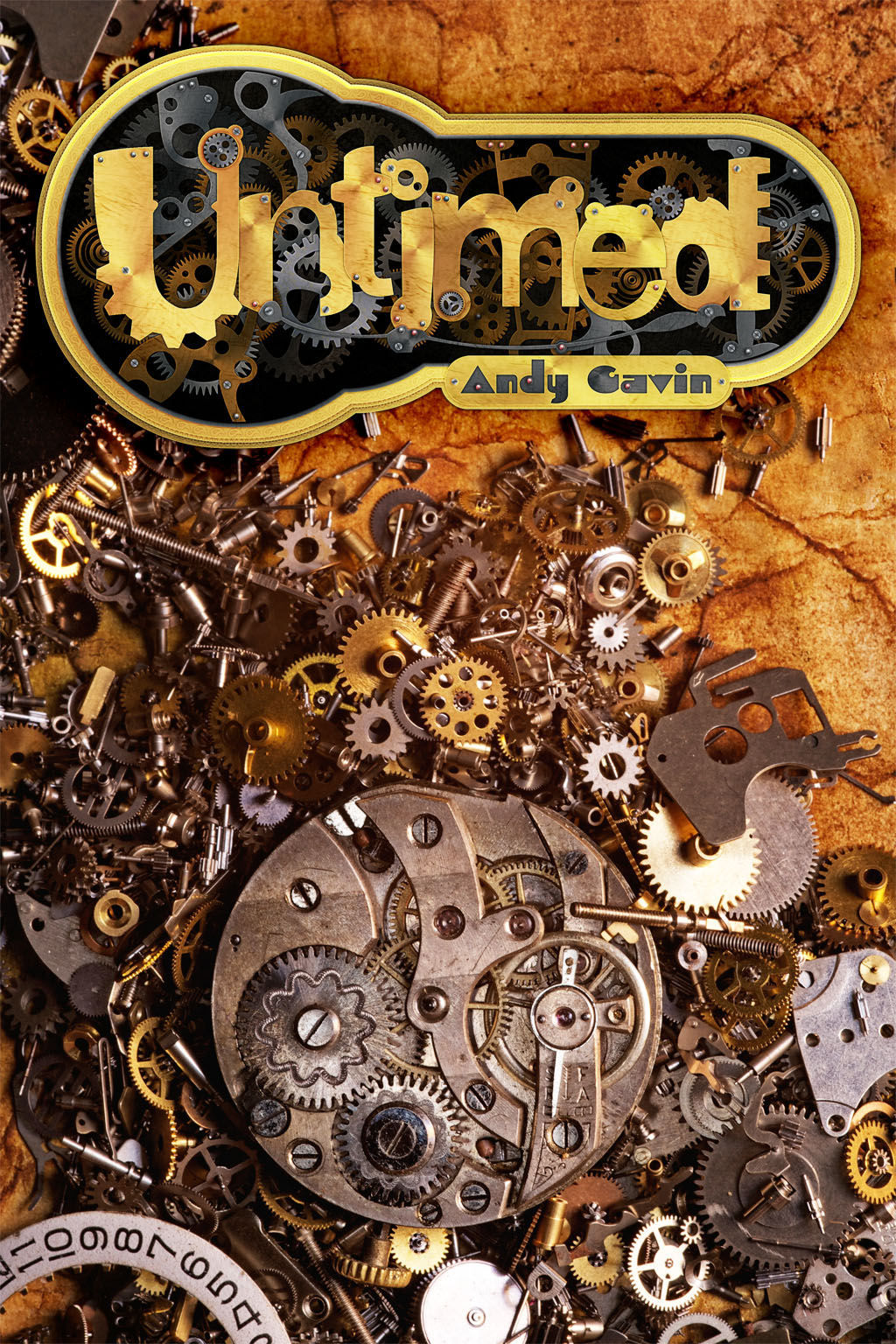
So I’m about halfway through my last polish pass on my third major draft of Untimed. [Update 7:44pm, finished the polish] This is one of the umpteen revision passes. Only another day or two to go before I send it off again and get down to waiting for feedback (hands down my least favorite part of writing).

The book totally kicks ass BTW — biased opinion but true.

Anyway, this has me planning to spend my “downtime” (waiting) doing some really serious research on self-publishing my first novel, The Darkening Dream, and seeing if I can get it out there before the holiday season.

I’ve been following self-publishing blogs like A Newbie’s Guide to Publishing and Dean Wesley Smith for around a year. These guys — rhetoric aside — have made sense for some time but the arguments for traditional publishing grow lamer and lamer. Check out something like this, which lays it out there — albeit with a lot of flavor. Publishing is in the throws of the cataclysmic “doing digital” change that has or is shaking up all the media businesses. For example, in music the conversion from media (vinyl, cassette, CD) to MP3 during which the labels/studios stuck their head in the sand and found themselves nearly destroyed.

The fact is, the change is coming no matter what any big old-school companies want or try to do. Readers are well on their way to embracing ebooks, the rise of the tablet (aka iPad), and dropping smartphone and reader prices (order your Kindle Fire here! 250,000 preorders in 5 days!), has etched the writing on the wall (in blood). In a few short years print will make up 20 or less percent of the market. Paper books (and I say this as someone who has a two story library with over 15,000 of them!) aren’t going to vanish instantly, but they won’t be majorly relevant for novel sales.

So this basically guarantees completely and without any doubt that print revenues will crater, leaving publishers unable to support their big overheads. Borders (and nearly every independent) going bankrupt will just hasten this. Barnes and Noble is next. They tried with the Nook, but Amazon is going to crush them (again, Kindle fire, not to mention $79 regular Kindle). And publishers, being large old-school companies that employ LOTS of people under the old model are showing lots of signs of panic, but pretty much not a glimmer of adapting to the changing business.

But they won’t have one soon. Because without control of the gates to bookstores, they don’t control anything.

Right now they still make the better product. But as an author they:

1. tie up rights

2. take way too much money (15% vs 70% doing it yourself)

3. take way too long (15 months instead of like 1-2 to market!)

4. charge too much for ebooks

5. don’t actually do any marketing

6. often have really stupid ideas about “marketability” (like “sex doesn’t sell” or “vampires are over” *)

Eventually new meaner leaner packaging companies will make the murky ground of processing books a bit easier, but in the meantime. Time to get researching.

If anyone knows a kick ass indie book marketer, I’m looking to hire one (that’s the only part I can’t really do myself).

For more posts on writing, click here.

* From above: The Vampire Dairies and True Blood both prove both statements simultaneously asinine. And while TDD does have a vampire, he does not ever sparkle in daylight (900 years and he hasn’t seen a glimpse of it) and he is not in the least sexy. He is, howeverfrightfully smart, cautious, and happy to decorate your house with the entrails of your closest family members.

Weekend Draft

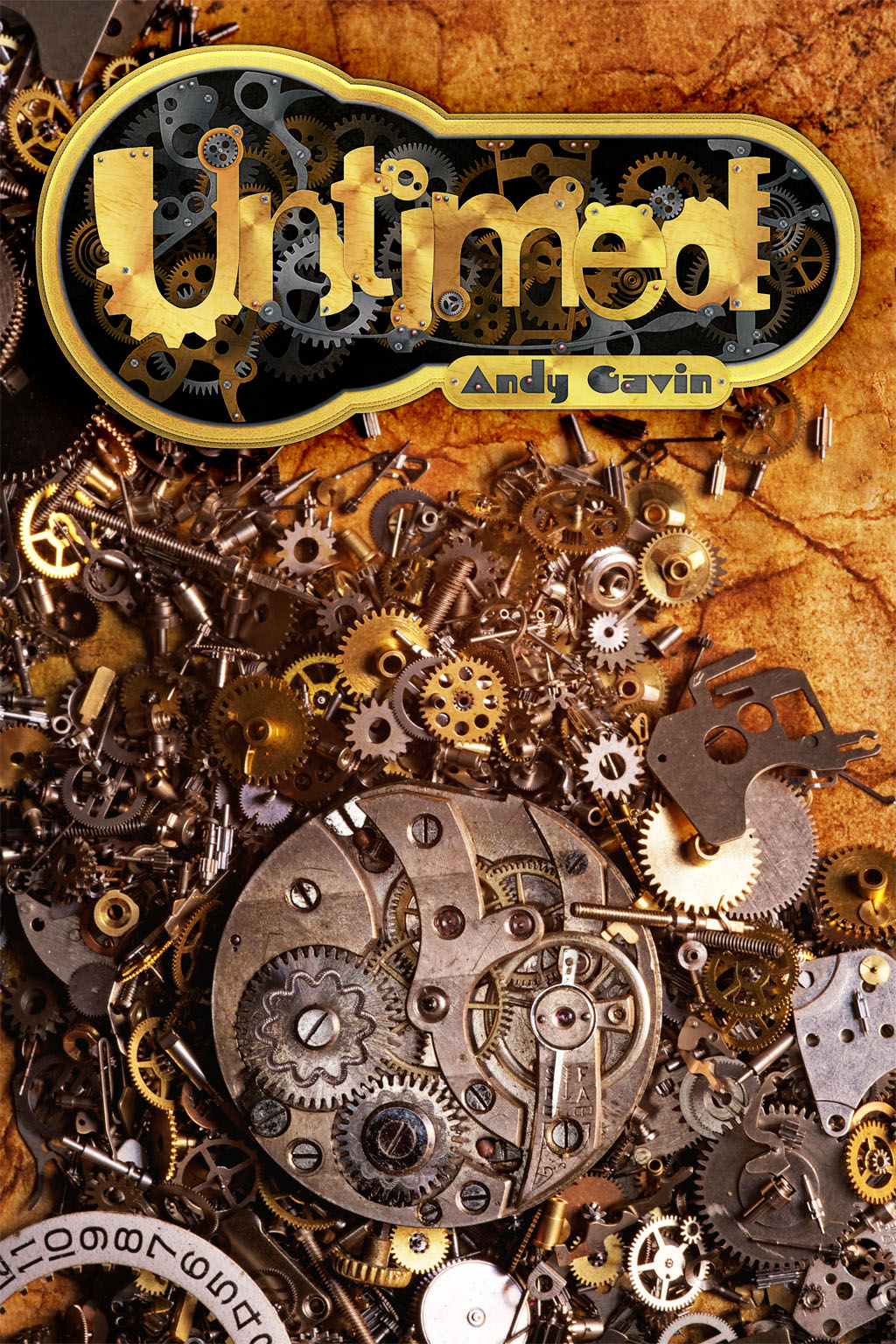
I just finished the rough cut of the third major draft of my new novel, Untimed. Just in time too to get out of town.

This weekend will be quiet and post free. I’m off to Vegas with the Foodie Club for some more high end gluttony. Namely Twist by Pierre Gagnaire and  É by José Andrés (my review of the comparable Saam here).  You can expect detailed coverage when I get back.

For more on the revision process, see this recent post.

Or for more posts on writing, click here.

Revision Slog – Novel as Algorithm

As I slog toward the end of my third major draft of my new novel, Untimed, I felt the need for brief procrastination in the form of detailing the process. Most people seem to discount how much grind and sheer time investment is required in writing (and revising) a novel, even a vey steady workaholic like me. Let’s do a little breakdown.

Untimed is actually fairly short, currently at 83,000 words and 38 chapters. This is MUCH shorter than my first book started out. Length is a factor because you have to iterate (i.e. read through the book a LOT of times).

Think of each major draft as a loop (I am a programmer) with various sub loops.

. Generate Idea (for the most part this kind of happens or doesn’t)

. Character Design and High Level Plotting (you could spend who knows how long on this, I don’t find it that useful upfront, most of it just comes to me while doing other things)

. The First Draft:

. Initial drafting: For each chapter (1..38) loop:

. Plot the beats in the chapter. This takes an absolute minimum of 1-3 hours even if you know exactly what’s supposed to be in there. Sometimes it takes several days of banging your head and talking to others.

. Pound out a first draft. I can do 2000-2500 words of new draft in one 8 hour day. I generally make this a chapter. Occasionally I’ll be on a roll and do two.

. Reread it to catch really stupid typos, phrasing, and make sure it makes sense (1 hour)

. Subtotal. For above book that represents 50-60 workdays (NOTE: if you take days off, it’s chronologically much longer). Notes on finishing the first draft, here.

. High level pass:

. It’s impossible when writing a chapter or two a day to see the big picture in the book, so you have to do at least one faster pass through afterward.

. I can do about 10-15,000 words a day like this, which is actually fairly brutal

. Subtotal. About 7 workdays. 1-2 full reads.

. Quick read:

. If you want to judge pacing you have to read it all in a day or two like a normal book, not on the computer

. Subtotal. 1-2 days. 1 full read.

. Draft total. About 60-70 workdays. 4-5 full reads.

. Wait for feedback:

. Since you have to finish something and send it to someone, even a paid editor will take some time to read it and return feedback. This usually takes several weeks. I try and overlap it with the cleanup passes, but it’s tricky.

. Revision Drafts (I’m currently finishing the third major redraft) so I’ve done two of these so far on Untimed:

. Plan, outline, and organize changes.

. Can take from a couple days to a couple weeks. Some thoughts on this with Untimed HERE.

. I can do about 2-3 chapters a full day of revision. So for each block of 2-3 chapters loop:

. Do the actual revision. This can be fairly grueling, involving initial big surgery, a smoothing pass, then a cleanup pass

. Reread it to catch really stupid typos, phrasing, and make sure it makes sense (2 hours)

. Subtotal. Plotting 7 days, revising 15 workdays. Generates 2-3  extra reads per chapter.

. Medium Quick read:

. Checking for consistency

. Subtotal. 3-4 days. 1 full read.

. Total for each revision draft. Approximately 25 workdays. 3-4 full reads. Notes on the second draft HERE.

. Wait for feekback. You have to find out from others, often people who have never read the book before, how a draft comes across. This takes awhile. A reader who gets back to you in a week is amazing. It often takes several and some gentle (or not so gentle) prodding. Or tossing them some money. Sometimes that doesn’t even work. I had one (paid) unemployed beta reader tell me that they couldn’t start it because it interfered with their watching TV! NOTE: Said individual did not get paid.

. Line Editing:

. When the big picture is all settled out one sends it out to an editor for Line Editing. This involves more editor time than author time, but still chunks of the book come back and one must go over the edits and install them.

. My editor will request a “compression” pass before sending it to her. This is an extra pass to try and self edit it first.

. I can do about 8000 words a day like this. Approximately 10 days. 1 read. This is brutal but can be overlapped chronologically with the editor’s line editing. I.e. I can self edit a chunk and then send it out, meanwhile self editing the next chunk while the editor is working on the previous one, then also fit in the next part (processing) of returning chunks in a pipelined fashion.

. I can “process” returned line editing at about 6,000-8,000 words a day. For each chunk loop:

. Read over the track changes version of the line edit in word, approving and rejecting various edits and making cleanups

. Copy over each scene in into the real draft. Cleanup formatting.

. Do a quick read of the chunk or chapters to make sure nothing got screwed up

. Subtotal. Approximately 12 workdays, but spread across more chronological time as the edits can’t churn out this much per day. 2-3 full reads.

. Quick read:

. If you want to judge pacing you have to read it all in a day or two like a normal book, not on the computer

. Subtotal. 1-2 days. 1 full read.

. Total for line editing. approximately 24 days. 4-5 full reads.

As you can see. This adds up to a LOT of days and a lot of passes. Finishing up the third draft here, I’m already on eight months and at least 12 read throughs, and I can look forward to several more of each.

For more posts on writing, click here.

Ready Player One

Title: Ready Player One

Author: Ernest Cline

Genre: Pop Science-Fiction

Length: 384 pages

Read: September 13-18, 2011

Summary: 10: buy book 20: read book 30: goto 10

_

I read this after two different friends recommended it in the same week. Wow! If you’re one of my (presumably) many readers who love video games. Go buy and read it. This is pretty much the ultimate classic video games novel! And I should know, having been born in 1970, the perfect time to experience the full rise of video games and modern pop culture (inaugurated May 25, 1977). I was so enamored of computers in general and these little beasties in particular that I went and made (and sold) thirteen of them professionally.

But back to Ready Player One. It’s a first person narrative set in a roughly 2040 dystopia where the world has basically gone to shit and most people live inside a gigantic virtual reality video game. It’s creator has died and left his vast fortune to the winner of an elaborate easter egg hunt (think Atari Adventure Easter Egg crossed with the Great Stork Derby). This whole world and contest centers around an obsessive love of all things pop-culture and 80s, particularly films, comics, and most importantly, video games.

In practice the novel is an old school adventure set mostly in virtual reality. But it contains an astounding number of well placed and deeply woven 80s pop-culture references. For me, they were continual fun. I got 99% of them, including some damn obscure ones. I’ve played every game described in the book (except for Dungeons of Daggorath — never had a TRS-80 — but it looks like Wizardry), seen every movie, heard nearly every song, etc. I don’t know how this book will read for someone a lot younger who isn’t up on all this old school geekery, but I sure enjoyed it.

The story is great fun too. The protagonist is likable and all that. It’s not a long book but races along. There are a few second act jitters (the “romantic” period between the first and second keys), but I blew through them fast enough. The prose is workmanlike but unglamorous and there are some cheesy or cringeworthy moments. They don’t distract from the fun. The last third in particular was awesomely rad with numerous 1337 epic moments. When the protagonist faces off against an unstoppable Mechagodzilla avatar and invokes a two-minute Ultraman powerup I felt tears coming to my eyes.

As Science-Fiction the book is a bit mixed. Mr. Cline manages to deftly describe what must to the novice be a bewildering array of virtual reality technologies and concepts. He’s fairly unusual in actually specifying some of the interface elements in his world and he does a credible job with all of this. Nothing stood out as particularly bogus, but was based on decent extrapolation. There are some elements, however, which still exist in his 30-years-from-now future that are already on the way out. Hard drives in “bulky laptops” for example. One only has to look at the iPad and the Macbook Air to see that writing on the wall. Again, I must point out that these minor quibbles do not detract from the book’s extreme fun factor.

Cline is uncannily knowledgable about his video games (and again, I should know), but there is a curious oddity in the biography of the central Bill Gates crossed with Richard Garriot character. He is described as releasing his first hit game (for the TRS-80) in 1987 in plastic baggies. Besides wondering if any TRS-80 game had much cultural impact (Read my own Apple II guy origin story here!), the date is totally off. If he was talking about 1982 that would have been fine. But by 1987 the TRS-80 had gone the way of Allosaurus and plastic baggies hadn’t been seen in years. My first game, Math Jam, was released in baggies in 1984 and that was way late for them. 1987 featured games like Zelda II, Contra, Maniac Mansion, Mega Man, and Leisure Suit Larry. All of these are well after the era venerated in the book. This small, but important, error is odd in a book so otherwise accurate. I can only assume that the author (and his character), living in the middle of the country, existed in some kind of five-year offset time-warp 🙂

On a deeper level, the novel toys with one of my favorite futurist topics: Will we all get sucked into the computer? I actually think the answer is yes, but that it’s unlikely to happen via 90s envisioned visors and immersion suits (like in Ready Player One). I think we probably will have retina-painting laser visors/glasses at some point. Then neural implants. But the real big deal is when our brains are digitized and uploaded into the Matrix. Muhaha. I’m actually serious, if flip. Eventually it will happen. If not this century then the next. I just hope I make it to the cutoff so I can evade bony old Mr. Grim and upgrade.

In conclusion, I have to agree with the back cover quotes of some other authors I like:

John Scalzi: “A nerdgasm… imagine that Dungeons & Dragons & an ’80s video arcade made hot, sweet love, and their child was raised in Azeroth.”

Patrick Rothfuss: “This book pleased every geeky bone in my geeky body. I felt like it was written just for me.”

So if you have even the least enthusiasm for video games, virtual reality, 80s pop culture, or just plain fun. Go read this book!

For more book reviews, click here.

PS. If you are 5-10 (or more) years younger than me (born 1970) and have (or do) read this book. Tell me in the comments what you think of it. I’m really curious how those who didn’t live it see it.

I couldn’t resist.

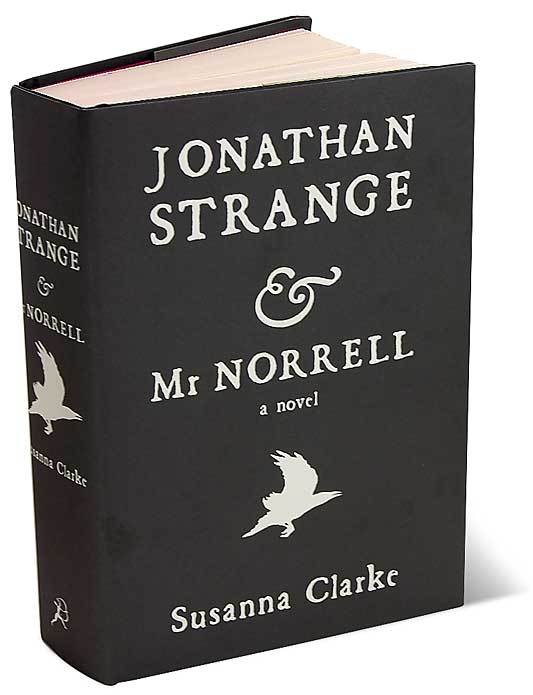
Jonathan Strange & Mr. Norrell

Title: Jonathan Strange & Mr. Norrell

Author: Susanna Clarke

Genre: Historical Fantasy

Length: 948 pages, 308,931 words

Read: August 20 – September 10, 2011

Summary: Really good, really unusual book

_

This is one of the best and most unusual books I’ve read in a while, although it’s not for everyone. As you can see it’s quite a tome, clocking in at 308,000 words! It’s set mostly in England during the Napoleonic Wars (first 15 years of the 1800s for historical dolts). It’s also written in a very clever approximation of early 19th century British prose. Think of it as Dickens or Vanity Fair with magic. Actually it’s a little earlier than either of those, but still.

This is not your typical modern novel. It doesn’t have a lot of action. It’s stylistic and archaic voice mostly “tells” (as in “show don’t tell”). But the voice is great, if you like that sort of thing (I did). It’s wry and very amusing, with a defined narrative tone. The voice gives the who book a kind of wry feel, as if we (the reader) are in on something.

It’s also a very character driven story. This is the tale of two magicians, the only two “practical” (i.e. real) magicians to surface in England for some centuries. It’s to a large extent about their quirks and their relationship. There isn’t a ton of action, although there is plenty of magic. There are copious and lengthy asides. Every chapter has several pages of footnotes on magical history! You can skip/skim these if you like.

The historical feel is really good. Most of the characters are “gentlemen” or their servants so their’s is a particular rarified world of the early 19th century British aristocracy. I know quite a bit about this era and it felt pretty characteristic. The Napoleonic Wars are well researched, but they aren’t front and center, serving more as a backdrop. This all has a very British slant to it, which is accurate from the British perspective. I.e. Napoleon is a bit of a bogey man. While the British felt this way, it was mostly propaganda. I’m actually a pretty big Bonaparte fan — he did a lot to shake up and form the modern era — even if he was a “tad” aggressive. The 19th century British Empire was itself staggeringly arrogant and well… imperialistic. But anyway…

I also liked the way the book handles issues of enchantment and perception. This is a very fairy oriented magic — as is appropriate to a historically based English Magic — and it’s treated deftly with a strong sense of the fey. Many of the characters are under strong enchantments, preventing them for hundreds of pages from realizing something which seems rather obvious to us readers. This is both fun and frustrating.

If the book has any problems (besides being a bit long) it’s that the end isn’t entirely satisfying. Things are not really explained to either the characters or the readers. They are wrapped up, but not clarified. So I had the feeling of a grand build up without appropriate payoff. But I did enjoy the journey. This is clearly one of those huge first novels that was like 10 years in the crafting — making it unlikely the author will every exactly repeat the phenomenon.

For more book reviews, click here.

Middle Madness

I think I’m over the hump with the third major draft of my new novel, Untimed (for a quick blurb see here).

Story structure is hard. And while this book is much better structured than early drafts of my previous novel, it had two major problems: the ending and the first part of Act II. Late (very late) in the second draft I cracked the ending. So that just left the middle.

Therefore, I wasn’t surprised when the biggest comment from my awesome freelance editors’ (I use three: Renni Browne, Shannon Roberts, and R.J. Cavender) involved problems in this middle section. It’s not that the scenes wen’t good or exciting, but mostly that I fell prey to a personal need to sneak Napoleon into the story (time travel seems to call out for the most pivotal personality of the modern era) and this resulted in a bad case of “Double Mumbo Jumbo” (or a variant thereof).

So what is the dreaded Double Mumbo Jumbo? Most specifically it’s the phase coined in Blake Snyder‘s Save the Cat book (which I discuss here). DMJ is invoked by throwing two unrelated implausible things into the same story. However, my specific problem is really a cousin, what my editor Renni calls “1+1=1/2”. This is, the idea that doing the same improbable thing twice in the same book isn’t twice as good as doing it once, but actually half as good. Even if the thing is cool. So a kind of DMJ.

And I was doing it in my middle.

Still, this section of my story accomplished a lot of other things too. And I had to figure out how to rework it to keep as much of the good as I could, avoid a DMJ — and not make TOO much work for myself in terms of repercussions later in the book. Thinking about various ways to restructure, particularly given the constraints of my story, my elaborate time travel scheme, and history itself, was quite the brain buster. I thought on it all day for at least a week. So hard one Friday that I literally gave myself a migraine headache! I found myself pondering time travel so aggressively that I became confused as to what year it was — and then my vision began to shimmer (migraine).

I probably outlined 15 different scenarios and talked about countless more. This part of the writing process is very peculiar. I often end up with a half-baked scenario that satisfies some goals, but just doesn’t really work. One quickly reaches a point where no new ideas surface internally and you need to shake it up. I then find it extremely useful to talk with a limited pool of friends who have read the book in it’s latest incarnation. This allows me to efficiently go over the possible elements. Then we talk out the problems. By vetting numerous failed scenarios it’s often possible to collect enough different disconnected ideas that a single coherent new plot can be jig-sawed together. Or at least coherent enough to polish out in the writing.

This last week, I even twice resorted to writing out (as prose) incomplete outlines to see if they worked. The first revealed itself as a miserable failure. The second made it to the finish.

Now it’s off to friends and editors to see how it passes muster.

For more posts on writing, click here.

City of Bones

Title: City of Bones

Author: Cassandra Clare

Genre: YA urban fantasy

Length: 460 pages, 131,000 words

Read: August 17-19, 2011

Summary: Fun until the end

ANY CHARACTER HERE

City of Bones is the first in a series of fairly typical urban paranormal. We have a girl who thinks she’s nothing special, but she discovers she’s part of this whole world of demon hunters, fairies, vampires, werewolves, etc. And right under our noses in New York City!

Seen that before?

Well yes. Certainly one of my biggest problems with this book is just how similar it is to lots and lots of other late 2000s urban fantasy. It’s much like Holly Black‘s stuff (White Cat, Tithe), but with a bit less atmosphere. In fact, the two authors are friends and share the same agent (coincidence?). But City of Bones is similar to a lot of other things as well. At times there’s a wee bit of a unique feel involving the Shadowhunters (that’s what this book calls the demon hunters clan the protagonist hooks up with). Just a little. There’s certainly very very little rooting in any kind of traditional mythology, but instead a whole hell a lot of stuff stolen from contemporary pop myth. Werewolves and vampires both, and guess what? They hate each other. Author Cassandra Clare started off as a Harry Potter fanfic writer, and that shows because she borrows a lot from HP. But not what you’d think. There’s next to no similarity of feel, no wizard school, etc. Instead City of Bones borrows things like naming conventions and loose bad guy structure. Names like “Pangborn” and the like. The evil guy (who faked his death) is back with a “Circle” (ahem Death Eaters) and their’s more. Clare loves capitalized terms like “The Circle,” “The Uprising,” “The Institute.”

Still, for at least the first 50-60% I really enjoyed reading this novel. It’s well written. Albeit overwritten. I can’t understand how the hell they let her through the gates at 130k words. At least 15% could be cut with just a good line edit and there are long long dialog exchanges that are either datadumps or serve only as barbed chatter between the male and female leads. The POV is a little wonky too, 95% of the time focusing on the female lead (Clary), but occasionally shifting to the male or even a baddy. Clary’s very very typical. She’s pretty, but thinks she isn’t. She dives into crazy life threatening fight scenes time and time again, but has no skills herself. But somehow you don’t mind her. In fact she’s pretty likeable. The male lead (Jace) is less typical. He’s genuinely obnoxious (verbally) but mostly tries to do the right thing in deeds. His aloof self is actually pretty well crafted, although annoying at the same time. There is some good tension in the interpersonal stuff — although not even the whiff of sex, which would have spiced it up.

All this criticism aside, I did actually enjoy the first half of the book. I even said to my wife half way: “I’m reading one of those rare urban fantasy’s that’s actually good.” Truth be told, there’s all sorts of drivel I don’t finish and don’t mention on my blog. City of Bones is a long book, and I flew through it to perhaps the 75% mark. I can’t exactly say what made it enjoyable, but it was. Despite the pretty derivative scenario, the characters were engaging for the most part. Clare’s a good action writer — not perfect, but her action scenes are to the point and clear. There’s a definite urban feel to things. Sometimes a little too much as this is one of those worlds where the fantasy types spend a lot of time at clubs posing as hip weirdos. They have “cool” swirly tattoos too (in this context quotes = sarcasm). There are twists and turns and reveals. Some of the big ones you can see a mile coming. Like the deal with Clary’s father. I guessed that one about page 20. The hints were slathered on like a redhead with the sunblock.

Really the only thing that prevents this book from being a solid guilty pleasure (it was never aimed at classic), and me from starting in on the sequel (which people say is actually better), is the cheesy final showdown. It totally lost me. Mired and tortured me in fifty pages of “bad guy gives lots of Scooby Doo explanation in the middle of a fight.” Yeah, he’s like stabbing with a sword and he has time to get about three pages of dialog in during each stroke. We even have this cheesy flashback from one of the older characters (a werewolf named Lucian — we’ve never seen that before!) to a supposedly crucial scene right around the time of Clary’s birth. A big flashback at the 85% point? It’s the only one in the book too. A couple lines of dialog would have told us what we needed to know. The whole end just felt forced. Clare should have kept the villain off screen or something, because he was so ham-handed he was begging for a slice of pineapple. Which is a shame, because there was enough craft in the other characters that I actually grew to like them.

For more book reviews, click here.

Conan the Barbarian – I live, I love, I slay

Title: Conan the Barbarian

Director/Stars: Jason Momoa (Actor), Ron Perlman (Actor), Marcus Nispel (Director)

Genre: Fantasy

Watched: August 24, 2011

Summary: Plot holes galore, but fun!

_

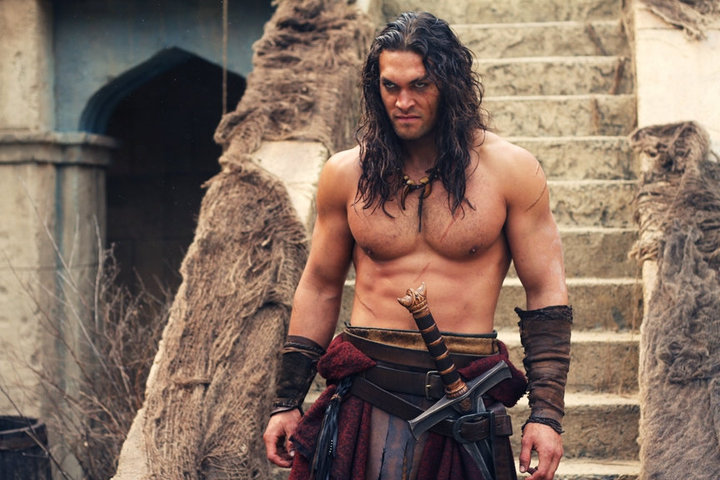
The new Conan is surely a guilty pleasure for the fantasy hound like myself. Yeah, the plot and characterization is a little weak, but it is gorgeous, and the action is comprehensible. I have to admit, I enjoyed it. It’s certainly faster paced than the awesome although slightly dated and admittedly cheesy original — my recent review here.

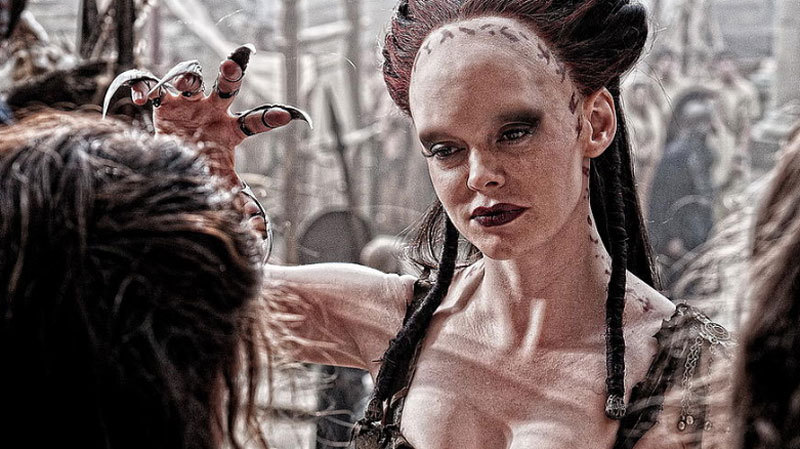
The casting is decent enough. Jason Momoa lacks a bit of the gravitas he had as Drogo in Game of Thrones, perhaps because he speaks English here. He has charisma, and handles the action well, but the American accent really bugged me, and he plays it with a touch of the comedic. Ron Perlman is fun as dad, although he doesn’t mention Crom, but he does talk about the secret of steel — at least indirectly. Stephen Lang has already proven he makes a good one-dimensional bad guy (although he’s no James Earl Jones). There are a bevy of distinctively made up sub-bosses, although none of them are as cool as Rexor and the other headbanger. Rachel Nichols is a little dull as the screaming victim/love interest, although she’s cute enough. But call me twisted, I thought Rose McGowan was hot and funny as nasty sorcerer-girl daughter of big-bad. Yeah her fivehead is CG, but she’s looking great for 38.

And the world looks awesome! The cities and temples (as seen in overhead shots) look totally kick ass. Funny too that they’re all so close together, as it never seems to take anyone more than an hour to ride/walk between locations. I guess the lack of public transit notwithstanding, the Age of Hyboria predates traffic. This is a fairly authentic (to the 1930s source material) Conan world. It has slave girls. Even George R. R. Martin likes slave girls. Said women in bondage are properly absent their tops.

The action scenes are fun and surprisingly clear. They could have edited this to death like a lot of recent movies, but you can make sense of what’s going on in a physical way. I had the good fortune to see it in 2D, without sunglasses.

Someone also did their medieval torture research. The noseless sub-boss employs a genuine torture device in his nameless workcamp. It’s somewhere between The Head Crusher and the Thumbscrew, but it’s real. I went to a torture museum in Volterra Italy, home of Twilight’s most leather-conscious vampire clan, so I’m all up on this stuff. Later in the movie, Tamara spends some quality time bound to a wheel, which is most reminiscent of this, fortunately for her, she’s way too pretty to break and leave for dead. Big-bad even uses a clever homebrew version of the Lead Sprinkler to harass Conan and dad.

But there are a lot of lost opportunities here. The backstory intro is cheesy as hell and not really necessary. Conan has some friends, but we don’t get to see him meet them, nor do they play a really important role in the story. There’s basically no characterization of anyone, but there could have been. Star Wars and Raiders of the Lost Ark manage to characterize and have plenty of action. We don’t really find out much about the world or any people in it, instead it merely serves as pretty backdrop.


But did I mention I really liked skanky sorcerer-girl Marique?

However, I do have a few questions:

Who cut infant Conan’s umbilical cord? Why did the big-bad bother with the whole “torture dad” bit when his little witch-daughter could just sniff out the mask piece anyway?  When Conan and friends role a bunch of boulders down at the slavers, how is it that they miss hitting all the slaves? Imagine the coincidence that after 20 years of searching for the “pure blood”, Conan arrives at the temple on the exact day in which the big-bad finds her. If sub-boss Remo is such a badass, why does he run from Conan the moment he sees him? Why does the big-bad travel with a ship carried on the back of twenty elephants? And given said elephants, why does he need a whipping crew of slaves to pull it too? And given all that, how do they get the ship on and off the elephants without a crane? Why after big-bad and daughter fall for the ancient trick of being taunted to kill their informant (the old priest) do they gloat? Why did not much come of sorcerer-girl’s poison? Why don’t we see sorcerer-girl at the hair salon, obviously this is where she spends most of her time? Why does Conan let the girl go wander in the woods after sex, knowing that the bad guy is looking for her? And where did those woods come from anyway, as they were on a rocky coastline? Oh, and when sorcerer-girl leaves a calling claw, how is it that she has all five a minute later? How does Conan manage to ride all the way to the city of thieves and back to big-bad’s hideout in about an hour? Why does the hideout have a little monster fun pool in the basement? How does Conan get out of said hideout? And how does his thieving friend? Why if sorcerer-girl is so badass, does she fall for a little cat-fight action and not pull out some new magic at the end? Why if this mask is so powerful does it not really help the big-bad any? Or even curse him as payback for his big-badness? After winning, why does Conan drop off the girl at home and ride off into the sunset with hardly a word of explanation? Surely he could have brought her home to his ruined hovel or had at least one more literal roll in the hay!

Overall, though, it’s about 1000 times better than the Clash of the Titans remake.

For my review of the original manly man Arnold version, click here.

For more Film reviews, click here.


Fright Night (2011) – Not a waste of film

Title: Fright Night

Director/Stars: Colin Farrell (Actor), Anton Yelchin (Actor), Imogen Poots (Actor), Craig Gillespie (Director)

Genre: Horror

Watched: August 19, 2011 (and before)

Summary: Fun update!

_

As a lifelong vampire fan — hell, my first novel is (somewhat) about vampires — I saw and loved the original Fright Night when it opened in 1985. Truth be told it was always one of my favorite vampire movies (up there with Coppola’s DraculaInterview with the Vampire, Let the Right One In, and The Lost Boys). The 1985 Fright Night offers up a clever blend of comedy and horror. Not only is the movie very funny (and it holds up well today), but it’s not a pure spoof. The plot’s moderately clever, and the vampire, played by Chris Sarandon (Susan’s first husband) has a sinister charm and a genuine sense of menace. In my opinion vampires need a sense of menace (even the goofy Master from Buffy Season 1 is menacing). No sparkles for me.

So it was with some trepidation that I checked out the remake. See the trailer below:

I was pleasantly surprised to find the new version pretty fricking good. The story is loosely faithful to the original film. Buffy writer Marti Noxon penned the screenplay. She’s a consistently excellent writer, with the exception of the incredibly sucky I Am Number Four (maybe someone butchered it after the fact?) with a knack for catchy dialog. Most of the original elements survived intact, but character and balance has been adjusted significantly. Most substantially, Roddy McDowall‘s campy older vampire-killer TV host has been replaced by David Tennant channeling a campy blend of Chris Angel and Russell Brand. But that works.

The casting is top notch. Anton Yelchin is fast talking, self deprecating, and likable as Charlie. Imogen Poots is smoking inferno hot — and 21st century feisty/competent — as Amy. Hers is a career to watch, I wouldn’t be surprised to see her carrying a movie in the next year or two. The rest of the cast is fun too. But it’s Colin Farrell that steals the show with his visceral new take on the ancient killer. Farrell’s Jerry isn’t so slick or romantic as the classical vampire, but he brings a feral intensity to the role which is extraordinarily predatory. Supremely confident, this Jerry starts off the movie as a mere “human” predator, clearly a man not to be trusted with the ladies. But when he senses the kids are on to him, he doesn’t just depend on the defense of disbelief that the original did (although he does have some good fun with this) but goes straight for the jugular — literarily and figuratively. Part white trash, part serial killer, part vampire, he’s all around delicious to watch.

Noxon’s script is full of dark humor and quippy (but not too campy) lines. The story has been rearranged to suit modern tastes. Essentially act 1 has been compressed to almost nothing. Gone is the first third of the movie where the characters (although not the audience) are trying to sort out exactly what they’re dealing with. Instead, we open with vampire, and by scene three (perhaps 4-5 minutes) Charlie’s friend Evil is desperately trying to convince him that the new neighbor Jerry is a vampire. The movie makes no bones about confirming this either. It leaps right into fang games and breaks into a very extended second act filled with big chase and action scenes. This could have ruined the film, but the scenes are slick and intense. The final showdown perhaps felt a little rushed, and there was at least one major story error (the vampires show up in Vegas at exactly the wrong time and place with no explanation of how they knew to be there), but none of this really detracts from the fun and mayhem.

The effects are top notch and don’t get in the way too much. Sure they’re gratuitous, but they’re supposed to be. The editing is more classic, not the frantic mess that’s popular these days. And the cinematography was often quite striking. Certain shots were highly memorable: particularly both fang outs (Jerry and another), the stripper’s final number, and many others.

So vampire fans, go see.

For more Film reviews, click here.
For more vampire posts, here.

Introducing the Writing Index

In my continued effort to improve site navigation I’ve introduced a new page to index all my writing posts, sorted by topic. You can also find it in the “Writing” menu at the top of the site or by clicking on the gold “Writing” icon on the righthand sidebar.

As an added bonus, the page includes a blurb of my new novel, Untimed, check it out.