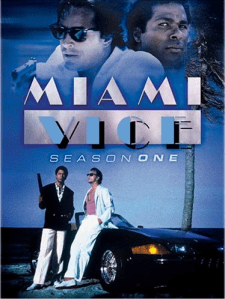
The 80′s revisited: Miami Vice

Title: Miami Vice

Creatives: Anthony Yerkovich and Michael Mann

Genre: 80s Cop Drama

Watched: pilot 1984 and Nov 13, 2010

Summary: Holds up great.

Dexter (one of my 2-3 favorite currently running shows) had me thinking about Miami so I found a copy of the Miami Vice complete series boxset on Amazon Marketplace for dirt cheap. I’d watched the show 26 years ago, but this is really just a review of the pilot which just I re-watched.

For early 80’s television, the show holds up amazingly well. Sure the picture quality of the DVD transfer is mediocre, and it would’ve benefited from wide screen shooting, but it’s still better than most TV today. Some of the acting, particularly reaction shots, still retains that 70s/80s cheese factor. Cut to cheesy Tubbs facial expression. But the 2 hour pilot plays more like a movie, a Michael Mann movie, in fact. The writing is great, and starting off the protagonists separately, with Tubbs a bit of a mystery, works well. The music is still fantastic, and the evocative much-touted MTV style shots of car hoods and wheels racing along night streets still work. When “In the Air Tonight” kicked in, I got goosebumps.

For me the real star of the show is 1984 Miami. This now forgotten world of no cel phones, no computers, teased hair, and leisure suits. Since it’s a 1984 show, this is real 80s, or at least how Hollywood wanted us to see it then. One tends to forget that styling black guys dressed like Michael Jackson (2 belts!), Don Johnson sported a cheesy mustache, or that sleeveless vests were ever in. And the close up shots of the seedy Colombian drug lord’s sleeve, gaudy bracelet, and rings were priceless. Maybe it’s just because my High School years were in the early/mid 80s, but there’s certainly a deep nostalgia factor.

I liked the pacing too. Nowadays, particularly on network TV, the editing is all rushed. Everything happens piled up on top of itself, and oftentimes there’s no setup or character development. The computer and the cel phone have also become crutches for easy writing solutions. Need to know something? Look it up on the computer. Someone needs to warn someone? phone call comes in. Before that, each of these information exchanges required an actual character.

In some ways Miami Vice might represent one of the first TV dramas that IS still watchable. Every time I’ve tried to watch some old late 70s or early 80s favorite the pre-cinematic / pre-Miami Vice TV cheese factor just punchs me in the face. We’ll see how I feel a couple more episodes in.

On Writing: Passes and Plots

This afternoon I finished the rough cut of my 7th major draft of my novel, The Darkening Dream. In my process, a rough cut is a draft (in this case v4.55 — yes you can tell I’m also a computer programmer) where I’ve done all the major changes I intend, but I haven’t yet gone through and reread the whole book (again, for the 40th or so time) to fix up little inconsistencies I missed and to tweak and improve the prose specifically. Part if this is that different read and edit passes have different paces, and it’s not a great idea to mix them.

In a rough cut pass one is struggling to perform large scale surgery. To cut out big sections and sew them back together. To remove characters, objects, or character the motivations, purposes, or settings of things. I like to move fairly fast during this phase because I have to keep in my head all the little loose ends that need to be tied up (I try to write them in my change plan — a kind of chapter-wise outline of changes — which I follow as I redraft). Plus, during a big rough cut the novel is also “broken”. To me this is analogous to the period when a program can’t be compiled or crashes in some heinous way. So, I don’t really want to stop too long and noodle over a sentence. I don’t like either my novels or my programs broken. It was S.O.P. during Crash Bandicoot and Jax and Daxter to build a test disk every night that testers would play the next day. If your build was broken, this couldn’t happen and other people couldn’t work. Same with the book, I like to be able to give it to a beta reader if necessary. You can’t if it’s broken.

On a read-as-a-reader pass one drops the thing on the iPad (these days) and then read it from start to finish, jotting quick notes or highlighting problems. If you stop to fix them for too long, then you loose the feel of the book as it was intended to be read. This, by the way, is why if you want to really enjoy a book, you should read at least a few pages each day. If you take a two-week hiatus (or more), you lose too much continuity.

And finally, there is polish. In this kind of pass you line edit, or change on the fly. Improving sentences, polishing phrases, fixing errors, trimming fat, whatever. It’s possible while doing this to easily trim 5-15% out of a scene without actually removing any real content. This too has its easy analogy in programming: optimization, particularly of memory or code size (no longer very relevant). In this kind of pass you just work at the low level, and so you can move slowly.

So that was passes. Now onto plots and subplots.

In my previous major draft (v4.43 — don’t ask) my editors pointed out something huge that I was subliminally aware of as a problem, but hadn’t pinpointed the exact cause. I had two major subplots going in my book. One was the main plot, and the other was the villain‘s secondary agenda. I used to have three, but that was in versions before 4.xx.

To explain this, in v4.43 and before: There were the heros and the villains. The villains had this super bad plan going, and they had multiple sub goals serving this plan. The two main villains (meaning the ones who have points of view in my story, not the boss villains) had this separate — albiet bad — agenda to get something from a vaguely good third party. The heros were both the target some of the other offscreen villains and collateral damage of the pov villains. Now this was done originally to show that the villains were so badass that even distracted they were crazy nasty. The heros had as their agenda stopping the villains and saving themselves (nothing really wrong with that), however, they were never really able to understand the actions of the villains because of the mysterious secondary objective.

By making the seemingly simple change of merging the secondary objective and with something the heros had this entire situation was changed and improved. Now, the villains want something the heros have, and although they do much the same things they did against the third party + the collateral part, they do it all to the heros (and a little to each other, because they’re evil!). By way of analogy, before the heros and villains were on adjacent train tracks lobbing bombs at each other and trying to cut each other off at the pass, now they’re on a head-on collision course firing full time at the other. This got rid of the third parties which no one cared about, and had the net effect of creating literally dozens of additional opportunities for conflict and 5 or so new big head to head confrontations — and this is in a book filled to the brim with fights. Conflict is a novelist’s bread and butter, so this is win-win.

It’s also worth saying that to improve any work. Be it video game, novel, or whatever. When you get well articulated suggestions you have to be willing to try and view their merits objectively. This is with the end of judging if the end result would be better in an absolute sense. Of course, sometimes even if it is, the bang for the buck isn’t there, or there are tradeoffs. The changing itself, however, is part of the process.
FOR MY PREVIOUS POST ON WRITING, CLICK HERE

Book Review: Dead Beautiful

Title: Dead Beautiful

Author: Yvonne Woon

Genre: YA Supernatural

Read: Nov 5, 2010

Summary: Great YA, gripping voice pulls you right through.

_

I found this via one of my writer blogs. A lot of recent YA is frankly, trash, but this was a very well written book. Superficially it might seem very Hogwarts, a young girl’s parents die suddenly, and then she is bundled by her mysterious grandfather off to a creepy gothic prep school in Maine. But it’s anything but derivative. First of all the first person voice is great. Smart, but not forced or full of attitude it pulls you seamlessly through the entire novel — and it’s 500+ pages. I literally read it in one sitting.

I’m not going to give away the major premise, but the school setting is often an enjoyable one when done right, and this one certainly is. The characters seem real enough, particularly the protagonist, and there is a unique creepy feel to the whole world. Intellectual, but not heavy. The supernatural is fairly subtle, and about 75% of the way through there is the “big reveal” as to what the deal is with certain things. As is usual with this sort of thing the book was better before the reveal, but it still held up afterwards, even coming to an emotional finish.

Fantastic debut novel, and I eagerly await the author’s next book.

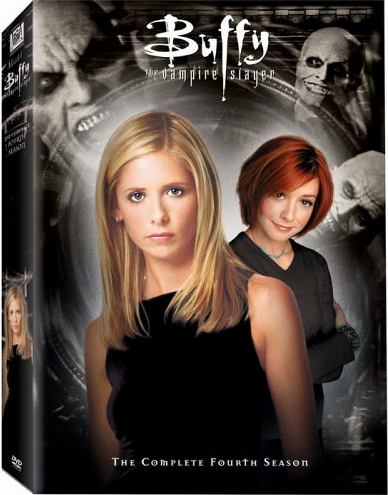
TV Review: Buffy the Vampire Slayer – part 3

CONTINUED FROM PART 2 ABOVE. And the whole series [12, 3, 4, 5, 6]

WARNING: CONTAINS SPOILERS:


Season 3:

Everyone must have thought: With the little half-length first season, and such a strong second season, that Buffy season 3 was heading toward a huge sophomore slump. But no, this season is even better than the second. Several things contribute to this:

1. The writers learn to deepen the mythology. They bring back old characters in surprising ways. They take gimmicks that made previous episodes great, and reintroduce them with new twists that get even better. Through it the characters and dialog stay strong, the veneer of comedy and fantasy is used to toe into, and then later delve deep into places where TV was usually afraid to venture.

2. The “experimental” or more radically different episode is introduced.  These special episodes shake up the viewers preconceptions about the show. Many of these are written and directed by Whedon himself, and make up some of the best episodes of the series, culminating in Season 6’s “Once more with feeling.” Season 3 comes out of the gate this way with “Anne” (Buffy alone in LA), and continues with “The Zeppo” (told entirely from Xander‘s perspective), and “The Wish” and “Doppelgangland” (where an alternate version of the town and characters are explored). These introduce vampire Willow, who heralds some of the long term changes in store. Willow: “It’s horrible! That’s me as a vampire? I’m so evil and…skanky. And I think I’m kinda gay.”

3. The main series arcs become more integrated with each of the shows. We get the best darkly comic villain of the whole series, the sinister “Mayor.” The arcing becomes so sophisticated that even the most standalone episodes have important changes affecting the relationships of the characters. We meet bad-girl Faith, who provides delicious counterpoint to Buffy’s honor-bound sense of duty — not to mention introducing sexy newcomer Eliza Dushku. Her presence, twisting as it does across the entire season and winding together with the overall villain arc helps stich the entire season together. The result is very few episodes that feel standalone, as even those with a monster of the week are moving forward the relationships between the characters.

4. Sub arcing involving character relationships, notably the love lives of Xander, Willow, Cordelia, Oz etc. proceeds fast and furiously.


Season 4:

This season could have sunk the show, as High School shows often fail after graduation. It’s stil a transitional season,  but it accurately reflects many details of college life (adapted to the Buffyverse). The show’s formula is mildly upset by the change. The relationship of the Scooby Gang (the main gang of friends) and mentor Giles teeters — enough that by season five, college will be downplayed and a new equilibrium established around the magic shoppe as headquarters.

Additionally, the main villain of the season is the weakest of the series, involving a government/army conspiracy and a frankenstein-come-terminator monster. Still, the great writing holds everything together through the change.

Many classic elements of a High Schooler’s transition to college are parodied successfully: college jitters, bad roommates, one night stands, over-drinking, fraternities, four-year lesbians, etc. The show keeps us engaged by continuing the ever evolving relationships. Willow and Oz explode, and she goes gay. Xander finds love with an ex-demon. Buffy has her only healthy relationship of the entire show. Spike, the popular villain from season two makes a return and begins a long an amazing transformation that is pretty much a Whedon halmark, where villains can become heros and heros villains.

The tradition of special episodes also continues with the groundbreaking “Hush,” the extraordinarily creative “Superstar,” and the oddball “Restless.” In “Superstar” for example a relatively minor (at this point) reoccurring character from the past literarily takes over the show. This extends to a meta level, involving the creation of a new custom title sequence just for the episode. There is a radical creativity here, a willingness to experiment and play with even the container and format of TV itself.

CONTINUE WITH PART 4 HERE.

Book Review: The Last Colony

Title: The Last Colony

Author: John Scalzi

Genre: Sci-Fi/Space Opera

Read: Nov 1-4, 2010

Summary: Fun read, but not as good as the previous two.

_

This is the sequel to Old Man’s War and The Ghost Brigades. I really enjoyed those books and pounded through this one as well. It’s just as easy to read and picks up with the same two main protagonists. John Perry narrates in first person as he did in the first novel.

Unfortunately, it just isn’t as good. Not that it’s bad. It’s a fun read. John and Jane, no longer nano-engineered soliders, get recruited to lead a new colony, and are swept into a high stakes game of Alien politics. It just seems sillier. There’s less specific action, more political explanation. That might be half my problem with this novel. A lot of the big stuff takes place off screen and/or is just summarized in narrative instead of being told in scene. The plot also tries to tackle way too much, leading to loose ends like a newly discovered sentient alien species — introduced, and totally never resolved or explained in any way. The political action happens too fast, and on such a large scale, with fairly crazy solutions. I just didn’t buy it, so I was left feeling a bit empty.

The fourth book in the series is apparently the same story told from the point of view of Zoe, John and Jane’s teenage daughter. I’m not sure I want to read this story again — although I did like Zoe as a character.

Movie Review: Centurion

Title: Centurion

Director/Stars: Michael Fassbender (Actor), Dominic West (Actor), Neil Marshall (Director)

Genre: Period Action

Read: Nov 3, 2010

Summary: Surprisingly kick-ass.

I’d completely missed this movie in the theaters, but that’s no wonder because it only played on 19 screens across the country. I hadn’t even heard of it, but I noticed a review while browsing my favorite movie reviewer’s site. Reviews were mixed, but it’s set in 117AD, and as a Roman History buff I had no choice but to order.

Wow. It kinda kicked ass.

This isn’t a film for everyone, certainly not for most women. Like the original Predator, it’s a guy’s film. Set in Northern Britain, this is the story of a bunch of Roman soliders on the run from a group of Pictish warriors (old old school Scotts) who want nothing better than to hack off their heads and carry them back to their village. Now, you actually can’t totally blame the picts, they have their reasons. For the most part, this movie is actually fairly authentic. I mean this in a loose sort of way. It’s not based on any real historical events. The action is pretty crazy, but still, compared to some (cough cough, King Arthur), it makes perfect sense.

The movie is basically one long chase scene, and it just works. The landscapes are gorgeous, and the fight scenes have an intensity that’s often missing in today’s over edited films. Things are a bit grisly, but the camera cuts away quickly. You could freeze frame to see some nice brain splatters and battlefield amputations if you were so inclined. There’s a bit of a problem with the fact that many of the actors look very similar in their military uniforms with helmets or short cropped hair — but that’s why the army has uniforms etc. The actors do a good job given the largely physical demands of the roles. The dialog didn’t make me cringe except for a couple lines right in the intro. The whole thing has a nicely stylized feel without being all 300/Spartacus (the second of these, however, is a serious guilty pleasure). It’s much more realistic than either.

So if you like mano-a-mano sword and survival fighting, give it a watch.

If you don’t care about historic nitpicks, you can stop reading, but because I’m a huge Roman buff I’ll mention the anachronisms that bugged me, although none of them really detracted from the film. There are two female Pictish warriors. They kick ass, and I didn’t mind, but I’d wager my life on the fact that 1900 years ago Scottish society — like Roman — was, shall we say, a tad too sexist to allow women to formally fight. I’m all for the recent trend of sexy girl action stars, my own novel has a slightly anachronistic tough female protagonist, but we should realize it just wasn’t the case historically. The Picts also ambush and slaughter  a roman legion using the old “rolling balls of fire” trick, slaughtering all but about 10 men. I’m not sure that balls of fire had been invented, or that they ever were terribly effective in the field. In this period, leadership, numbers, discipline, armament, and positioning usually determined the outcome (almost always in the Roman favor). There are only a few cases of bald-faced defeats of the Imperial army, and none that bad in Britain, but I guess it isn’t that different than their defeat at Teutoberg Forest about a 100 years before the date of this film. Certain bits about the costumes were a little dubious, particularly the boots. What we think of as modern boots really weren’t in service in the Roman army at this period, even in cold areas. The armor looked accurate though, they were lucky because movies always love to use the segmented look of the second Century, even if depicting a Republican army. The Pictish outfits looked a bit medieval to me, rather than Iron Age, and the women had shoes (sorry girls, such luxuries were mostly for soldiers and hunters in that kind of borderline neolithic society). Oh, and a few too many Picts seemed to speak Latin — I have to wonder how common that was. But all and all it felt fairly second century.

TV Review: Buffy the Vampire Slayer – part 2

CONTINUING FROM PART 1 ABOVE. And the whole series [1, 2, 34, 5, 6]

WARNING: CONTAINS SPOILERS.

Buffy


Season 1:

The Buffy pilot is a work of art. In just 74 minutes, it manages to effortlessly introduce a big cast and a complex setup. But it’s the dialog that sells the entire series, and how that manages to consistently characterize a big cast of very funny, yet very real people, caught up in ridiculous situations. There’s a rhythm to it, capturing natural teen dialog, self referentially referred to as “buffy-speak.”

Xander: Well, uh, maybe I’ll see you around… maybe at school… since we… both… go there.
Buffy: Great! It was nice to meet you. [walks away]
or
Willow: Well… when I’m with a boy I like, it’s hard for me to say anything cool, or, or witty. Or at all. I-I can usually make a few vowel sounds, and then I have to go away.
Buffy: It’s not that bad.
Willow: No, i-it is. I think boys are more interested in a girl who can talk.
Buffy: You really haven’t been dating lately.

Whedon even manages to make an info dump funny:

Buffy[to Giles] To make you a vampire they have to suck your blood. And then you have to suck their blood. It’s like a whole big sucking thing. Mostly they’re just gonna kill you. Why am I still talking to you?

The pilot may be brilliant, but some of the other episodes in this mid-season 12 episode run are a little “monster of the week.” The special effects are laughable. But still, the dialog is spot on and the characters are great. Buffy, Willow, Cordelia, and even the evil Darla are all sexy, yet not fully stereotyped. Xander and Giles are just plain funny. Even in this early run, the season has an overall meta-villain, the sinister, yet silly “Master,” a rehash of all Most Ancient Vampires.

The Master: You’re dead.
Buffy: I may be dead, but I’m still pretty. Which is more than I can say for you.
The Master: You were destined to die! It was written!
Buffy: What can I say? I flunked the written.

He’s totally silly, but he’s also kinda scary in his own goofy way. And he is a nasty killer. The connections between the pilot, a few of the intermediate episodes, and the literally killer finale (“Prophecy Girl“) give the show a nice hybrid continuity (see my article on this). Overall it’s the weakest season until Season 7, but it’s still fun, and the show slips in references to material from older episodes in such a consistant manner (much as real High School friends never let you live anything down),  that it’s essential to foundation for the greatness that is to come.


Season 2:

It’s with the second second that Buffy really starts to hit stride. As our season villains we get the awesome Spike & Drusilla, a pair of british vampire lovers who play marvelously against type. On first watch a lot of the episodes in this season don’t seem as integrated into the overall story and mythology as they will from Season 3 on, but the clever writing team retroactively mines them as sources for ongoing material in later seasons, therefore pulling them into the fold. The robot employed in “Ted” will eventually lead to Season 5’s robot girlfriend and hence the Buffybot. “Halloween” sets up Giles’ past as Ripper, and his old nemesis Rayne. The creation of a second slayer upon Buffy’s first season death at the hands of the master is revealed. And that’s just a few.

Across all the episodes the relationships between the characters start to really come into their own. Willow’s lifelong crush on Xander is stymied and she meets Oz and begins to dabble in witchcraft. Xander’s negative chemistry with Cordelia draws them both into something unexpected. Giles’ dark past begins to surface. Fundamentally, the writers aren’t afraid to play with their formulas. Since season one, Buffy’s relationship with the brooding reformed vampire Angel has been growing, and when on her 17th birthday she decides to give her virginity to him: Things don’t go exactly as planned. Writers before and after have used the supernatural as allegory for human problems, but never with such darkly comic panache. The show isn’t afraid to go dark. I mean really dark, and still be funny. Most shows would have just beat around the bush of Buffy’s sexuality, but here, she does it, and gets a metaphoric stake in the heart in return. This pivot drives the second half of the season into really dark territory, and it’s all the stronger for it. Watched back to back on DVD there is a raw emotional intensity to the arc, and it comes from just plain good writing. The characters are funny, yet real, and their genuine changes and growth irresistible.

CONTINUED IN PART 3, CLICK HERE…

TV Review: Buffy the Vampire Slayer – part 1

Title: Buffy the Vampire Slayer

Creator: Joss Whedon

Genre: Comedic Teen Contemporary Fantasy

Watched: Winter 2004-05, Summer 2009, Winter 2010-11

Summary: Best TV show of all time.


As a diehard vampire fan I saw the movie version of Buffy when it came out. I hated it so much I used to mock it as my pre Twilight example of lame vampires. I have this requirement that vampires need to be menacing, even if comic (Fright Night) or romantic (Interview with the Vampire). The Buffy movie undead were just flaccid.

When the TV show debuted, I was in the midst of the busiest year of my life, the year of Crash Bandicoot 2, when I was in the office every single day (7 days a week) between New Years and September 8th. Besides, the movie had been dumb. So the show even became a punching bag of mine (although I hadn’t seen it at the time) used to illustrate Hollywood’s creative drought: Hey, they’d made a show based on a terrible movie that hadn’t even made much money.

Oh, how wrong I was.

Finally, in November of 2004, after having “retired” from Naughty Dog, my wife having insisted for years that the show was good, I succumbed and ordered the first season on DVD. Thus began an obsessive binge where I watched all seven seasons, plus five of Angel, back to back over the next three months. Generally I consumed three or more a day, including watching 18 episodes of season 3 in one continuous sitting (home Sunday with a cold). My only breaks were the week back east for Thanksgiving and three weeks we spent in Sicily (yum!). Four and a half years later I re-watched all seven Buffy seasons during the summer of 2009. It was almost as good the second time, and I appreciated it more.

Despite a significant cheese factor, and a first season that suffers from being overly episodic, the show is absolutely brilliant. If you aren’t a fan you probably think, “Buffy has these weird obsessive fans, but that kind of thing isn’t for me.”

It is.

I’ve never met anyone who’s sat down and started watching from the beginning who doesn’t absolutely love the show. But that’s just it, you have to start from the beginning. Fundamentally the show blends fantastic writing, really funny dialog, off-beat but likable characters, zany and intricate mythology, a creativity with the TV medium, and quirky humor with a kind of hidden dark realism found in only the best dramas. By disguising drama with humor and the supernatural the writers are able to get at real human issues without freaking out the network, and because they’ve created characters we care about, it all works.

The casting too is inspired. Sarah Michelle Gellar is perfect as Buffy. She may be cute, blonde, and perky, but she isn’t a typical airhead. She combines practical cleverness, toughness, and hidden vulnerability, with a strong sense of duty. Fundamentally the show is about the weight that rests on her narrow shoulders, and what it takes to bear it. The rest of the core team is great too. Alyson Hannigan‘s Willow is every geek’s fantasy, the shy computer nerd who learns to kick ass, Nicholas Brendon‘s Xander provides the token maleness with more humor than testosterone, and Anthony Stewart Head‘s Giles is pitch perfect as the stuffy older advisor with a dark past.

But it’s not just the premise that makes this show rock, but what the writers do with it. I’ll explain when I CONTINUE IN PART 2…

The whole post series [1, 2, 34, 5, 6]

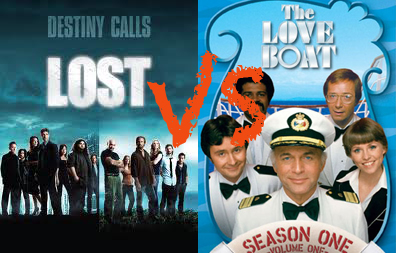
Thoughts on TV: Lost vs The Love Boat

I’ve had a funny relationship with TV as a storytelling medium. During the 80’s and much of the 90’s I used to mock it as generally inferior and for numbskulls. But let it be said that I watch TV for stories. I pretty much detest the medium for information transfer (like news) and I despise reality TV and other non story based programming. The article title makes light of the difference between what I call “episodic” and “continuous” television. The Love Boat is episodic, you could scramble the order of many episodes, and everything resets back to neutral between shows. This is pretty much a constant. You KNOW when watching the show that any changes that occur during the course of the episode will get resolved and unwound by the end. Almost all sitcoms fall into this category. Although in more recent years, even some of these are hybrids, like Friends, where major changes do slowly occur.

Lost is an extreme example of continuous television. The story runs continuously — I hesitate to say linearly — from episode to episode. In the most extreme shows of this sort, like Lost and HBO/Showtime dramas, the episodes and seasons are merely chunks of delivery, much as Dickens novels were originally sold in chapters.

I was never much for episodic TV. During the dark years of the 80’s I watched little TV, and the few programs I did watch were either hybrids or had extreme appeal (like the original Battlestar Galactica which is both). I did find myself attracted to some early ventures into the continuous arena: Hill Street Blues, Saint Elsewhere, Miami Vice (my REVIEW HERE), Wiseguy, etc. One might classify these as adult soaps — and they are — but at least they allowed for character development. That’s the thing about episodic television. There isn’t much development, and very little risk. If you know that everything will get back to where it started by the end of the hour, why worry, why invest?

A number of factors have contributed to the rise of continuous television. These 80’s trendsetters can take some credit, as can the miniseries, but probably it is the rise of cable that was the next big step. On cable, freed of some of the childish conventions of traditional network programming and more importantly of the albatross of mid-show advertising, television has become a medium where it is possible to deliver “books” of 10-17 hours of solid programming. This is radically different than film’s 1.5-4 hours (and 4 is a Gone with the Wind length movie) scope. Sure film often has a bigger budget to work with, but that’s not what really makes a story. Writing fulfills that responsibility. DVD packaged television provided the second huge step, allowing even interrupted network programs to be viewed in a continuous manner.

With this in motion the 90’s saw the rise of more hybrid continuous shows: My So Called Life, Buffy the Vampire Slayer (my DISCUSSION ON BUFFY HERE), the X-Files, to name a few. These straddled the line, retaining a roughly episodic format, but allowing characters, relationships, and big conflicts to arc from episode to episode. In the late 90’s, with the rise of the big HBO dramas this all changed. Some network shows like Buffy that started episodic became largely continuous. In the 2000’s we experienced a golden age of fully continuous television. Network shows are still mixed, with most being largely episodic or hybrid. It’s rare on the networks to have a fully continuous show like Lost, but few are wholly episodic like most 80’s fare. The big cable dramas: The Sopranos, Deadwood, Rome, Carnivale, The Tudors, Six Feet Under, Big Love, Dexter (my REVIEW HERE), Weeds, Boardwalk Empire, The Wire, Trueblood, Entourage, etc. are pretty much all continuous.

This new medium, the continuous or strongly hybrid series, allows for a depth of character development and intrigue not possible in the traditional visual mediums. Although, I guess technically soap operas have done this for decades, but the narrow demographic focus, slow pace, and extended melodrama makes these a unique species of their own. I myself am basically drawn to television on a basis of how continuous it is, and the quality of the writing, not so much the particular genre or subject. Often I sense  the progressive modulation of quality in a show is based on where it falls in the spectrum. For example, Roswell, which began with a hybrid first season that leaned toward continuous was forced into a more episodic form in the second season, much to the detriment of the show’s quality. Likewise, Buffy, my all time favorite show, picks up strength in seasons 2-6 as the show sheds itself of the early episodic quality and becomes a more continuous narrative.

Another interesting phenomenon is that continuous shows are much better when watched in bulk on DVD without the breaks in time or advertising. I’ve discussed this with many friends and all agree that when you start a show like Lost on DVD, bingeing through episodes back to back it has a continuity and emotional intensity that is lost when one is forced to skim through ads and wait a week between episodes — and we won’t even mention the endless inter-season breaks. Catching up to “realtime viewers” can feel like driving into a brick wall. This exists for book series as well. Pounding through a huge series of fantasy novels back to back is much more satisfying than when one catches up with the author and has to wait years.

In any case I’m all for this, as I like longer more substantial storytelling where characters are free to change. Anything else is just repetitive.
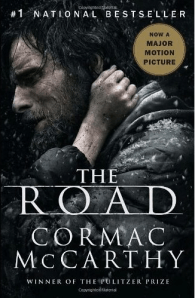
Book and Movie Review: The Road

The RoadTitle: The Road (movie)

Author: Cormac McCarthy

Genre: Literary Sci-Fi Horror

Read: Oct 29-30, 2010

Summary: Evocative.

_

At the suggestion of my friend Peter (in comments on my review of The Passage) I picked up The Road. I’d seen the movie a couple months ago. This novel is a relative oddity, being both literary and Sci-Fi post apocalyptic.

The prose: We have to speak first about the prose. At first, as with other McCarthy books, I found it jaring. He writes long sentences without much punctuation. He uses nouns and adjectives as verbs (like Shakespeare). For example, “The man glassed the horizon” (meaning he looked with binoculars) or “The white fog paled the trees.” These long sentences are interrupted with short burps in counterpoint. The dialog, what littler there is, has no quotations (remember he doesn’t like punctuation), and precious few tags. There’re no chapters, but scene breaks occur with startling rapidity. Many scenes are just description, slashes of images. McCarthy employs vocabulary the likes of “vermiculate,” (covered in worm like lines) or verbs like “hove” (past tense of heave). I found myself needing to use the kindle app’s built in dictionary feature. Still, after 15-20 pages I stopped noticing — well I didn’t stop entirely, but it grew comfortable. This very specific and personal voice is wonderfully evocative. Haunting, and spare, but with elegant and precise use of words and word parings does a good job of sketching the bleak setting. I’m not sure how the casual reader would react, but I certainly appreciate his skill with words. No awkward Stephenie Meyer style constructions here.

The book: Not a whole lot happens in the book. Basically “The man” and “the boy” wander through this post post apocalyptic landscape where nothing but an occasional hostile person moves. The world has burned and been all used up. There is no hope, absolutely none. Not a plant or animal lives. It’s just a matter of delaying the inevitable — perhaps avoiding being eaten by cannibals along the way. This bleakness is well conveyed. Still, I had issues with the overall setup. What the hell would kill EVERYTHING but humans? Every plant, bug, animal, but just leave the people? I don’t know, but we have the same biology as the other animals. I could see everything getting obliterated, or LOTS, but not every single thing but people. That being said, if that did happen, and you waited until really few were left, it might be this bleak. But I’d think that basic items like shoes would be easier to find. With 5 billion less people to wear them, they should be in decent supply. Overall I found it very evocative, and depressing, but there are only two characters, and the dialog felt staccato and stilted. Hard to follow, and not much reason to do so. I’m a plot and character reader first and formost, so I had mixed opinions. I enjoyed reading it, I liked the deft literary sketch work, and the book is the right length (short), but I can’t say that I absolutely loved it.

The movie: I did like the book better than the movie. I’m a Viggo fan (who couldn’t be after Lord of the Rings and Eastern Promises). The boy was very good too (he also stars in Let Me In, and does a great job there too). The film is surprisingly faithful. A few little adjusts, but the only big thing they changed was adding the flashbacks with the man’s wife. There’s one brief one in the book, but it’s more developed in the film. They didn’t need this. The film captures the bleak qualities, but without the energetic prose it’s just grim on grim. I found watching to be almost punishing. The unrelenting hopelessness, the fear of being eaten. It was much scarier than the book, but also harder to stomach. It’s certainly not a fun watch, although very well made.