Book Review: The Last Colony

Title: The Last Colony

Author: John Scalzi

Genre: Sci-Fi/Space Opera

Read: Nov 1-4, 2010

Summary: Fun read, but not as good as the previous two.

_

This is the sequel to Old Man’s War and The Ghost Brigades. I really enjoyed those books and pounded through this one as well. It’s just as easy to read and picks up with the same two main protagonists. John Perry narrates in first person as he did in the first novel.

Unfortunately, it just isn’t as good. Not that it’s bad. It’s a fun read. John and Jane, no longer nano-engineered soliders, get recruited to lead a new colony, and are swept into a high stakes game of Alien politics. It just seems sillier. There’s less specific action, more political explanation. That might be half my problem with this novel. A lot of the big stuff takes place off screen and/or is just summarized in narrative instead of being told in scene. The plot also tries to tackle way too much, leading to loose ends like a newly discovered sentient alien species — introduced, and totally never resolved or explained in any way. The political action happens too fast, and on such a large scale, with fairly crazy solutions. I just didn’t buy it, so I was left feeling a bit empty.

The fourth book in the series is apparently the same story told from the point of view of Zoe, John and Jane’s teenage daughter. I’m not sure I want to read this story again — although I did like Zoe as a character.

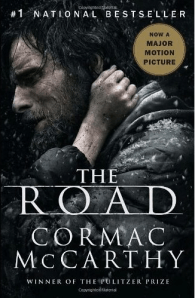
Book and Movie Review: The Road

The RoadTitle: The Road (movie)

Author: Cormac McCarthy

Genre: Literary Sci-Fi Horror

Read: Oct 29-30, 2010

Summary: Evocative.

_

At the suggestion of my friend Peter (in comments on my review of The Passage) I picked up The Road. I’d seen the movie a couple months ago. This novel is a relative oddity, being both literary and Sci-Fi post apocalyptic.

The prose: We have to speak first about the prose. At first, as with other McCarthy books, I found it jaring. He writes long sentences without much punctuation. He uses nouns and adjectives as verbs (like Shakespeare). For example, “The man glassed the horizon” (meaning he looked with binoculars) or “The white fog paled the trees.” These long sentences are interrupted with short burps in counterpoint. The dialog, what littler there is, has no quotations (remember he doesn’t like punctuation), and precious few tags. There’re no chapters, but scene breaks occur with startling rapidity. Many scenes are just description, slashes of images. McCarthy employs vocabulary the likes of “vermiculate,” (covered in worm like lines) or verbs like “hove” (past tense of heave). I found myself needing to use the kindle app’s built in dictionary feature. Still, after 15-20 pages I stopped noticing — well I didn’t stop entirely, but it grew comfortable. This very specific and personal voice is wonderfully evocative. Haunting, and spare, but with elegant and precise use of words and word parings does a good job of sketching the bleak setting. I’m not sure how the casual reader would react, but I certainly appreciate his skill with words. No awkward Stephenie Meyer style constructions here.

The book: Not a whole lot happens in the book. Basically “The man” and “the boy” wander through this post post apocalyptic landscape where nothing but an occasional hostile person moves. The world has burned and been all used up. There is no hope, absolutely none. Not a plant or animal lives. It’s just a matter of delaying the inevitable — perhaps avoiding being eaten by cannibals along the way. This bleakness is well conveyed. Still, I had issues with the overall setup. What the hell would kill EVERYTHING but humans? Every plant, bug, animal, but just leave the people? I don’t know, but we have the same biology as the other animals. I could see everything getting obliterated, or LOTS, but not every single thing but people. That being said, if that did happen, and you waited until really few were left, it might be this bleak. But I’d think that basic items like shoes would be easier to find. With 5 billion less people to wear them, they should be in decent supply. Overall I found it very evocative, and depressing, but there are only two characters, and the dialog felt staccato and stilted. Hard to follow, and not much reason to do so. I’m a plot and character reader first and formost, so I had mixed opinions. I enjoyed reading it, I liked the deft literary sketch work, and the book is the right length (short), but I can’t say that I absolutely loved it.

The movie: I did like the book better than the movie. I’m a Viggo fan (who couldn’t be after Lord of the Rings and Eastern Promises). The boy was very good too (he also stars in Let Me In, and does a great job there too). The film is surprisingly faithful. A few little adjusts, but the only big thing they changed was adding the flashbacks with the man’s wife. There’s one brief one in the book, but it’s more developed in the film. They didn’t need this. The film captures the bleak qualities, but without the energetic prose it’s just grim on grim. I found watching to be almost punishing. The unrelenting hopelessness, the fear of being eaten. It was much scarier than the book, but also harder to stomach. It’s certainly not a fun watch, although very well made.

Book and Movie Review: Twilight

TwilightTitle: Twilight

Author: Stephenie Meyer

Genre: YA Romantic Supernatural

Read: January 2008 and Oct 2010

Summary: Confused.

_

Since I’m such a vampire fan, having seen or read vast untold volumes of the stuff, I thought I should put my formal two-cents in on the strange source material that spawned the Twilight phenomenon.

First the book. I read it before the movie came out. There was a lot of buzz about it already, and I was excited about it. Generally, things that are really popular have a kernel of quality about them, and I love vampires and teen heroines. Buffy the Vampire Slayer is my favorite TV series of all time — I will blog about it one of these days. So I started reading Twilight in the Vegas airport while waiting for a flight. Despite the clunky prose (more on that later) I was actually pretty engaged in a low key way during the first half. Then Edward revealed to Bella that he was a vampire (not that I didn’t know) and the whole thing went to shit. I had to force myself through most of the rest, and the ending left me baffled. “Wait, where’d the fight go?  What about the climax?”

Back to the writing: It’s really clunky. I won’t go into too much detail, this other blogger did. But let me say Meyer is the anti Cormac McCarthy (I’m in the middle of The Road right now). He eschews punctuation, she loves it. Every long improper sentence is peppered with a random assortment of commas and em-dashes. She adores the em-dash, using it in approximately 50% of sentences, and usually not for its proper purpose of offsetting a parenthetical. Maybe she felt she had too many commas (she does), and needed to replace some of them with em-dashes for the hell of it. Oh, and she loves certain words or word combinations, like “cold fingers” and uses them several times a page in places. And she clearly choses random synonyms from the thesaurus without being aware of the connotations of said words. For example: “His expression shifted instantly to chagrin.” Can the word be used that way? I don’t think so. But none of this really matters when reading the book, you adjust and just role with it. I guess if you’re 14 and haven’t read a lot you don’t notice to begin with.

The plot and content: Given what actually happens in the first book, it’s pretty long: 118,000 words. Not much really does happen. We have a LOT of words devoted again and again to how pretty Edward is and how much Bella loves him. This isn’t really SHOWN too much, or justified, but she sure TELLS us about it a lot. But again, the first half was okay. However, once the reveal came in, it gets really silly. Basically they go play this ridiculous baseball game and the Black Eyed Peas (oops, I mean the evil vampires) walk onto the field, sniff Bella, and decide the most important thing in the world is to sink their fangs into her blood. There is no real attempt to sell anything in this plot, to provide any believable reasons, it just happens. You couldn’t possibly have more one dimensional villains — although they do compliment the one dimensional heros nicely. Then my all time biggest gripe, we close in on the unbelievable “final” confrontation of the book and Bella gets knocked unconscious (she is after all the narrator) and we miss the whole thing. It’s told to us by Edward after we know it came out okay so as to minimize tension. I had the feeling that the author didn’t know how to write an action scene, so she just chickened out.

The vampires: Oh my. It’s totally clear (particularly in later books) that Meyer doesn’t do research. This includes even watching a few vampire films or perhaps reading Dracula. Her undead aren’t really vampires, or even undead, except for being immortal and having a taste for blood, and “cold fingers.” They don’t seem dead, or particularly evil. They sparkle in the sun, they apparently have like, oh my God, no real weaknesses. And they’re all really pretty. We hear about that a lot. Let’s not forget their smorgasbord of cool psychic powers like seeing the future, and reading minds. These make hack plot construction really convenient. I actually started my novel a year before even hearing of Twilight, but reading it certainly motivated me to make sure my vampire heavy was a really bad-ass undead in a nasty evil way. He doesn’t sparkle in the sunlight but he will leave your entrails hanging from a tree to make a point — and he certainly wouldn’t ever concern himself to learn current High School vernacular.

Publishing mystery: Twilight had a very aberrant publishing history. As a first time novelist it was picked up by Jodi Reamer of Writers House really quickly. This is a very prestigious agency and that’s very rare. It was then sold quickly to a great publisher for a really huge advance. That Reamer showed interest in it is not what surprises me. There is a mysterious something about the first half of the book — it had potential. But what surprises me is that it was never edited — or if it was I’ve never heard of an editor that lax. The standard length for YA books is more like 50-70k, and there is a LOT of fluff in the book, not to mention the bad grammar and the flaccid ending that would be easy to fix. Having been through rounds and rounds of revision myself, the book was held to none of the standards my editors have exhibited. Of course it turned out to be a great decision for Jodi, but I still don’t understand why it was never edited.

The movie: Catherine Hardwicke directed the first movie. She actually did a really good job with the source material, and I think the movie is actually better than the book. Not exactly great, but better. The casting was excellent, particularly Kristen Stewart who does have a soft charisma, and she’s hot in a non obvious way. If you see her in some of her other films like Adventureland or Speak you realize that she’s actually a very fine young actress in certain roles. Twilight doesn’t provide a lot of room for subtle acting. I myself had casually known Hardwicke from when she did production design for Insomniac’s Disruptor in the mid 90’s (Insomniac was located next to my company Naughty Dog in those days). So I’d noticed when she started directing with Thirteen, which is a depressing but brilliant movie — particularly given what must have been a VERY low budget. Hardwicke brought the same kind of hand-held-documentary style to Twilight, and it worked well to offset the inherent cheese factor of the material. Not totally offset, but the result was somehow watchable. She did a nice job capturing Bella’s POV. This is tricky because in a novel, particularly a first person one like Twilight, so much of the book is dominated by the voice. With a combination of diary style voice over (more-or-less quoted from the book) and a peeping-over-the-shoulder viewpoint (as also used in Thirteen) Hardwicke pulls it off. For some reason, they ditched her with regard to directing the sequels, and the those devolve into further cheesiness. Of course so do the later novels. Can I just say Volturi?

Conclusion: I’m kinda baffled. Twilight isn’t particularly good, or well done, but it does have a certain appeal. However, the overall magnitude of success has left me totally confused. Harry Potter is ludicrously popular, but at its core rest three stunningly good initial books. The first book is really well written, the central premise is very novel and sold with incredible style. Even the ridiculously melodramatic Vampire Dairies is more fun than Twilight. I’m just left scratching my head and hoping the anti-vampire backlash isn’t too bad.

Book Review: Tropic of Night

Tropic of NightTitle: Tropic of Night

Author: Michael Gruber

Genre: Supernatural Horror Thriller

Read: Spring 2010

Summary: Very good.

I read this book both because it was represented by an agent I was interested in and because it loosely fit the ill-defined cross-genre of my own novel: Supernatural thriller with realistic style and magic. In fact, in this book it’s not even 100% clear that the magic is intended to have actually happened — but I like to think it did. There’s a lot of interesting stuff going on here, particularly to my taste. There are three points of view, and not all are as good. One is the female protagonist, a former anthropologist hiding out in Miami from her murderous African shaman ex-husband. The second is the same character, but told in the format of journals written during her field work in Siberia and Africa. And the third is a Miami Cuban-American police detective investigated a series of horrific murders in Miami (perpetrated by the nasty shaman of course). I loved the detective, his investigations of the ritual crime scenes, and the bit of Cubano Miami flavor . The present action protagonist was okay, and the journals were intermittent. When they got into the magic stuff they were good. What I most loved about this book was the creepy and very realistic feel of the mostly Yoruba based shamanistic magic. Overall I enjoyed reading it, but the book could have benefited from some tightening up. The detective investigating this awful ritual crimes was very good too. If you like murder procedurals, and you like creepy well researched voodoo-esque magic, then give this a read.

Book Review: Hex Hall

Hex HallTitle: Hex Hall

Author: Rachel Hawkins

Genre: YA fantasy

Read: Oct 23, 2010

Summary: Fun.

Continuing my unrelenting survey of both supernatural and YA books (together and separate). This is a vaguely Harry Potter-ish tale of a fifteen-year-old witch who ends up in magical reform school. It was surprisingly decent. Not great, not super innovative, but the first person voice was very enjoyable. Occasionally I found myself cringing when the events served the plot in ham handed ways. For example, the protagonist and boy she likes are both sentenced to the same detention — just the two of them. And there are vampires, but they are treated too casually like everything else. Still, it was funny and I enjoyed reading it, I didn’t have to force myself through anything. I plan on buying the sequel. This is actually pretty high praise for a reader as jaded as myself.

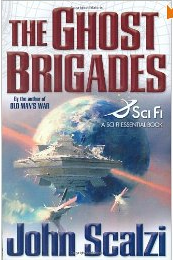
Book Review: The Ghost Brigades

The Ghost BrigadesTitle: The Ghost Brigades

Author: John Scalzi

Genre: Sci-Fi/Space Opera

Read: Oct 27-28 2010

Summary: Great read!

_

Since I enjoyed Old Man’s War so much I jumped right in and pounded this out last night. I might have liked it even better. The characters are a tad less likable than the first book, but there is more plot, and more aliens — remember I like aliens. The book starts off with a great prequel that holds your interest (and I’m not a prequel fan), slaps you with a nicely done twist, and is immediately obvious to the real plot that develops. This involves a Special Forces space marine who is a complete genetic construct. He is born an adult, learning to be a solider and human all at the same time in a frantic computer-in-the-head rush. There is some good Sci-Fi in here, and some really fun aliens, but it doesn’t get in the way of a really fast fun story. I’m very much reminded of a lot of my favorite authors from my High School Sci-Fi reading: Robert Heinlein, David Brin, Larry Niven, etc. but Scalzi‘s books (at least the two I’ve read) don’t feel derivative in any negative way. He maintains a good balance between character, story, action, and Sci-Fi elements without letting any of them overshadow the rest. I’ll read the third book soon.

Book Review: City of War

City of WarTitle: City of War

Author: Neil Russel

Genre: Contemporary Thriller

Read: First week August 2010

Summary: Extremely fun read.

_

I don’t read too many Thrillers without a Horror/Sci-fi/Fantasy/Supernatural element, but I was introduced to the author through a friend of mine and decided to check his book out. I’m glad I did. This is a roller coaster ride I can only describe as Fletch meets James Bond meets The Big Sleep. A billionaire playboy who happens to be ex-special forces happens to rescue a naked (and gorgeous) kidnapping escapee on the freeway, and things snowball into a globe spanning conspiracy of murder, art forgery and more. It’s fast and fun, but what really sells everything is the know-at-all first person voice of the protagonist. The action is often a little over the top, but his snarky attitude makes everything amusing. Perhaps (like Bond and many other action heros) he is a little too good at what he does, too calm under pressure etc. But it doesn’t really matter because he entertains with every paragraph. Great settings and a plot with a few shocking moments and unexpected changes of direction doesn’t hurt either. A director and well cast lead with the talents to capture the voice could turn this into a great action movie.

Book Review: Old Man’s War

Old Man's WarTitle: Old Man’s War

Author: John Scalzi

Genre: Sci-Fi/Space Opera

Read: Oct 26-27 2010

Summary: Top notch fun! If you liked Avatar and want to see how much better a good Sci-Fi novel can be, read this.

_

This novel borrows heavily from classics like Starship Troopers and Forever War, but who cares. It’s great. A flawlessly breathless read from start to finish. Basically it’s about a normal (for the year 2200) 75 year old man who volunteers to leave the sheltered Earth, gets upgraded, and is thrown into the maelstrom of interstellar alien combat. It’s action driven, idea driven, AND character driven. Not that the characters are painted with some kind of world shattering mastery, but they’re good, and likable. The atmosphere and action are all great. I also enjoyed seeing aliens again in my Sci-Fi. By that, I mean weird and tentacled out hostile aliens. I like my aliens alien.

There are also a lot of good newer Sci-Fi ideas packed into the book, plus a healthy dose of classic 60’s-80’s ones that have been nicely updated. I have a few little bones to pick with the author’s vision of the future. Particularly on Earth where things seem to have barely changed. Hell, there are even magazines in a waiting room. We won’t have magazines 20 years from now. In addition, the alien planets seemed to too often have the coincidental breathable atmosphere. This is common across Sci-Fi but always bugs me. The space marines have combat suits, it could just mention the suit dealing with the issue. And several of the aliens liked to eat humans. Now I liked the gruesome touch, but the reality is that alien biology would be way too different. The odds of them having the same amino acids, salts, etc as life on Earth are astronomical. But as I said, I liked Scalzi’s aliens, particularly the weird militant advanced religious nut warrior bugs.

But still, these complaints are just nitpicks. I loved the book. I downloaded the next two sequels already (via Kindle to my iPad). Enough said.

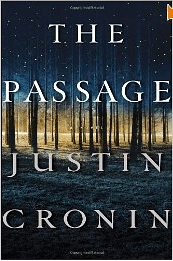
Book Review: The Passage

The PassageTitle: The Passage

Author: Justin Cronin

Genre: Sci-Fi/Horror

Read: Late June 2010

Summary: Excellent.

Nne of this year’s top new vampire entries. It’s an odd book, long, and broken into three parts, but good. The first third is set more or less in the present and deals with how a viral epidemic that turns people into nearly indestructible vampire-like creatures gets loose and destroys the world. The writing is good and this section is a bit of an oddity in that the plot itself is minimal, but padded out with almost gratuitous backstory on nearly every character. Bit players that we meet in the gas station for one page get five pages of life story flashback. All these people, lovingly details, die quickly. Oddly, it works and is a compelling read. However, it makes me scratch my head as all the standard writing advice I’ve been given by editors, agents, and the like would’ve been to cut all these backstories. In fact, they certainly would’ve told me that the entire first third of the book is backstory, and the proper place to start was far later. At a certain level they are correct, because there is only one character — and an odd one at that — who crosses from this long prelude into the main two thirds of the novel.

The middle third of the book takes place 100 years later and totally kicks ass. This was some of the best Sci-fi/horror I’ve read in years. It’s post apocalyptic, taking place in this one compound somewhere in the California desert. They are under continual siege by vampires, and their numbers are dwindling. Their entire life and society is organized around survival, but slow attrition of their numbers is the only thing in their future. The Road Warrior meets I-don’t-know-what feel of this section is awesome. Cronin does a fantastic job of world building here, and the specific animalistic vampires (a bit reminiscent of I am Legend) is great. In some way’s it feels more like a Zombie apocalypse because it has that feeling of instant-death-at-any-second.

In part three, these same characters are forced out of their little sanctuary into the big bad world. This part is still good, but does a little shark jumping and borrows very heavily from things like the Stand, etc. I didn’t mind, but the ending felt a little forced and just didn’t quiet sustain the promise of the amazing middle section.

Still, the overall novel was excellent. Flawed, but the middle part was so great, and the first and third sections enjoyable enough, to make it one of the better books I’ve read in a while.

Book Review: Personal Demons

Personal DemonsTitle: Personal Demons

Author: Lisa Desrochers

Genre: YA supernatural romance

Read: Oct 20 2010

Summary: Detested it.

The premise of this book is that a demon and an angel are both vying for the love (and soul) of the same high school girl. This I don’t mind. The execution however…  Let us start with voice and character. The book is told in staccato alternating first person from the girl and the demon’s POVs. The girl is written in currently-in-vogue snarky-boy-crazy voice which is frankly repulsive and (hopefully) not even accurate in all but the most brainless products of mass media consumption. All she can think about is that whichever guy is in front of her looks hot in his jeans. The demon was less annoying but even more ridiculous. He’s supposed to be a 4000 year-old denizen of Hell out to corrupt the souls of the innocent and he comes off like a self involved High Schooler. At no point does he actually BEHAVE in any way particularly evil. He shows no particular long term perspective, but instead just has the hots for the girl. There is no real thought about what it might mean for God and the Devil to actually  meaningfully over someone’s heart, or even what it means to be a good or evil person. The good vs. bad is couched in terms of which boy the girl sleeps with. The high level premise is fine, but the book as written just makes no sense except on the most superficial level, and most importantly the characters are cardboard cutouts serving only the voice and premise — so who cares about them. This makes Twilight seem a work of art, and is exactly the kind of pseudo-religious story that I wrote my novel in counterpoint to.