So you want to be a video game programmer? – part 4 – School

…CONTINUED from PART 3. Or start at Part 1.

There are two basic approaches: home training and school. Personally I’d recommend both.

Let’s talk school. In my day (1980s) pre-collegiate computer classes barely existed, and if they did they were mostly about Pascal programming and data-structures. They often used p-System pascal, an old-school predecessor to Java!

College Computer Science programs followed (and I imagine they still do) a traditional regimen of stuff like Algorithms, Data-structures, Architecture, Compilers, AI, Theory of Computation etc. They rarely taught or emphasized programming itself. Personally, while I have this training myself (several years at the M.I.T. AI Lab working toward my PhD) I got it long after teaching myself to program and after having 5 published video games on the market.

What I was taught at M.I.T. (1992-94) was way too theoretical to make a good starting place for a young programmer. Don’t get me wrong, I learned a tremendous amount there and it really upped my game. But it was best digested in light of several years practical experience. So I don’t personally think that traditional CS is the way to start. But if you are really serious about computers it is a very solid choice for your higher education. You just need to be ready for it.

And here is the dirty secret about the University Education system: It’s made up of classes. Yep. Your four (or more) year educational experience will just be the summation of eight semesters worth of classes, usually 4-5 per semester. The exact order of these, which topics, and how they are taught will be at the whim of all sorts of varied factors. For example: scheduling, major and general requirements, teacher sabbaticals, friends, personal choice, etc. The school itself will have broad requirements (like you must have 3 science and 2 history classes). You major/department will have more specific ones (like requires 14 classes in the major, with 7 out of the 10 “core” classes — as defined by the department). So everyone’s education is different. That can be a good thing, but it’s less coherent.

And even within a particular class type, like say: Computer Architecture, the classes vary wildly and are rarely designed to work with each other or be taken in a particular order. The school and department might have determined that it should have a Computer Architecture class, but each teacher is free (somewhat) to determine the specific content and style of his or her class. Teachers vary wildly in teaching ability. I mean WILDLY! Even at the best schools. In fact, the teaching quality at M.I.T. was considerably lower than at my undergraduate school, Haverford College. It’s not that the M.I.T. professors weren’t as smart — they were plenty brilliant — but they leaned more toward being famous researchers while Haverford selected people who excelled first and foremost at undergraduate education.

In any case, even within a particular major, say Computer Science, the slate of courses you take might not form a coherent picture. There isn’t much effort made to ensure this. It’s more like, “we need a Compilers course, who wants to teach it?” and then that professor goes off and builds their plan. I’m sure there are constraints and feedback, but it being part of a single coherent program doesn’t seem to be one of them. And teacher style so heavily influences the experience. Now, don’t get me wrong, many of these courses are really good. But they require that you, the student, do a lot of the work integrating the bigger picture. Which really, for first rate minds trying to absorb advanced modalities of thought, is totally fine. It’s just not exactly the same as learning a complex practical field like programming.

But let me speak briefly about the classic topics:

Theory of Computation – Is the cool (but highly esoteric) field of math that endeavors to prove things about what can and not be computed. It includes a lot of discussions about theoretical computers like the Turing Machine and what sorts of computational problems are equivalently complex. This is actually very useful, but only if you have already encountered practical programming tasks. Otherwise it will probably just confuse the bejesus out of you.
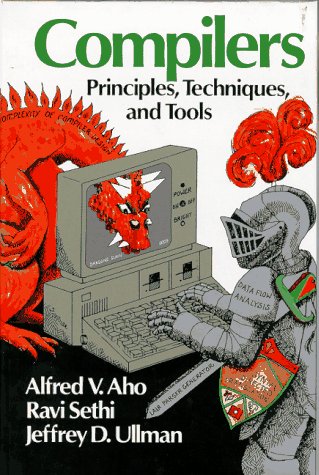
Compilers – Is about writing compilers, and how computational semantics are transformed. This is bordering on totally useless for the novice programmer. I myself found it fascinating, but I wrote several compilers. Again, you want to study this several years into your career.

Algorithms – Is the formal study of different methods of problem solving. This is where stuff like the difference between a bubble and an insertion sort goes. Every programmer should know the basic algorithms, but you can read a beginning book fairly early in the learning process and pickup the basics. The college version is much more rigorous. But in the early stages you can lean on libraries which encapsulate these solutions.

Data-structures – These relate closely to Algorithms, but are methods for actually storing data in computers. Different data-structures lend themselves better to different algorithms. The mistake made by a purely academic approach is in thinking that they make a lot of sense without some practical knowledge of the kind of things that you do in normal computing. Still, Algorithms and Data-structures are essential at all levels of programming beyond the totally trivial, and these are the most practical of the classic topics.

AI (Artificial Intelligence) – Can be extremely useful to the game programmer. Games, after all, need enemies that appear intelligent, and in addition have to solve all sorts of big computational problems which use AI techniques (like moving the camera around etc.). But as taught in school it’s pretty theoretical and you need at least a couple years of practical skills first.
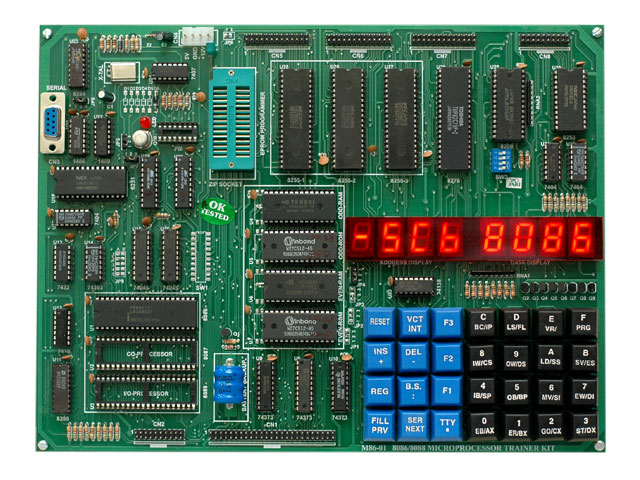
Architecture – Is the study of computer hardware, usually micro-processors. A lot of people hate this topic, not being hardware guys. And although you can learn this anytime, you really should. It’s impossible to be a truly great programmer without knowing something about the hardware that makes it all happen. If you are into compilers, this is even more true. I personally loved these classes.

I also want to mention the subject of Programming Languages. Most schools rightfully view the choice of specific programming language as fairly “academic” (or not actually). In the above classes advanced CS guys learn that all normal computer languages are “Turing Complete” and therefore equivalent to each other. Any program in one could be converted to a program in another by automated means (this is what compilers do). Languages all have the same basic features. And if it’s missing one you can write the feature within itself. So who cares which one you use?

This makes a certain academic sense, but in practice, the choice of programming language is vital. And the budding programmer should be introduced to a wide variety of them at a steady yet-not-overwhelming pace so that they learn the fundamentals common to all and do not become one of those lame-ass programmers who are afraid to learn a new programming language. I can be programming in any new language in one day, proficient in a week, expert in a month, master in six. It’s just not that hard.

Schools often have a particular language that they favor. These days it might be Java. In my era it was either Pascal or C. For many schools it’s still probably C/C++. At M.I.T. it was Scheme/Common Lisp! But often professors are also free to just teach a class in a different language. I had an undergraduate AI class all in Prolog. For the gifted student this is a good thing, having a whole class in a new language, as it’s a decent enough emersion to actually learn a new mode of thought (the Prolog class substantially improved my programming even though I’ve not used Prolog since). But also some professors will try the new language for each assignment approach, which is retarded, as there isn’t enough time or depth to master anything, and so the whole assignment becomes about learning the minimum information needed to get it done. The net net is that there is rarely a coherent plan to get you programming and then to have you learn a wide range of practical languages. In said plan, you might start learning with an easier interpreted language like Python, then be taught to master four or five others that are both practical and varied (say C/C++, Java, Javascript, at least one assembly, a “fancy” or two like Ruby/LISP/Scheme/Prolog/Smalltalk etc.) That doesn’t usually happen. You might get lots of Java and a smattering of 10 others.

College professors also don’t usually think that classes that directly and specifically teach programming languages and practical programming are very cool. There is no research or terribly theoretical aspect to them. I.e. the subject isn’t very academic. They are rarely themselves very good programmers (if they were, they’d be off working for Google or whatnot 🙂 but seriously the personality type for “programmer” and “professor” are different — albeit both bookish). This leads to professors rarely adding this kind of class to the curriculum unless someone makes them.

_

Having heard about all these more practical Gaming majors that colleges now have, but which I know nothing about (they didn’t exist 20 years ago), I asked a friend of mine who just finished her CS degree yesterday! Lauren is a fellow blogger, programmer, WOW fan, and budding game designer-programmer. Big congratulations! Her comments are in blue:

Having just completed my degree yesterday, I can confirm that not as much has changed in Computer Science education as one might expect, especially given the exponential growth of the field. Aside from the specific languages taught, which for me was mainly Java instead of Pascal, the curriculum is much the same. The breadth of languages taught is still very much dependent on what you choose to seek out yourself; were it not for honors opportunities or research, I never would have become as familiar as I am with functional programming or the MVC architecture.

After the first two years, programming takes a back seat to theory; upper division classes, while useful and offering a degree of specialization, can be light on actual coding. There are still opportunities to improve your skills, though. Project classes, at least at my school, offer a chance to really show your programming chops, so to speak; with the exception of one I personally considered, all required the completion of extensive coding projects in ten weeks or less to the exclusion of lecture material.

The biggest factor that affected the quality and extent of the education I received was the professors. Sometimes, you will get a truly horrible lecturer, someone who isn’t fair or just doesn’t care. For me, this happened more often than not. The best advice I can give is: Be able to teach yourself. To be honest, I didn’t bother attending classes where the professor was incapable of teaching — I don’t want to waste my time. I went home and read the textbook, or taught myself using tutorials or information online.

“Bad” classes will happen, and the most important thing I learned in college, or even before, is that you need to take active control over your education. Even if the teacher sucks, you can’t blame a failing grade on him; you have the power to learn the material and should do so to the best of your ability. This isn’t to say that poor professor performance doesn’t raise my hackles (it does, a lot), just that self-directed learning is a necessity for succeeding as a student and a programmer, especially since the number of future employers that will accept “The teacher sucked!” as an excuse for a failing grade must be pretty small.

Even if you’re taking the so-called “structured” or “formal” education path, no one will hold your hand. You need to look out for yourself, and find opportunities to broaden your knowledge. I learned firsthand that often these opportunities will not be supplied to you, or even pointed out. You need to be responsible for your own education, especially at large universities. Self-directed study and college are not mutually exclusive.

In that spirit, in addition to my CS degree, I also took a Concentration in Game Culture and Design. This was an interdisciplinary program in conjunction with the art school which, did add a nice game “focus” to my studies. I think these types of programs can be helpful, though to say this improved my coding skills would be more than a stretch. Mostly, it gave me a bit more insight into the game pipeline, and the scale of the work that goes into making a game. I’ve gained some skills which I otherwise wouldn’t have been exposed to; for instance, I’m now comfortable finding my way around game design docs and I’ve had practice giving pitches.

While not a value traditionally espoused as part of a CS education, some gaming or art courses can help your creativity. I can’t speak for the more technical games programs out there, I think there is merit in learning a bit about the industry even prior to leaving school.

This fresher opinion confirmed my belief that no school can be as rigorous as GOOD self training like I gave myself, and under no circumstances should you want until you’re 18 (unless you already are!).

The basic message: Start as early as you can, preferable at age 8-12.

Given that college is roughly age 18-22, and adds a lot of value an education begun at home, it can actually dovetail perfectly with said self education. This will be the topic of a later post in this series.

CONTINUED HERE with The Method!

_

Parts of this series are: [WhyThe SpecsGetting Started, School, Method]

Subscribe to the blog (on the right), or follow me at:

Andy:  or blog

Read more from guest blogger Lauren here.

Or more posts on video gaming here.

And what I’m up to now here.

So you want to be a video game programmer? – part 3 – Getting Started

…CONTINUED from PART 2. Or start at Part 1.

Some kid is always asking me, “I love video games, how do I learn to program them?”

First of all, a warning. Reaching the skill level to be a professional video games programmer takes years. There are no shortcuts. You can not possibly go from nothing to professional grade skills in less than perhaps 2-3 years — and for that you’d have to be an uber-genius — usually it takes 5-10.

The good news is that you can start very young (8-10 — I started at 10) and you can do it on your own with common equipment and readily available information.

There are two basic approaches: home training and school. And while I personally recommend both, I’m going to use this post to give my own “origin story.” In followups we can apply these lessons to the present (programming itself hasn’t changed all that much in 30 years — there are just more libraries).

[ BTW, if you’re new to the blog and wondering who the hell I am in this context, click ]

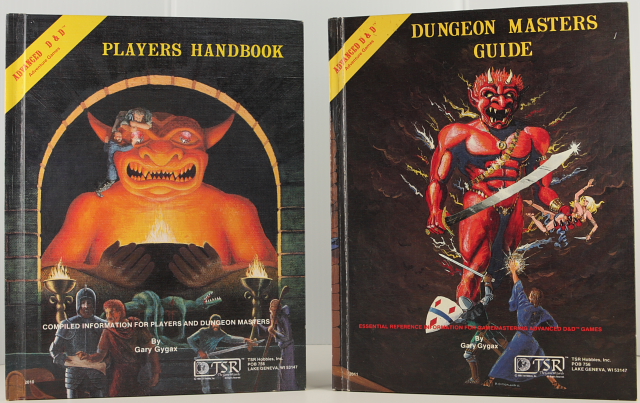
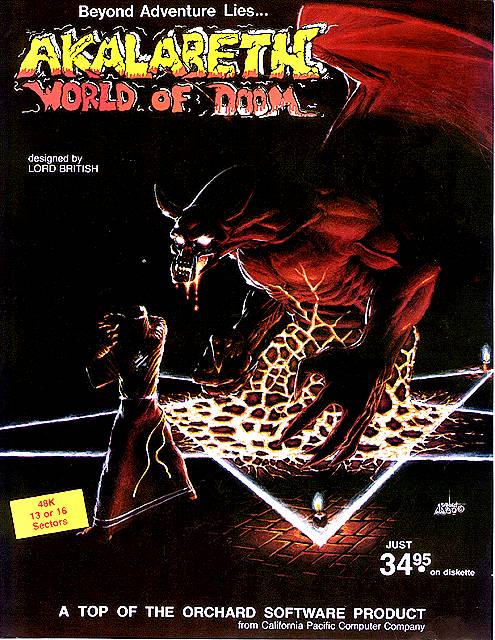
Rewind to 1979. Some of my favorite things in the world were Dungeons and Dragons and arcade games. I was really too young to actually play D&D accurately, but I loved reading the books and modules (besides my regular diet of fantasy novels). I went to the Apple Store (not actually owned by Apple or nearly as glamourous as they are today — in fact, the owner resembled Gandalf) and saw the game Akalabeth running on an Apple II (not a + or an e, but an old school II). Boy did that set me to dreaming!

Then in 1980 my science teacher brought into class a Heathkit H8 her husband built (yes built). This early computer ran a lousy version of BASIC and possesed the world’s worst storage device: the audio tape drive. Actually punch cards were worse, but with the tape drive, saving your program bordered on impossible (at least for the sharing audio tapes with the rest of the class) and so you had to type it in repeatedly. We were given a single mimeographed sheet of paper with the BASIC commands. I read this a couple times and then wrote out longhand the first draft of a text-based RPG where you wandered around and fought orcs and trolls for gold and tretchure (this is how I spelled treasure at 10). During lunch I typed in and debugged the game, editing my paper copy as needed. I used my friends as beta-testers. It may seem overly ambitious to try and recreate D&D as one’s first program, but it illustrates the programmer principle of: program what you love.

Then my best friend got himself a brand new Apple II+ (just released). This was a slick update of the Apple II. It had a whole 48k, came with BASIC, and was often (but not always) accompanied by a 143k floppy disk drive! Low low price of $900 just for the floppy drive! In any case, the II+ was so much more awesome than the Heathkit. It even had graphics!

So I began pestering my father for an Apple. This took 9-10 months of continuous harassment — the machine was expensive — and all sorts of creative techniques to convince him. I offered to mow the lawn for free. I explained how various accounting software would make balancing his checkbook a breeze, etc. Once I was victorious (Jan 1981) we got the accounting software, but he never used it, leaving me to my own devices on the machine. And I think I kept getting paid for the lawn. Still, this episode illustrates another important programmer principle: persistence.

After the Apple arrived, I spent nearly all of my free time (perhaps 6-8 hours a day) on the thing for years. This is essential. You must offer up blood onto the alter of the programming gods. Principle: sacrifice. I used this time in many ways. I played a lot of games. I used every piece of software. I taught myself to program. I hacked. Principle: market research. But I couldn’t afford as many games as I wanted and in those early years the available library was small, so I was always trying to make my own.

I wrote totally lame versions of nearly every arcade game ever made. In BASIC at first (we’ll get to the issue of environment later). I would generally spend a day or three banging these out until they were marginally playable and then move on to new projects. Lesson here: practice. I chose more and more ambitious games and would use each one to teach me something new. I did this in incremental steps, mostly 1-2 day projects. By way of example, I might upgrade something or I might add a load/save system (requiring learning about I/O). My early games didn’t have much in the way of collision, later ones did. I started with text, then moved up to lores graphics, then highres, then shape tables, then bits of assembly language subroutines for blitting. Principle here: baby steps.

Baby steps are incredibly important. You can’t learn everything there is to know in computers in one shot. Each little area takes multiple projects and days — at least — to learn and master. Take file I/O. I’m sure I got something up and going the first day or two back in the early 80s when I decided to add a load/save system, but I was still learning about file I/O 25 years later on Jak 3 (of course then I was inventing new ways of doing stream I/O, but it was learning nonetheless). Your first pass might work, but often you barely understand any of the principles involved.

You have to start simple, build up blocks, and go from there. That’s why interpreted languages and text programs are a good way to begin. You need to learn about variables, scope, and flow of control before you can jump into 3D graphics. And forget about complex unforgiving environments like C/C++ or assembly to begin with. Those come later and are just one more thing to spend a series of baby steps on. Just learning about makefiles or projects and compile options could stop a novice dead. So don’t — yet. Each task (and thing to learn) should be broken into some chunk that only takes a couple days at most to digest — or at least make some headway on. This leads to a virtuous feedback loop of progress and learning.

I kept writing those lame little games for about 3 years (100s of them). Of all my friends with computers (we all programmed in that era because computers didn’t do much if you didn’t program) my games were the coolest. I used them to invent all sorts of excuses to develop new skills. I wanted to learn about interpreters so I made an engine to allow the creation of text adventure games using a custom scripting language. Once I got this going I upgraded it to graphic adventures, which proved to be a perfect excuse to implement an idea I had seen in the Sierra games where line drawing and fill commands were used to compress images to a fraction of their raw size. On the Apple II a raw graphics screen was 8k. So a floppy only fit 17. A normal compressor (ancestor of zip) might squeeze this to 3-4k but that is still only 30-35 images. This “save the drawing commands” style made them a fraction of that. But for it to work I not only had to create the “renderer” (including an assembly fill routine) but I also a whole “paint program” to allow the recording/creation of these proprietary images.

However, each of these sub-steps resulted in satisfying progress on its own. Principle: chunking. For example that fill routine. It took several days, and my mastery of recursion in assembly wasn’t the best so it left little corners unfilled, but it was cool in of itself. My first fill routine (in BASIC) took 5 minutes to do a fill, and the assembly one only a second or two. Plus, I was to keep using it in all sorts of programs for years (with improvements). Principle: reuse. Building on the tools you make is essential to programming.

In 1982, I met Jason Rubin. He also programmed. He was an amazing (by the standards of the time and our age) artist and his games LOOKED REALLY COOL. But they crashed a lot. Mine rarely did. From the beginning I hated crashing. Still can’t tolerate it. I have trouble leaving the keyboard if a crash bug is still outstanding. Principle: perfectionism. My programs also did much cooler “programming” stuff. They just didn’t look cool. When we combined our talents, things really took off! Our games now looked cool AND ran decently. Impressive stuff. Lesson: partnership. Not everyone can be good at every aspect of computers. Nor even of programming itself.

CONTINUED with Part 4 – School!

_

Parts of this series are: [WhyThe Specs, Getting Started, School, Method]

Subscribe to the blog (on the right), or follow me at:

Andy:  or blog

Or more posts on video gaming here.

And what I’m up to now here.

So you want to be a video game programmer? – part 1 – Why

This post is a sequel of sorts to my How do I get a job designing video games. The good new is — if you’re a programmer — that nearly all video game companies are hiring programmers at all times. Demand is never satisfied. And the salaries are very very competitive.

The bad news is that it takes a hell of a lot of work to both be and become a great game programmer. Or maybe that isn’t such bad news, because you absolutely love programming, computers, and video games, right? If not, stop and do not goto 20.

I’m breaking this topic into a number of sub-posts. Although this is the intro, it was posted a day after the second, number 2, on types of game programmers, but I’m backing up and inserting this new number 1 (I’m a programmer, I know how to insert). Other posts will follow on topics like “how to get started” and “the interview.”

_

So why would you want to be a video game programmer?

Let’s start with why you might want to be a programmer:

1. Sorcery. First and foremost, being a programmer is like being a wizard. I always wanted to be a wizard. Given that magic (as in the D&D variety) doesn’t seem to be real (damn!) programming is the next best thing. Computers are everywhere. They’re big, complex, and all sorts of cool everyday devices (like iPhones, set-top boxes, cars, and microwaves) are really basically computers — or at least the brains of them are. 99.9% of people have no idea how this technology works. As the late great Author C. Clarke said, “any sufficiently advanced technology is indistinguishable from magic.” Yay computers! If you actually know the arcane rituals, incantations, and spells to controls these dark powers then you are… drum roll please… a wizard.

2. Career security. Computers are the foundation of the 21st century economy. Nearly every new business is based on them. Knowing the above incantations is secret sauce. All the growth is in high tech (product possibility frontier and all that). Hiring is supply and demand too. The demand is for programmers and other high tech specialists.

3. Even more career security. Programming is hard. It requires a big New Cortex style brain. This means lots of people can’t do it. It takes years of study and practice. I’ve been programming for 30 years and there is still an infinite amount for me to learn. Awesome!

4. It’s a rush. Creating stuff is a rush. Making the infernal machine bend to your warlocky will is a huge thrill. It never gets boring and there is always more to learn (related to #3).

5. It pays really well. This is related to #2 and #3. People need programmers and they can’t get enough, so they have to pay competitively for them. Even in the late 90s early 00s at Naughty Dog it was very rare for us to start ANY programmer at less than $100,000, even ones right out of school. Good ones made a lot more. And if you’re a total kick-ass grand master wizard (nerd) like Bill Gates or Mark Zuckerberg you can even start your own company and make billions. Take that you muscle bound warriors!

6. Solo contributions. You like spending time with machines and find all day dealing with illogical humans at least partially tedious. Sorry to say it, but even though most professional programming is done in teams a lot of time is spent at the keyboard. For some of us, this ain’t a bad thing.

7. Socialization. You need an excuse to hang out with others. On the flip side, because of this team thing you’ll be forced to socialize on and off between coding. This socialization will have certain structural support. This is convenient for the would-be wizard, master of demons but terrifying forces, but afraid of starting conversations.

So why would you want to be a video game programmer specifically?

8. Video game programming is really hard. Probably the hardest of the hard. It combines cutting edge graphics, effects, the latest hardware, artistic constraints, tons of competition, very little memory, and all sorts of difficult goodies. The really serious wizards apply here.

9. Other types. Video game teams have artists, musicians, and designers on them too. Lots of tech jobs don’t (although they sometimes have those pesky marking folks). Artists etc are cool. They know how to draw or compose cool stuff which makes your code look and sound much cooler.

10. Consumer driven. If you make it to work on a professional game they often sell lots of copies and people will have heard of what you do. This is much much cooler than saying “I worked on the backend payment scheme of the Bank of America ATM.” It’s so cool that it might even get you laid — which is an important concern for bookish wizards of both genders.

11. It’s visual. Seeing your creations move about the screen and spatter into bloody bits is way more exciting than that green text on the bank ATM. Talented artists and sound designers will come to you with said bloody bits and all sorts of squishy sounds which will make your coding look 1000x more cool than it would by itself. If you aren’t into bloody bits than you can work on a game where enemies explode into little cartoon rings. It’s all cool.

12. It’s creative. For me, I have to create worlds and characters. I’ve been doing so my whole life. Right now I’m not even programming but I’m writing novels, which is also about creating. Programming in general is pretty creative, but game programming is probably the most so.

13. Love. You love video games so much that working on them 100+ hours a week seems like far less of a chore than any other job you can think of!

I’m sure there are more reasons, but the above seem pretty damn compelling.

CONTINUED HERE with Part 2: “The Specs”

_

Parts of this series are: [Why, The Specs, Getting Started, School, Method]

Subscribe to the blog (on the right), or follow me at:

Andy:  or blog

Or more posts on video gaming here.

And what I’m up to now here.

So you want to be a video game programmer? – part 2 – Specs

…CONTINUED FROM PART 1.

There are a couple of broad categories of programmers working on video game teams. If programmer is your player class, then the following types are your spec. Programmers are all warlocks and mages so instead of “demonology” or “frost” you can choose from below. (NOTE: if you don’t get this joke, you don’t play enough video games) This is the real world however, and many programmers dual (or even triple) spec — i.e. they handle multiple specialties.

1. Gameplay programmer. Programs enemies, characters, interfaces, gameplay setups etc. Probably also does things like AI and collision detection. These programmers are sometimes a little less hardcore technical than some of the other types, but this is the sub-field where the most “art” and experience are often required. Learning how to make a character’s control feel good is not something you can read about in Knuth. It takes the right kind of creative personality and a lot of trial and error. In a lot of ways, this is the heart and soul of game programming, the spec that truly differentiates us from the more engineering programming disciplines.

2. Tools programmer. Works on the extensive tools pipeline that all games have. This is the only branch of game programming where you don’t absolutely have to know and breathe video games inside and out, and it’s a little closer to mainstream applications programming. That being said, life at most video game companies is so intense, you better love them. Tools programmers tend to be very good at practical algorithms, data processing, etc. For some reason, perhaps because it’s more “behind the scenes” this spec is often viewed as less glamourous and there are fewer programmers who want to go into it.

3. Sound programmer. A very specific niche. Here you have to not only know how to program well, but you have to care about the esoteric field of sound. You need the kind of ear that can tell if there is a one sample glitch in some audio loop, and you need to care if the 3D audio spatialization is off or the sound field isn’t balanced. This is often a fairly low level area as audio programming is often done on DSPs.

4. Collision programmer. This is a really specific spec, and often overlaps with Graphics because it involves totally intense amounts of math. You better have taken BC calculus in tenth grade and thought “diffy-q” was the coolest class ever if you want to go into this.

5. Network programmer. In this era of multiplayer and networked gaming there’s a lot of networking going on. And programming across the internet is a bit of a specialty of it’s own. In general, video game programming takes any sub-field of programming to it’s most extreme, pushing the bleeding limits, and networking is no exception. Games often use hairy UDP and peer-to-peer custom protocols where every last bit counts and the slightest packet loss can make for a terrible game experience. If this is your thing, you better know every last nuance of the TCP/IP protocol and be able to read raw packet dumps.

6. Graphics programmer. Some guys really dig graphics and are phenomenal at math. If you don’t shit 4×4 matrices and talk to your mom about shaders, don’t bother. This sub-specialty is often very low-level as graphics programming often involves a lot of optimization. It may involve coming up with a cool new way of environment mapping, some method of packing more vertices through the pipeline, or better smoothing of the quaternions in the character joints (HINT: involves imaginary math — and if you don’t know that that means the square-root of -1 then this sub-field might not be for you).

7. Engine programmer. For some reason, most wannabe video game programmers hold this up as their goal. They want to have created the latest and greatest video game engine with the coolest graphics. Superstars like Tim Sweeney,John Carmack, and even myself are usually seen as falling in this category. The truth is that superstars do all kinds of programming, and are often distinguished by the fact that we are willing and able to handle any sub-type and tie it all together (see lead below). In my mind engine programmers are jacks-of-all-trades, good at building systems and gluing them together. The top guys often blend with Graphics and Lead below. There’s also tons of stuff like compression (nothing uses compression like games, we’d often have 8-10 different custom compressors in a game), multi-threading, load systems (you think seamless loading like in Jak & Daxter is easy?), process management, etc.

8. Lead programmer. People also dream of being the lead. All the great programmers are/were. This is the hardest spec, and no one ever starts out in it. You need to be able to do any of the other specs, or at least judge what approach is best. You need to be able to roll up your sleeves and dive in and fix crap anywhere in the program. You need to live without sleep (4 hours a night every day for years baby!). You need to be able to squint at the screen and guess where the bug is in others people’s code. You need to know how to glue systems together. You need to be able and willing to trim memory footprints and optimize (no one else wants to do it). In fact, you have to know the entire program, even if it is 5-10 million lines of code, and you have to do all the crap that no one else wants to do. Plus, you often have to manage a bevy of other personalities and waste lots and lots of time in meetings. Still want the glory? Being lead is all about responsibility!

CONTINUED with Part 3: Getting Started

_

Parts of this series are: [Why, The Specs, Getting Started, School, Method]

Subscribe to the blog (on the right), or follow me at:

Andy:  or blog

Or more posts on video gaming here.

And what I’m up to now here.

Old Crash 20 Questions

This is an old Crash Bandicoot 20 questions that used to be on Naughty Dog‘s site a long time ago. I’ve gotten a lot of messages looking for them, so I dug them up, but I haven’t done any editing except for trivial formatting. They are served up “as is.” Additionally, the links in here are ancient and might not work.

_
1) Q: Are you all insane?
A:
Technically…yes.
2) Q: Help! I’m stuck in Crash! Can you give me some help?
A: No. But GameSpot
has a full walkthrough of Crash 2 online. Game Informer
Online also has good ones for Crash 1, 2, and Warped.
Or you can pony up a few more shekels and buy the
hint guides to Crash 1 and Crash 2 from Dimension
Publishing, or the strategy guides to Crash Bandicoot:
Warped and CTR (Crash Team Racing) from Prima. They
are the only ones with pictures of Crash on the cover.
Don’t be taken in by one of the unofficial hack jobs
out there, though. They all have errors. (ed.
note: Links to sites mentioned above were removed
because they are no longer active… sorry, that’s
the web for ya.)
3) Q: In Crash Bandicoot: Warped, what times are needed to earn each relic?
A:
  • “TOAD VILLAGE” sap 1:03:00 gold 0:57:53 plat 0:44:06
  • “UNDER PRESSURE” sap 1:46:00 gold 1:17:93 plat 1:10:50
  • “ORIENT EXPRESS” sap 0:41:00 gold 0:27:80 plat 0:18:10
  • “BONE YARD” sap 1:45:00 gold 1:40:21 plat 1:21:00
  • “MAKIN’ WAVES” sap 1:08:00 gold 0:58:23 plat 0:53:26
  • ——————-
  • “GEE WIZ” sap 1:35:00 gold 1:22:73 plat 1:05:93
  • “HANG’EM HIGH” sap 1:24:00 gold 0:52:66 plat 0:43:80
  • “HOG RIDE” sap 0:45:00 gold 0:41:46 plat 0:35:06
  • “TOMB TIME” sap 1:42:00 gold 1:10:00 plat 0:53:93
  • “MIDNIGHT RUN” sap 0:53:00 gold 0:38:23 plat 0:18:20
  • ——————–
  • “DINO MIGHT!” sap 1:34:00 gold 1:25:76 plat 1:03:00
  • “DEEP TROUBLE” sap 1:47:00 gold 1:25:16 plat 1:18:36
  • “HIGH TIME” sap 2:12:00 gold 1:04:12 plat 0:56:96
  • “ROAD CRASH” sap 1:25:00 gold 1:20:73 plat 1:17:10
  • “DOUBLE HEADER” sap 1:27:00 gold 1:21:16 plat 0:59:43
  • ——————–
  • “SPHYNXINATOR” sap 1:42:00 gold 1:22:66 plat 0:56:70
  • “BYE BYE BLIMPS” sap 1:09:00 gold 0:58:43 plat 0:51:50
  • “TELL NO TALES” sap 1:42:00 gold 1:25:66 plat 1:05:26
  • “FUTURE FRENZY” sap 2:01:00 gold 1:34:00 plat 1:19:66
  • “TOMB WADER” sap 2:44:00 gold 1:45:06 plat 1:24:00
  • ———————
  • “GONE TOMORROW” sap 2:05:00 gold 1:25:60 plat 1:02:13
  • “ORANGE ASPHALT” sap 1:36:00 gold 1:31:30 plat 1:21:80
  • “FLAMING PASSION” sap 1:43:00 gold 1:13:10 plat 0:59:40
  • “MAD BOMBERS” sap 2:08:00 gold 1:55:23 plat 1:38:16
  • “BUG LITE” sap 1:49:00 gold 1:34:86 plat 1:14:93
  • ———————-
  • “SKI CRAZED” sap 1:16:00 gold 0:50:50 plat 0:33:33
  • “AREA 51?” sap 1:53:00 gold 1:49:83 plat 1:44:50
  • “RINGS OF POWER” sap 1:20:00 gold 1:01:46 plat 0:51:76
  • “HOT COCO” sap 1:00:00 gold 0:30:10 plat 0:19:96
  • “EGGIPUS REX” sap 0:55:00 gold 0:50:03 plat 0:44:83
4) Q: (a) What is a Bandicoot?
(b) Why is Crash a Bandicoot?
(c) Why is he named “Crash?”
A:
(a) Crash is a Perameles gunnii, of the order POLYPROTODONTA,
family Peramelidae, commonly known as the Eastern Barred
Bandicoot. He is a marsupial, which means that he is born with a
built in fanny pack. They live in Tasmania, a small island south
of Australia, as well as on the Australian mainland. The
Parameles gunnii is, on average, 320mm from head to rump, and has
a 80mm tail. They weigh about 950g. Crash’s family, on the other
hand, tend to be about a meter tall, orange, walk on their hind
legs, and wear big shoes. They have, therefore, earned a good
living in the Parameles gunnii circus sideshow spinning real fast
and the like.
(b)Because both of his parents were.(c) Because that is the name his parents gave him.
5) Q: We want toys and stuff. When will we get them?
A: Where have you been? A toy company
named Resaurus recently released their second series of Crash Bandicoot
posable action figures! They made the Duke Nukem and Quake toys, so
you know they are good. Other stuff is in the works as well. Check
’em out!
6) Q: (a) Why did you choose to make Crash Bandicoot for the
PlayStation?
(b) Are there plans to port any of the Crash games, or make original Crash games for other systems?
A:
(a) Picking a game system, or “platform”, at the beginning of a
project is like picking horses before a horse race. It is more
of an art than a science. When we began Crash 1, the only 32 bit
systems available were the 3DO and the Atari Jagauar. There were
rumors about the coming PlayStation game console and the Sega
Saturn, and distant rumblings about the N64. It was easy to toss
the 3DO and Jaguar, neither had the power. And the fact that the
N64 wasn’t going to have a CD ROM drive made it ineligible. In
the end, we chose the PlayStation game console because it had the
best mix of power and storage. Based on its worldwide sales,
game players have picked the PlayStaton game console as well.
Looks like we picked the winning horse!
(b) Until recently, PlayStation has been the only system capable of
handling the sophisticated graphics and gameplay of the Crash Bandicoot
games. The Saturn doesn’t have the power. N64 cartridges cannot hold
the data. Also, Crash likes the PlayStation. Naughty Dog has no idea what
Crash’s future holds. We do not control his destiny. You’ll have to ask him.CTR (Crash Team Racing) is our last game working with Crash (and our last title
for the first generation PlayStation). Naughty Dog’s future lies with
completely new characters on PlayStation 2.

7) Q: What are Naughty Dog’s favorite games?
A:
We wish the following games had never come out. They have
killed our productivity:
Goldeneye(N64)Gran Turismo(PlayStation)Command & Conquer (PlayStation & PC)

Tekken 3 (PlayStation)

Mario Kart 64 (N64)

Spyro (PlayStation)

Point Blank (PlayStation)

Beatmania (PlayStation)

Metal Gear Solid (PlayStation)

Banjo & Kazooie (N64)

8 ) Q: What other developers do you respect?
A: We don’t sleep well because we know
that Rare, Miyamoto san, the Gran Turismo team, and the Gex 2 team
are out there. So we’ve hired the lead programmer and lead designers
from the Gex 2 team (Dan
Arey
, Daniel
Chan
, Evan Wells.)
They don’t frighten us anymore. Miyamoto
san
, on the other hand, keeps turning our offers down!
9) Q: Does Dr. Neo Cortex use Rogaine?
A:
Yes, but only on the sides of his head.
10) Q: (a) What is it like to work at Naughty Dog?
(b) Are you hiring?
(c) What is it like to work with Sony?
A:
(a)We don’t know. Nobody here considers what we do to be work.
(b) Check
our job opportunities page
.(c) We don’t know. The people we interact with at Sony are
so good that we don’t have to work at it. Seriously, we just
make the game, they take care of the rest.
11) Q: Naughty Dog created the first software z-buffer for the PlayStation. How did you do it?
A:
Greg coded it. We don’t know how it works. It just does.
12) Q: Where do the Naughty Dog artists come up with their ideas?
A: The Naughty Dog artists are so used
to Crash’s world now that it doesn’t seem like designing, so much
as just making 3D models of a world that already exists. Still, there
is a lot of exploration on paper, as well as on the computer before
the final locations and characters exist. Take a look in our Art
Gallery
for some samples.
13) Q: (a) How many polygons is Crash?
(b) How many frames of animation does he have?
(c) How do you animate him?
A:
(a)532 triangles.
(b) In Crash 2, Crash had over 9000 individual
frames of animation @ 30 frames per second. In Warped,
Crash had around 30,000 frames! We believe this to
be more than any other console game character. If
we are wrong, e-mail usand we will change this answer.(c) We attach motion capture equipment to Crash and ask
him to do the moves we need for the game.
14) Q: What is your favorite food?
A:
The artists like sushi and Chinese, as well as Mexican. The
programmers are on the “flat diet”. We lock them in their room
until they finish a project and only give them whatever food fits
under the door. Pizza – yes. Pancakes – Yes. Hamburgers – Yes,
one layer at a time. Chicken – Yes, but it tastes horrible after
all of the shoving. They are very thristy.
15) Q: Crash doesn’t have any graphic violence. Are you against graphic violence?
A:
No, and if you ask us that question another #$@! time we’ll kick
your @#X* and rip your !@% off! Crash doesn’t need violence.
It’s that simple.
16) Q: How do I become a video game programmer?
A: All of the Naughty Dog programmers
started programming when they were very young. They all had computers
at home, and they would all spend a good deal of time in the basement
doing what was called “hacking”. Some of them took computer-related
courses in High School, but at that time you didn’t need to know that
much about computers to teach the computer lab teacher a thing or
three. Andy got
a post graduate degree in Artificial Intelligence, but one of the
biggest arguments in Artificial Intelligence is whether or not it
even exists. All the Naughty Dog programmers work very hard, keep
long hours, and have the ability to say things that make you confused.
17) Q: What percentage of the PlayStation’s power are you using for each Crash game?
A:
All of it. 110 volts. Exactly what is in your wall socket. But
there is a lot more that we can do with the 110 volts in the
future. Look for the next PlayStation games we work on to look
better and better.
18) Q: Is Crash related to the Tasmanian Devil?
A:
The Tasmanian Devil refuses to do blood tests, so we may never
know.
19) Q: What kind of shoes does Crash Bandicoot wear?
A: Big red ones. Though
if Nike would like to sponsor Crash and start a line
of shoes like “Air Jordans” called “Spin Crashes,”
we are open to offers.
20) Q: Are there only twenty questions?
A:
Yes, so far.
21) Q: I thought there were only 20 questions. Why is there a 21?
A:
Because Naughty Dog is firmly AGAINST antidisestablishmentarianism.
Go look it up.
_

The index of all Crash posts is here.

The Making Crash series: [12345678910, 11, 12]

Subscribe to the blog (on the right), or follow me at:

Andy:  or blog

Also, peek at my novel: The Darkening Dream

or more posts on

GAMES or BOOKS/MOVIES/TV or WRITING or FOOD.

Crash Bandicoot – Interviews “R” us

These are answers (of mine) to a series of interview questions from Russian game site  www.crashbandicoot.ru. They’re a major Russian Crash fan site, hence the bad pun in my title. If you happen to speak Russian, they’ve it here.

The questions are in bold, and my answers in normal.

Crash Bandicoot (series)

Image via Wikipedia

_

There was the soundtrack of Komodo Bros. boss on the CB1 CD. Does it mean you planned to bring this boss to the first game? What the fight was like and why have you dropped this idea?

Time. We ran out of time, plus we already had six bosses. They ended up in Crash 2. The Crash 1 battle plan was about 30% larger than the game we shipped – which was plenty big enough – as we planned too much. Everything extra ended up in Crash 2. But we didn’t actually make it during the Crash 1 development, we realized before then that there was too much in the plan and shelved it for later. It takes much less time to write on paper, “cool snow level where crash can slide around on the ice” than it does to design, model, and program said level.

Why the cut levels from CB1 beta like Cavern, Cliff and Waterfall haven’t reached its finish point in the final version of the game? According to the video they were well developed.

These were two early levels. The Cliff and Waterfall are the same level (jungle1). The cave was (cave2). These were the first two levels we built in Spring 1995, and they just didn’t work. The designs were too open, showing too many polygons and not channeling the player well enough for proper gameplay. If the space was so big that Crash could just walk around the enemies it wasn’t very fun.

There is the screenshot on crashmania where you can see the fruit similiar to pineapple instead of wumpa. Is it right and was it planned to add different fruits to the game?

Originally (for over a year in development) we had an elaborate fruit currency for pickups. Different fruit were worth different “points.” The only problem with this was that we only had so much texture memory and so each fruit got very little, and didn’t look that great. We eventually decided to spent all that memory on one fruit (the Wumpa fruit) and make it look really good. We rendered it out rotating and stored all the angles. Doing the fruit in actual 3D wasn’t feasible because fruit are round (hence lots of polygons) and we wanted to have many of them on screen.

What the bosses’ heads of Pinstripe, Koala Kong and Papu were for in the bonus rounds in the early version of the game?

We experimented with different “bonus head” currencies. I can’t remember which. In the end Tawna, Cortex, and Brio won out.

What the famous platform with plants from the level Air Crash (CB2) was for? Lots of players used to think it could take you to some secret place however there was the published video where Crash stayed on the platform and nothing happened.

That is just a video of some uncompleted area in some unfinished version of the game (say for a tradeshow). It was under construction and was never intended to be seen. Under construction levels can display any kind of whacky behavior.

The returning characters of Crash Tag Team Rac...

Image via Wikipedia

Why Nitros Oxide wasn’t brought to playable characters in CTR?

We only had room for so many, and the consensus (particularly of the Japanese) was that the cute characters were better choices (like the polar bear cub).

Is it true that there was a secret character called Hippo in the beta of CTR? Why weren’t all the characters from original trilogy included? It’d been nice to see Koala Kong and Nitrus Brio there.

Time and space. Each character was a lot of work and took up a lot of memory. I don’t remember the hippo though.

Why did you choose Mutato Muzika as the music composer to the all games of Crash Bandicoot?

We auditioned a number of composers to give us sample music for the game. Theirs was the coolest. And we were in a hurry J. But it worked out great!

Why CB1 takes all space on CD while CB takes only 1/3 of disk space? It’d be nice to see CB2 on mini-CD.

There is a huge fake file on the CB1 CD (the data.wad) which the game doesn’t care about. The file is full of random numbers and it was there to fill out the disk. The reason for this was twofold. First of all, the outside of the CD is faster, so by putting the useless file on the inside the game would be pushed to the outside. Second, we thought that pirates would be irritated by and less likely to download a 650meg game than a 150meg game. Less pirate copies is a good thing when you make games for a living.

Why have you deleted your official site of Crash Bandicoot on http://www.naughtydog.com? I’d like to read 20 questions and answers for Crash Bandicoot one more time.

I don’t control or influence www.naughtydog.com in any way, and haven’t since 2004.

What do you think about the bug which allows player to take the red gem in CB2 in an alternative way, not through the secret warproom?

I don’t 🙂 But it’s just a bug. In 1996 it would have pissed me off (mildly), now I shrug and smile.

Why do Brio and Cortex quarrel so that Brio looks for the way of destroying Cortex Spaceship in CB2?

Brio turned out to be surprisingly sympathetic (because Cortex picks on him) so we thought it would be amusing to develop that a bit. The Crash series, however, is not exactly The English Patient in terms of character depth.

It is very interesting what was planned to develop and what plans of that came true in CB2 and CB3?

For Crash 1 we had this huge three-part Island and all sorts of ideas for different areas and levels. Crash 2 was to a large extent those that didn’t make it in the first game plus lots of extra cool ideas we had. There was more time for new mechanics like the surf board, zero-G, sliding on the ice, etc. For Crash 3 we needed something a bit different and came up with the time travel idea (mine!). But truth is that we all loved that idea, and both Jason and I adore time travel. My second novel is about time travel! So the idea naturally led to putting in favorite times and places as levels for Crash 3.

Have you ever regretted of selling the rights of Crash Bandicoot franchise to another company? If there was a chance would you like to return on developing this franchise?

It made sense at the time, but I love Crash. Of all my creations it’s still my favorite and it’s sad to see him drop to his current lows. As Jason puts it, like discovering that your sweet High School girlfriend is now a street walker in Atlantic City.

_

Why did you call your company just “Naughty Dog”?

We liked dogs. Plus Jason was always drawing these cool cartoon characters (in the mid 80s) and one of them was “The Naughty Dog” a studly 80s shades wearing dog who always got the chicks. So he became the mascot and source of the name.

Why Crash Bandicoot and Jak franchises are so similiar? I mean it includes the way of games (1, 2, 3 and racing). The first game of Jak is very similiar to CB1, the attack of Jak is like Crash’s one, we are destroying the crates and so more. Dammit, you can also see the Plant from CB1 in the beginning of the game?

The same people made them. Sometimes you like your own ideas 🙂 Certainly there is plenty new stuff in Jak.

Why have you developed Action-Adventure but not the platformer on PS3 as it lacks of them? I have read your Making of Crash Bandicoot series where you have said Naughty Dog was always looking for the opportunity ways, don’t you think the nice platformer could worth it?

I myself didn’t really do much PS3 development. I left Naughty Dog when Uncharted 1 was in its infancy. But market wise there seemed to be less support for pure platforming. It was seen as old fashioned.

_

What are you interested in besides the video games?

Lots of stuff. Look at my blog http:all-things-andy-gavin.com.  Food, history, travel, writing, fiction of all sorts, technology. I’m very much a fantasy geek in the broad sense of the word.

What is your favorite game?

World of Warcraft. Even though I “quit” (again) after six years. Told you I’m a fantasy geek.

According to Facebook you like classic music. What are your favorite compositions?

I like a lot of music. In pure classical everything from Mozart to Stravinsky. But I listen to a wide variety of things, from weird folk music to industrial techno.

Have you ever been to Russia or the countries of post-Soviet Union. If yes did you like them? If no then are you going to visit them some time?

The closest I’ve been is Budapest and Prague. I’d love to visit many places in the former USSR. St. Petersburg is high on my list because I have a palace and museum fetish and I must see the baroque palaces there. Jason’s been to Moscow too – and I’d love to go there myself.

How do you think if Crash Bandicoot is relevant nowadays?

Current (or recent) Crash games are not relevant, but the character is. The response I get from my blog proves this. People still love the character, his world, and the games. I’m sure if they got an opportunity to play good Crash games in an updated format — millions would.

Any wishes to the users of Bandicoot Internet Zone?

I’d like to thank all the fans. It’s always been so gratifying how much people enjoyed visiting and playing our whacky cartoon universe. We brought it to life because it was just this super silly place that we thought would be a fun to inhabit (even if virtually), and it’s so great that millions and millions of players agreed and had a blast there!

_

The index of all Crash posts is here.

The Making Crash series: [12345678910, 11]

Subscribe to the blog (on the right), or follow me at:

Andy:  or blog

Also, peek at my novel: The Darkening Dream

or more posts on

GAMES or BOOKS/MOVIES/TV or WRITING or FOOD.

Untimed – Two Novels, Two Drafts!

My second novel, Untimed, is a YA time-travel adventure.

And I just finished the rough version of my second draft. Whew! Happy to be done with that. The book grew to 84,000 words (it’ll probably get trimmed down a bit for draft three). It still needs polish, but the second draft is often the worst, and this one took 5 or so weeks of concentrated work. While I learned from my first novel and put the beginning at the right place, the previous draft still had a number of classic first draft problems.

Namely, character and motivation needed work. Plot can formally be considered the friction between the protagonist’s desire and the obstacles to said desire. The book is/was jam packed with conflict and action, but the desire line was a bit weak. I won’t say it’s perfect now, but it’s a hell of a lot better. As are the characters. For me it’s difficult in the first draft to flesh both of these out because as a pantser I don’t know exactly where I’m going with the story until I get there. Not that I write blind, but I like the story and the characters to take me where they want.

When writing the second draft, you have an end (even if you plan on changing it), so you know all the elements that you intend to put in the book. Therefore it’s easier to go back and foreshadow those and reinforce the important ones. You also know what the character is going to need to feel at different points in the story, so it’s easier to try and set up and reinforce those feelings.

Additionally, as a pantser, I actually get to know my characters in the first draft. The writing of them brings them to life in my head. Then in the second draft, I need to brainstorm extra elements in their past and present that reinforce the traits I know they’re supposed to have, then hint at the them in the book. Again, hard to do the first time around.

Now to see what some reader that aren’t me think — and trial and nail the third draft.

I’d also like to thank my story-consultants Sharon & Bryan for listening to every blow by blow change and my independent editors Renni & Shannon for pointing me in the second draft direction. Here’s to hoping I went far enough :-).

The second draft involved a few weeks of incubation (June), a full read and polish (also June), and then hardcore writing from June 30 until August 2.

And in case you’re wondering what the book is about, I still haven’t written a log line, but its a lean-mean-fast-paced first person present story about a boy whose name no one remembers — not even his mother. And it features Ben Franklin, Napoleon, a male gang leader that wears red high heels, and the Tick-Tocks, creepy clockwork time traveling machines from the future.

For more posts on writing, click here.

Untimed – The Second Cover

Just finished up a new “working cover” for my second novel, Untimed. Thanks a million to my friend and long time business partner Jason Rubin for concocting the excellent logo. He is a true Photoshop wizard.

If any of you have thoughts on the cover (the book’s a YA time travel adventure), post them in the comments.

Now back to working on the second draft.

I will use powers of superhuman concentration to ignore the fact that I have A Dance with Dragons sitting on my iPad — more or less unstarted.

I will.

Not reading during working hours!

Untimed – Two Novels, Check!

Today I reached a milestone and finished the first draft of my second novel, tentatively titled Untimed. Now this doesn’t really mean it’s done, revision is usually more work than the first draft. Still, it’s a book. It has a beginning, a middle, and an end.

Untimed is the first book in YA time travel series. I haven’t written a log line yet, but it’s currently 70,000 words, and is a lean-mean-fast-paced first person present story about a boy whose name no one remembers — not even his mother.

Oh, and it features Ben Franklin, Napoleon, a male gang leader that wears red high heels, and the Tick-Tocks, creepy clockwork time traveling machines from the future.

I started it Feb 9, 2011 and finished the first draft May 20, 2011. I took about three weeks “off” to work on revisions of The Darkening Dream. So that’s roughly three months. My output was actually slower (as measured in words) than with TDD, because a don’t overwrite now. If anything Untimed is underwritten and certainly needs a lot of character work in revision, which might make it grow slightly.

I learned a lot of things from problems with TDD (mostly fixed in my many many revisions). I learned to find a place to start your story that really hooks BEFORE starting to write. I learned not to write any scenes that involved merely going from place to place. I learned not to flash back. I learned to stick with the plot, not the sub plots. And a whole lot more.

And I tried to outline the entire story before I wrote it, failed miserably, and concluded that I’m really a pantser (a seat of the pants writer).

For info on my first (and completed) novel, click here.

ps. If you’re one of my many dedicated beta readers, and want to offer early high level feed back, send me a note.

All Your Base Are Belong to Us

Title: All Your Base Are Belong to Us

Author: Harold Goldberg

Genre: Video Game History

Length: 306 pages

Read: April 5, 2011

Summary: All the good stories!

_

This new addition to the field of video game histories is a whirlwind tour of the medium from the 70s blips and blobs to the Facebook games of today, with everything in the middle included. Given the herculean task of covering 45+ years of gaming history in a completely serial fashion would probably result in about 4,000 pages, Goldberg has wisely chosen to snapshot pivotal stories. He seizes on some of the most important games, and even more importantly, the zany cast of creatives who made them.

My personal favorite is Chapter 8, “The Playstation’s Crash” featuring none other than that lovable Bandicoot, myself, Jason, Mark Cerny and various other friends. This chapter covers loosely the same subject matter that Jason and I detail in our lengthy series of Crash blogs (found here). It’s even 98% accurate! 🙂 If you enjoyed our Crash posts, I highly recommend you check out this book, as it includes not only some extra insights there, but 18 other chapters about other vitally important games or moments in gaming history.

These include old Atari, the great 80s crash, Mario, Tetris, EA, Adventure Games, Sierra Online, EverQuest, WOW, Bioshock, Rockstar, Bejeweled, and more. All are very entertaining, and focus heavily on the personalities behind the scenes — and boy, are there personalities in this business! In many ways this reminds me of Hackers, which is dated, but was one of my favorite books on the 80s computer revolution.

So click, buy, and enjoy!

For my series on Making Crash Bandicoot, CLICK HERE.