Juggling Brains

As the process of the revising my — hopefully — almost finished novel, The Darkening Dream, draws out the amount of work I have to personally do on it declines toward the limit of… well very little. More and more I’m just waiting on something to come back from someone else. When it does, I have a little flurry of activity and then it’s back to waiting. This is par for the course in the glacially paced publishing business, and I haven’t even seriously gotten into the game of waiting on agents and editors yet, which makes glacial look fast. Hell, publishers routinely (read almost always) sit on books for 12-18 months between signing and release. Of course, this is mostly because that’s how it was done prior to the computer and internet age, and must change very soon or they will find themselves in Chapter 11. One only has to look at something like this to realize that.

But in any case, the authorial solution to this process is to write another book in the meantime.

I’d had a really fantastic idea a couple months ago, as usual a hybrid between some new ideas and one of the forty-two thousand stories that have been bouncing around in my head for years. Often a great book comes out of the evil-mutant-mating of two or more half-formed book ideas. In this case the oldest of these is a time travel concept I conceived in the fall of 1994. Anyway, I’ve been doing some outlining work on it since the new year and finally began writing. Three chapters (5700 words) popped out in no time, as I’m very good at the process of converting a scene idea (as long as I know in my head roughly what’s supposed to happen) into the actual prose. I’d half-forgotten how fun first-drafting is. More fun for sure than line editing, and WAY more fun than outlining, and WAY WAY more fun than writing queries or synopses.

The tricky part when flipping back and forth between books is not getting the voice all confused. The Darkening Dream is in third-person past, and has six distinct character voices, while the new one is first-person present with very clipped immediate sentences. Good synaptic exercise for sure.

Food as Art – Nobu

Restaurant: Nobu Malibu

Location: 3835 Cross Creek Road # 18, Malibu, CA 90265 (310) 317-9140

Date: Febuary 16, 2011

Cuisine: Japanese Fusion

Rating: Maintains it’s very high standards, and price.


In my continuing quest to eat the oceans of the earth clean in the form of sushi I returned to one of my “old” haunts, Nobu Malibu. The various Nobus represent the corporate version of the Japanese-Peruvian fusion begun by Nobu Matsuhisa at his eponymous Matsuhisa (REVIEW HERE). While not quite as inventive as the original, the Xerox job is pretty darn good. Food quality is extremely high and highly consistant. The atmosphere is fun. The only deficit is the price, which is perhaps 40-50% higher than most similar restaurants, like say Takao (REVIEW HERE). And it’s not like these are cheap either!

From my cellar, parker gives this Rhone white 94 points. “The 2006 Chateauneuf du Pape blanc (80% Roussanne and the rest Marsanne, Picpoul, and Bourboulenc) possesses classic notes of orange marmalade, honeysuckle, and rose petals, a full-bodied, unctuous texture, gorgeous purity and richness, and a stunningly long finish. It can compete with the finest full-throttle, dry whites of France as well as the world. It is difficult to find a better white Chateauneuf du Pape than Beaucastel. Much like their reds, their whites are made in a style that is atypical for the appellation. It is put through full malolactic, and one-third is barrel fermented, then blended with the two-thirds that is aged in tank. Extraordinarily rich and honeyed, it is ideal for drinking with intensely flavored culinary dishes.”

In the glass, this has a nice yellow/amber color not seen in duller (read generic Chardonnay) wines.

“Yellowtail Sashimi with Jalapeno.” The total Nobu classic, but it still holds it’s own. This version is as good as any i’ve had.

“Sashimi Salad.” Another Nobu classic. The dressing has this nice flavor and texture I’ve always liked, and the mildly seared tuna is succulent. The overall salad is a bit salty, but Japanese cuisine usually is.

“New Style Sashimi.” Classic again. Apparently this is very Peruvian, although I wouldn’t know directly as my closest contact to that country was an hour spent in Lima airport. However, the halibut is supremely tender, and the warm olive oil, ponzu and sesame thing gives it a toasty richness.

“Shrimp Tempura with Ponzu Sauce.” More classics. I’ve always loved these little fellows. Basically the normal Shrimp Tempura, but pre sauced, and in smaller bite sized chunks. Addictive, but eat quickly before it sogs up.

“Rosemary crusted Scallops in sweet and sour crust with cilantro sauce.” This was my first new dish of the night, and it was pretty incredible. The pseudo fried crisp on the scallops was a bit sweet, and the cilantro sauce mild, but it all went together perfectly, and inspired marriage of textures and flavors.

“Lobster Sweet and Sour.” Another new dish, and pretty delectable. Tender lobster on a spinach bed, with a subdued sweet and sour sauce and then the whatever-it-was on top adding a bit of texture.

“Austrialian Wagyu Beef, butter truffle sauce and crispy onions.” Yum. The beef was almost like candy, sweet and rich. The onion-ring-like crisps were good for soaking up the sauce.

Marbling!

“Miso Soup.” Classic, and as expected.

A bit of sushi.

In the front, Tai (red snapper) with shiso, toro (tuna belly). The white thing with frisy stuff on top I can’t remember.

In the middle, Kani (king crab leg) sushi.

In the back, Unagi (Fresh Water eel).

The white stuff in the middle. Ika (squid) with shiso leaf and a bit of ginger.

The yellow chunks Tamago (sweet omelet).

On the left Ikura (salmon roe) and on the right Uni (sea urchin).

Completely stuffed, we rolled out of here well satisfied. My only complaint is that Nobu is so expensive. For example the “Toro Tartar w/ Caviar” is $36 compared to $25 at Takao — identical too.

Sicilian Style – Drago

Restaurant: Drago

Location: 2628 Wilshire Blvd., Santa Monica, CA 90403. T: 310/828-1585

Date: February 5 & October 15, 2011

Cuisine: Italian

Rating: One of LA’s top Italians!

_

Celestino Drago and his brothers have a bit of a mini Italian culinary empire here in LA with a number of different restaurants and concepts. These include the flagship Drago, a branch in Pasadena, Il Pastiao, Enoteco Drago and Piccolo Paradiso in Beverly Hills, Drago Centro downtown, Panzanella in the valley, a bakery, catering, and probably something I missed. All of these places are top notch and despite the expansion there is a real attention to quality.

Originally from Sicily the family blends tradition with the modern to make some of LA’s best Italian. Having eaten all over Italy I have to say that the two areas with the best food are in my mind the Piedimonte/Venato and Sicily. And the later wins hands down for desserts. Celistino doesn’t purely stick with Sicilian cuisine anyway, but very much pulls in the latest Italian culinary trends. In particular, the pastas, usually homemade, are phenomenal.

He’s also incredibly creative and adaptable. He’s catered about 8 or so of our events and that includes some whacky stuff. In 2006 we even did a party themed after the Ancient World where all of the dishes were based on the ancient Roman cookbook by Apicius. I just gave Celistino a copy with circled dishes and he adapted these VERY OLD (1900 years old!) recipes and brought them to life. Very interesting.

Anyway, Drago is the flagship restaurant of the empire, and its most formal. They have a big Menu well represented in every category, including good hearty meaty dishes. Certain favorites persist, but it’s always being adapted and changed (something I like), and includes seasonal stuff.

As usual I brought wine. Parker gives this 92 points, “The 1999 Brunello di Montalcino Tenuta Nuova, from newer vineyards near Castelnuovo dell-Abate in the southern part of Montalcino, is sweet, spicy, and weighty on the nose, with the aromas given additional push and penetration from the alcohol. The important volume and length, the solidity of the structure, and dense, liquorice-laden finish are those of a wine destined for long life. Drink: 2005-2018.”

For January, the theme is game! We don’t see it as much here in America, but Italians love meat and game, and no one in LA does it as well as Celistino and crew.

Because the group owns its own bakery, they always have really good bread. This is just a small selection, at the bakery or catered events they can go nuts with grain.

An amuse. Arincini, which is basically a friend risotto. In this case one with a bit of cheese, tomato, and ground beef. Inside it retains the creamy cheesy quality of the risotto, paired with a hot crunchy outside. Now I prefer my risotto in normal form, but these certainly are tasty.

A vegetarian squash soup.

“Elk carpaccio, candied walnuts, mache, spiced pear chutney.” You can see a dusting of fresh pepper. This was a wonderful and different carpaccio. The elk meat had almost a spicy quality to it, certainly more gamey, and the sweetness and crunch of the walnuts paired perfectly.

Panzenella. My wife loves this salad. It isn’t on the dinner menu and they made it up for us on the fly, so it actually doesn’t look like it usually does. At lunch the “normal” version can be had, and several of the other Drago Group places have it all the time. Its crunchy bread, tossed with tomatoes, mozzarella, cucumbers, etc.


A mixed tri-color salad of greens with goat cheese.


“Burrata, market beets, arugula, pistachio, fried shallot.” Most Italians have a beets and burrata these days, but this way a particularly good one with a very interesting sweet dressing.

Another favorite and a Celestino classic. This is pumpkin ravioli in a parmesan cream sauce. Inside is a pure of pumpkin, slightly spiced. A homemade spinach pasta, and then a rich cream and cheese sauce. This is a varient on the truly tradition tortellini de zucca where a slightly smaller normal fresh pasta is used, and the stuffing mixes pumpkin and amaretti cookies, and then the sauce is just butter and sage. This version is richer obviously.


“PAPPARDELLE AL FAGIANO. Pappardelle, roasted pheasant, morel mushroom.” This is one of my favorite Drago pastas. A rich winter dish of hearty fresh pappardelle, chunky pheasant, and morel mushrooms.

“Cavatelli al ragout di capriolo, venison and porcini ragout, chestnut.” This is one of the reasons I come here: for dishes like this. While this is a special, there are always many great pastas, and this is a level of pasta perfection that you WILL NOT find at 95% of LA’s Italians (although we certainly do have some other great ones: Angelini Osteria, Capo, Georgio Baldi, and many more). This particular dish is a homemade larvae shaped Cavatelli (pasta perfection) coupled with this incredibly rich winter ragout. The chestnut adds a little crunch and further winter cheer — chestnuts being very popular/traditional in Italy in Dec/Jan. Stylistically I would have to say this is more a Roman or maybe mountains near Rome kind of dish than explicitly Sicilian, but I could be wrong. Doesn’t matter, it’s great.

“Risotto alla quaglia, foie gras stuffed quail, pearl onion, port reduction.” Pink Risotto! This was a slightly weird dish. Good, but unusual. The quail was great, perfectly tender and who can fault a little fois gras thrown in? The risotto itself had a kind of tart sweetness too it, and the onions added even a bit more sweetness. It was also perfectly cooked, and overall a very pleasant dish, just not as orgasmic as the cavatelli — and the color is amusing, like the weird pink pizza one of my friends made the other week.

In keeping with being Sicilian, Drago always has fantastic desserts.

Gelato, chocolate and maple sugar. Really very fine gelato, I’m sure made on premises. It’s hard to find good gelato in LA, but this is.

“Dolci di nocciole, hazelnut brown butter cake, praline crunch, salted caramel gelato, apple rum puree.” This is perhaps a deconstructed version of a more traditional Italian dessert, not Sicilian perse as most of those use fresh Ricotta and almonds (yum yum yum!). This was nice, but a tad dry. When all the flavors combined they did so excellently, but I would have loved more gelato as it was SUPERB. Hell, just the gelato and some candied hazelnuts would have been incredible. The ice cream itself tasted a bit like the incredible Gjelina butterscotch budino. So while really good, I think this dish could perhaps be better served by a slight format change.  Perhaps piling the cake into layer separated or covered by gelato. Or maybe just more gelato would solve it :-).

This was just a simple little meal (for Drago) with only the family, so we never even really made it to the excellent meat courses. Rest assured, you can’t go wrong here (or at any of the groups places). Sometimes I’ll come here with a really big party and get tons of stuff, so I’ll have to document that next time I do.

Click here to see Eating Italy posts.

Or for more LA Restaurants.

Capo Valentines

Restaurant: Capo [1, 2, 3]

Location: 1810 Ocean Ave, Santa Monica, Ca. 310-394-5550

Date: February 14, 2011

Cuisine: Italian with Cal influences

Rating: Well done, particularly for a special night.

_

Valentines is tricky restaurant-wise, and rarely shows off a place at it’s best. The economics of the situation tend to force them toward set menus (at high prices) and to rush the service so they can get 2-3 seatings in. We decided to try Capo, which I have reviewed on a normal night HERE.

Normally, Capo boasts of being a “slow food” restaurant. Tonight they hustled a bit, although the food was very good. We had a 7:15 reservation and they had us out of there (7 courses later!) at 9! Actually, we didn’t really mind, but that certainly wouldn’t be the case here on a normal night.

The have good bread. I particularly like the flatbread.

And this probably chickpea based dip.

For Valentines there were two menu choices, the regular on the right, and the truffle on the left. Both had two choices per course (more or less). Click to embiggen.

The amuse, a cone of tomatoes. Essentially like a tomato bruschetta — in a crispy cone.

To start we got two glasses of white. A muscat on the left and a Sancerre on the right. Other than having a rather hefty per glass price tag they were very nice wines.

“Baby red beet, ricotta ravioli.” The first of many Beurre blanc type pasta sauces. They have very nice fresh pasta here, and well the butter sauce is hard to go wrong with.

“Russian Beluga caviar, linguini.” Again with the butter. A very simple dish of pasta, butter, and caviar. It worked. The sauce was bread dipping good. This might not be the BEST venue to show off the caviar, although it certainly wasn’t overwhelmed, lending a briny note to the whole thing.

I love Amarone, as it is very grapy, and that’s one of the things I like in a red.

Parker gives this 92. “The 2004 Amarone is beautiful and understated in its wild cherries, sweet herbs and flowers, all of which come together with unusual finesse and clarity. Silky, ripe tannins frame the exquisite finish. The 2004 is already approachable and should continue to drink nicely for another decade or so. This is a very representative vintage for Allegrini. Anticipated maturity: 2010-2020.”

“Bluefin tuna tartar, caviali.” This is a very nice sushi grade tuna, essentially chopped like you might find in a tuna handroll. The bread is very toasted.

“Gnocchi lobster, truffles.” Again with the Beurre blanc! The gnocchi were perfectly pillow-like, the lobster tender, and the truffles do go spectacularly with the butter — really one of the best ways to show them off. Everyone but my arteries thought this was a fantastic dish. Again, I lapped up the butter with yet another piece of bread.

“Heirloom tomato vegetable, burrata.” No faulting this combination. Capo always has a lot of burrata, and you know I love it (HERE FOR MORE ON THE BEST FRESH CHEESE!).

“Jamon Iberico de Bellota.” Spain’s best ham (see leg below). My biggest beef with this dish is that the bread is too toasted. It has a nice charred flavor, but that overwhelms the subtle salty-nutty taste of this very fine pig product.

Oink! How did my leg get from Iberia to American?

“”BBQ Wild King Salmon.” My wife, a salmon aficionado, loved this salmon. It had nice accompanying veggies too.

“Cote de Boeuf, truffle potato puree.” This was my least favorite dish of the evening, but this is just because I’m not really a steak guy. It was very rare, more than medium closer to rare. That was good. But I’m just not that into simple meat. I like things jazzy. If one were a steak lover, I’m sure this would be awesome. As it was for me it was good, but not mind blowing or anything. The mashers were really good though, and went particularly nicely with the black truffles.

“Fruit Crostata, zabaglione.” They described this as a pear tart. It tasted like apple pie. I wonder if they mixed it up and gave us “Hot apple tart, truffle honey ice cream” except that’s whipped cream (zabaglione?) and not ice cream. In any case, it was good apple pie, although it tended to fall apart.

“Chocolate creme brulee.” Yum! This was very good, rich, creamy, nicely chocolatty!

Some various petite fours. Mostly simple nut cookies and a couple fruit cream filled chocolates.

And they even included a rose!

Overall, this was one of the better Valentines dinners we’ve done. Really, just like with the flowers one can expect to pay more for less on this special night. But Capo did as well as could be expected. The choices were good, and every dish was very well executed.

Crash Bandicoot – An Outsider’s Perspective (part 8)

This is part of a now lengthy series of posts on the making of Crash Bandicoot. Click here for the PREVIOUS or for the FIRST POST .

After Naughty Dog Jason and I joined forces with another game industry veteran, Jason Kay (collectively Jason R & K are known as “the Jasons”). He was at Activision at the time of the Crash launch and offers his outside perspective.

Although I would not meet Andy and Jason until after Crash 3 was released, the time around the launch of Crash Bandicoot was a fascinating time in the game business, and I believe that the launch of Crash, which was so far ahead of every other game of its generation in every aspect – technical achievement, production values, sound/music, design and balancing – caused everyone I knew in the business to rethink the games they were working on.

Warhawk: One of the best looking early PS1 games

It seems hard to imagine given the broad scope of games today — Console Games costing $50+ million, Social Games on Facebook with 100 Million monthly average users, gesture controlled games, $.99 games on iPhone – how troubled the industry was before the release of Crash, which heralded the rebirth of console games after a dormant period and ushered in the era of the mega-blockbuster game we know today. In the year that Crash Bandicoott released, only 74 Million games were sold across all platforms in the US – of which Crash accounted for nearly 5% of all games sold in the US. By 2010 – more than 200 Million games were sold, with the number one title, Call of Duty: Black Ops selling “only” 12 million copies in the US – about 6% of the total market. In some ways, adjusted for scale, Crash was as big then as Call of Duty is today.

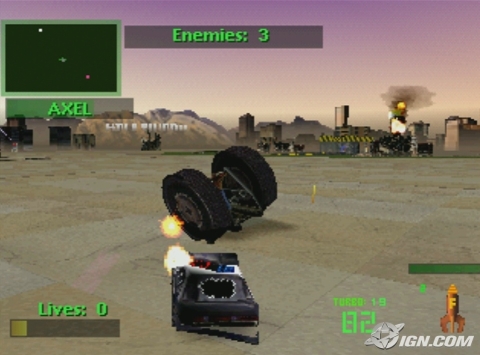
Twisted Metal - Another of the better early PS1 games

After the incredible success of Super Mario World and Sonic the Hedgehog, the game business was really in the doldrums and it had a been a boatload of fail for the so-called “rebirth of the console”. Sega had released a series of “not-quite-next-gen” peripherals for the incumbent Sega Genesis system (including the 32x and the truly awful Sega CD), and made vague promises about “forward compatibility” with their still-secret 32 bit 3D Saturn console. When the Saturn finally shipped, it was referred to by many people as “Two lies in One”, since it was neither compatible with any previous Sega hardware, and nor was it capable of doing much E3. Sega further compounded their previous two mistakes by giving the console exclusively to then-dominant retailer Toys “R” US, pissing of the rest of the retail community and pretty much assuring that console, and eventually Sega’s, demise in the hardware business.

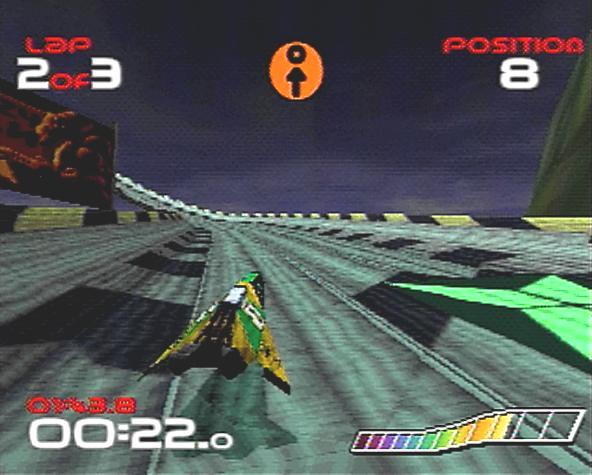
Wipeout - at the time it looked (and sounded) good

The PlayStation had shipped in Fall of 1995, but the initial onslaught of games all looked vaguely similar to Wipeout – since no one believed that it was possible to stream data directly from the PS1 CD-Drive, games were laboriously unpacking single levels into the PS1’s paltry 2 MB of ram (+ 1 meg vram and 0.5 meg sound ram), and then playing regular CD (“redbook”) audio back in a loop while the level played. So most games (including the games we had in development at Activision and were evaluating from third parties) all looked and played in a somewhat uninspiring fashion.

When Crash first released, I was a producer at then-upstart publisher Activision – now one of the incumbent powerhouses in the game business that everyone loves to hate – but at that time, Activision was a tiny company that had recently avoided imminent demise with the success of MechWarrior 2, which was enjoying some success as one of the first true-3D based simulations for the hardcore PC game market. To put in perspective how small Activision was at that time, full year revenues were $86.6 Million in 1996, versus over $4.45 Billion in 2010, a jump of nearly 50x.

MechWarrior 2: 31st Century Combat DOS Front Cover

Jeffrey Zwelling, a friend of a friend who had started in the game business around the same I did, worked at Crystal Dynamics as a producer on Gex. Jeffrey was the first person I knew to hear about Crash, and he tipped me off that something big was afoot right before E3 in 1996. Jeff was based in Silicon Valley, and a lot of the former Naughty Dogs (and also Mark Cerny) had formerly worked at Crystal, so his intel was excellent. He kept warning me ominously that “something big” was coming, and while he didn’t know exactly “what” it was, but it was being referred to by people who’d seen as a “Sonic Killer”, “Sony’s Mario”, and “the next mascot game”.

As soon as people got a glimpse of the game at E3 1996, the conspiracy mongering began and the volume on the Fear, Uncertainty and Doubt meter went to 11. In the pre-Internet absence of meaningful information stood a huge host of wild rumors and speculation. People “in the know” theorized that Naughty Dog had access to secret PlayStation specifications/registers/technical manuals that were only printed in Japanese and resided inside some sort of locked vault at Sony Computer Entertainment Japan. Numerous devs declared the Naughty Dog demo was “faked” in some way, running on a high-powered SGI Workstation hidden behind the curtain at Sony’s booth. That rumor seems in hindsight to have been a conflation of the fact that that the Nintendo 64 console, Code-Named “Project Reality” was in fact very similar to a Silicon Graphics Indigo Workstation and the Crash team was in fact writing and designing the game on Silicon Graphics workstations.

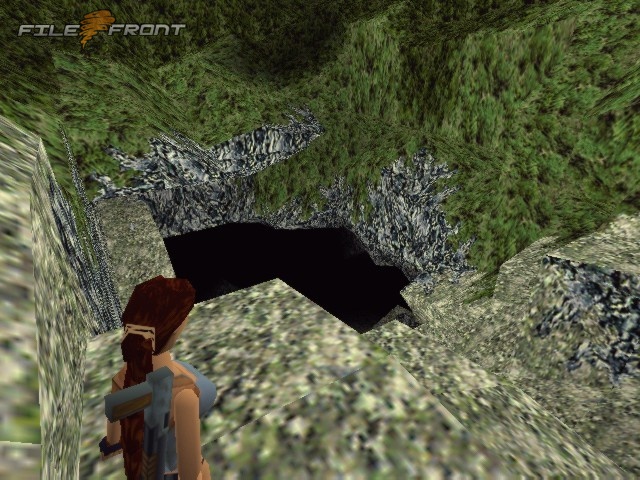
Tomb Raider - Crash contemporary, and great game. But the graphics...

Everyone in the business knew how “Sega had done what NintenDONT” and that they had trounced Nintendo with M-Rated games and better tiles in the 16 bit Era, and most of the bets were that Nintendo was going to come roaring back to the #1 spot with the N64. Fortunately for Nintendo, Sega’s hardware was underpowered and underwhelming and Nintendo’s N64 shipped a year later than the Playstation 1. With all the focus on many people’s attention on this looming battle, and the dismissive claims that what Naughty Dog was showing was “impossible”, most people underestimated both the PlayStation and Naughty Dog’s Crash Bandicoot.

Since no one that I knew had actually gotten a chance to play Crash at the show – the crowds were packed around the game – I fully expected that my unboxing of Crash 1 would be highly anti-climatic. I remember that Mitch Lasky (my then boss, later founder of Jamdat and now a partner at Benchmark) and I had made our regular lunch ritual of visiting Electronics Boutique [ ANDY NOTE: at Naughty Dog this was affectionately known as Electronic Buttock ] (now GameStop) at the Westside Pavilion and picked up a copy of the game. We took the game back to our PS1 in the 7th Floor Conference Room at Activision, pressed start, and the rest was history. As the camera focused on Crash’s shoes, panned up as he warped in, I literally just about sh*t a brick. Most of the programmers we had talked to who were pitching games to us claimed that it was “impossible” to get more than 300-600 polygons on screen and maintain even a decent framerate. Most of the games of that era, a la Quake, had used a highly compressed color palette (primarily brown/gray in the case of Quake) to keep the total texture memory low. It seemed like every game was going to have blocky, ugly characters and a lot of muted colors, and most of the games released on the PS1 would in fact meet those criteria.

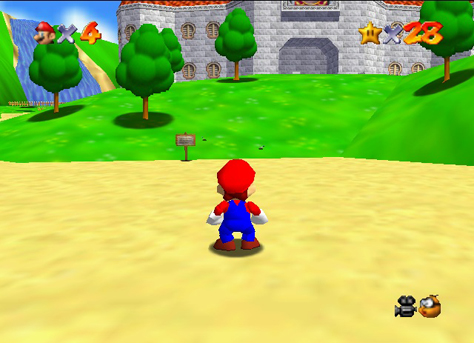
Mario 64 - Bright, pretty, 3D, not so detailed, but the only real contender -- but on a different machine

Yet in front of us, Andy and Jason and the rest of the Crash team showed us that when you eliminate the impossible, only the improbable remains. Right before my eyes was a beautiful, colorful world with what seemed like thousands of polys (Andy later told that Crash 1 did in fact have over 1800 polygons per frame, and Crash 2 cracked 3,100 polys per frame – a far cry from what we had been told was “a faked demo” by numerous other PS1 development teams). The music was playful, curious and fun. The sound effects were luscious and the overall game experience felt, for the first time ever, like being a character in a classic Warner Brothers cartoon. Although I didn’t understand how the Dynamic Difficulty Adjustment (discussed in part 6) actually worked, I was truly amazed that it was the first game everyone I knew who played games loved to play. There was none of the frustration of being stuck on one spot for days, no simply turning the game off never to play it again – everyone who played it seemed to play it from start to finish.

For us, it meant that we immediately raised our standards on things we were looking at. Games that had seemed really well done as prototypes a few weeks before now seemed ungainly, ugly, and crude. Crash made everyone in the game business “up their game.” And game players of the world were better off for it.


These posts continue with PART 9 HERE. You also never know when we might add more, so subscribe to the blog (on the right), or follow us at:

Andy:  or blog

Jason:  or blog

Also, if you liked this, vote it up at at Reddit or Hacker News, and peek at my novel in progress: The Darkening Dream

or more posts on

GAMES or BOOKS/MOVIES/TV or WRITING or FOOD.

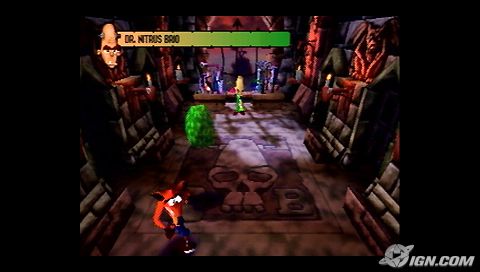
Detailed and Colorful - but most important fun

Certainly varied

Sorry for the lousy screen shots!

Book Review: The First American

Title: The First American: The Life and Times of Benjamin Franklin

Author: H. W. Brands

Genre: Biography

Read: Jan 25-Feb 10, 2011

Summary: Big solid Bio of a VERY interesting man

_

While I’m waiting for the last bits of line editing on my almost-finished novel, The Darkening Dream, I’ve been researching and outlining the  next. Given that it’s me, the new novel features both the historical and the fantastic. As to the historical: enter Ben Franklin. Who was one cool dude.

There’s a reason why he’s on the hundred dollar bill.

Now to reviewing this biography (I’ll call it TFA). It’s very well written, and easy enough to read. It’s also LONG (800 dense pages). Now, Ben lived 84 years, from 1706 to 1790, and he was perhaps the best known and most highly diversified American of his era. So there’s a lot to cover. As a printer/writer Ben left us a lot of his thoughts, and the book does a tremendous job capturing these, with long tracks of his writing embedded in the text. Lest you think this might be dry, he’s a surprisingly witty and modern voice. Eerily so. The book could have used a little bit of trimming here and there — but no more than 5-10%. It marches along steadily from Ben’s parents to his death and legacy, covering everything in between. This is not a history of the Revolutionary War, but covers more Ben’s role than the conflict itself. Good thing since that would’ve doubled the size. TFA does a good job characterizing the era, and particularly the politics of both Pennsylvania and London, and to a lesser extent Paris. It does a great job characterizing Ben.

Overall, I would give the book a 8/10 on the biography scale. That’s independent of it being Ben, but just in managing the job of conveying an important life in a different era. It’s not quite as good as Caesar: Life of a Colossus, Alexander of Macedon, or the Rise/Reign of Napoleon Bonaparte, but it’s pretty close.

But it’s worth talking about Ben. He was a pretty amazing guy, as influential in his own wry was as those three aforementioned titans. And he didn’t kill thousands or conquer nations doing it. Ben was a man of rare genius. Observant as to causes and effects, be it weather, electricity, ocean currents, politics, or business. And he’s depicted here with all his very human faults. But fundamentally he was a spirit of curiosity, optimism, energy, and general good intentions. He wasn’t the best husband or general, but he sures seems to have been one hell of a human being.

Food as Art – Takao

Restaurant: Takao [1, 2, 3, 4, 5]

Location: 11656 San Vicente Blvd, Los Angeles, CA 90049. (310) 207-8636

Date: March 9, 2010 and February 12, 2011

Cuisine: Japanese / Sushi

Rating: 9/10 creative “new style” sushi

_

Takao is my local outlet for high-end “new style sushi.” While my last sushi review, Sushi Sushi, is an example of a fairly traditional sushi bar Takao is more based on the model created by pioneer Nobu Matsuhisa at his eponymous restaurant (REVIEW HERE). In fact, Takao himself worked with Nubu at said restaurant in the early 90s. But he spun out in 1995 and started his own place, Takao. This however is no total “neo new style” joint like Sushi House Unico, but instead, like the late Hump (REVIEW HERE), marries Nobu-style sushi with a more traditional Japanese restaurant format. In fact, in homage to that tradition, Takao looks more like an old-school Japanese restaurant, and its menu includes the various set dinners like chicken teriyaki etc.  Nevertheless, this is some really good stuff if you take advantage of what they have to offer. One of the nice things about this place is that you can take people who just aren’t that into sushi. Takao is also the biggest beneficiary (in our family) of the Hump’s death, as we used to split our family Japanese outings between Takao and the Hump — now Takao gets them all.

IMG_9817

Storefront in Brentwood, conveniently located for us westsiders.

IMG_9784

Big Menu! Click parts to embiggen.

IMG_9785 IMG_9786 IMG_9787 IMG_9788 IMG_9789 IMG_9790

I’m going to review a bunch of different takes on eating here, derived from two actual meals and several people. One option, for the more timid, but also an excellent deal, is to get the “set dinners.” They come with soup, salad, appetizer, entree, and dessert. This is the salad. If you ask you can get sunomono or possibly some other optons instead.

If you are an advanced eater you might find these next 8 or so pics boring, keep going, the good stuff is below!

Miso soup. I think if you ask they have a couple different types. This is the basic scallion and tofu.

Vegetable tempura. Again, there are some typical options in the set meal.

This is a basic “sushi dinner” plate. There are lots of other options like miso glazed cod or terriyaki salmon. You can ask for more or less whatever sushi you want (but perhaps not a whole plate of Uni and Toro). In the center, Ikura (salmon egg), cut tuna roll.

In the front, left to right. Halibut, albacore belly, Tamago (sweet egg omelet).

In the back, left to right. Maguro (Tuna), salmon.

In the back after the salmon, hamachi (yellowtail) and regular albacore.

Vanilla and mango mochi is one of the many dessert options.

This next “meal” is a custom high end meal with a sashimi/sushi focus.

House cold sake. Masumi “Okuden-Kanzukuri” Nagano prefecture.

Tai (red snapper), with garlic, salt, red peppercorn, onions, olive oil. A very bright flavor, and the peppercorns, not spicy at all, add a nice textural component.

Toro tartar and caviar. Chopped tuna Toro, onions and wasabi mixed with light soy sauce topped with caviar. The classic found at Matsuhisa (you can even see it in my last meal there). It’s still good, a big blog of succulent Toro!

Kampachi (young yellowtail), jalepeno, cilantro, and ponzu. Another Nubu classic, but for a reason.

Main lobster tempura (1/2). Takao has a lot of interesting tempuras. Uni (my second favorite), sardine, crab, unusual seafood pancake with shiso, and more. This is a decadent favorite of mine, and in a half portion is pretty reasonable.

Japanese scallop sushi. With yuzu and salt on the left, and with shiso on the right. I LOVE good scallop. I couldn’t decide which was was better. The yuzu/salt has a gorgeous tang, bringing out the delicate flavor and texture of the scallop. The shiso also pairs wonderfully, although it’s flavor dominates to a larger degree.

Aji, Spanish mackerel. Very solid mackerel in the traditional preparation. Soft, with only a hint of fishiness.

Blue fin tuna, special soy sauce. Straight up tuna at its best.

Taco (octopus) with shiso on the left, and sweet soy and wasabi on the right. Again, tough to choose, but I think perhaps I prefer the shiso by a small margin.

Chu-toro with sweet sauce. Pretty melt in your mouth.

Sweet shrimp, as sushi and with the head fried. The shrimp itself is sweet and soft, sort of the essence of fresh crustacean. The head (you do eat it, the whole thing), is crunchy, fried, sweet. Very tasty too, but watch out not to get stabbed by the legs as you munch it down.

Uni (sea urchin) with sweet sauce on the left, and yuzu on the right. Some top Santa Barbara Uni. The sweet one is good, but I think I prefer the yuzu as it shows off the uni itself to perfection.

Unagi (fresh water eel). Typical version of the BBQ eel, and good. Not quite as good as the eel at Sushi Sushi (HERE).

Tamago. Solid, with a nice sweetness, but the texture is just a tiny bit heavy, and feels less “handmade” than the superlative Sushi Sushi version.

This next meal represents the $90 Omakase, allowing the chefs to put together a full meal. They do an excellent job of this, and you can customize it fully. It’s actually considerably cheaper to do an Omakase then to assemble a big custom sushi meal like above.

IMG_9783

White burgundy is always a good choice with sushi.

91-92 points. “Similar to prior notes, though this time the oak is joined by a noticeably sweet perfume on both nose and palate, particularly immediately on opening. A hint of nuttiness comes as the wine evolves the glass. I really enjoy this style, and most of the wines I’ve had from Girardin.”

IMG_9792

Wine in the glass.

IMG_9802

Halibut carpaccio. Thinly sliced halibut sashimi with salt, black pepper, chives, garlic, and pink peppercorn topped with yuzu and olive oil. Very nice and light, emphasizing the flavors of the condiments and the texture of the fish.

IMG_9803

Toro sashimi, black truffles, sweet sauce, wasabi. How can you go wrong with this?

IMG_9804

Tai (red snapper), sea salt. The lemon and salt dominate, but I find myself very much enjoying that as they don’t overwhelm the very subtle fish.

IMG_9805

New style salmon sashimi with truffle. Thinly sliced sashimi with truffles, chives and ginger topped with hot olive oil. This is much richer, and the pairing of the warm oil always throws me a bit, but it does taste good.

IMG_9807

Santa barbara prawn, ponzu. Emphasizes the sweet meatiness of the prawn, as the sauce is fairly light and citrusy.

IMG_9809

Miso glazed snapper. Scallop dynamite. The fish is pretty close to the Nobu classic cod. It’s fine, but not really my thing, and the cod might be better. The dynamite, with it’s mix of flying fish roe, scallops, and whatever eggy rich thing dynamite actually is — is quite wonderful. I love to suck on the marinated ginger shoot at the end too.

IMG_9810

Fish tempura. One of the above mentioned “interesting” tempuras. Not unlike something one might get in Spain. They fry a lot of small fish there. I guess the Portugese did too, as they brought Tempura to Japan.

IMG_9814

The Omakase comes with some sushi. If I’m at the bar I will steer it more interesting, but I wasn’t. Left to right.  Blue fin toro, yellow tail, Spanish mackerel, ika (squid), sardines (?). All are good examples of type.

The Omakase also includes miso soup (of your choice — there are mushroom and clam versions) and desert. I didn’t picture them however.

The chefs at work. Takao himself on the left.

Overall, Takao is a great place. It’s perhaps 90-95% as good as Matsuhisa or the late Hump which it resembles. And it’s cheaper and much more approachable. We go here more often. There is/was a “mise au point” (sharp) quality to the above places that isn’t totally honed here — but it’s still fantastic — and bear in mind that I’m a pretty damn snobby and experienced sushi eater. Been doing so (a lot) since 1978 plus over 20 trips to Japan and many Japanese friends. There is certainly better straight sushi in LA, but I still go here more often because there is an enormous variety of very well made food, and they are extraordinarily friendly and welcoming. Our two year-old has even eaten here!

For a second Takao review, click here.

For my LA Sushi index, click here.

Food as Art – Sushi Sushi

Restaurant: Sushi Sushi [1, 2, 3, 4]

Location: 326 1/2 Beverly Dr. Beverly Hills, CA 90212. (310) 277-1165

Date: February 11, 2011

Cuisine: Japanese Sushi

Rating: Old school sushi – fantastic fish and presentation!

ANY CHARACTER HERE

Last week I ate at this new (to me) sushi place in Beverly Hills, the redundantly named, “Sushi Sushi.” It was great but I didn’t have my camera. So with a bit of arm twisting — not — I convinced my brother to head back for a repeat.

The storefront, on Beverly Dr just south of Wilshire.

A small subset of the sushi bar. “Sushi sushi” is a pretty old-school looking Japanese place inside. Small room, small tables, and a sushi bar of about 12-15 seats. We decided to get the middle Omakase and let the chef work his magic.

He started out with this sashimi plate!

Ankimo (monkfish liver), with scallions and pickles in a ponzu. Perfectly fresh, with that rich creamy texture that it’s supposed to have, a hint of grainy, a hint of fishy,  but very mild (no such thing as monkfish liver with NO taste of the sea — what would be the point of that?)

Perfect Santa Barbara Uni (sea urchin) on a bed of soft Ika (squid). A bit of wasabi mixed with something, and some sauce (had a little citrus in it I think). Both fishes are sweet, with the uni being delectably so. The squid was very soft with that slightly pasty texture squid is supposed to have. While this is not a dish for the land-lubber, it was awesome!

Fresh raw Hama oysters, with a bit of soy vinaigrette. Yum too.

My brother isn’t so into the Uni, so he got sweet shrimp instead.

Blue fin tuna. The chef here “pre-sauces” the fish, so no soy sauce is needed. In this case it’s already been put on. I had this done a number of times in Japan, and at high end places here like Urwasawa (HERE FOR REVIEW). The tuna melted in the mouth. Sushi Sushi uses big pieces of fish and a small ball of rice too. The rice is traditional, not the warm rice favored by Sasabune (HERE FOR REVIEW).

Tai (Red Snapper), with a slightly citrusy sauce. This is a lighter fish, but I’m very partial to it.

After this we had another course pairing a piece of Chu-toro (medium grade fatty tuna belly) and a piece of Kampachi (young yellowtail). Tragically, somehow I forgot to photograph it. /cry /cry

The toro was soft and delicious, the kampachi firmer, but also very tasty, just not nearly as rich.

The chu-toro was just a warmup for this o-toro, the even more fatty toro. It melted in the mouse like butter. Always one of my (and everyone else’s) favorites.

Then there was a piece of scottish salmon which I also missed a photo of. Maybe I’m going crazy, maybe it was just the hangover from Saam the night before, I don’t know. In any case it was one of the best pieces of salmon I’ve ever had.

And another missed one, aji (Spanish Mackerel), with only the very slightest bit of fishy. Again, a great mackerel.

And a fourth miss. Kohada (Japanese Herring) I swear I photoed these, but they’re not on my camera. This was great herring, but is certainly a bit fishy — herring always is.

Saba mackerel, not as good as the Spanish one, but nothing to mock either.

Another sashimi course. Sweet shrimp, Japanese scallop, giant clam, and taco (octopus). Are were prefect examples of the breed, and doused with a little bit of yuzu (just the fruit, not with the pepper) to test them up.


My brother got albacore.

Kampachi cheek. This was marinated in one of those sweet broths I would frequently get in Japan. There was a bit of bone but the meat was incredibly soft (consistency like tuna fish?) and delectable. I really enjoyed the heavily marinated root vegetable. I don’t remember what these are, but I’d get them in Japan all the time.

Asari miso (clam broth miso soup). This is a very light miso, with a clam brothy quality. Not too salty, very nice.

They say you should judge a sushi chef by his tamago (sweet omelet). By those standards Sushi Sushi rules.

Ikura (salmon roe). Perfectly fresh, with just the slightest hint of brine (good). Wonderfully taught, they explode in the mouth like little brine balls.

Uni (sea urchin) sushi. I can’t get enough of this. It amazes me to think that even just a couple years ago (bear in mind that I have been eating sushi since 1978) I didn’t like the stuff.

Seared Japanese scallop.

Diced Toro handroll. This had yellow pickles and shiso leaf inside, which added texture and the exotic and wonderful flavor of the leaf.

Unagi (Fresh water eel). BBQ, with the sweet eel sauce. This was some damn fine eel, as good a piece as I’ve had.

Our chef. I think he’s been working the knives for a while.

The omakase included dessert, this concoction of fruit, green tea ice cream, green tea panna cotta, sweet bean sauce, and whipped cream. Oh yes, and with a “mens pocky” as garnish and corn flakes underneath. Pretty good, and all Japanese.

Sushi sushi is a new favorite place of mine. This place is GOOD! Not only because the fish is totally delectable, but because it offers that relative rarity now in LA, the “traditional sushi bar.” I like the warm rice Nozawa/Sasabune school and the modern Nobu school, but there is something satisfying about the original.

A second and third  Sushi Sushi meal review can be found HERE and HERE.

Or for the LA sushi index, HERE.

Son of Saam – Actually more Bazaar

Restaurant: Saam [1, 2]

Location: 465 S La Cienega Blvd, Los Angeles, CA 90048. 310.246.5555

Date: February 10, 2011

Cuisine: Spanish influenced Molecular Gastronomy

Rating: Awesome, even better than The Bazaar.

_

I’ve been to The Bazaar (REVIEW HERE) about 8-10 times. For the last four or so of these I’ve been trying to get into Saam, which is their “secret” prix fixe only room. Mostly because it’s only open Thurs-Sat it took me a while to manage it. So made it the destination of our fifth official Foodie Club outing.

For those who don’t know, Saam and the Bazaar are the children of Jose Andres, perhaps America’s leading practitioner of  my favorite culinary style: Spanish Molecular Gastronomy. This school of cooking, a radical interpretation of the preparation of food, was begun at El Bulli outside of Barcellona. Jose Andres cooked and studied there with master chef Ferran Adrià. I first encountered Jose’s cooking in Washington DC at Cafe Atlantico, and it’s own restaurant within a restaurant, Minibar.

I’ve eaten molecular a number of times in Spain, for example at Calima and La Terraza. The Bazaar and Saam brought molecular style to LA, and now Jose also has a new and very tempting pair of restaurants in Vegas. My colleague at Kevin Eats was lucky enough to make that pilgrimage.

Saam is a separate room, offering only a single continuously evolving prix fixe. They do however adapt very adeptly to dietary restrictions, as we shall see in a moment. But like most molecular prix fixes it begins with a specialty cocktail. In this case a champagne sherry concoction.

The sherry.

Some of our fellows kicking off the evening.

“The Golden Boy.” If you zoom in you can see the little golden speckles. It tasted like sherry and champagne.

Tonight’s menu. Click to embiggen.

“Lotus Root Chip.” Star Anise dusting. Like a very salty potato chip with a slight licorice flavor.


The first of my wines. The only beef I had with this otherwise perfect restaurant is extremely steep $50 corkage! Very displeasing. And they have a 3-4 bottle max, plus the Bazaar recently raised it’s corkage from $20 to $35. Contrast that with the Bistro LQ FREE corkage where we opened 8 bottles! I really despise these steep corkages.

Parker 97, “The 2004 Reserva, according to Remirez is “a great vintage, a lot of nerve, like 1994, that needed a long aging period”. Opaque purple in color, it offers up a splendid bouquet of sandalwood, incense, Asian spices, balsamic, and black cherry. Layered, opulent, and impeccably balanced, it is a monumental effort.”

“Tuna Handroll 2009.” Like the typical tuna tartar on a potato crisp — but a cooler shape.

“Bagel & Lox Steam Bun.” The dim sum style steam bun topped with salmon roe. Inside must have been some cream cheese or similar. Very interesting interplays of texture and taste.

“Olive Oil Bonbon.” Spanish extra virgin olive oil, coated in sugar and dusted with sumac and Maldon sea salt. Pretty amazing, a bit of candied crunch and pure olive oil is released. Very candy like.

“Black Olives Ferran Adria.” Instructions on how to make these can be found here. The pureed juice of the olives is coated in a thin gel. They are colored black with squid ink.

The olive bursts easily in the mouth, exploding intense oliveness into the mouth.

Spherified green olives. The “olives” are after spherizing marinated with olive oil, garlic, rosemary, and orange. This is the first of many Vegetarian Substitutions (VS), as the squid ink in the black olives isn’t exactly veggie.

“Jose’s Combination.” Jamón Ibérico de Bellota with a blob of real caviar. This ham is regarded as the best in Spain, and among the best in the world. They are fed on acorns. Salt on salt here. A very savory combination.


“Jicama wrapped Guacamole.” Micro cilantro, corn chips. The VS for above.

“Pastrami Saul.” Crunchy potato taquito filled with veal “pastrami.” Crunchy, salty, meaty.


“Tortilla de Patatas ‘New Way’.” Potato foam, egg 63, caramelized onions. The VS for above. This is a fairly radical reinterpretation of the classic Spanish Torilla de Patatas (what we might think of as a potato omelet). Egg is mixed with a potato foam and micro chives and caramelized onions.

“Buffalo Wing.” Looks like fried chicken (and it is), but Wow. Boneless, with a dab of spicy sauce and a blue cheese aioli. An explosion of flavor.

Just like it’s more plebeian cousin, it leaves a good grease stain.

“Ottoman Carrot fritter.” Apricots, pistachio sauce. VS for the chicken. A deep fried ball of flavor, with a very exotic taste.

“Not Your Everyday Caprese.” The mozzarella has been through the same sphere process as the olives above, then we have a peeled cherry tomato, tomato seeds, a bit of basil, sea salt, little crackers, and a very fine house made pesto genovese (with extra virgin olive oil). I’m not even a raw tomato fan and this is delectable. The pesto cheese combo really makes it. This pesto is as good as mine (recipe here).

“Crispy Nigiri.” A bit of red snapper on a blob of crispy Spanish rice.

“Chipirones en su Tinta.” More or less a classic Spanish dish, octopus in it’s own ink. Plus some squid ink chips. Very soft and tender meat, complemented by the sweetness of the ink.

Ink art. A tradition with me.

“Zucchini with Zucchini air.” VS for the octopus.


Parker 94. “The 2007 Laurel, a blend of 65% Garnacha and 35% Cabernet Sauvignon, is deep purple-colored with a bouquet of wet stone, Asian spices, black cherry compote, and incense. Dense and sweet on the palate with tons of spice, it is super-concentrated, rich, and smooth-textured. Give this lengthy effort 2-3 years of additional cellaring and drink it from 2013 to 2027.”

This is an amazing wine, deep grape.

“Hot and Cold Foie Soup with Corn.” The top is a delicious foam that tastes like sweet corn soup, underneath is the salty rich foie soup. I first had a variant of this dish at Cafe Atlantico. I’m very fond of these rich little soups.

“Traditional Gazpacho.” Not only is it pretty, but it’s a nice example of the classic.

“Banh Mi.” A brioche bun with wagyu beef, tofu, cilantro, pickles, pickled carrots, and a kind of mayo. Tasty tasty sandwich. A mix of soft and crunchy too, but the pickles give it a very distinct tang.

“Banh Mi, vegetarian.” VS, same as above, no meat.

“Linguini and Clams.” Another reinterpreted dish. A very sweet and sour, dishy and salty thing going on. Soft textures.

“Cauliflower ‘cous cous’.” VS for clams.

“Kurobuta Pork Belly.” Massively flavorful bacon chunk, with a spanish cheese infused turnip mouse and little carrots. Yum yum, heart stop heart stop.

“Brussel Sprout Leaves.” Lemon purée, apricots, grapes, lemon air. No hint of bitterness, and the fruit tangs nicely zest up the sprouts.

“Black truffle risotto.” This was an optional supplemental dish. Instead of the normal Italian risotto rice it used a premium Spanish one, calasparra bomba, and extra virgin olive oil instead of butter. Very tasty, but as the first truffle dish I’d had since our crazy 27 course Truffle Night, it gave me funny flashbacks.

“Philly Cheese Steak.” Air bread, cheddar, Wagyu beef. This is on the Bazaar menu, but it’s so damn good. The crispy bread is filled with liquid cheddar goodness.

“Hilly Cheese Steak.” Air bread, cheddar, mushrooms. The VS version of above. Monkey man will get you!


We move on to a sweet wine as we approach the end of the savory courses.

Parker 94. “The auction lot of Prum 2009 Wehlener Sonnenuhr Riesling Auslese A.P. #22 differs from the “regular” Auslese in a manner analogous to the relationship between the two corresponding Spatlesen, the most striking aspect of the present cuvee being its uncanny sense of near-weightless delicacy. “This came from a good but not absolutely top-class parcel,” notes Manfred Prum, “but one that got quite a bit of botrytis which we permitted to develop and then selected-out very late.” Given that description, one has to say this was the noblest of rot, so subtle and positive was the flavor concentration and creamy textural allure it engendered, while in no way freighting the wine or lending a taste of botrytis per se. Indeed, this strikes me as the finer of the two non-gold capsule Sonnenuhr Auslesen I tasted, incorporating underlying nut paste richness and a cloud-like sense of wafting sweet floral perfume. Furthermore, this introduces a salinity that renders the finish saliva-inducing and compulsively swallow-able. It should dazzle for 30-40 years.”

“Japanese Baby Peaches.” Burrata, hazelnuts, arugula.Really interesting. The peaches were so tart off the trees that they were soaked in simple syrup. Paired with the blobs of burrata (a favorite of mine), the nuts, and arugala it was pretty divine.

“Dragon’s breath popcorn.” The pre dessert. A gimmick, but neat.

Carmel corn “boiled” in liquid nitrogen.

It tastes like… carmel corn, but you can exhale it through your nose for a dragon-like effect.

Mutant lamp in the room.

“Rose Clementine.” Clementine ice cream, shards of extruded sugar, and rose water ice cream and foam. I really like the exotic taste of rosewater, reminding me as it does of Istanbul and Persian weddings.

“Chocolate Eucalyptus.” Extruded chocolate ganache with a peppermint meringue and eucalyptus ice cream. Very nice and creamy chocolate band, with a soft mouse-like texture. The ice cream is the eucalyptus, which went well but makes me think of spa steam rooms.

Video of one of us breathing the dragon.

“Birthday spun sugar.” Tastes… sweet.

“Sexy Little Sweets.” Passion fruit and raspberry pate-fruits. Mint white chocolate, regular chocolate, and various bonbons. The passion fruit pate was my favorite.

“Crown of Sugar.”

The room itself.
The Bazaar is great, and Saam is even greater. The presentation is nicer, and it has more experimental dishes. I’d wish they’d go even wilder. This is exciting food with strong combinations of flavors and unexpected textures.
As I said earlier my only beef is with their agressive corkage policy. I know restaurants make a good share of profit on their wines, but I like to pick my own.

TV Review: Buffy the Vampire Slayer – part 6

CONTINUED FROM PART 5 ABOVE.

The rest of the series can be found here: [12,34, 5, 6]

WARNING: CONTAINS SPOILERS:


Season 7:

So at long last we meander to the final, and worst, season. Not that it’s awful, but it does suffer from a number of serious problems.

1. The big bad is diffuse. This season, in an effort to be even more apocalyptic, they decided on an incorporal season villain called “the first evil.” A vaguely couched badness that takes the form of dead people, often Buffy herself (she did, after all, die twice). Frankly, the first is kinda lame, and not very funny. It certainly doesn’t measure up to Glory or the Mayor (although it occasionally looks like the Mayor). It’s “first” appearance (haha) where it slowly winds back through all the villains in reverse order is however kinda cool.

2. The slayerettes – About 40% into the season Buffy is inundated by a collection of 17 year-old idiots known collectively as the slayerettes. They totally suck, are just anoying, gum up the relationships we really care about, and often get themselves killed (good riddance). Only Kennedy has any redeeming qualities — mostly in the form of implied girl-on-girl action with Willow.

3. Andrew – For some reason, this lamest and most annoying of the “Trio” is held captive in Buffy’s house, where he can serve to annoy us, the viewers. He does have his occasional moments and lines, like “Episode one boring?” But mostly he grates on the nerves of the cast and viewer alike. Oh Andrew, why at least couldn’t you have died in “Chosen?”

4. Mysterious documentary-style shooting – Certain episodes have a more documentary style that is not evidenced anywhere else in the series. Notably “Storyteller” (deliberate there for sure) and bits in “Touched” and “End of Days.” It felt amateurish and out of place.

5. No good creative episodes – Nothing like “The Body” or “Once More with Feeling.” Nothing. They may have tried with “Storyteller,” but it was lame lame lame.

At least the writers knew it would be the last season, and so in a neat and orderly manner arced the story toward a decent conclusion. And the first half of the season starts pretty decently. The new character, Principal Wood is good. “Help” is a great episode and the Anya episode, “Selfless” has some totally priceless 1,000 year flash back scenes between Anya and Olaf the troll — totally priceless, and made all the better for being in some Germanic/Scandinavian tongue and subtitled. “Conversations with Dead People” and “Sleeper” aren’t bad either.

Ug. Then enter the slayerettes. The only compensating bit being the sub-boss bad guy, the “ubervamp” who is pretty cool and kicks some ass, including Buffy’s.

The second half of the season is uneven, including my least favorite episode in a long time “Storyteller,” but the pretty good “Lies My Parents Told Me.” The new sub-boss Caleb is decent too. Then we have “Empty Places.”

I don’t know what they were thinking, but it’s obvious the writers decided they had to separate Buffy from her friends for dramatic effect, and so they stage a show down in which they all turn against her. In no other episode of the entire series is there a moment where so many characters just act completely out of character. I can buy a few of them turning on her like this, but the writers failed completely to give each and every one of them a valid personal reason visa-via their relationship with Buffy to do so. I could barely watch it.

The return of Faith however is good, and the last three episodes are pretty strong, particularly the series finale “Chosen.” Despite the lame cameo from Angel, it does all end up in a pretty good place, and reasonably satisfying — a difficult thing to do after such a long and emotional series. Overall, it’s certainly a must watch, but just not on par with the magnificent pair of seasons that preceded it.

As with the previous two times I’m depressed that it’s over. This time I’m going to make a serious effort at Jos Whedon’s season 8 in comic book form.