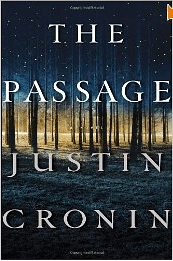
Book Review: The Passage

The PassageTitle: The Passage

Author: Justin Cronin

Genre: Sci-Fi/Horror

Read: Late June 2010

Summary: Excellent.

Nne of this year’s top new vampire entries. It’s an odd book, long, and broken into three parts, but good. The first third is set more or less in the present and deals with how a viral epidemic that turns people into nearly indestructible vampire-like creatures gets loose and destroys the world. The writing is good and this section is a bit of an oddity in that the plot itself is minimal, but padded out with almost gratuitous backstory on nearly every character. Bit players that we meet in the gas station for one page get five pages of life story flashback. All these people, lovingly details, die quickly. Oddly, it works and is a compelling read. However, it makes me scratch my head as all the standard writing advice I’ve been given by editors, agents, and the like would’ve been to cut all these backstories. In fact, they certainly would’ve told me that the entire first third of the book is backstory, and the proper place to start was far later. At a certain level they are correct, because there is only one character — and an odd one at that — who crosses from this long prelude into the main two thirds of the novel.

The middle third of the book takes place 100 years later and totally kicks ass. This was some of the best Sci-fi/horror I’ve read in years. It’s post apocalyptic, taking place in this one compound somewhere in the California desert. They are under continual siege by vampires, and their numbers are dwindling. Their entire life and society is organized around survival, but slow attrition of their numbers is the only thing in their future. The Road Warrior meets I-don’t-know-what feel of this section is awesome. Cronin does a fantastic job of world building here, and the specific animalistic vampires (a bit reminiscent of I am Legend) is great. In some way’s it feels more like a Zombie apocalypse because it has that feeling of instant-death-at-any-second.

In part three, these same characters are forced out of their little sanctuary into the big bad world. This part is still good, but does a little shark jumping and borrows very heavily from things like the Stand, etc. I didn’t mind, but the ending felt a little forced and just didn’t quiet sustain the promise of the amazing middle section.

Still, the overall novel was excellent. Flawed, but the middle part was so great, and the first and third sections enjoyable enough, to make it one of the better books I’ve read in a while.

Book and Movie Review: Let Me In

Let Me InTitle: Let Me In / Let the Right One In

Author: John Ajvide Lindovist

Genre: Horror

Read: Mid Oct 2010

Summary: Liked it, but had issues with the second half.

_

This is the original novel (translated I believe from Swedish) that forms the basis of the recent movie Let Me In and last years Swedish film Let the Right One In. First I’m going to talk about the book, then I’ll also discuss both movies and a bit about the process of adaption.

The novel has a lot going for it. It’s a relatively new take on vampire feel — and I’ve certainly seen/read an exhaustive amount of vampire films/books. Lindovist loosely sticks to the basic lore tenants (some of which I regard as sacrosanct). No daylight sparkles, feeding on blood, requiring invitation, etc. But his vampire(s) live a more marginal less powerful existence than many. The emotional core of the story is about a human boy who is misunderstood and bullied in school, and how he is therefore ripe for the kind of symbiotic/parasitic relationship that the book’s central vampire needs to survive. This part I like, and the character of the boy is well done, as is the girl vampire and the relationship. For me it kind of depends on the pubescent pre-sexuality of the central couple. But there are some things the book does to work against itself.

It’s too long, and has an extensive subplot involving some neighbors in the apartment complex. I ended up skimming much of this and it hardly mattered. It should have been trimmed to the bone (which the movies did). In the later third the book also goes crazy with this hard to understand devolution of the vampire’s former thrall/Renfield type into some kind of weird brainless half-vampire. This also was cut from the movies for good reason. But most critically, in the later part of the book [ SPOILER ALERT ] the gender of the vampire is thrown into question back making her/him into a castrated boy, and tossing in a horrific undead on undead anal rape scene. I’m all for extreme, but this whole ending left me not only feeling grossed out, but requiring myself to kind of ignore it and try and pretend she was still  a girl to finish the book. I really didn’t see the point and this more than anything mared my overall opinion of the book. I try to like it despite the twist.

So this brings us to the film translations. The process of stripping down a longer work into the compact requirements of a feature film is interesting. You have to find the central story and rip everything else out. This is what the filmmakers did, and in my opinion, almost all for the better. By stripping down the subplots, removing the crazy monster, and most important the gender ambiguity (although there is a hint of it in the Swedish film, but not enough to bother) the story concentrates itself on the central relationship and becomes very effective. Both films are good. The Swedish one is a bit moodier and the vampire is a little more androgynous. In the American adaption, which at times feels like a shot by shot remake, the subplots have been stripped even further and the sexuality notched up just a hair (Chloe is very clearly feminine). The American version also adds a slight tragic-comic quality to the vampire’s old familiar which I liked. Both films are very good, and very similar (besides the language spoken). I really liked this combined take on the story. The only thing I would have borrowed more from the book was a sense of the strange pedophiliac relationship with the old familiar — which although horrible, jives well with the creepy mood of the work.