Eating Montalcino – Le Potazzine

Restaurant: Ristorante Le Potazzine

Location: Montalcino, Italy

Date: June 20, 2011

Cuisine: Tuscan

Rating: Tasty traditional

ANY CHARACTER HERE

We took a most excellent wine tasting tour of Montalcino (the home of the one and only Brunello). This was led by a top flight young guide named Matteo Perinti, who took us to a pair of top flight small wineries (but more on that itself later). In between we stopped at Montalcino the home base for Brunello.


Montalcino is one of Tuscany‘s long list of ugly locales — just kidding. It’s a gorgeous mediaeval village — with a LOT of wine for sale.


We went to the restaurant owned by the Le Potoazzine vineyard, which was one that we visited. Not only was their wine incredible, but they run a nice restaurant.


For lunch we actually had their IGT Tuscan, slightly down the curve than this amazing Rosso Di Montalcino, but I didn’t get a photo. If you can find the above wine in the states do — it was incredibly seductive.


Tuscan Prosciutto.


And a wider selection of local cured meats.


Panzenella, the very traditional “salad” of stale bread crumbs, onions, tomatos, and fresh olive oil.


Bruschetta with tomato, basil, and olive oil. Tuscan’s have no fear of serving bread too many ways.


Minestrone soup.


Gnocchi done the simple way, with cream, butter, and cheese.


Risotto Brunello. Very fitting, and very tasty.


Local wide pasta fresca with vegetables.

This was a nice little lunch place. Certainly nothing radical about the cooking but every dish was delicious.

Click here to see more Eating Italy posts.

Eating Poggibonsi – Babette

Restaurant: Ristorante Babette

Location: Poggibonsi, Italy

Date: June 19, 2011

Cuisine: Tuscan Seafood

Rating: Great food, great value

ANY CHARACTER HERE

After our self selection failure on Saturday, we got another restaurant recommend from our host (the owner of our villa). He sent us to this casual but very good seafood restaurant in Poggibonsi.


As usual there is a nice outside dining space.


And a gigantic menu.


This being all seafood we got both a prosecco.


And a local white from San Gimiangano. This is one of those joints where the wine is like E10. I like this light quaffable, almost Greek-style, white.


Caprese.


One of my friends and I ordered this “assorted fish appetizer, min 2 people” which was E10 a person, it came with this and EVERY dish until the pastas! An amazing assortment. This one was “Tuna with balsamic dressing.”


Marinated white anchovies and onions.


Crostini with white I think is a fish row mayo.


Marinated Salmon with red peppercorns.


What I think are winkles, or little sea snails, in a delicious garlicky sauce.


Octopus pulp. Also garlicky.


Muscles.

Scallops stuffed with a kind of pesto scallop paste.

Some tasty but undetermined shellfish “stew.” Wow, that’s a lot for two people and E20 total.


Home made pasta with a kind of tomato pesto.


White Risotto with mixed seafood. This was good, and unusual in that usually seafood risottos have some tomato in them.


Risotto with squid.


Strozzapreti with Fish ragu. This was highly unusual (for me) and really good. It was essentially a ragu made using shellfish instead of ham. It was very salty, with a significantly briny taste, but very tasty. The al dente shells were a fantastic foil.


Pizza Margherita.


Mixed fried fish. Lightly fried and delicious.


Branzino, simply grilled and filleted at the table.


A very very typical fish preperaration all over the Medditeranian, but done very well here.

The final presentation of the fish.

Not only was this restaurant a bit different, being all seafood, and very good, but it was an incredible deal. The bill was less than E20 a person and we had an incredible amount of food.

Click here to see more Eating Italy posts.

The Eagle

Title: The Eagle

Director/Stars: Channing Tatum (Actor), Jamie Bell (Actor)

Genre: Period Adventure

Year: 2011

Watched: July 7, 2011

Summary: Decent.

ANY CHARACTER HERE

It’s interesting that in the last year or so there have been two movies about the Roman legion “lost” in North Britain during the Hadrianic period. The other is Centurion which I review here. It just goes to prove that Hollywood loves to copy. Two volcano movies? Two Wyatt Earp films? Two Lambada films?

And, to boot, it’s unlikely the legion was actually “lost” (as in militarily). More likely it was just disbanded and the sketchy historical record makes it seem to have disappeared.

In any case, The Eagle is less stylized, and perhaps less anachronistic in terms of it’s action and look than Centurion. However, it doesn’t work as well. Centurion is a very fine chase movie, with almost no character development. The Eagle tries for the latter, with mixed success. The first half works best. Our hero, Centurion Marcus, is posted (on request) to a fort in Britain, proves himself and is injured, then gets shipped out to his uncle’s villa to recover. I liked this opening section, and the film is very well researched from a visual standpoint. The scenery and costumes are great. They didn’t, however, get as much right involving the way in which the Roman army is organized. They insisted on using modern terms like “duty roster” and “honorable discharge.” Roman soliders (of this period) weren’t enlisted out of civilian life. They were either senatorial/imperial appointees (mostly officers) or serving a fixed (20+ year) service.

But I did like this early section. The battle sequences were well done. I liked the crazy druid and his chariot (still in use then by tribal groups in Britain). I liked the legionaries fighting in formation (mostly).

But after recovering, Marcus makes the ridiculous decision to go north of Hadrian’s wall (into enemy Scotland) by himself, accompanied only by a celtic slave who owes him his life. His mission, taken upon himself, is to recover the Eagle (battle standard) lost by his father a decade or so before. He has no idea where it is. Scotland is a big place, full of celts and picts. They don’t like Romans.

But he blunders right into it after riding across some gorgeous wet looking scenery. Again, landscape and costumes look amazing. The movie also doesn’t have a lot of CG, which is good. The natives feel very… well native. I was reminded visually of The New World — a movie of stunning visual lushness about the Jamestown colony. After all that we have an encounter with this seal tribe, a fictionalized Northern British coastal tribe. Their look and ceremonies are wonderfully depicted. Marcus has a bit of slave/master reversal with his friend, but eventually the two grab the eagle and make a run for it, followed by a showdown.

The finale devolved into a kind of anachronistic “all cultures are equal” kind of thinking that just did not exist in the second century. Not only didn’t it exist then, it didn’t even exist during World War I, or any time in between. This modern, intensely modern, way of thinking was formulated during the 20th century. Sure a few people may have thought this way — slightly this way — in the 18th and 19th centuries. But precious few.

Romans. No.

The Roman’s were actually very accommodating and tolerant of foreign cultures and races, radically so compared to medieval Europe, incorporating them in great numbers into their polity. But this stemmed not from any sense of cultural relativism, but from an intense pragmatism, and a world-crushing confidence in the ability of Roman society to absorb and transform.

But back to the film. Overall, I enjoyed it, but mostly from a visual and historical standpoint. The costumes, locations, and sets really are fantastic. It has a pretty ancient feel — ignoring some of the dialog. It’s not nearly as satisfying an adventure movie as Centurion. But it tried to be more. I also appreciate the extremely well done more traditional style of filmmaking. This is no 300, full of garish comic book stylization and whacky CG.

For more film reviews, click here.

At the Roman Table

What better intersection of my interests than a meal based on Ancient Roman cuisine. On Thursday July 14 and 15th the Getty Villa offered a combination of lecture on ancient food and a meal of authentic Roman dishes based on the legendary recipes of Apicius. I had used this very same cookbook as the basis for our Empires of the Ancient World Ball back in 2006! The event page for the Getty dinner is here, although it might eventually go away.


We enter the new Getty Villa, which mixes a gorgeous setting, the lovely and semi-authentic original villa, and Richard Meier‘s over-modern Travertine slabs (I personally think the architecture of both Getty’s should have been entirely traditional, as I DO NOT subscribe to the ornament is dead school of thought).


Food historian Andrew Dalby starts the evening by exploring dining practices in the city that once ruled the Mediterranean. He identifies the range of luxuries that comprised a fashionable meal 2,000 years ago: great wines, local farm produce, and exotic spices from India and beyond. Dalby illustrates how invitations and place settings at the table were calculated to impress, persuade, or seduce. Gaius Julius Caesar understood better than any of his rivals that food could serve as a means of persuasion. How did Caesar, a relatively unknown politician, build up the influence that made him a dictator and gave birth to a new political structure? Dalby shares examples from the ruler’s feasts and entertainments to shed fresh light on this pivotal period of Roman history.


Andrew Dalby is an historian and linguist with a special interest in food history. He collaborated with Sally Grainger on The Classical Cookbook (Getty Publications, 1995), which explores the culinary history of ancient Greece and Rome and includes recipes adapted for the modern kitchen. His bookDangerous Tastes (2000), on the origins of the spice trade, was a Guild of Food Writers Food Book of the Year. His other publications include Empire of Pleasures (2000), which addresses food and other luxuries in Roman writings; light-hearted accounts of Bacchus and Venus (Getty Publications, 2003 and 2005); and a new biography of the Greek statesman, Eleftherios Venizelos (2010). His latest translation, Geoponika (2011), brings to light a forgotten primary source on food and farming in Roman and Byzantine times.


Then we proceed into the main villa for dinner.

The food portion was supervised by Sally Grainger, who trained as a chef in her native Coventry, England, before developing an interest in the ancient world and taking a degree in ancient history from the University of London. Combining her professional skills with her expertise in the culinary heritage of the Greek and Roman world, she now pursues a career as a food historian, consultant, and experimental archaeologist.

Grainger’s recent projects include Roman food tastings at the British Museum and the Bath Roman Museum in England. She has demonstrated ancient cooking techniques for English Heritage and also Butser Ancient Farm, a reconstructed Iron Age village and laboratory for experimental archaeology. Grainger recently acquired an M.A. in archaeology and is currently researching the extensive trade across the Roman world of the fermented fish sauce known as garum. With her husband, Christopher Grocock, Grainger published a new translation of the Roman recipe book Apicius for Prospect Books. She has also published a companion volume of recipes, Cooking Apicius.


An aperitif of saffron and honey infused wine. This tasted pretty much the same as the “wine coolers” I made at my party by mixing Soave (a traditional Venetian white that lore has Livia the wife of Augustus praising) with honey.


A table showing off some imperial produce.


Artichokes, pomegranates, raddishes etc.


Suey!!!


More produce.


At the table we are greeted by a menu, and a sprig of aromatic lavender. The full menu can be seen here.

“Traditional White Spelt Loaf: spelt flour, bread flour, yeast.” Rustic roman bread. Food this simple hasn’t changed much, it was pretty bread-like.

“Cucumber in a Mint‐and‐Honey Dressing: cucumber, honey, fish sauce, vinegar, black pepper, mint.”

“Sweet‐and‐Sour Egg and Leek Dipping Sauce with Crudités: cumin, myrtle berries, black pepper, parsley, leek, eggs, honey, white wine vinegar, olive oil, fish sauce”

The cucumbers were very tasty. The sauce was good too, it just had a slightly odd flavor that took a little getting used to.

It’s worth mentioning the infamous Roman fish sauce, garum. This was a type of fermented fish sauce condiment that was an essential flavour in Ancient Roman cooking, the supreme condiment. Although it enjoyed its greatest popularity in the Roman world, it originally came from the Greeks, gaining its name from the Greek words garos or gáron (γάρον), which named the fish whose intestines were originally used in the condiment’s production.

Around the outside edge:

“Chicken Meatballs with a Dill and Rice‐infused Sauce:

Meatballs: chicken, pheasant, sweet wine, black pepper, fish sauce, egg, bread crumbs, dill hydrogarum (cooking liquor): pepper corns, fish sauce, sweet wine, water, Spanish camomile, celery leaves

Sauce: chicken stock, fresh green dill, black pepper, salt, celery seed, arborio rice, defrutum (boiled and flavoured grape juice)”

The meatballs were good, like chicken meatballs with a slightly sweet flavor.


Then in the center:

“Calf’s Kidney stuffed with Coriander, Fennel Seed, and Pine Nuts: calf’s kidney, pine nuts, fennel seed, fresh coriander, black pepper, pigs caul fat, fish sauce, olive oil”

I can’t say I’m a big kidney fan, and this is, well kidney. It was rubbery, with a very very long finish. I just can’t say it was a pleasant one. It’s all the kidney’s fault though, not the recipe per se.

“Oysters with oenogarum: fish sauce, white wine, honey, black pepper, ground celery seed.”

Wow. These were interesting. The oysters are oysters, but the flavor in combination with the oenogarum was REALLY interesting. It added a pleasant, slightly vinegary, sweet briny taste which lasted in the mouth for a good minute or two. I could only describe it as “essence of maryland blue-crab aftertaste.”

“Zucchini Stuffed with Calf’s Sweetbread, Dressed with oenogarum and Served with Mixed Greens: zucchini, calf’s sweetbread, oregano, lovage, fish sauce, eggs, black pepper, mixed baby greens.”

These tasted good, but as usual it’s hard for me to get over my brain aversion, although that was entirely psychological.

“Sea Bass Fillets in a Green Herb Sauce: sea bass, fresh fennel, coriander, mint, rue, lovage, honey, fish sauce, oil, black pepperMain.”

Like herby sea bass!

porcellum hortolanum: Whole Stuffed Roasted Pig

Stuffing: chicken, pork, eggs, cumin, fennel seed, oregano, savoury or thyme, pine nuts, parsley, pepper corns, pepper, salt, bread crumbs.”

Now this was some good stuff. I was reminded of this crazy pig video (below). They have essentially taken a roasted pig, taken out everything inside, and then packed the skin together with sausage, the meat and all sorts of other goodies to make a giant piggy-shaped meatloaf!


The pig plated.

Shredded Cabbage and Leek with Coriander and Caraway: white cabbage, coriander, leek, olive oil, black pepper, caraway, fish sauce.”

Roman cole slaw! Tasted like slightly sweet herby slaw.

“Beans in a Honey‐Mustard Sauce: black‐ eyed peas, pine nuts, honey, whole grain mustard, rue, parsley, cumin, white wine vinegar, white wine, black pepper, fish sauce”

Again slightly sweet and herby, with a distinct mustard taste. Actually very yummy beans.


2000 year old BBQ pork with beans and slaw!

gastris: Sesame Sweetmeat: almonds, walnuts, hazelnuts, poppy seeds, sesame seeds, honey, black pepper.”

I guess this stuff has survived more or less, because I’ve had this greek candy Pasteli that is very similar. Sweet and nutty, kinda dry.

libum: Honey‐infused Cake Served with Apricot Patina: ricotta, eggs, flour, figs, white wine, honey, dessert wine, defrutum (boiled and flavoured grape juice), cumin, black pepper, apricots.”

This is sort of the ancient version of biscuits with stewed apricots. But like all Roman dishes they are more willing to play with the conventional rules of sweet/savory. Hence, the black pepper! The overall affect was pleasant enough, but certainly not radical.


Luna watches over the festivities.

Overall this was a very enjoyable evening. While a bit strange to our palette, it did show how Roman food was anything but primitive (of course I already knew this :-)). Certainly this was a rare treat. Now I just have to find someplace that serves dormice in walnut sauce! It also made me further appreciate the job Celestino Drago did with adapting recipes from Apicus for our 2006 Ball, as they were nearly as authentic. We did, however, skip the kidneys!

To check out another Getty event involving my favorite Dionysian disciples, the satyrs, click here.

Or for some modern Italian dining, here.

Fraiche – Ultimo Wine Dinner

Restaurant: Fraiche Santa Monica

Location: 312 Wilshire Blvd., Santa Monica, CA 90401. Phone : 310.451.7482

Date: July 13, 2011

Cuisine: Cal French Italian

Rating: Epic!

ANY CHARACTER HERE

Last weekend I was eating at one of my favorite local spots, Sam’s by the Beach and chatting with the owner, Sam. He mentioned that he was co-hosting an epic wine dinner at Fraiche in Santa Monica and that he had two available spots. As soon as he sent me the food & wine menu (below) I called up my Foodie Club partner in crime and we jumped on it. You’ll see why in a second.


Of course the food looks great, but the wines! While anyone who pays attention to the wines I bring will have noticed that I almost never drink from the New World — I am willing to make exceptions when no less than eight Parker 100 pointers are involved!

The event was held in Fraiche Santa Monica’s lovely back room (shown here on another occasion in its normal configuration).


For us it was arranged with a single table.


And an extensive staging area for the wines.


Here’s Sam, supervising.


Along with our other hosts: Amir Ohebsion president of the combined Fraiche operation on the right, and Mazen Mustafa their brand new Executive Chef on the left. Believe it or not he started on Monday (this dinner had been planned for some time) and had to leap into the fire first thing.


As a little amuse we had some classic bruschetta (I’ve had just a tad of that lately, like here), with marinated tomatoes, garlic, and mozzarella. The marinate was enough for me to handle the tomatoes and I enjoyed the crisp brightness of the flavors.


A little olive oil and balsamic on the table. There was bread too of course, but I forgot to photo.

So we begin with the wines. All of the wines at this dinner came from The Redd Collection, who was also co-hosting. Click their link for an inventory of their wines.

1985 Dom Perignon, Parker 96. A mature champagne in perfect shape. “Fresh and lively, with remarkable intensity, fruit, and perfume. An example of how effortlessly some vintages of Dom Perignon can age.”


1990 Salon Le Mesnil. I found it brighter and fruiter than the Dom. Wine Spectator 97. “Brilliant stuff. Vinous, with a patina of nutty maturity offset by a citrus and honeysuckle-tinged freshness, all embraced by a taut silky structure. The best is the finish, a kaleidoscope of biscuit, fig and walnut that goes on and on.”


Accompanying the champagnes we have a trio of fishes. “Santa Barbara Sea Urchin with American caviar and pea puree.” Yum yum. Some really great Uni, showcased perfectly. Notice the Uni/Caviar combo which Go uses so often at Go Sushi.


“Yellow Fin Tuna Tartare with Russian Caviar.” The flavors here were really bright and delicious. One of the best tuna tartars I’ve had. Similar to Sam’s usual tartar, but without the “secret ingredient.”


“Kampachi Sashimi, watercress, and black truffle.” Nothing wrong here!


2007 Peter Michael Point Rouge Chardonnay. The finish on this went on and on. Certainly the best non-white-burgundy Chardonnay I’ve had. Parker 98. “The 2007 Chardonnay Point Rouge (280 cases) has moved out of the restrained state it was in a year ago, and now exhibits splendidly intense, nearly over-the-top levels of honeyed tropical fruits, hazelnut, almond paste, quince, and peach liqueur. Full-bodied, thick, and rich yet braced by considerable acidity, this is a remarkable tour de force in Chardonnay that should age for a decade or more.”


2006 Marcassin Estate Chardonnay. Very very good, just not quite so good as the Peter Michael. Parker 96+. “As for the 2006 Chardonnay Marcassin Estate, it is a more mineral-dominated wine displaying a liqueur of crushed rocks/wet stones, pears, and subtle smoky, honeysuckle, quince, and citrus oil notes. It also possesses exceptional length and richness as well as a full-bodied mouthfeel. Given the history of the vintage and the challenging conditions for Chardonnay, I would suspect these wines will evolve quickly by Marcassin’s standards, meaning they are probably best drunk in their first decade of life.”


“Bouillabaisse — modern.” Here we have some fish, muscles, clams, corn etc, but we have them reinterpreted in a light broth instead of in the classic tomato and garlic broth. The newer style showcased the freshness of the fish to a T.


1937 Chateau Caillou Sauternes-Barsac. This bottle was a gift from Frank Sinatra to a local collector! It was almost almond/rose colored, sweet but not unctuous. Probably a tiny bit past its prime, but still delicious, particularly with the foie below.


“Seared Hudson Valley Foie Gras, grilled Nectarine, Aged Balsamic.” Pretty much straight foie, but fabulous. There was a bit of nectarine puree, and the fat of the duck paired perfectly with that and the Sauternes. The Nectarine was stuffed with pistachios and was amazing!

Now on to the reds. We start with a trio of Rhone style blockbusters.

2008 Sine Qua Non Grenache “The Line.” This was the lightest of the three, but still having that thick front of the tongue quality that most Rhones have. Parker 96-98+. “The 2008 Not Yet Named Grenache will be aged in barrel for around 20 months as opposed to the extended time the 2007 experienced. Composed of 87.5% Grenache, 11 % Syrah, and 1.5% Viognier, it initially appears to play it tight to the vest, but I think that’s part of 2008’s vintage character. Many vineyards had significant frost issues in 2008, and those who waited to harvest fared better. Manfred Krankl did not finish picking until the end of November, which no doubt explains the extraordinary purity, richness, and aromatic and flavor complexity found in this wine. Although slightly more muted aromatically than his other Grenache cuvees, when the wine hits the palate, there is tremendous density and power as well as an inner core of steely richness, and a flavor profile and length that build incrementally. It is not the sort of wine you pick up and are wowed by. But the more you think about it, as well as the longer it sits in your mouth, the more nuances and aspects emerge. This should be another superb example of Grenache from the New world’s number one practitioner of that varietal.”


2007 Sine Qua Non Next of Kyn Syrah “Cumulus.” This was my favorite, the brightest and closest to a great Hermitage. Parker 94-96. “The debut release from the new home vineyard on the steep hillsides of Ventura is the 2007 Next of Kyn Syrah Cumulus Vineyard. Composed of 96.5% Syrah and 3.5% Viognier, it sees only 20% new oak in its upbringing. From a six-acre parcel of vines, it may be sold under a different label than Sine Qua Non. Krankl had not made up his mind at the time of writing. In any event, it is a very impressive debut release that should be bottled after 25 months of barrel aging. Sweet notes of creme de cassis, camphor, acacia flowers, licorice, pepper, and meat are followed by a wine with fabulous intensity and purity, a full-bodied texture, and a long finish. Unfortunately, only 125 cases were produced … from six acres!”

From here on down, it’s all 100s baby!

2007 Saxum Syrah “James Berry VYD.” Parker prefers this, which was delicious, and utterly massive — in need of a bit more cellaring. Parker 100! “Utter perfection, and one of the most profound Rhone Ranger wines I have ever tasted is the 2007 James Berry Vineyard Proprietary Red, a blend of 41% Grenache, 31% Mourvedre, and 28% Syrah (15.8% alcohol). It would be an amazing wine to insert in a tasting of the most profound 2007 Chateauneuf du Papes. As with many prodigious wines, the extraordinary freshness, purity, equilibrium, and singularity of this effort is breathtaking. Its dense purple color is accompanied by an extraordinary, incredibly pure, all enveloping, intense, sweet nose of black raspberries, kirsch, spring flowers, spice box, and pepper. Full-bodied with not a hard edge to be found, it is stunningly concentrated with unreal purity, a voluptuous texture, and remarkable freshness for a wine of such power, depth, and concentration. This 2007 will be approachable young, although I would not be surprised to see it close down given the relatively elevated proportion of Mourvedre, and it should drink well for 12-15 years.”


General Manager Vito hard at work on setting up the reds. Doing this many pours is actually hard work!


The Rhone styles and the sauternes on the table.


“Duck breast and turnips,” pretty close to straight up. This was a lovely piece of duck, cooked (or not) to perfection. It didn’t need more, as it the wines paired perfectly.

And we begin a trio of perfect Cab based Californians. They were all so good, and I was getting drunk enough, that this round blended into just a prodigious ode to Cabernet.

2007 Scarecrow. Parker 100! “Scarecrow’s inky/purple-colored 2007 Cabernet Sauvignon is a prodigious effort. It reveals a liqueur of crushed rocks intermixed with a smorgasbord of spring flower, blueberry, creme de cassis, and assorted blue, black, and red fruit characteristics. It also possesses extraordinary concentration, but what sets it apart is the fragrant aromatics combined with uncommon purity and elegance for such a full-bodied, massively concentrated wine. Its perfect balance suggests it can be drunk at a relatively young age, but it should easily evolve over 30-35 years. Congratulations to all involved!”


2002 Shafer Hillside Select. Parker 100! “One of the world’s most extraordinary Cabernet Sauvignons is the 1,800-2,400-case offering of Shafer’s Hillside Select. It was a treat to re-taste the utterly perfect 2002 Cabernet Sauvignon Hillside Select. A dark purple color is accompanied by a gorgeously powerful nose of pure creme de cassis, pain grille, flowers, licorice, and spice box. Full-bodied with multiple dimensions, superb purity, layers of fruit, and a blockbuster finish, it is an amazing offering. This wine should drink well young yet evolve for 2-3 decades.”


2007 Sloan Estate. Parker 100! “The 2007 Sloan, now in bottle, has lived up to the extraordinary quality it exhibited from barrel. A world-class, perfumed nose of charcoal, espresso roast, white chocolate, black currants, sweet plums, Asian soy and a Grave-like scorched earth aroma soars from the glass of this dense purple-colored wine. Full-bodied and seamlessly constructed with a multidimensional mouthfeel as well as a phenomenal finish, this 2007 carries considerable tannin, but at present it is concealed by the wine’s luxurious levels of fruit, glycerin and intensity. This spectacular 2007 should drink well for 25-30+ years.”


“Seared Wagyu Couloote Steak, served with fried baby broccoli.” This meat was fantastic, just perfectly soft and juicy. The broccoli was amazing, like little popcorn.


But this beef jus that went with it was the real stunner. Amazingly rich. Everything of course went perfectly with the perfect Cabs.

And now we have the Cab blends, and even more blockbuster trio.

2007 Screaming Eagle. Parker 100! “The most profound Screaming Eagle since the 2002 and 1997, the 2007 Cabernet Sauvignon (an 800-case blend of 77% Cabernet Sauvignon, 20% Merlot and 3% Cabernet Franc) offers up a prodigiously pure, complex nose of cassis, spring flowers, licorice and black currants, the latter component being so intense and lingering that it makes this cuvee stand apart from other Napa Valley wines. Full-bodied in the mouth, like a ballerina on her toes, this wine glides gracefully across the palate with a cascade of purity, equilibrium and compelling complexity. Extraordinary balance and elegance combined with power make for an utterly stunning wine that should drink well for two decades or more. Even though the estate is being reconstituted and a new winery built, this wine still came from the old sector of the vineyard (15.5 acres) that was used by the previous proprietor, Jean Phillips.”


2002 Harlan Estate. My personal favorite of the group. Not only massive, but just so bright and fruity! Parker 100! “Very deep garnet-black colour with a purple rim. The nose is still a little closed giving notes of blackberry, black cherries, dark chocolate, tobacco, cigar boxes and cinnamon. The palate displays faultless structure and balance: very finely grained, firm tannins, medium to high acid and incredible intensity. Perhaps paradoxically, this wine is at once rich and full bodied yet exquisitely elegant. Although taut, it is already irresistibly tempting to drink. Epic finish with lingering flavours of Chinese dried plums, truffles, and an interesting iron/stony nuance. Drink 2009 – 2030+. Tasted November 2008.”


1997 Harlan Estate. Parker 100! “The 1997 Harlan Estate is one of the greatest Cabernet Sauvignon-based wines I have ever tasted. A blend of 80% Cabernet Sauvignon, with the rest Merlot and Cabernet Franc, this enormously-endowed, profoundly rich wine must be tasted to be believed. Opaque purple-colored, it boasts spectacular, soaring aromatics of vanilla, minerals, coffee, blackberries, licorice, and cassis. In the mouth, layer after layer unfold powerfully yet gently. Acidity, tannin, and alcohol are well-balanced by the wine’s unreal richness and singular personality. The finish exceeds one minute. Anticipated maturity: 2001-2030.”


To go with this trio of stunners we have “Grilled Venison Chops, shaved black truffles, mushrooms, and a squash puree.” Not quite as amazing as the beef (that was REALLY amazing), but great too.


Just a small sampling of the glasses on the table. Unlike some, I was keeping up with mine and only had the Cab blends. But some folk were starting to worry, “Oh my God, if I don’t finish all these perfect wines Dionysian Maenads will flay the skin from my flesh!”


Passion fruit sorbet as pre-dessert. I love passion fruit, and this was one of the best passion fruit sorbets I’ve had. I spent about fifteen minutes eating it incredibly slowly by shaving off just a sliver on the spoon, then adding to the mouth-mix an alternating trip of perfect wines. It was actually, IMHO, the best pairing of the night.


R.L. Buller Calliope Rare Muscat. Yum Yum! Parker 100! “Giving aromas of dark brown sugar, black strap molasses, licorice and preserved walnuts, the deeply brown colored NV Calliope Rare Muscat is again incredibly sweet and viscous with a good amount of acid to balance and is decadently rich and nutty / spicy in the very long finish. All these vintage blended fortified wines are bottled to drink now and though are stable enough to hold, they are not designed to improve with cellaring.”


This was about as good as “Chocolate Lava cake with vanilla Ice Cream” gets. The extra elements added a little texture, but the inside of the cake had that perfect runny chocolatly goodness. It of course went perfectly (getting a lot of use out of that word tonight) with both the Cab blends and the Muscat.


Good to the last scrape.


The full line up!

This was some rather serious dining, and some even more serious drinking! Really an embarrassment of riches. I was very impressed with the cooking. It betrayed both hints of Sam’s signature (and awesome) palette, and a bold kind of styling and presentation that I am guessing comes from our budding new Chef Mustafa (who has cooked in many great kitchens before this too). The dishes pretty much concentrated on fantastic ingredients and bold but not over-layered flavors, which showcased perfectly (there it is again!) the epic wines.

Click here for some tamer meals at regular Fraiche Santa Monica or Culver City or:

here to see more Foodie Club posts.

Eating Poggibonsi – Osteria da Camillo

Restaurant: Osteria da Camillo

Location: Poggibonsi, Italy

Date: June 18, 2011

Cuisine: Tuscan

Rating: Very mediocre

ANY CHARACTER HERE

We were in Poggibonsi to drop my brother off at the bus/train station and we spent a few minutes wandering around and then picked a likely random lunch restaurant. This turned out to be our worst pick of the trip compared to expectations. It looked like all the other likely places — and it was even very touristy — but the food just wasn’t very good.


The menu.


This inexpensive Chianti Classico (probably 10-15 euros) was perfectly nice though.


Classic bruschetta with liver. These weren’t bad, one of the places better items. They weren’t however even close to the best bruschetta we’ve seen.


Mixed bruchetta, also fine. Starting from upper left and going clockwise. Fava beans, lard, mushrooms, and tomato.


Spicy pici with walnuts. This pasta tasted like glue. Paste. It was pretty gross. I think they added flour to the sauce, making it like elmers.


Tagliatelle al pesto. Edible, but very mediocre pesto.


Green tortelli with fossa cheese and yellow pumpkin cream. I didn’t try these.


Linguine with cheese and pepper. This was really bad too. Not even close to the amazing pepper and cheese pasta at Trattoria Pepei. I could barely eat a few bites. The pasta was pasty. Those thin slices of pecorino has an unpleasant melted cheese taste, and the sauce — there barely was one — tasted of paste.


Penne pomodoro.


Tagliatelle with tomatoes, olives, capers and hot peppers. Didn’t try this either.


Chicken, green beans, tomatoes, mushrooms. This was fine, not horrible. Not really a dish that does it for me though.

This place was completely unique for this trip in that it actually had bad dishes, several of them. That pretty much makes it the worst meal, even though it wasn’t horrible or anything. But it goes to show, eat out 50 times in Italy and you can find a dud!

Click here to see more Eating Italy posts.

Eating Tuscany – Villa Breakfast

Location: Staggia, Italy

Date: June 11-25, 2011

Cuisine: Tuscan

ANY CHARACTER HERE

This is our third year renting a villa in Europe for a big chunk of June. I’ve experimented with different ways to handle the breakfast situation for a large number of people (9-15 is what we’ve had). It’s not practical to go out everyday, it would just take too long to wrangle everyone, and a free for all at the house (which we tried last year) has all sorts of issues. Namely the challenge of restocking the groceries and cleaning up. So, our houses at this year’s villa arranged to set and clear a continental breakfast table, to which we added some local products. Overall it worked out very well.


The first thing I need is my coffee. Cappuccino this time of morning. Our hosts made them, which was convenient as last year my dad was making them straight for 90 minutes every morning. Given that many people have two, and the slow speed of the little home machines, it’s hard to churn a lot of them out.


The full spread.


Various dry goods, yogurts, jams, cereal, orange juice.


Fruit, cookies, toast, blood orange juice (yum).


We also put out some of the local cheeses, mostly Pecorino.


And more.


And the stubs of all sorts of them.


A few cow cheeses from the local market.


No Italian breakfast is complete without Prosciutto.


Or Salami.


Our hosts also baked a variety of pastries and breads over the two weeks. Homemade croissants in this case.


A really yummy chocolate torte. Buttery crust, with congealed nuttella type filling.


We had some extra ricotta and our baker turned it into this wonderful cheesecake.


Chocolate inside, with a tasty crust and coco top. It was like breakfast tiramisu!


Pound cake.


Cherry tart.

Delicious chocolate cake, tasted like a giant brownie. Nothing like chocolate to pick you up in the morning.


Tuscan apple pie. Really good stuff, perhaps drier and more bready than the American version, halfway between that and an apple strudel. Delicious.


Blackberry tart. These kind of fruit tarts are typically Tuscan.


Mixed local fruit.


And cherries, which are local and in season.

Click here to see more Eating Italy posts.

Untimed – The Second Cover

Just finished up a new “working cover” for my second novel, Untimed. Thanks a million to my friend and long time business partner Jason Rubin for concocting the excellent logo. He is a true Photoshop wizard.

If any of you have thoughts on the cover (the book’s a YA time travel adventure), post them in the comments.

Now back to working on the second draft.

I will use powers of superhuman concentration to ignore the fact that I have A Dance with Dragons sitting on my iPad — more or less unstarted.

I will.

Not reading during working hours!

Eating Florence – Nove IX

Restaurant: Nove IX

Location: Florence, Italy

Date: June 17, 2011

Cuisine: Modern Tuscan

Rating: Tasty!

ANY CHARACTER HERE

Our Florentine friend brought us to this attractive new place on the banks of the Arno river as the sun was making it’s way into that great tunnel in the west.


It’s actually about three blocks to the left of this, past the Ponte Vecchio. Nove IX is more typical of a city like Florence than most of the Tuscan restaurants we have been eating at in that it’s a bit more modernized, trendy. Still, the cuisine is solidly rooted in the local countryside.


The menu.

The have their own olive oil.


This 90 point Chianti Rufina is readily available in the Florence area. “The 2007 Chianti Rufina Riserva shows the open, opulent personality that makes this vintage so alluring. Ripe, silky tannins frame a core of red fruits, flowers and spices, all of which come together with unsual grace. Though medium in body, there is wonderful generosity to the fruit, not to mention fabulous overall balance. Anticipated maturity: 2010-2015.”


This is a tartar of beef with parmesan.


And on a more modern note, a tartar of tuna with avocado and tomato.


And one of white fish (perhaps even yellowtail) with citrus and a light frise-type salad. Certainly showing those Matsuhisa type influences.


The Nove IX take on the mixed salad.


Risotto with spigola (sea bass), lemon, and Florentine zucchine.


Spaghettini with pesto of zucchini flowers.


Paccheri (wide pasta) with tomatos, mozzarella and fried eggplant.


Shellfish ravioli in creme of zucchine sauce.


Trofie alla genovese. Traditional twisted little pasta with pesto (basil, olive oil, garlic, parmesan, and pine-nuts) as well as a bit of sliced potato and green beans. This was the best pesto I had until we got to Liguria (where pesto comes from).


Chopped chicken with green beans and balsamic sauce. Not so far off from a chinese dish!

Nothing at all wrong with Nove IX. The food was great, and it was a welcome change to see a little bit more updated menu without compromising at all on quality.

Click here to see more Eating Italy posts.

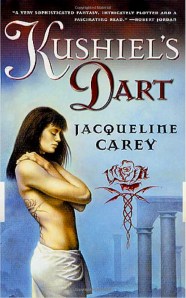
Kushiel’s Dart

Title: Kushiel’s Dart

Author: Jacqueline Carey

Genre: Epic Historical Fantasy

Length: 912 pages, 315,000 words!

Read: June, 2011

Summary: Long, overdone, but intriguing

ANY CHARACTER HERE

This book itself as Fantasy, but it’s certainly not your typical one. Really it’s a sort of reinterpreted epic (and I mean long) historical romance — without much of the modern sense of romance (almost none). But it does have plenty of the traditional, more atmospheric form.

This is a flowery first person narrative about a slave girl brought up as a sort of high end courtesan who gets involved — very involved — in politics. I’m going to try and break down and discuss various elements of the work.

It’s worth noting the tremendous length. The book is 900+ pages and feels it. I enjoyed it, but it’s like four novels glued together. This lends it a decidedly Gone with the Wind effect. Just when you think it should be over (except for the fact that you have 650 pages to go!) everything switches up and it moves on to a new stage. This happens several times.

First the setting. With the exception of a bit of prophecy and one large scale pseudo divinity (the Master of Straights) at about the 85% mark this novel really has no magic. And in fact, is actually a sort of disguised work of Historical Fiction. The Fantasy is more the invented nature of the tale than any actual magic. As best as I can tell the whole thing is more or less set in a reinvented thirteenth or fourteenth century France. It felt late medeval or early Renaissance. At times I wondered if it even had overtones of Carolingian (ninth century France). The names of the places and faiths are all changed, but in a recognizable way for those of us who know our European history. Rome is “Tiberium,” Spain “Aragonia,” the Germanic tribes the “Skaldi.” Carey does a good job of this, and her grasp for the flavor and cultures of Europe between the fall of Rome and the modern era extremely solid. The central nation of the novel feels both troubadour French and even a little Late Venetian Republic at times. There are plenty of deviations from real history. First an foremost the loosey goosey religious situation (as opposed to the dogmatic Catholic church). The religions have been reinterpreted and the nation founded by what appears to be an interesting mating of Jesus and Dionysus. An intriguing (and Romantic) mythical entity who was also followed around by a bunch of demi-god disciples who seeded various schools or bloodlines. Overall, the setting was probably my favorite part of the novel.

The voice. At first I loved the voice. Yeah it’s flowery. Girly. Really girly. And full of words that the Kindle dictionary informed me were “archaic” or just chosen for plain weighty flavor. Words like “limned” or “ague.” The sentences have an unusual and formal structure. There is a LOT of reppetition. This began to wear on me. Carey reminds you like 50 times who everyone and everything is, which considering the vast cast of characters and the incredibly complex political situation might be necessary for those that don’t have a semi-photographic memory or an obsessive knowledge of European history. The narrative is first person, and told from some unspecified far future point in Phedre’s (the protagonist) life. It’s the antithesis in many ways of my own voice, as it’s really really really heavy on the TELL and fairly light on the SHOW. Carey loves to insinuate before the action (when it occasionally occurs, separated by many many pages, but often enough given the titanic length of the book) that things won’t turn out as planned, or that something bad is about to happen. Lots and lots of stuff is done with narrative summary. I myself try to set everything in scene and tell it as it happens in a more hard boiled style, more like the Maltese Falcon or the Big Sleep, even if the subject matter is very different. Carey chooses a more sentimental approach. But at the same time I found the voice very distancing. A lot of this is the feeling that it is written looking back on events, which removes a lot of the tension inherent in the action. The rest is probably the TELL factor.

I liked the whole sex-slave-girl-bondage-courtesan angle. But Phedre is a little too good at just about everything other than pure agressive bravery, and she has her constant companion the warrior-monk for that. While bad things do happen to her, she pretty much flawlessly reads every situation and is titanically lucky / unnaturally talented. I still kinda liked her. And the fact that she has a lot of edgy sex is good. The book alternates between graphic and evasive in this realm, which ends up being more teasing than satisfying. Still, I guess normal people might find it dark.

Now the overall affect of this novel is pretty good. It starts off great. But it sometimes bogs under volumes of political talk I found excessive — and I read multivolume political histories for pleasure! Some of the sub-adventures (like Phedre’s time as a Skaldi slave) are really good and there are lots of varied settings, cultures, and characters. I also really enjoyed the depth of world building and the alternate but very “realistic” religious mythos. But…

There is absolutely no psychological realism to any of the characters, our protagonist included. The central condition of Phedre’s nature is supposed to be that she finds pain and suffering intrinsically hot. Even this isn’t really handled totally consistently. The rest of the people — while interesting and possessed of different traits — merely serve the story or the need to roster out a bunch of interesting types. The don’t feel exactly cardboardy, as they are detailed, but unlike the completely brilliant Game of Thrones, there is no fundamental relationship between the different nature of different personalities, their situations, and the decisions they make and the consequences those decisions bring.

In the end, I found the way in which things just sort of grandly worked out for Phedre tedious. The big war at the end is complex, but summarized, and the wrap up phase of the story nearly 100 pages. Carey also just loves to throw in grand and sumptuousness just for it’s own sake, which at the beginning felt lush, but by the time Phedre has dressed in 62 elegant gowns a bit much.

Still, I kind of liked the book, if only for its world and its very creative reinterpretation of medeval/renaissance fantasy. At times it reminded me of Guy Gavriel Kay, but his works felt somehow a bit more connected to place and certainly more emotional.

For more book reviews, click here.